I made an animated GIF of the comet and moon diving towards the horizon. There’s 30 images that make up the loop. Click here or the reduced animation image below to see it.
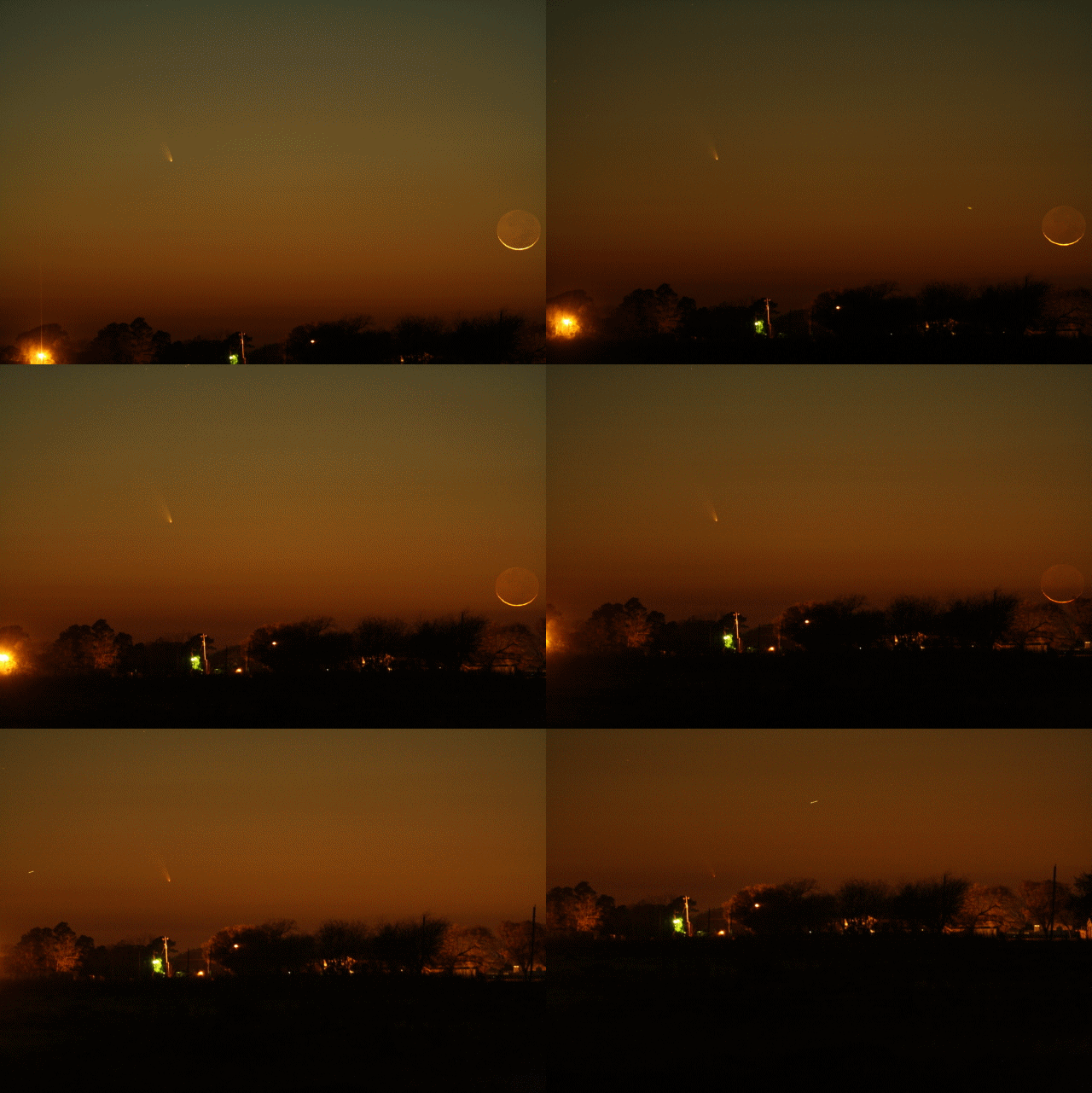

I made an animated GIF of the comet and moon diving towards the horizon. There’s 30 images that make up the loop. Click here or the reduced animation image below to see it.
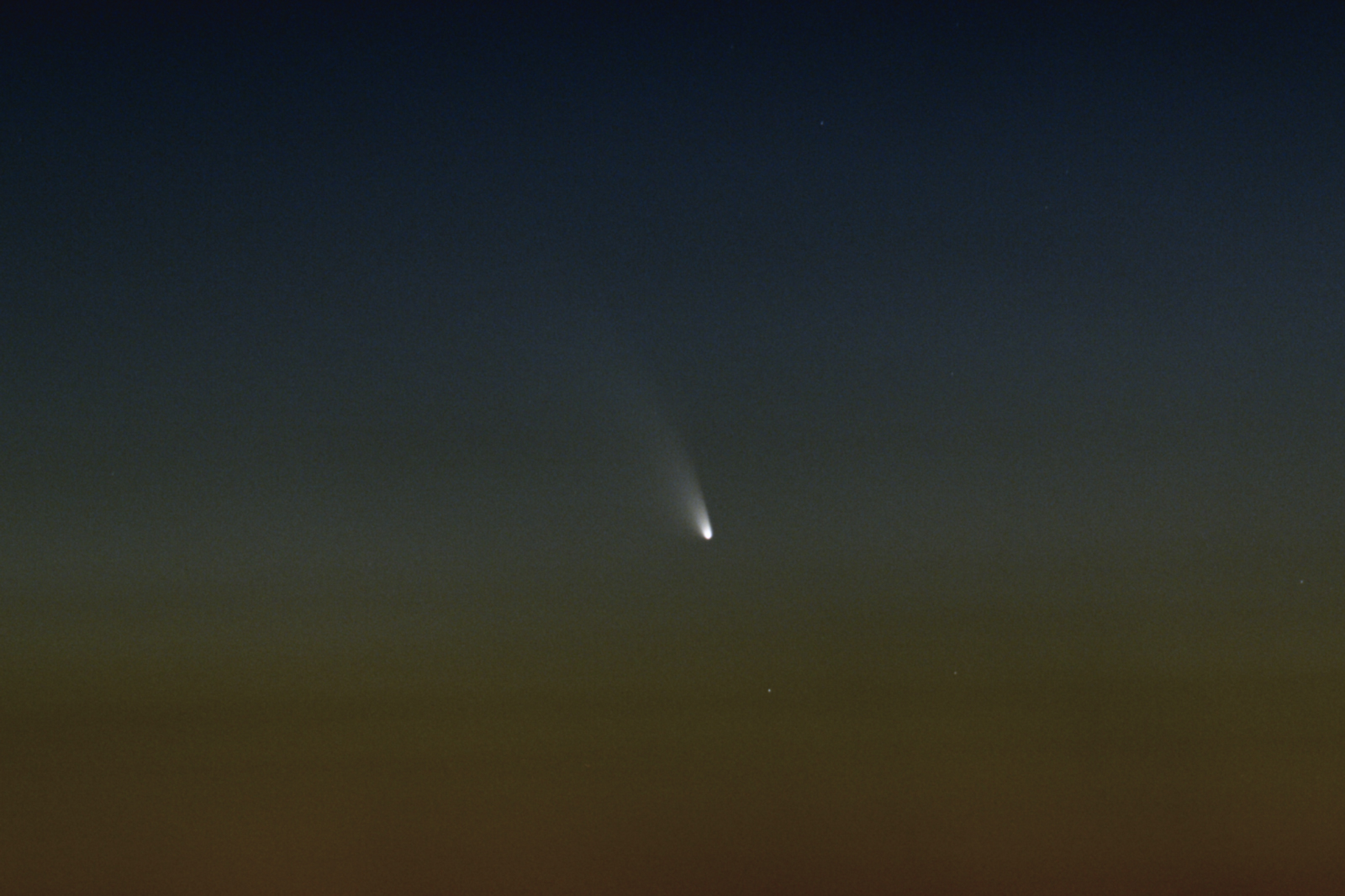
A stack of 5 images helps bring out the tail better. I calibrated and processed these in IRIS with some dark data taken right after the imaging session.
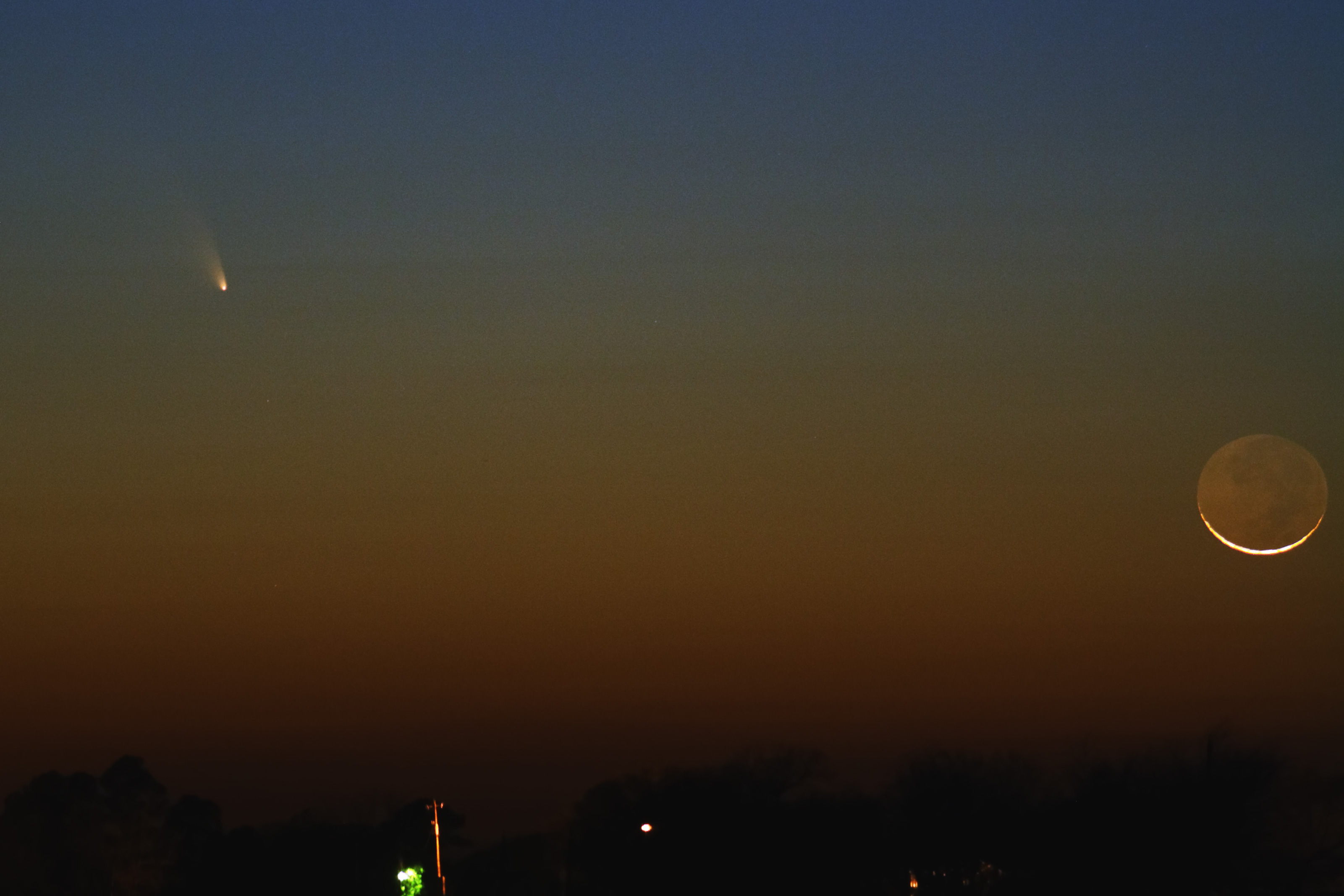
Possibly the most photogenic part of Comet Panstarrs apparition occurred on March 12, 2013 and luckily, I had clear weather. I took a number of images, all with a Canon 200mm at F/2.8, a Canon XS (modified) and my little CG3 mount and a laptop. This particular image is a 2 second exposure at ISO 800.
Continue reading Comet Panstarrs & The Moon – March 12th, 2013
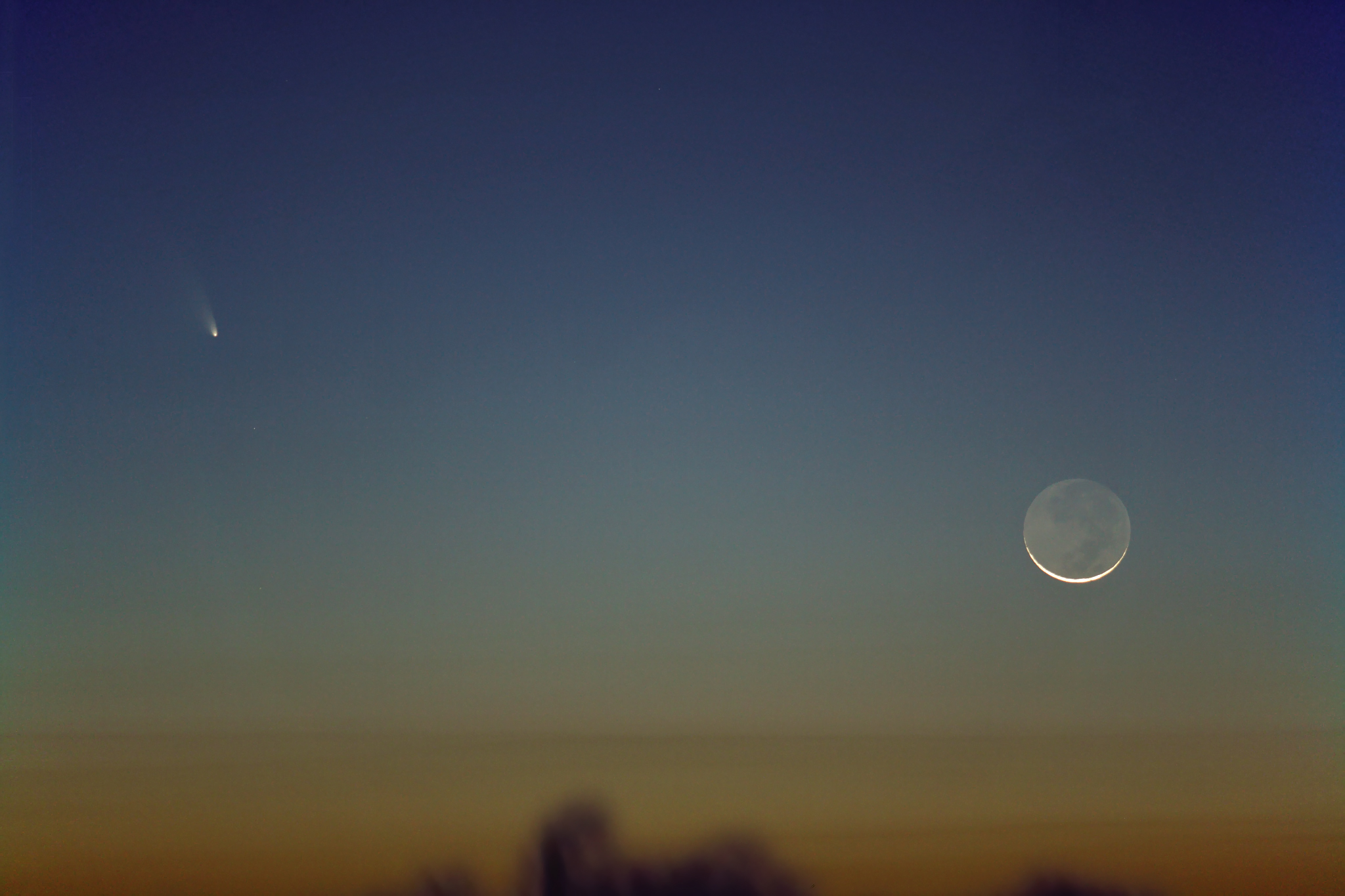
I shot this at the start of the session, before the comet and the moon sank too deep into the murk. This is a one second exposure at ISO 200, Canon 200mm lens at F/2.8. Lots of twilight still, but dark enough to show a good portion of the comet’s tail.

This is 10×4 sec ISO 400 sub-images stacked in IRIS. I had a feeling it would be difficult to process and it was. But, I managed to get this final image regardless.
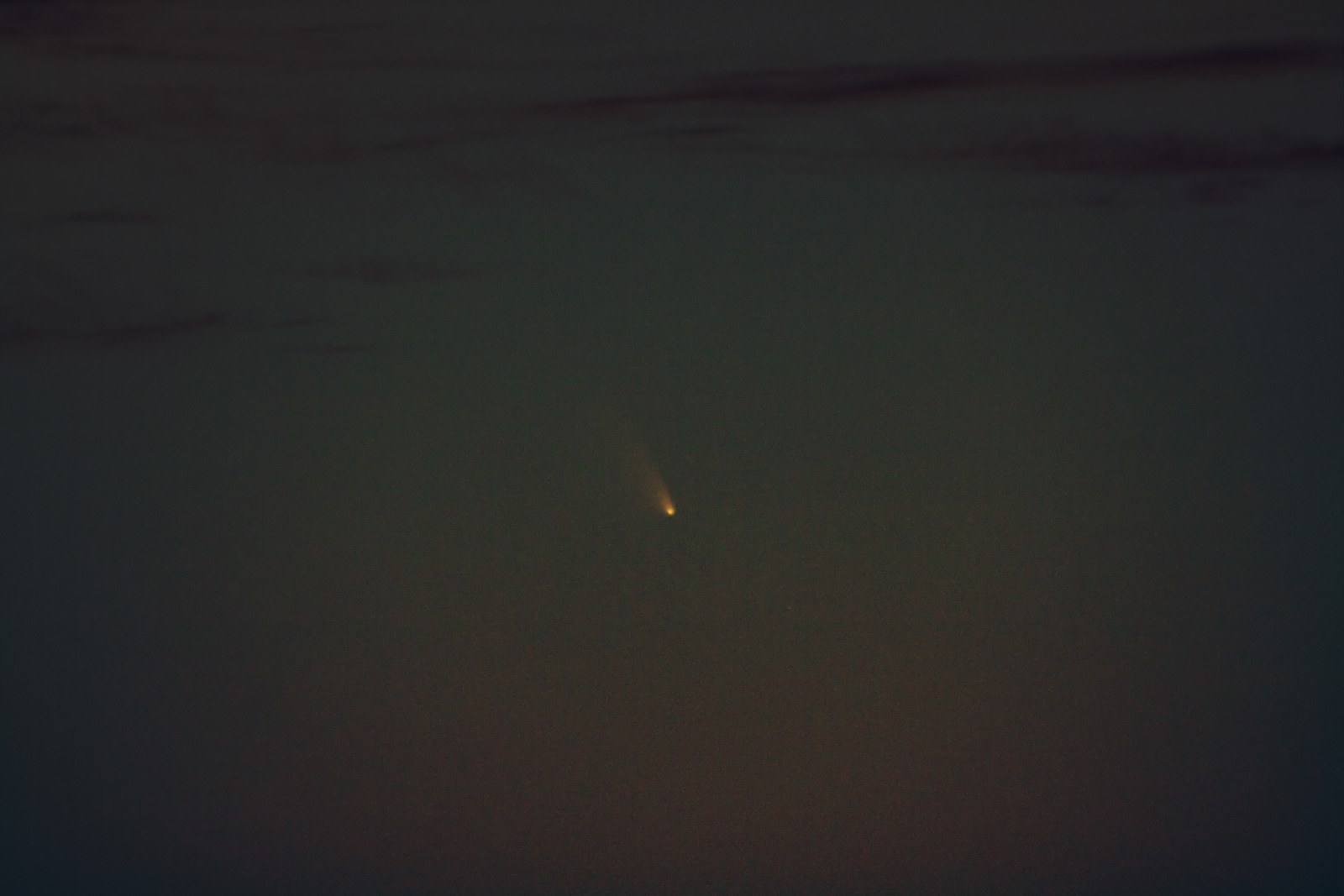
Here’s one of the first images from the batch of images I shot of Comet Panstarrs on March 11, 2013. I used a 200mm F/2.8 Canon lens with a Sigma 2X Teleconverter, for 400mm of focal length at F/5.6. This was a 1 second exposure @ ISO 400. The camera was riding on an old German Equatorial mount (a CG3 clone) with a clock drive.
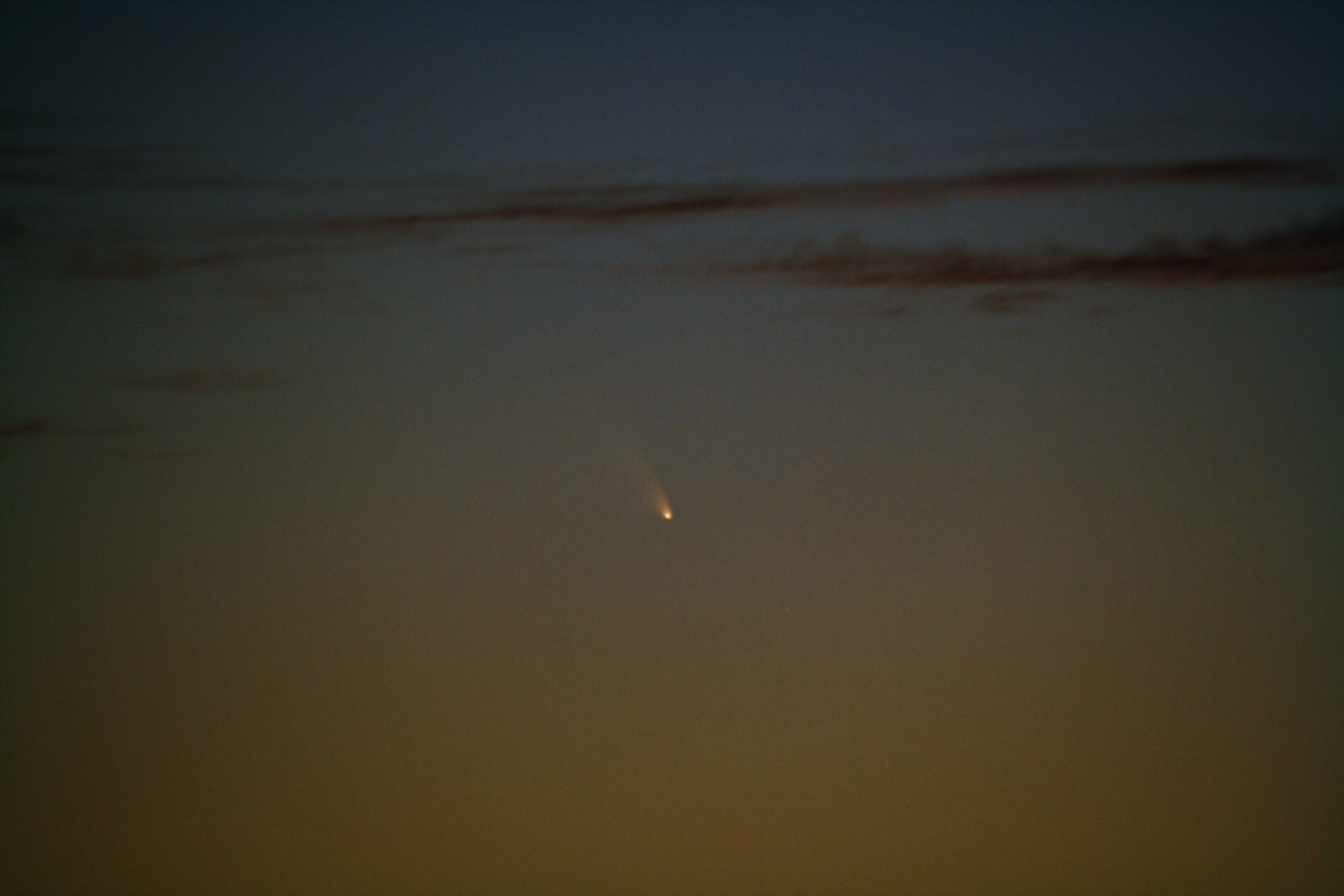
Comet Panstarrs with a 2 second exposure @ ISO 400, Canon 200mm F/2.8 w/Sigma 2X Teleconverter, Canon XS (modified) DSLR.
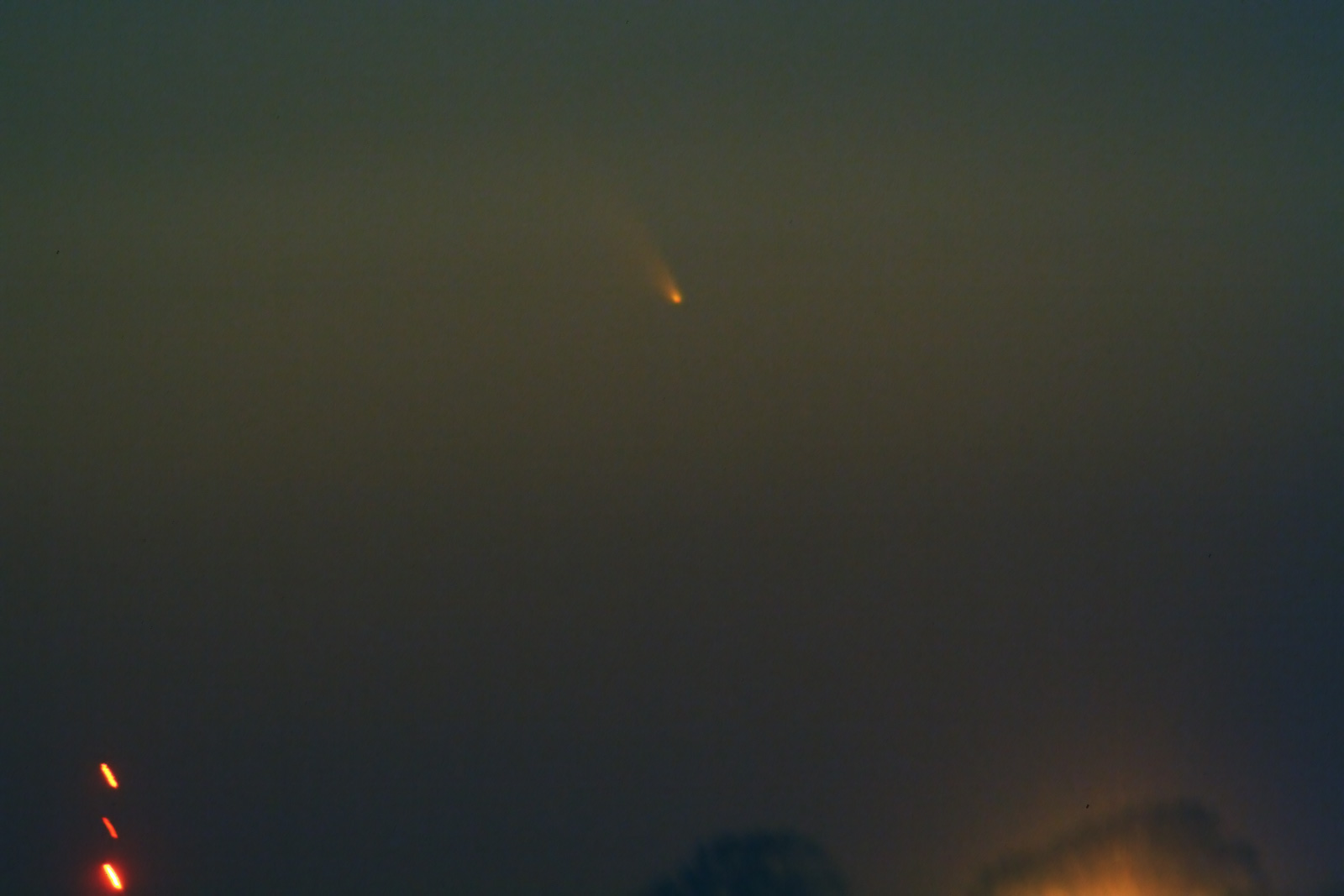
Here’s one of the last shots before the comet sank into the murk. I couldn’t even see it anymore with the binoculars, but the camera picked it up with a 10 second exposure.
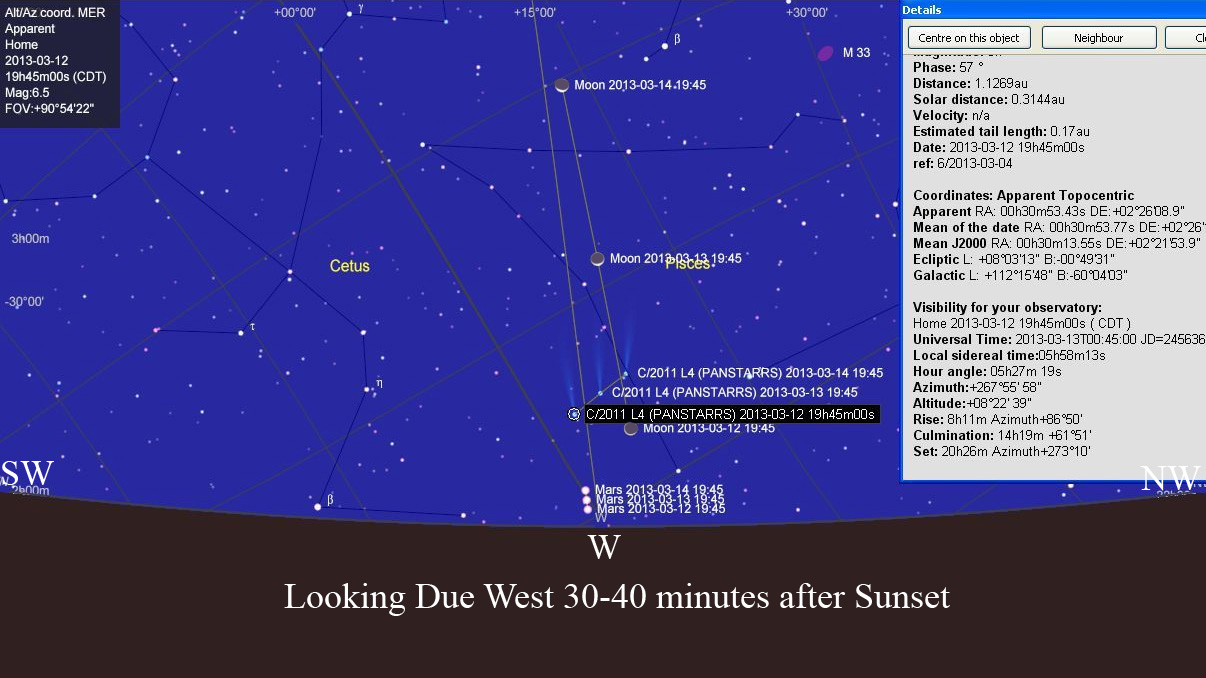
All this testing of camera and mounts I’ve been doing lately is for Comet Panstarrs. It is very low in the west at sunset now, but it is getting higher each night. It should be high enough out of the muck to see by March 12, 2013, when it will be next to the moon right at twilight.
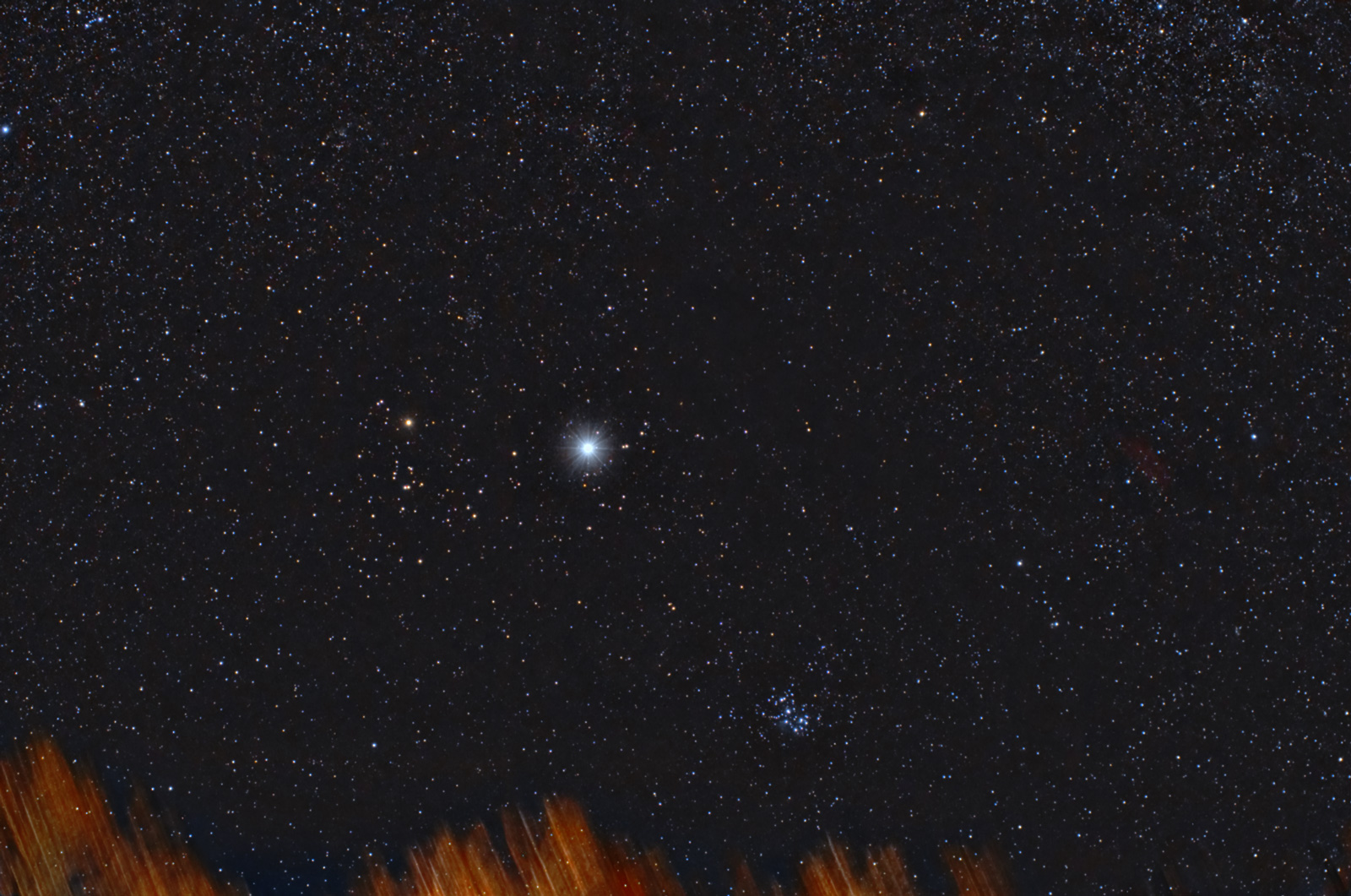
Jupiter in Taurus w/Pleiades. 5×120 sec @ ISO 1600, 28mm F/5.6.
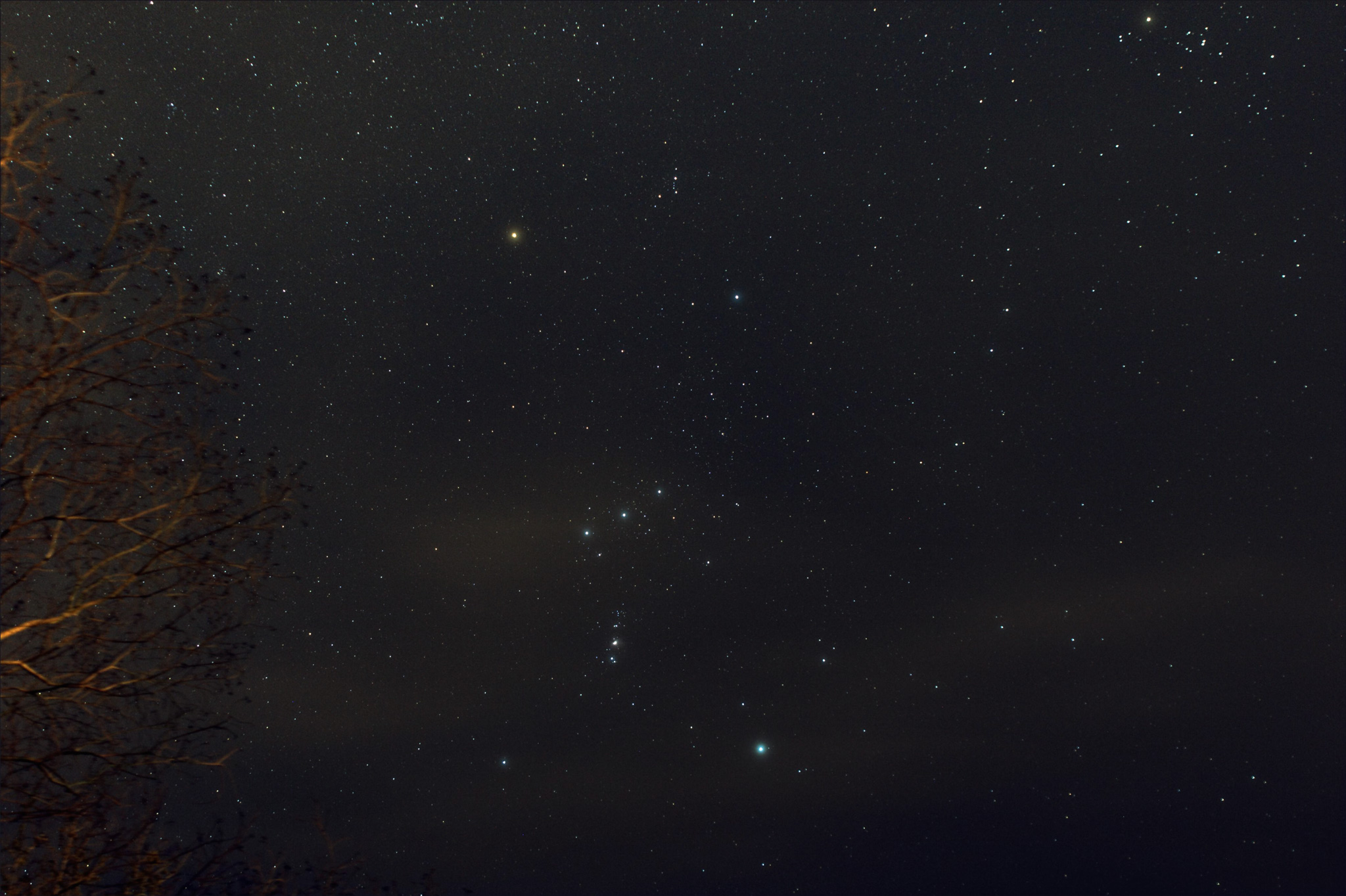
Here’s a single 30 second exposure with my 28mm F/2.8 lens and my camera mounted on an old CG3 style mount with a simple clock drive. I had a Bogen ball-head camera mount so I could position the camera. The mount works well at this focal length for 30 seconds. Too bad there were clouds.
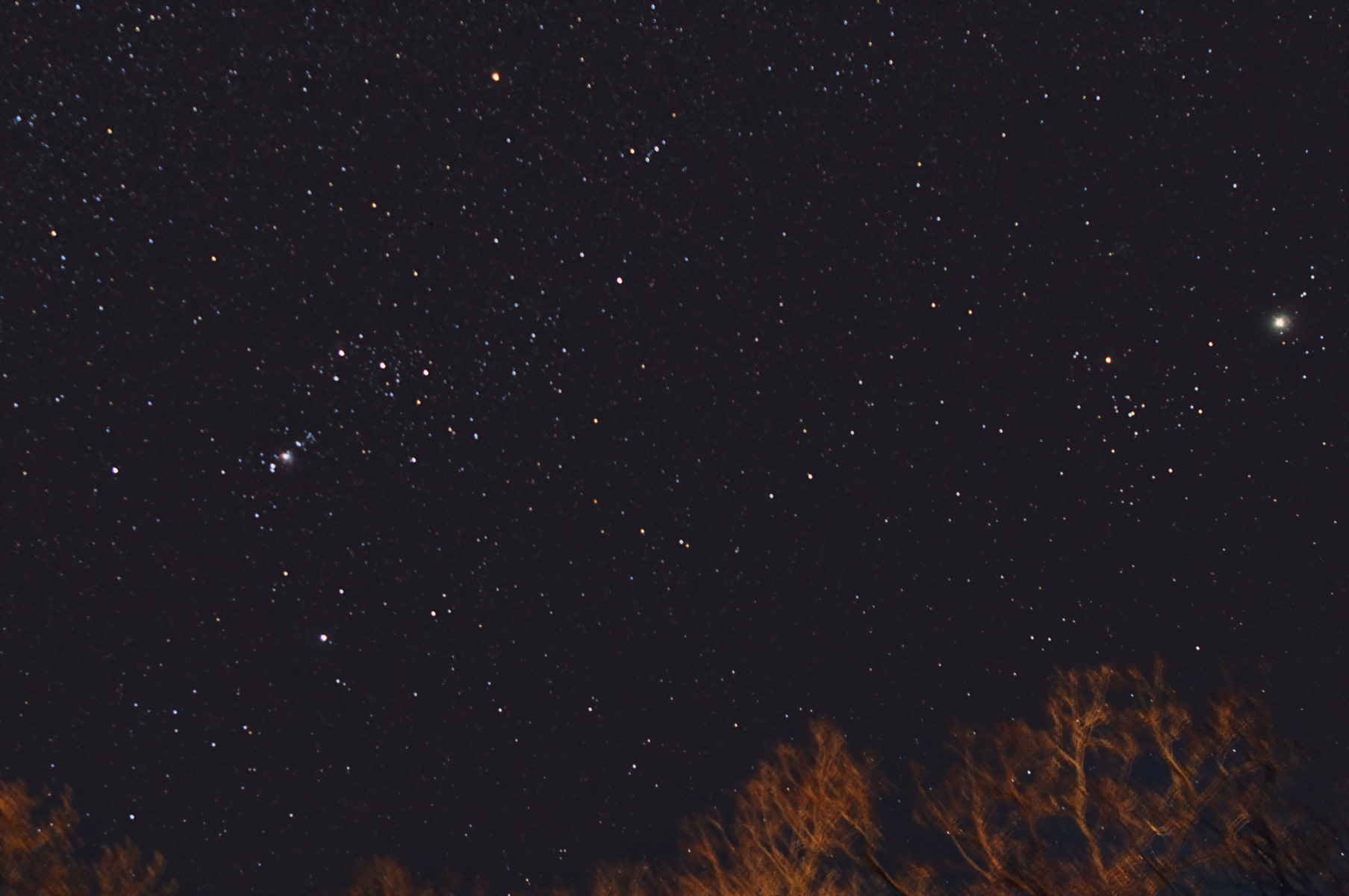
The Orion and Taurus constellations taken with a 28mm F/2.8 lens. The camera used is a Canon XS at ISO 1600 and was mounted on a regular tripod. I used 3×20 sec exposures combined in IRIS. Calibration frames were from old data. Bright Jupiter is visible on the right. Even with just 20 seconds for exposure, the stars trailed due to the Earth’s rotation. I had to do some star rounding in PS to correct it somewhat.