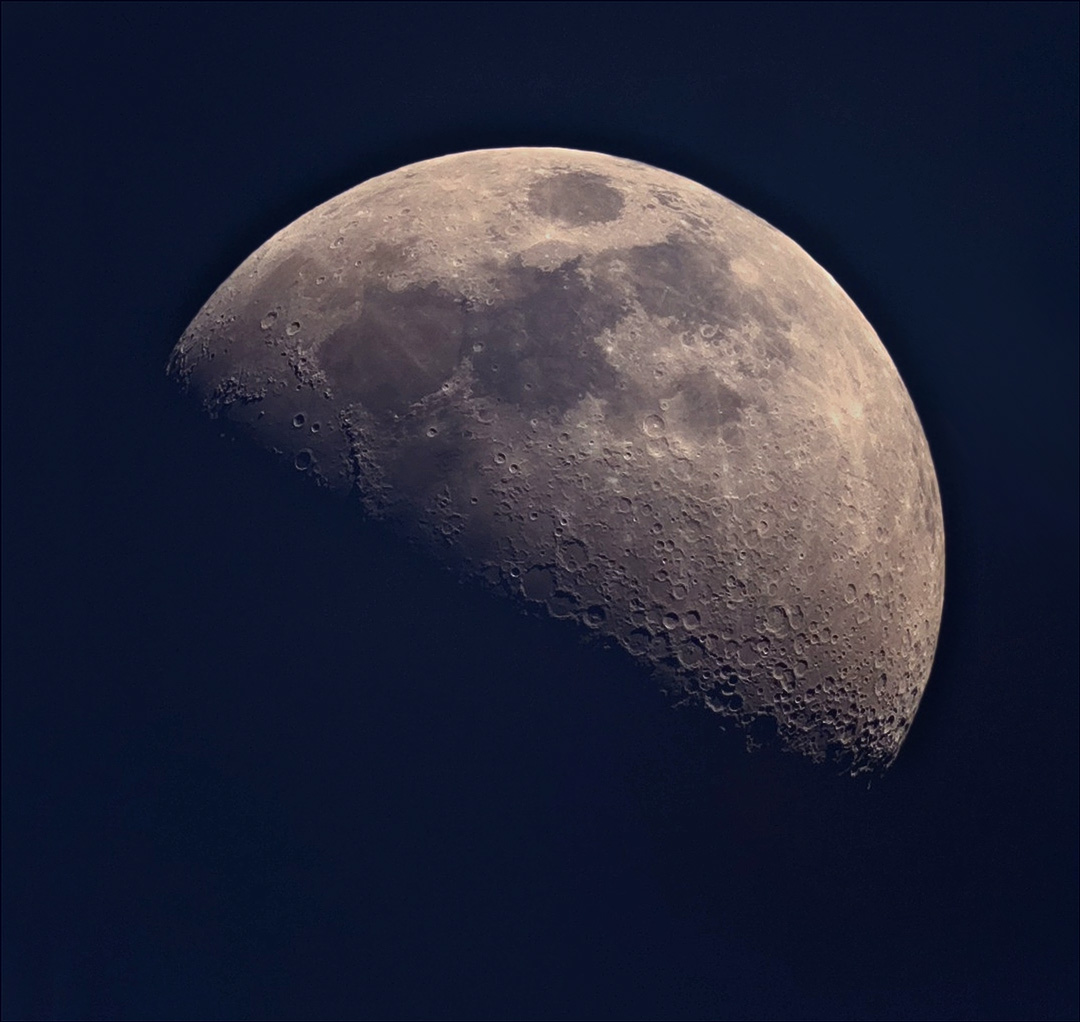
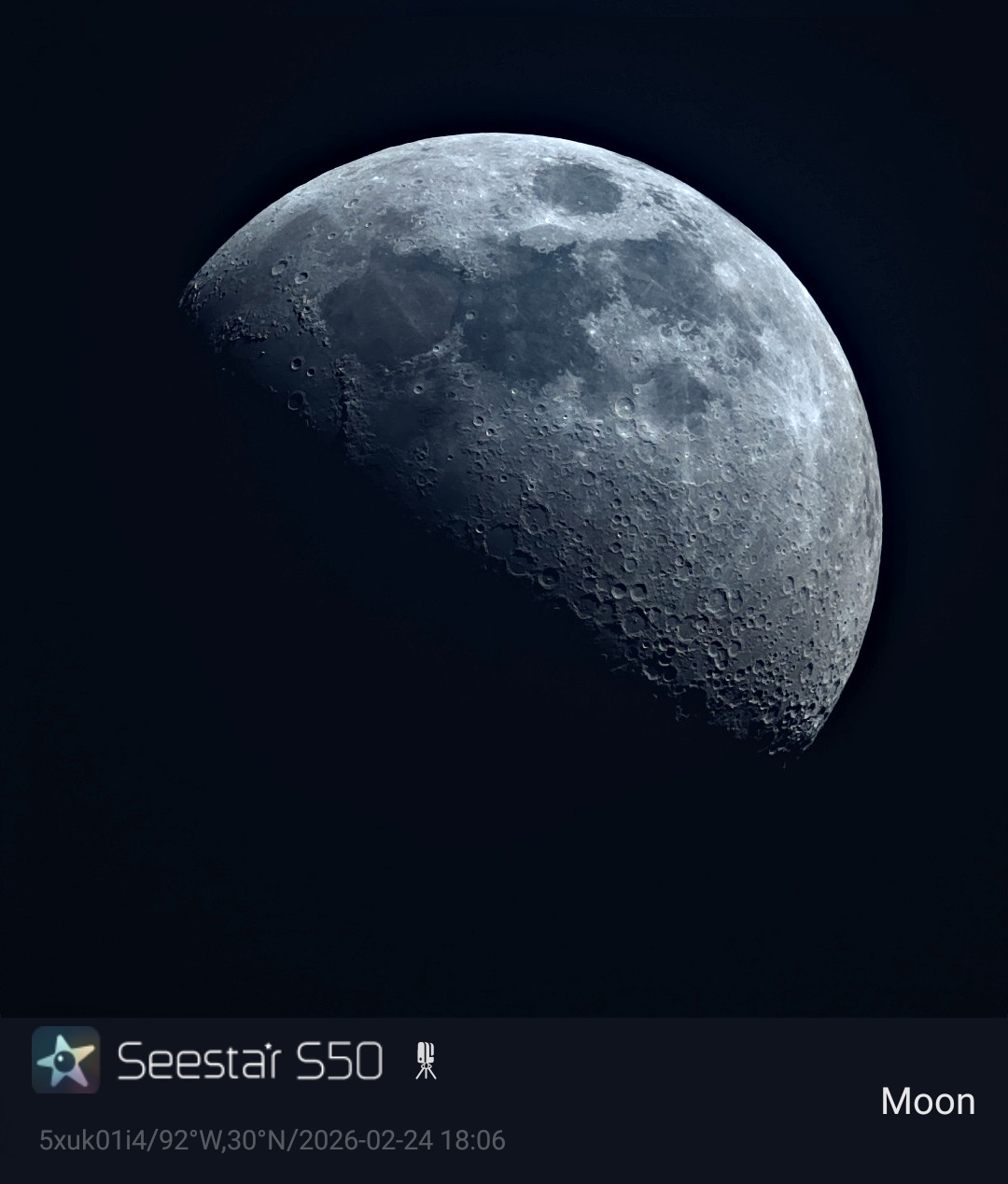
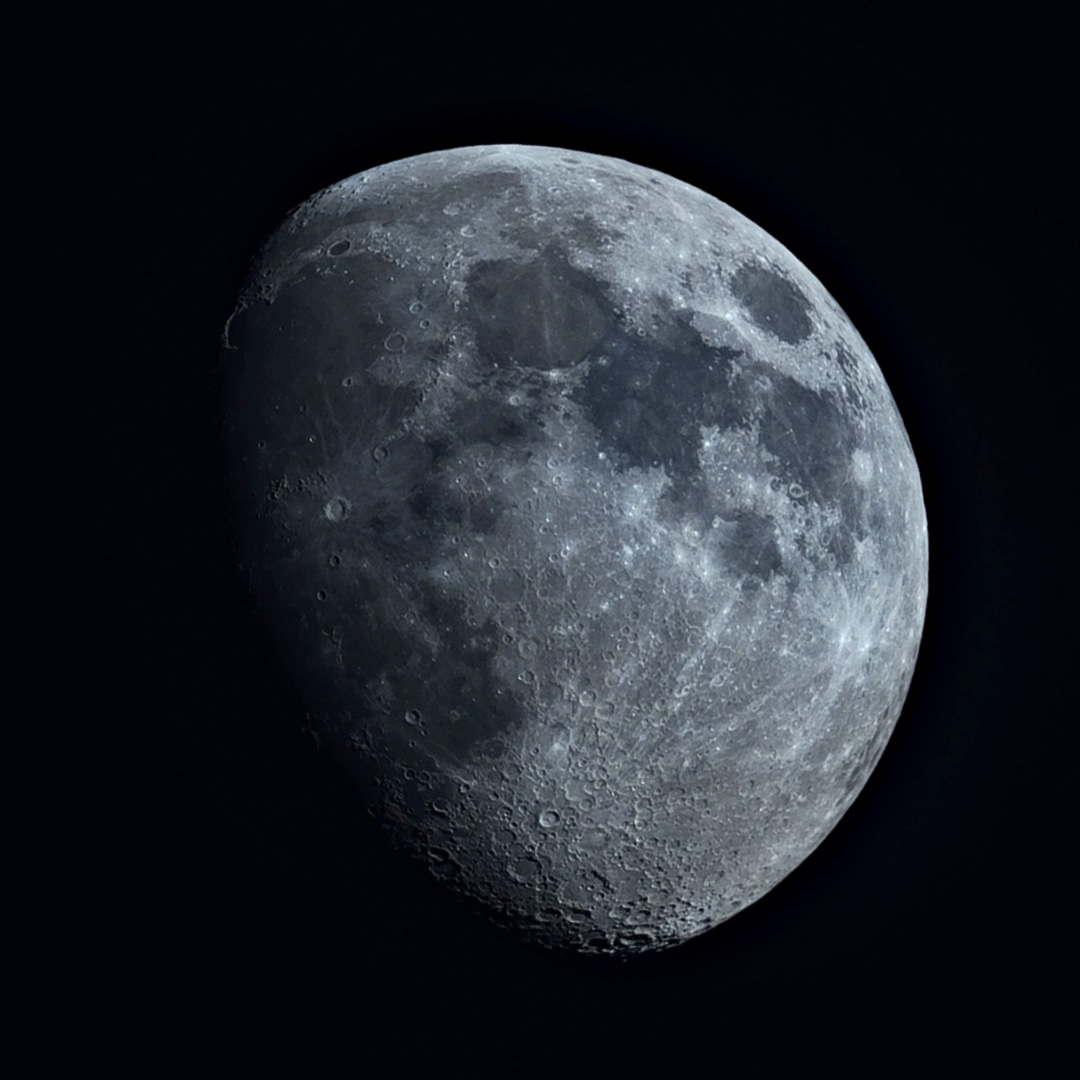
The moon was directly overhead near the end of twilight on Feb 24th, so I broke out the Seestar S50 for some close-ups of it. There were clouds, but they were thin. I was able to shoot the moon through them, however. I took one in scenery mode (above) and one in solar system mode (below.) The seeing was excellent, despite the high clouds.
Feb 22nd, 2026 was a pretty decent night, but I was a little too worn down to travel , so I stayed in the city and tried some nebula and star cluster shots to see how well this new camera on the S30 Pro behaves with clear skies, but heavy light pollution.
To start things off, I did a quickie solar system session and got the moon. The results are above. The Seestar S30 Pro’s Image scale is not quite there for moon shots, but that’s why I have the Seestar S50, which works great on that target.
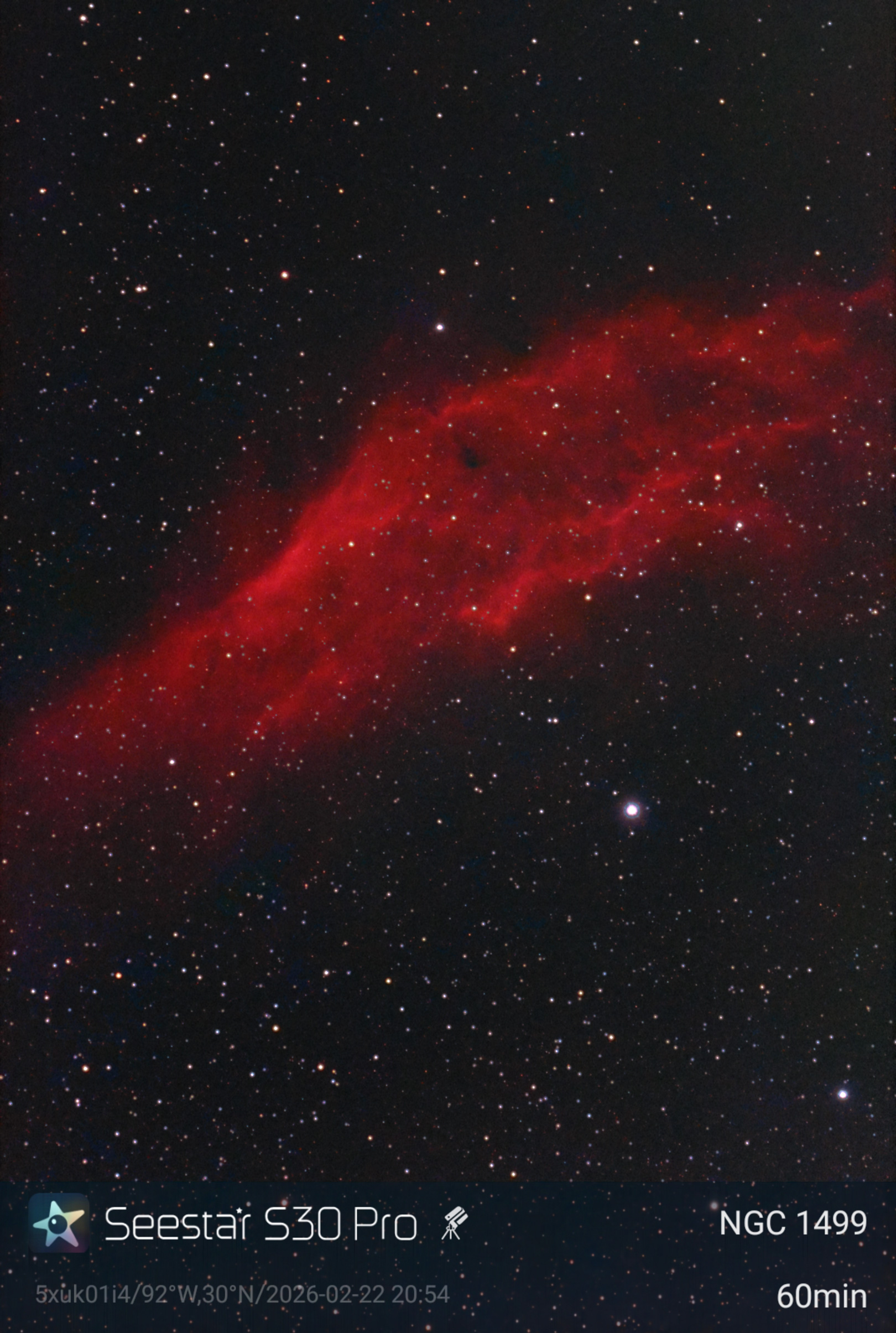
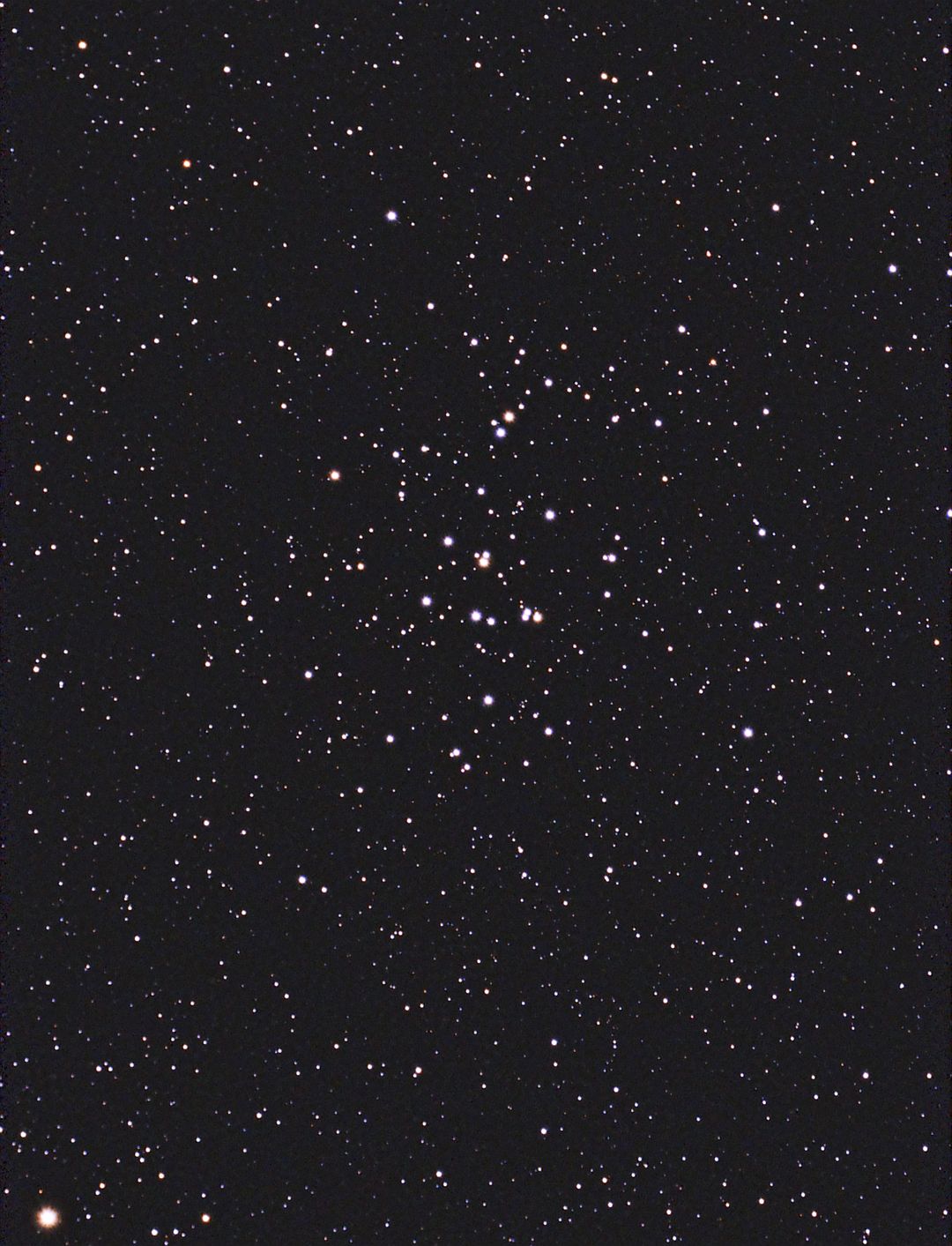
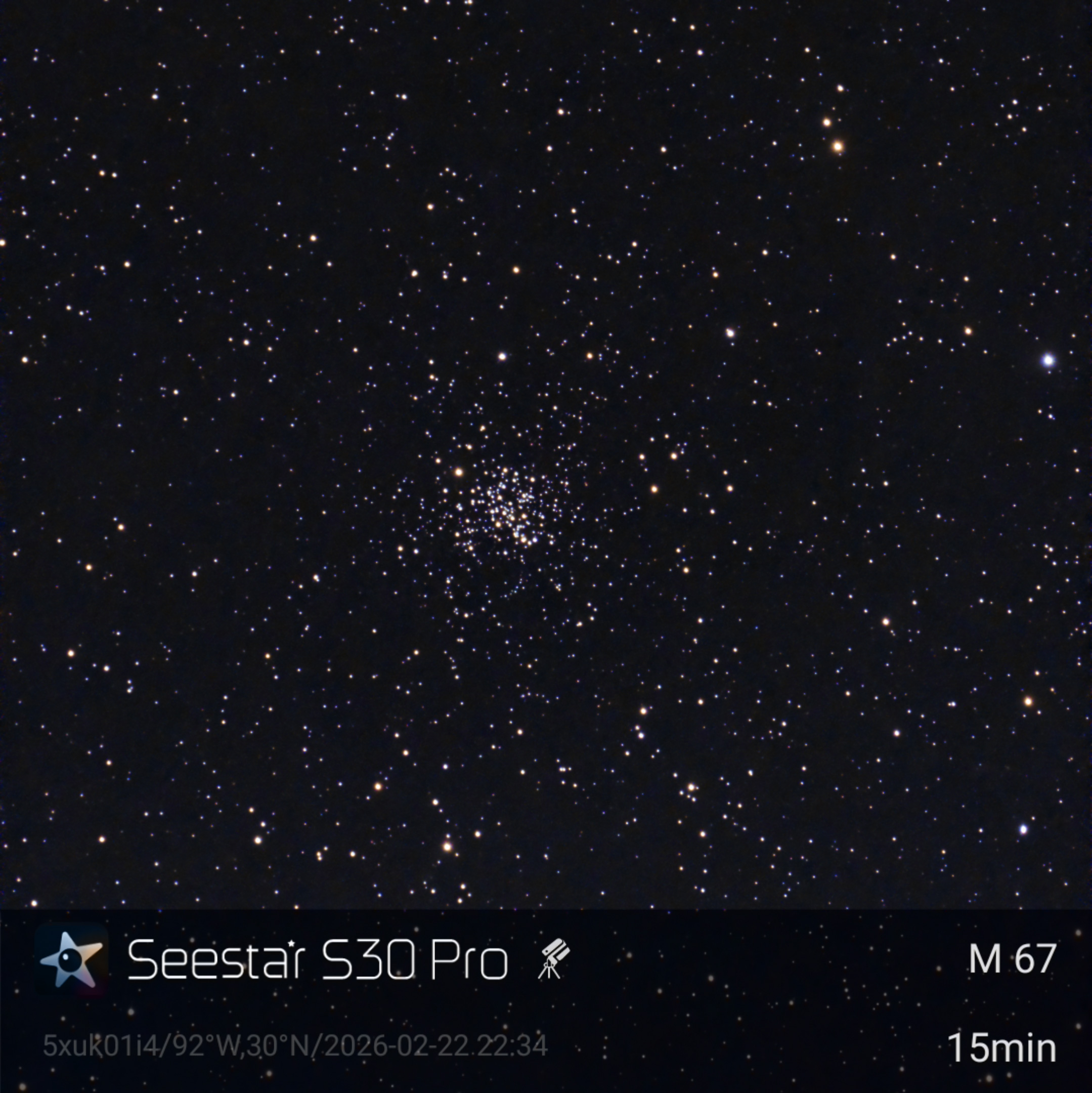
After the moon, I picked the California Nebula as my first DSO target of the night. It did great on that one. Afterwards, I tried it on some star clusters. I shot M44 and M67 in Cancer. Then, M35 in Gemini. I haven’t gotten around to processing all of the clusters, yet, though. I’ll add the others once I have them done.
M44 Open Cluster in Cancer. 120 x 20 sec (40 minutes,) Seestar S30 Pro.
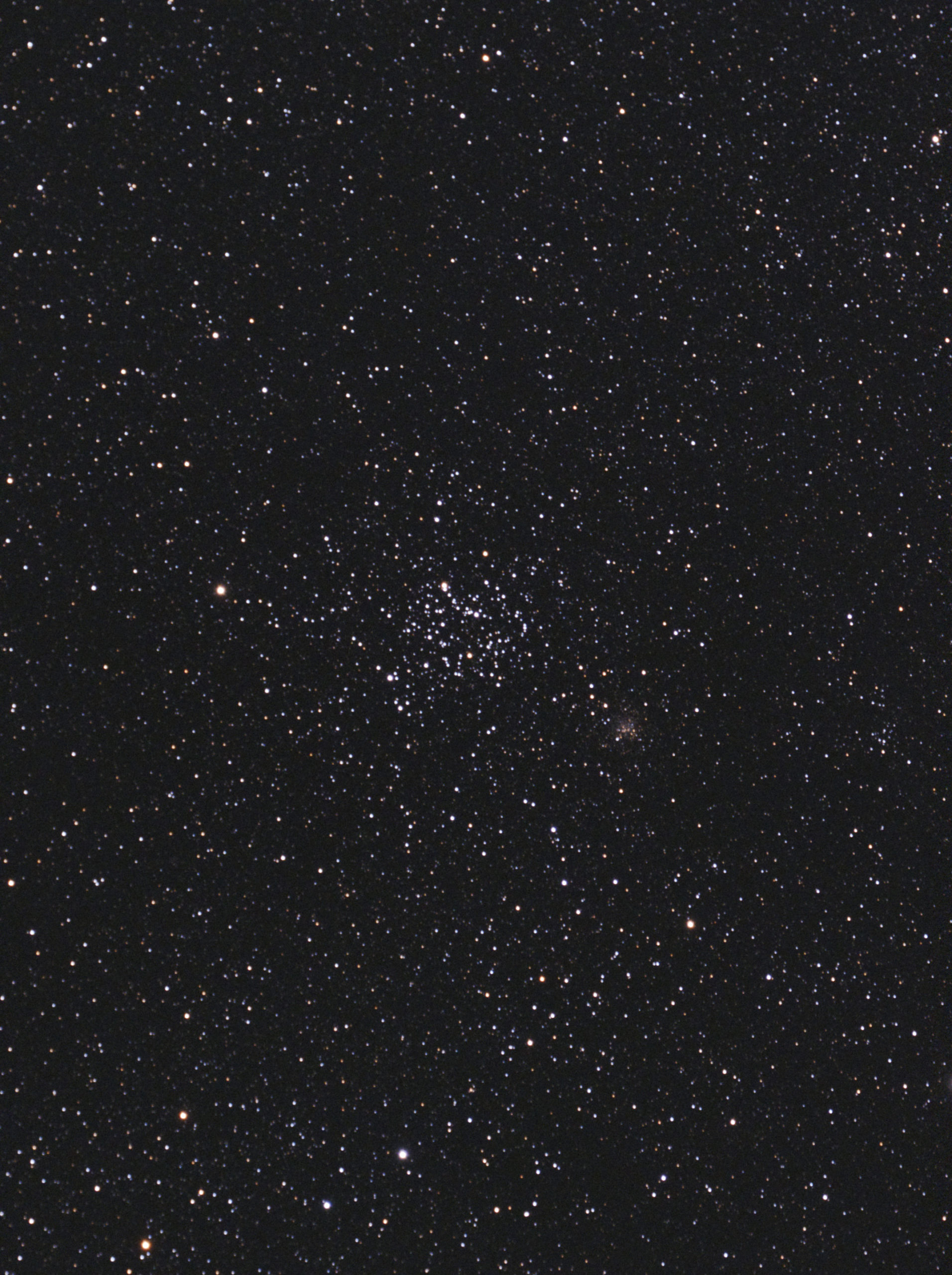
M35 Open Cluster, Feb 22, 2026. Seestar S30 Pro, 51×20 sec (17 minutes.)
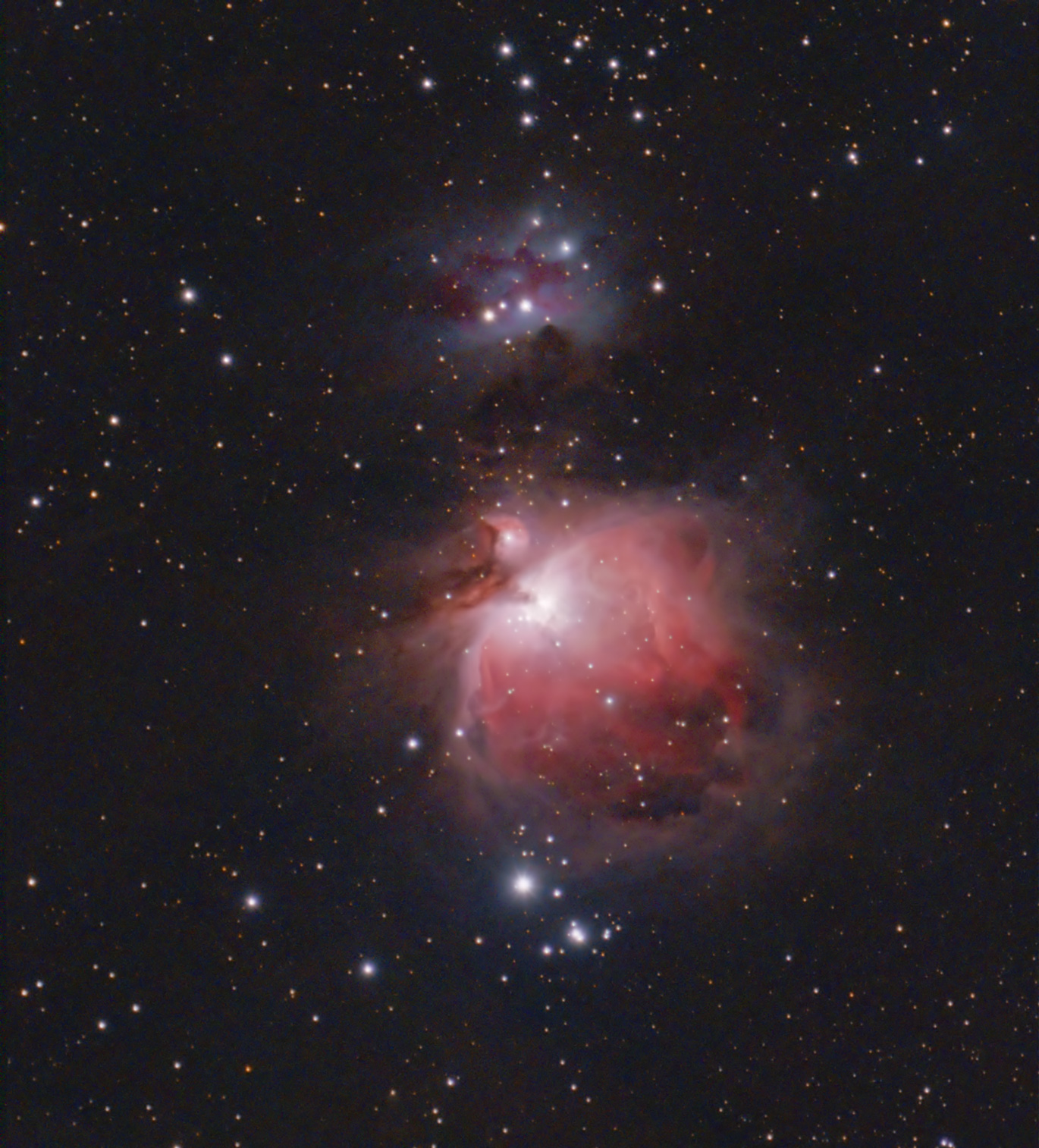
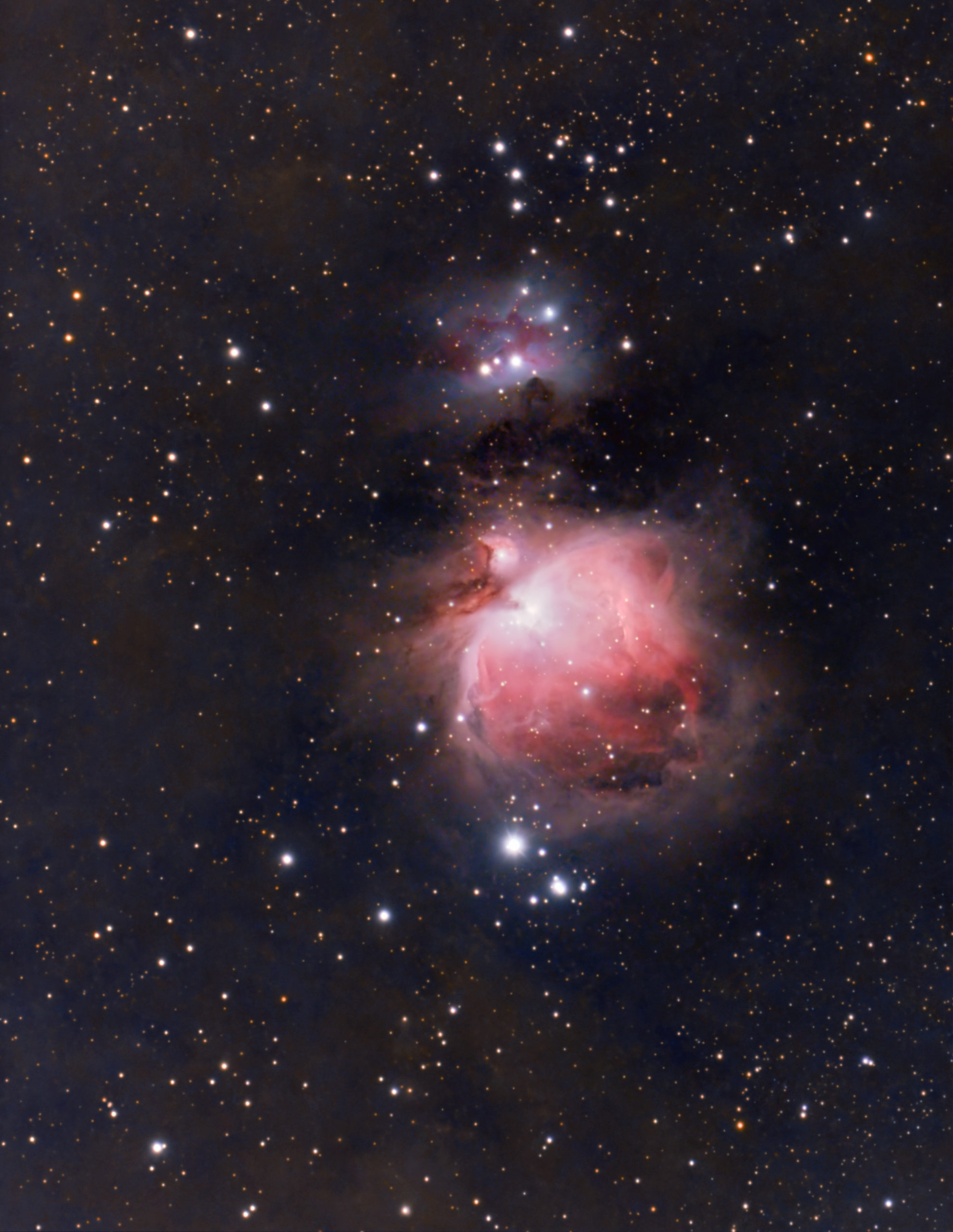
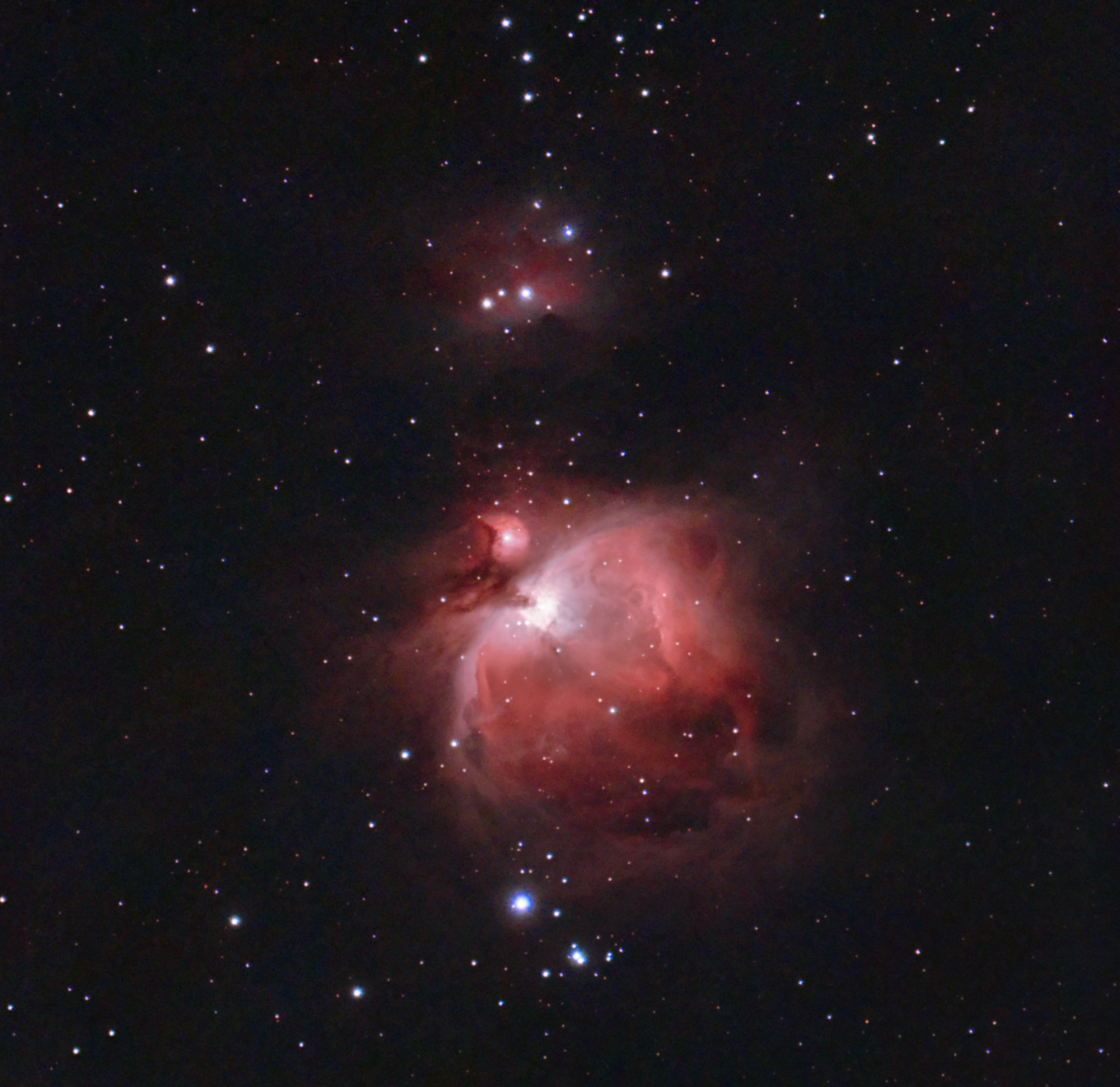
The images below were taken the following night, Feb 23rd, 2026. It was an even better night than the one before, with max transparency. I had to try M42 again with the skies this clear! I used the built-in nebula filter for 30 minutes worth first, then switched to the IR/UV cut (clear) filter and gathered another 45 minutes. So, a total of an hour and 15 minutes.
I created two versions of M42 – the first being my try at taking the raw stack generated by stacking the two sets of images taken with the different filters and stretching/color balancing it, Then, the Seestar S30 Pro’s try at stretching it and cleaning it up with it’s AI Denoise tool. That output was used to generate the base image. Color was added from my first image, however, since the Seestar had too much LP to deal with to get the color right.
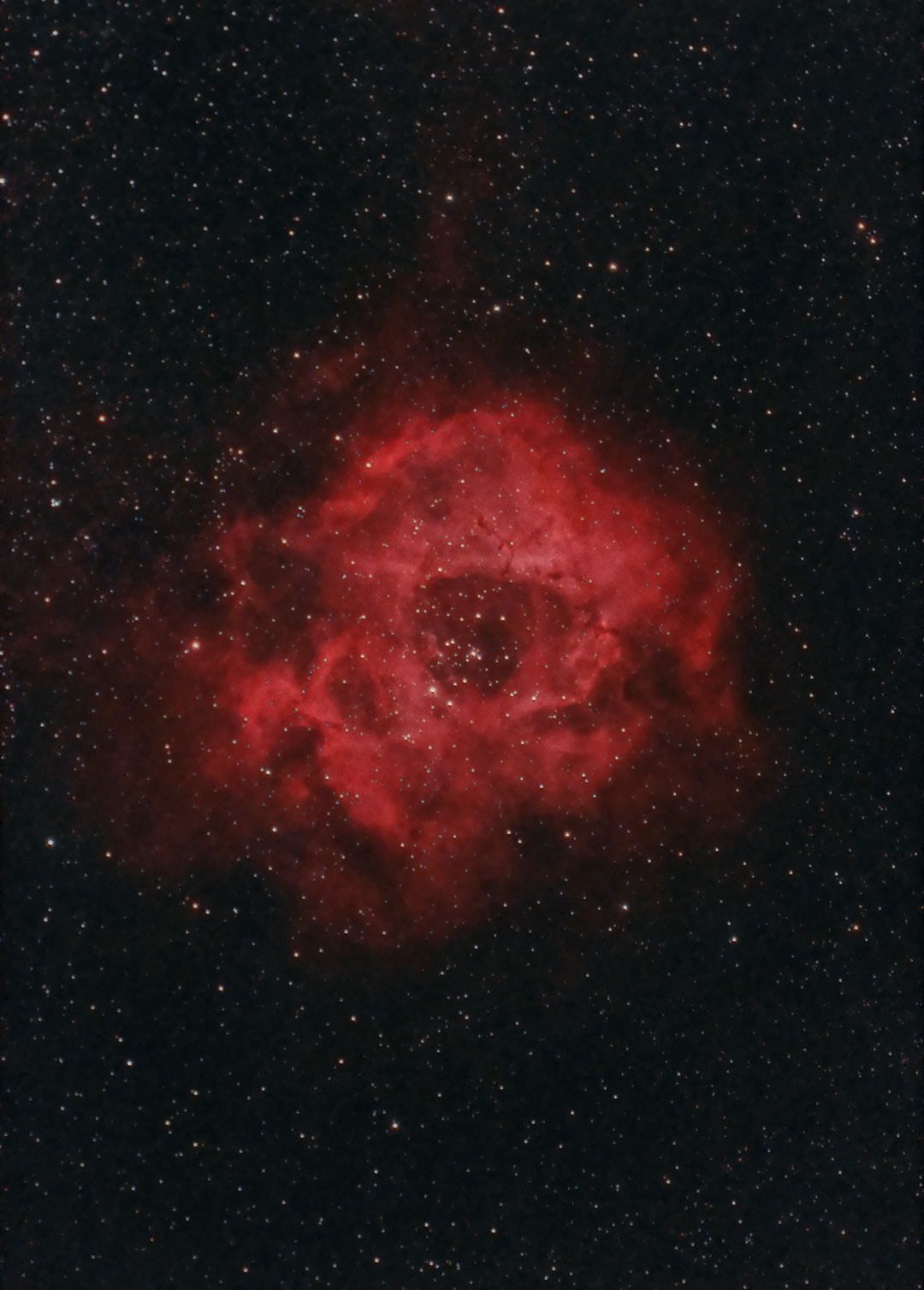
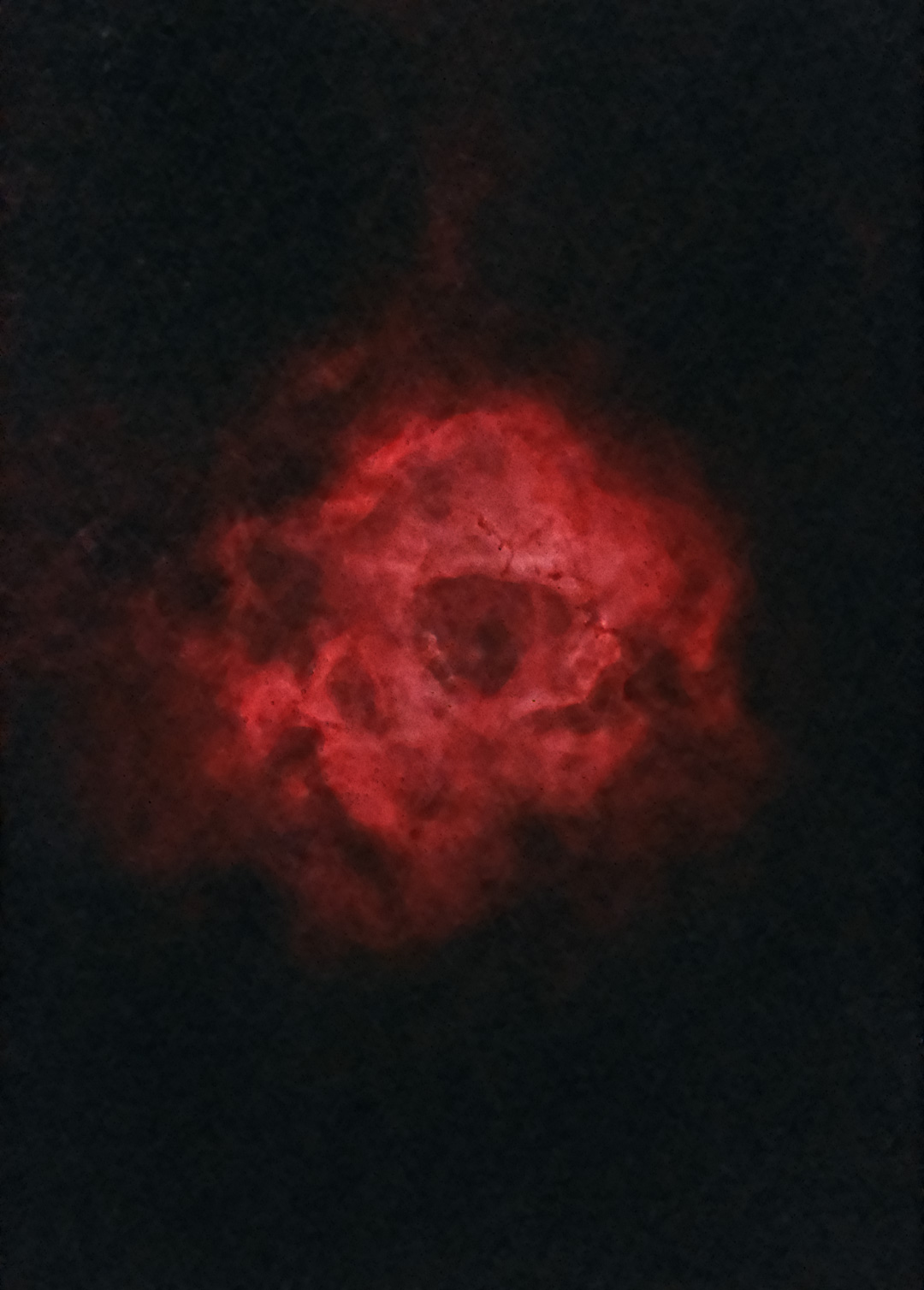
My next subject was the Rosette Nebula. 135 x 20 sec or 45 minutes of data. I created a starless version to enhance the nebula more and merged it with the stars for the first image. The second image below is the enhanced starless image itself.
All in all, it was two pretty good nights with some decent images to show for it. 🙂
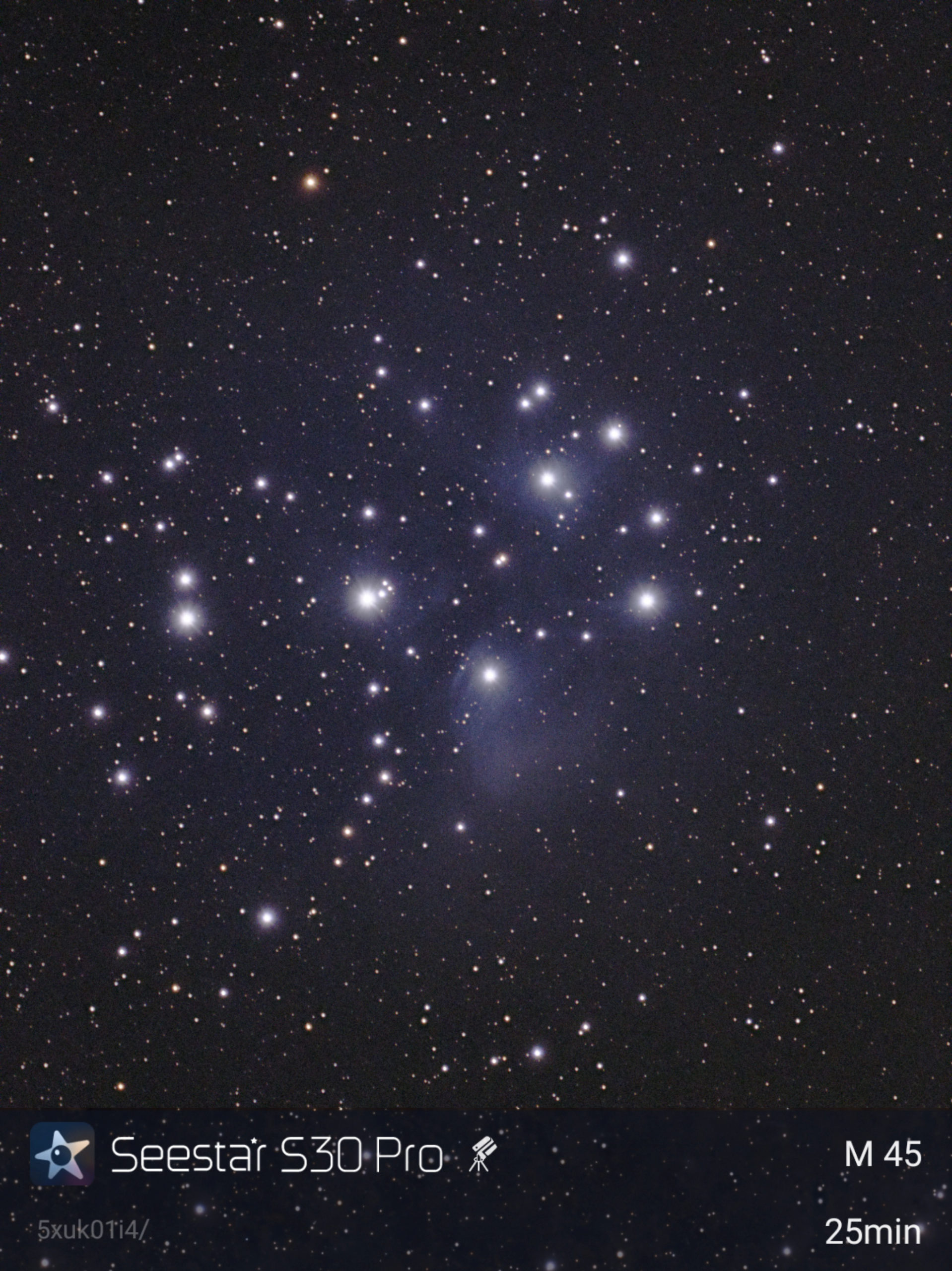
On Feb 16th, I went to a darker site with a Bortle rating of about 5/6. It borders on Bortle 4 in the south-southwest. I got the comet again, M45 and some more tests with the Milky Way mode camera, as the Seestar refers to it.
The Deep Sky image for this night was the Pleiades. I let it run for only 25 minutes, since it looked like dew was forming on the lens.
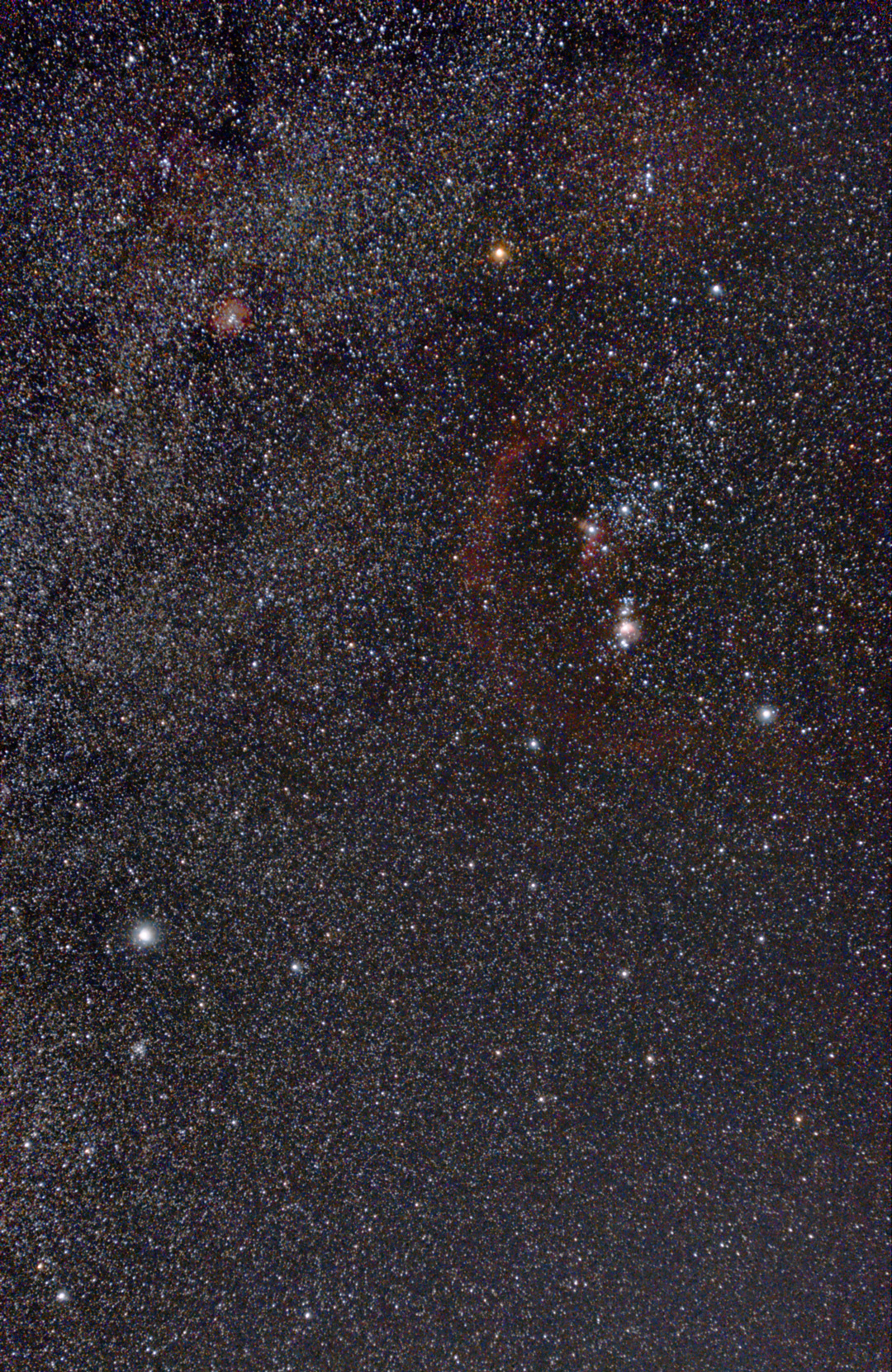
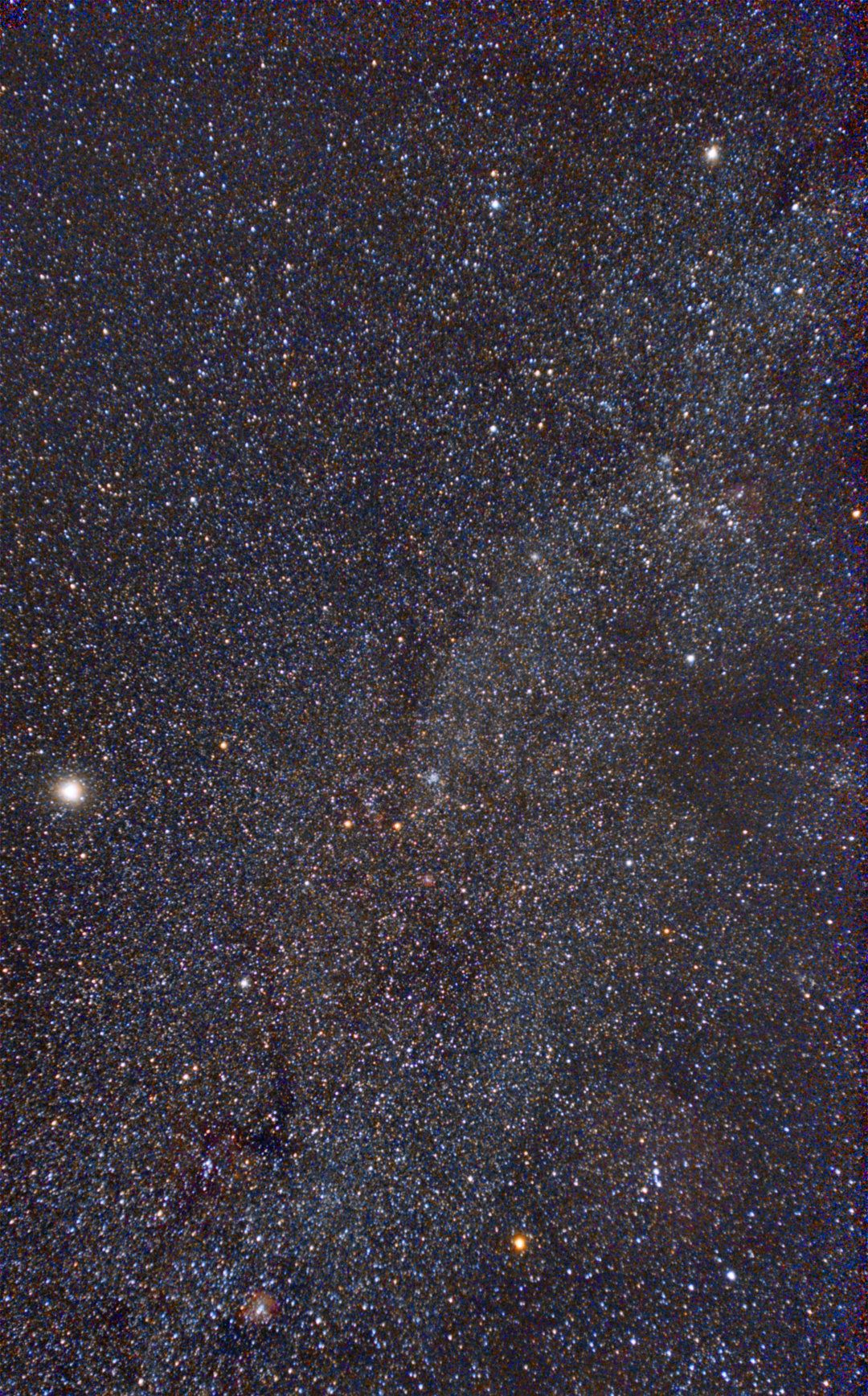
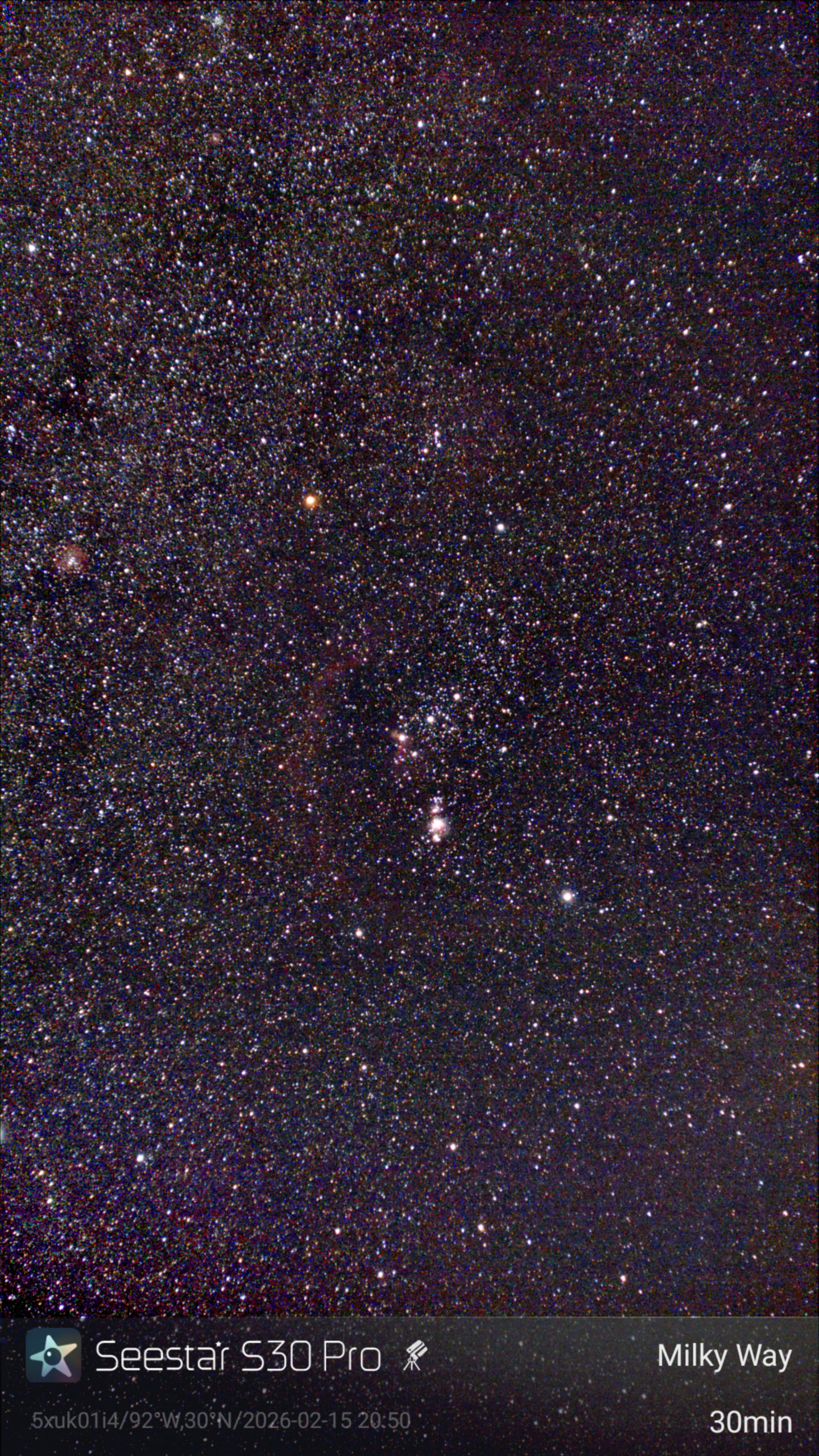
For the wide angle lens, I went back to the Orion area and was able to point it much more south to include Canis Major with Sirius dominating towards the bottom left. Very dark part of the sky at this location, so it was a good test.
Orion and Canis Major area. 60 x 30 sec, Seestar S30 Pro.
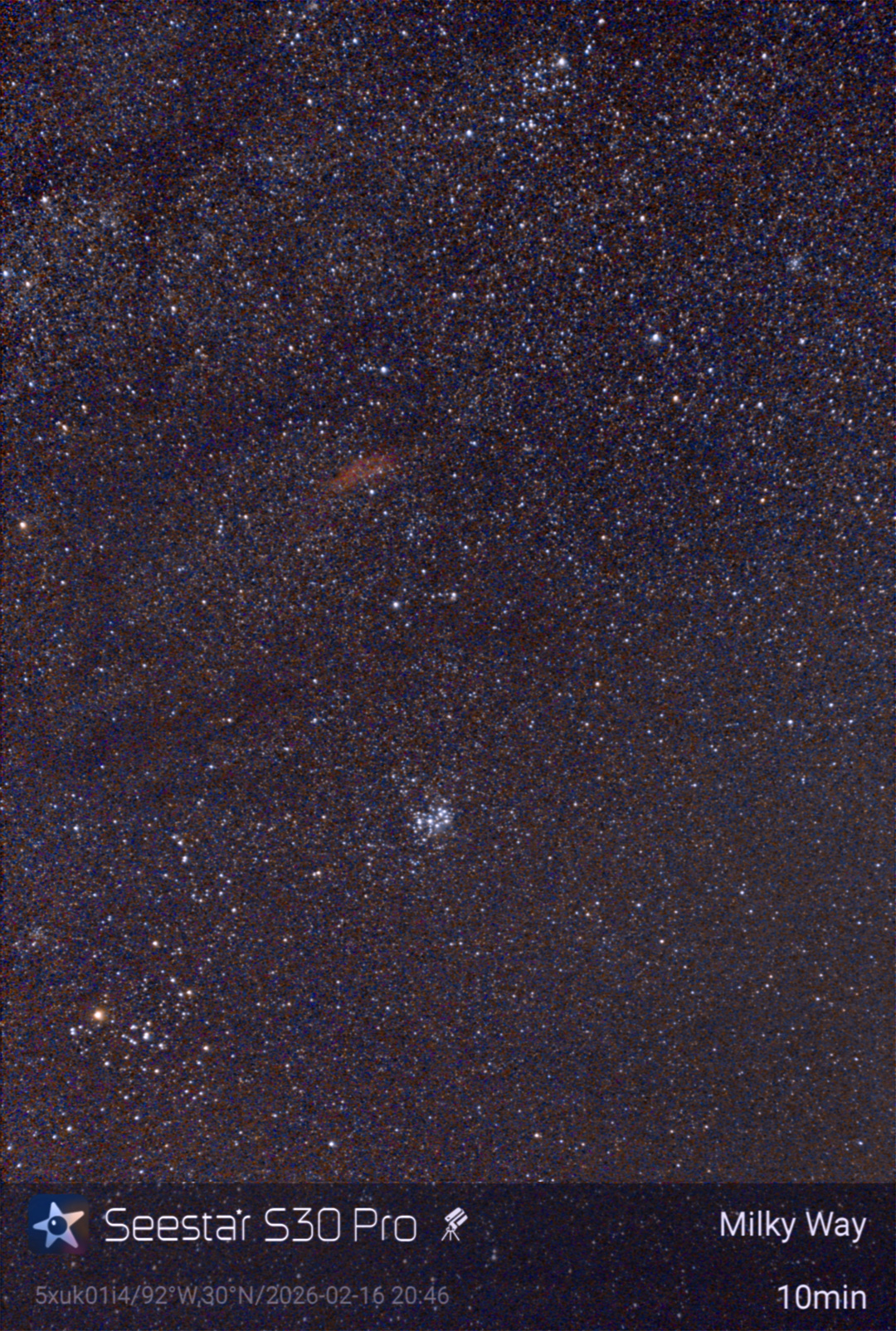
Another try of the Pleiades area:
Taurus and Perseus area, featuring the Pleiades and the California Nebula. 20×30 sec.
Finally, this last one was nothern Orion and parts of Gemini.
Northern Orion, Gemini, featuring Jupiter to the left. 25 x 60 sec, Seestar S30 Pro.
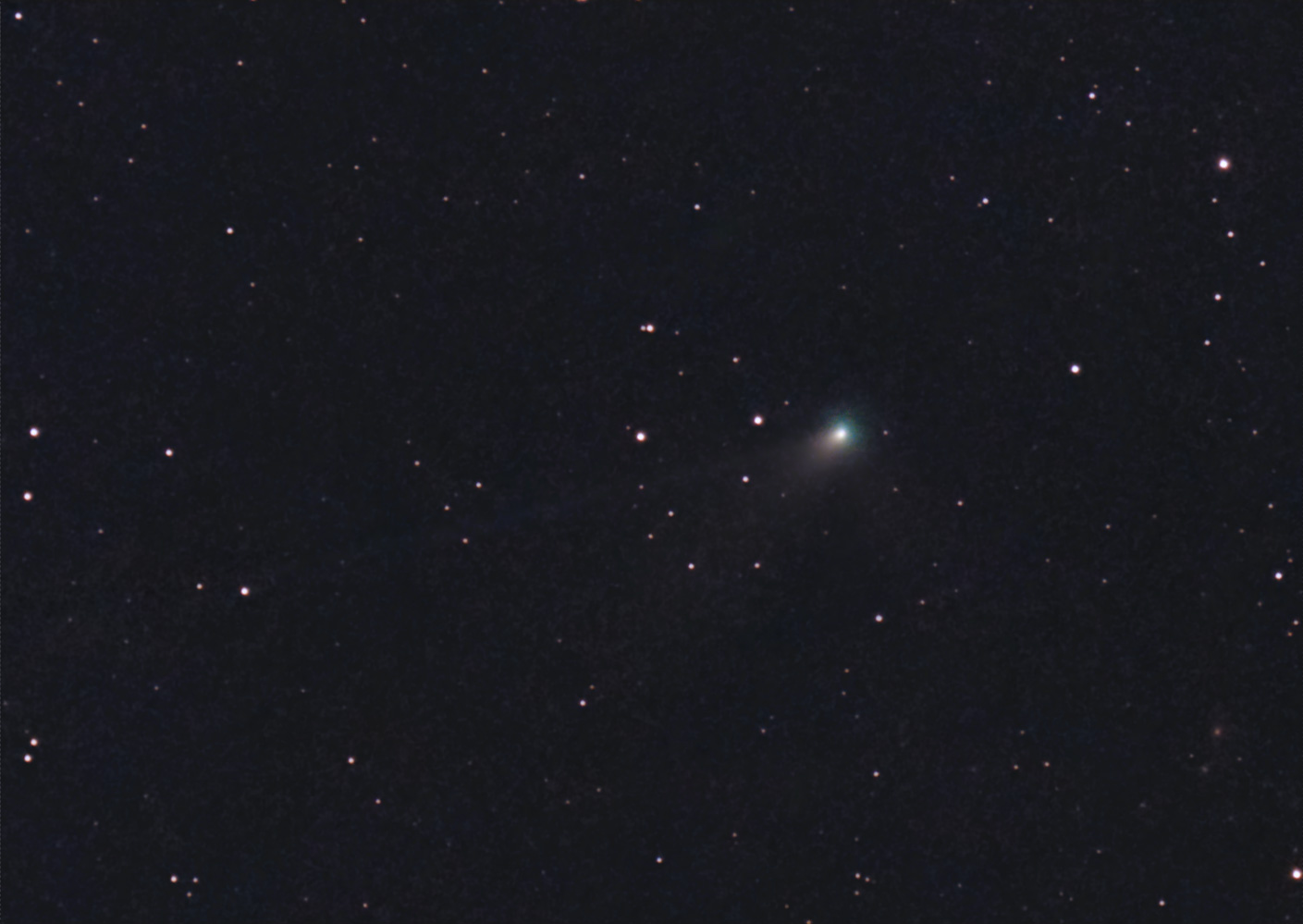
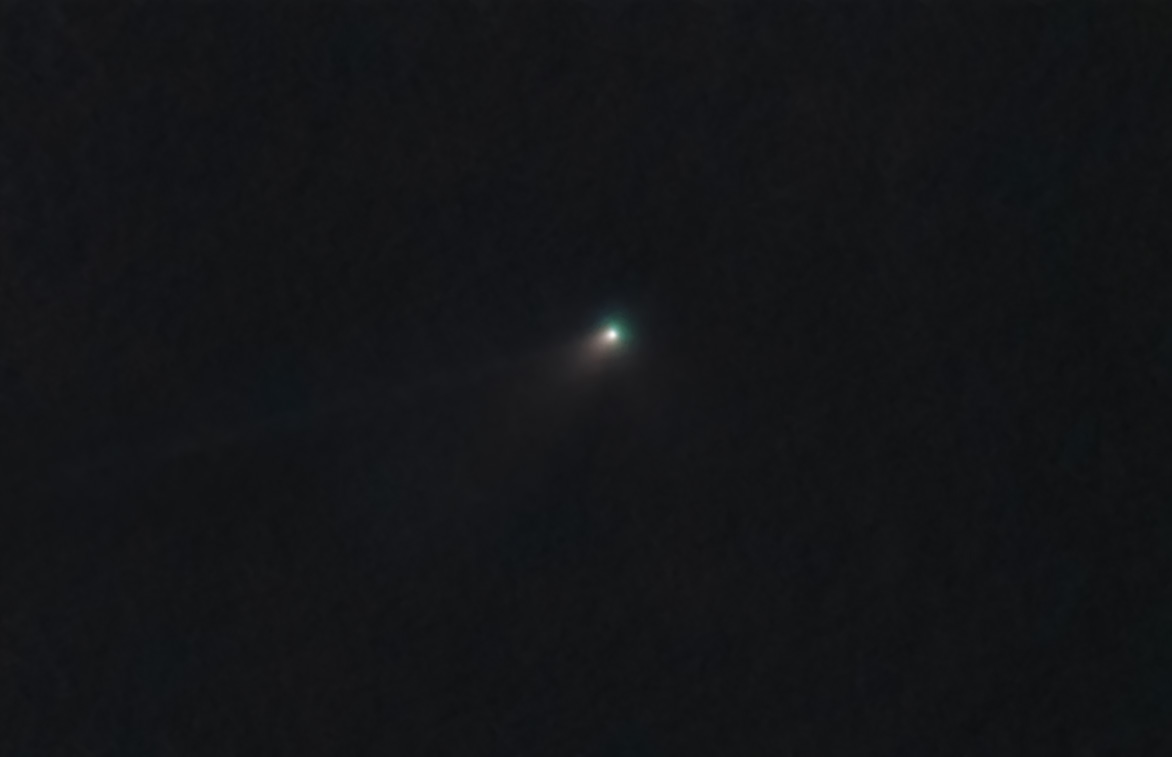
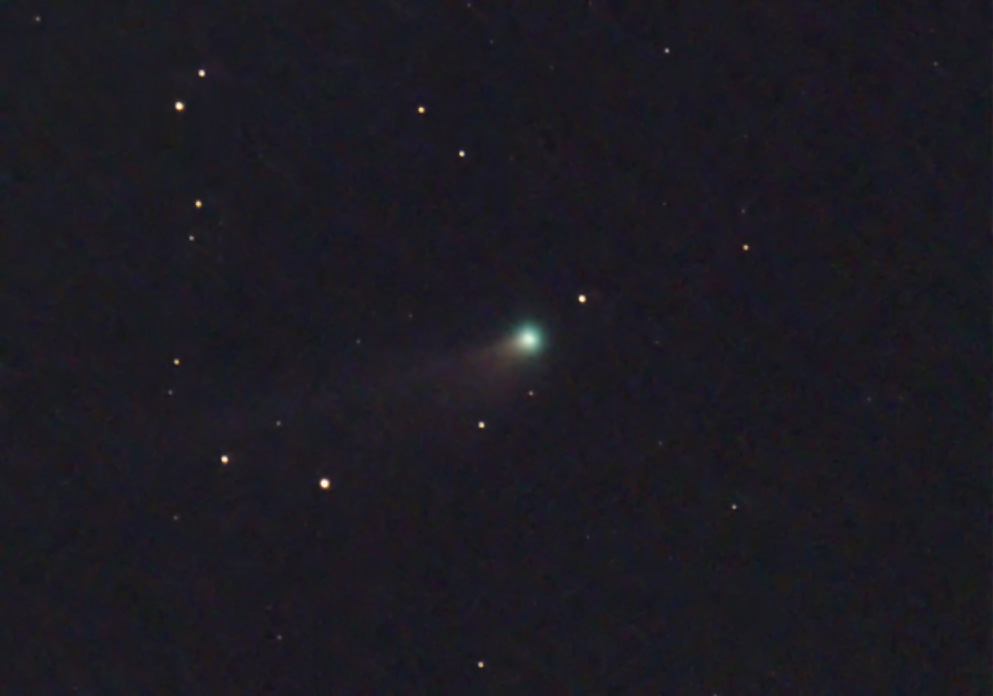
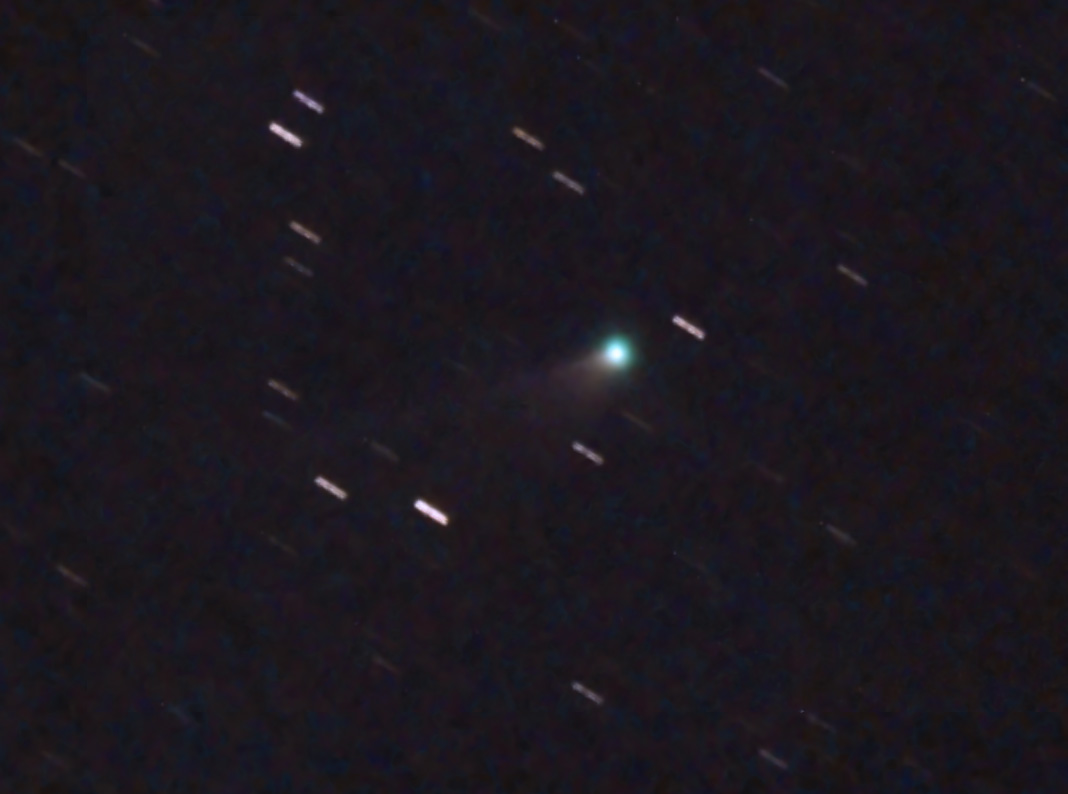
My first chance to get out of the city and into the country (Bortle 6/7 skies) with the new smart telescope was Feb 15th, 2026. My first target was Comet C/2024 E3 (Wierzchos). I managed to get 50 frames of 20 sec each, even though the comet was very low to the horizon in the southwest. I generated a star-freeze and star-streaks set of images with that data. Those are below:
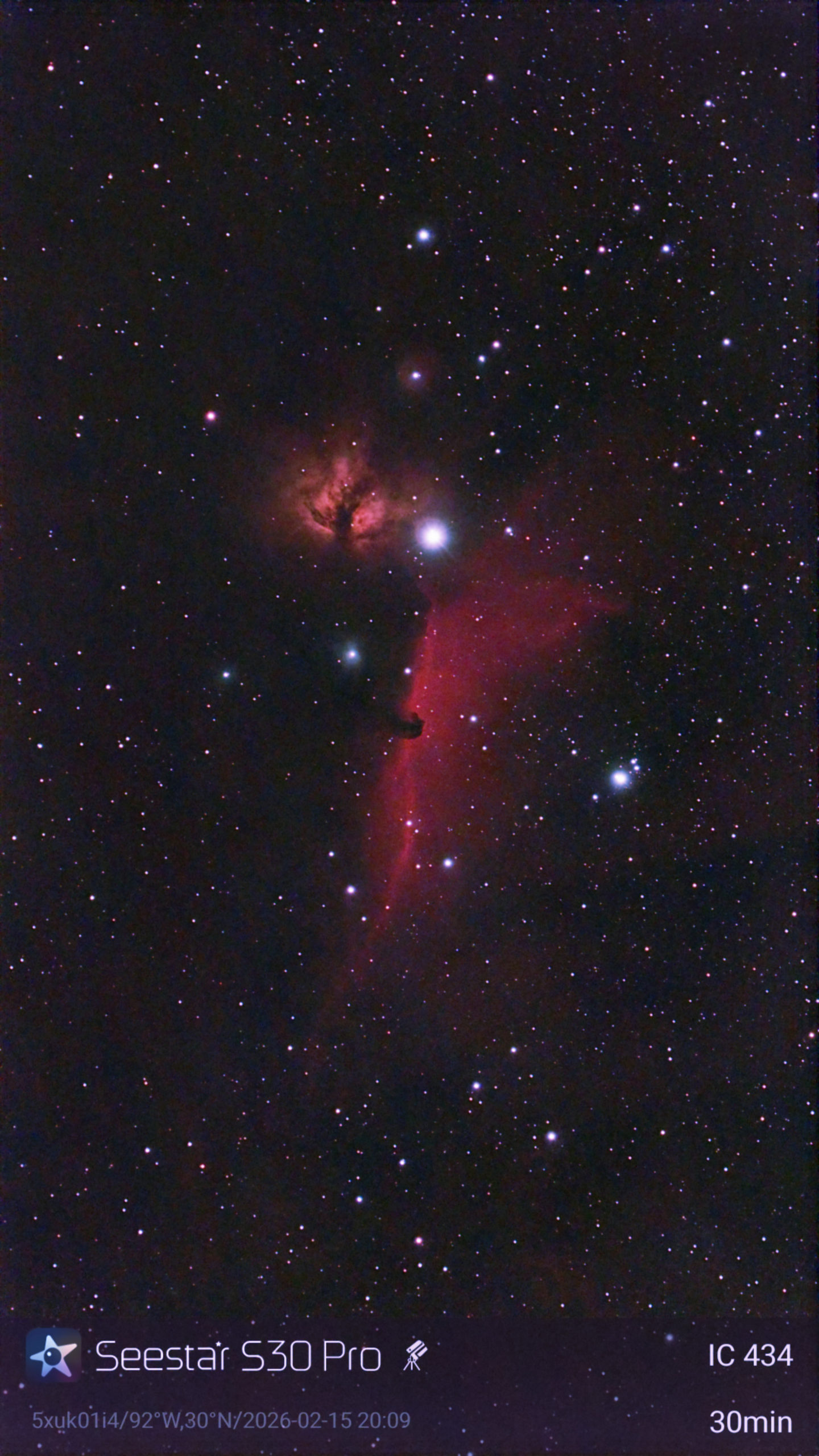
Next, I switched out of comet imaging mode and into Deep Sky mode. I picked the Horse Head Nebula as my next target and let it run for 30 minutes. It did fairly well, as you can see:
For the next step in my testing of this new scope, I switched to the wide-angle lens and took some images of a large swath of sky. It was my first time using this camera. I left the scope pointing where it was (the Horse Head) and did another 30 minute run:
Not too bad of a night for Bortle 5/7 skies and it being a short imaging session before a work day.
The wait is over, at least for me, anyway. It came in on Feb 12, 2026!
😍
Impressive as the S50 is, the new Seestar S30 Pro may work even better for me, specifically when it comes to the bigger comets, like we had last year and year before last. Now, all I have to do is wait for one to show up. lol
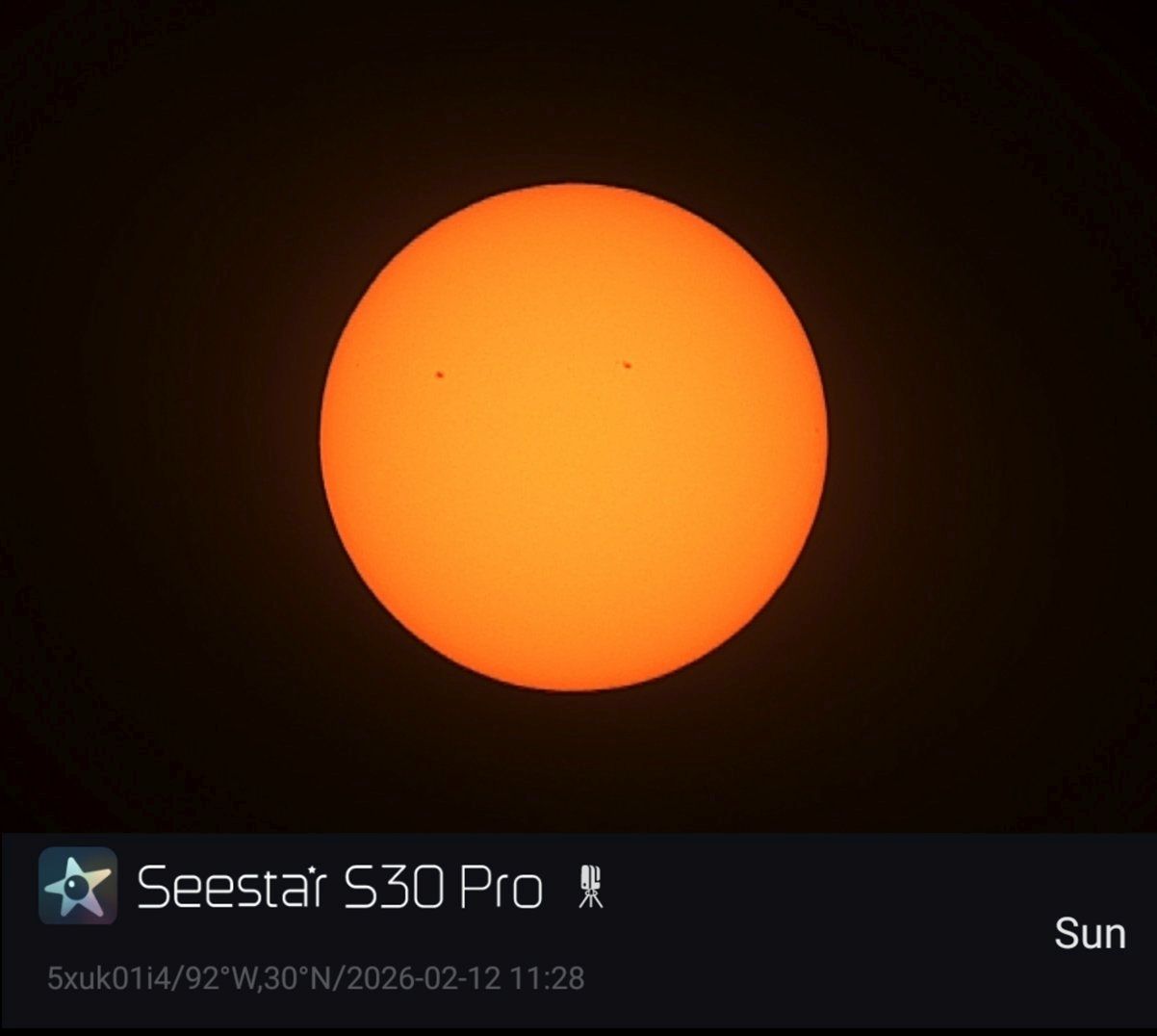
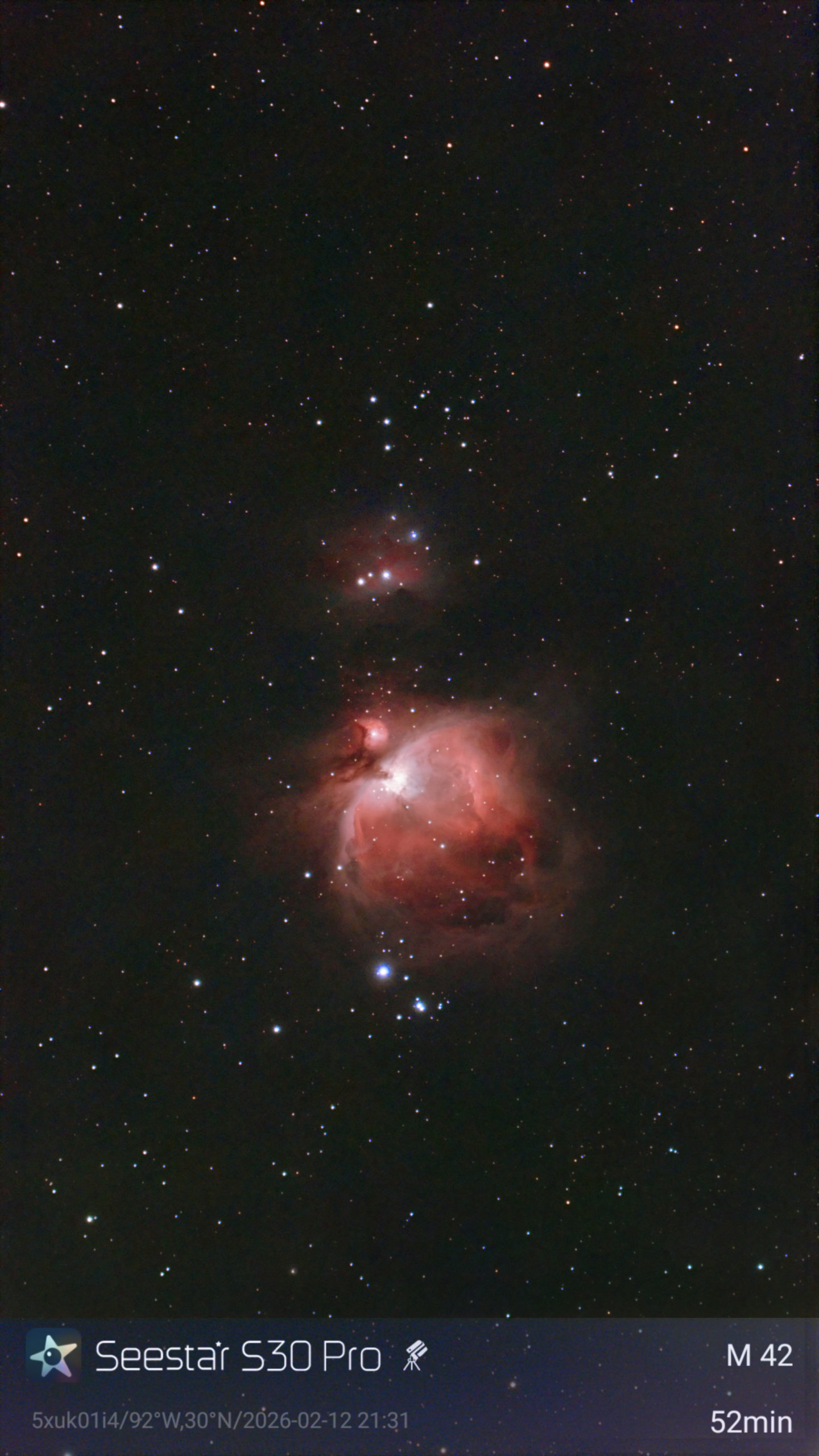
These were the first light images for it. I took the Sun as soon as I unpacked it and powered it on. Later after it got dark, I tried it out on my favorite test subject for new gear, M42.
Unfortunately, I had poor conditions with below average transparency, a few clouds at times and horrible LP. But, at least I could see stars on the first night after it arrived earlier in the day. The astronomers’ bad weather curse after getting new gear avoided for once. lol
I hope to get to a darker location and put it through more tests and maybe even catch Comet C/2024 E1 (Wierzchos) before it starts dimming down too much.
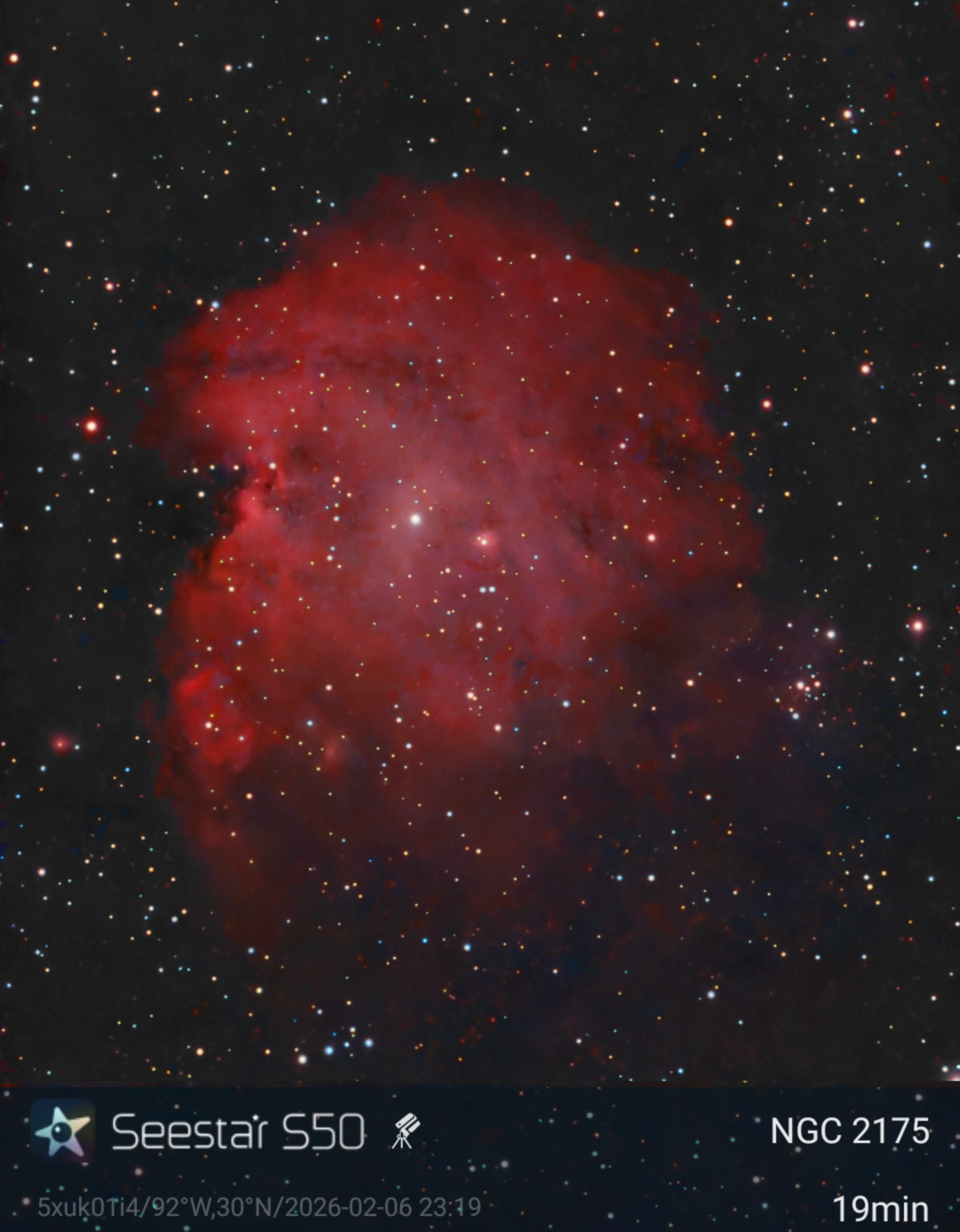
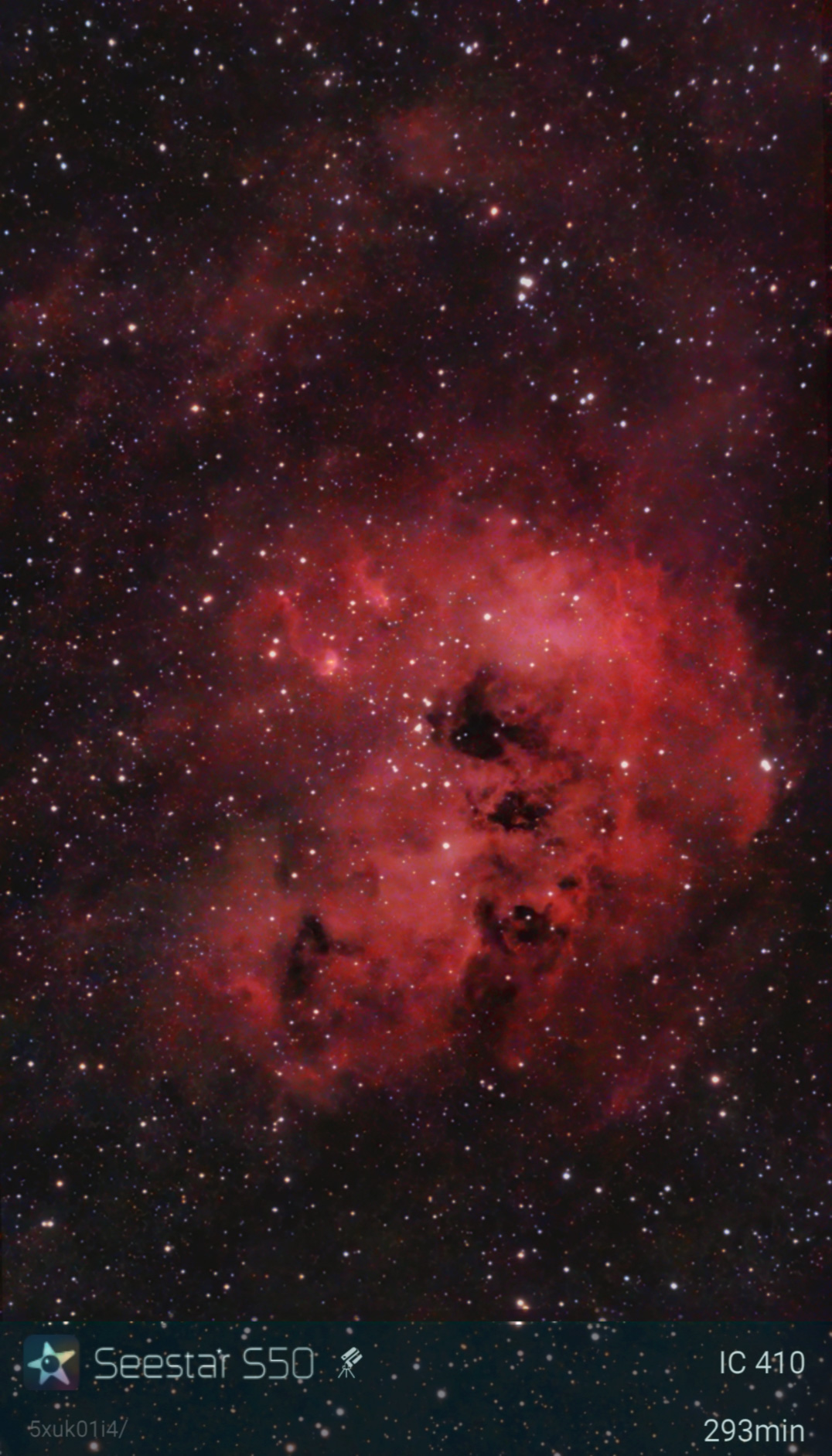
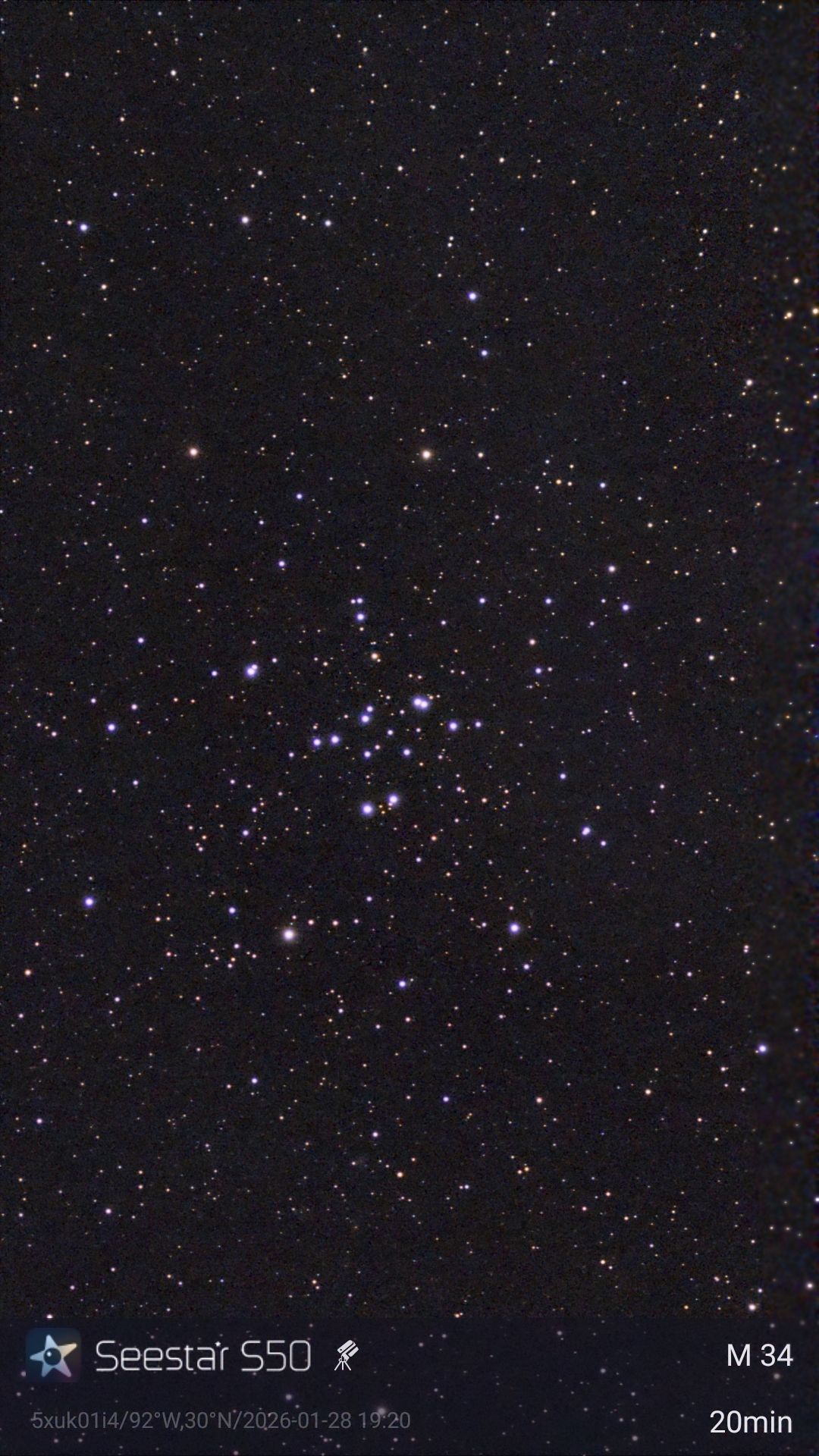
At the beginning of February, we had some clear weather, which doesn’t happen too often for this month. I managed to take advantage of it and produced these 3 images. One was a short run (The Monkey Head,) but the other two were more involved.
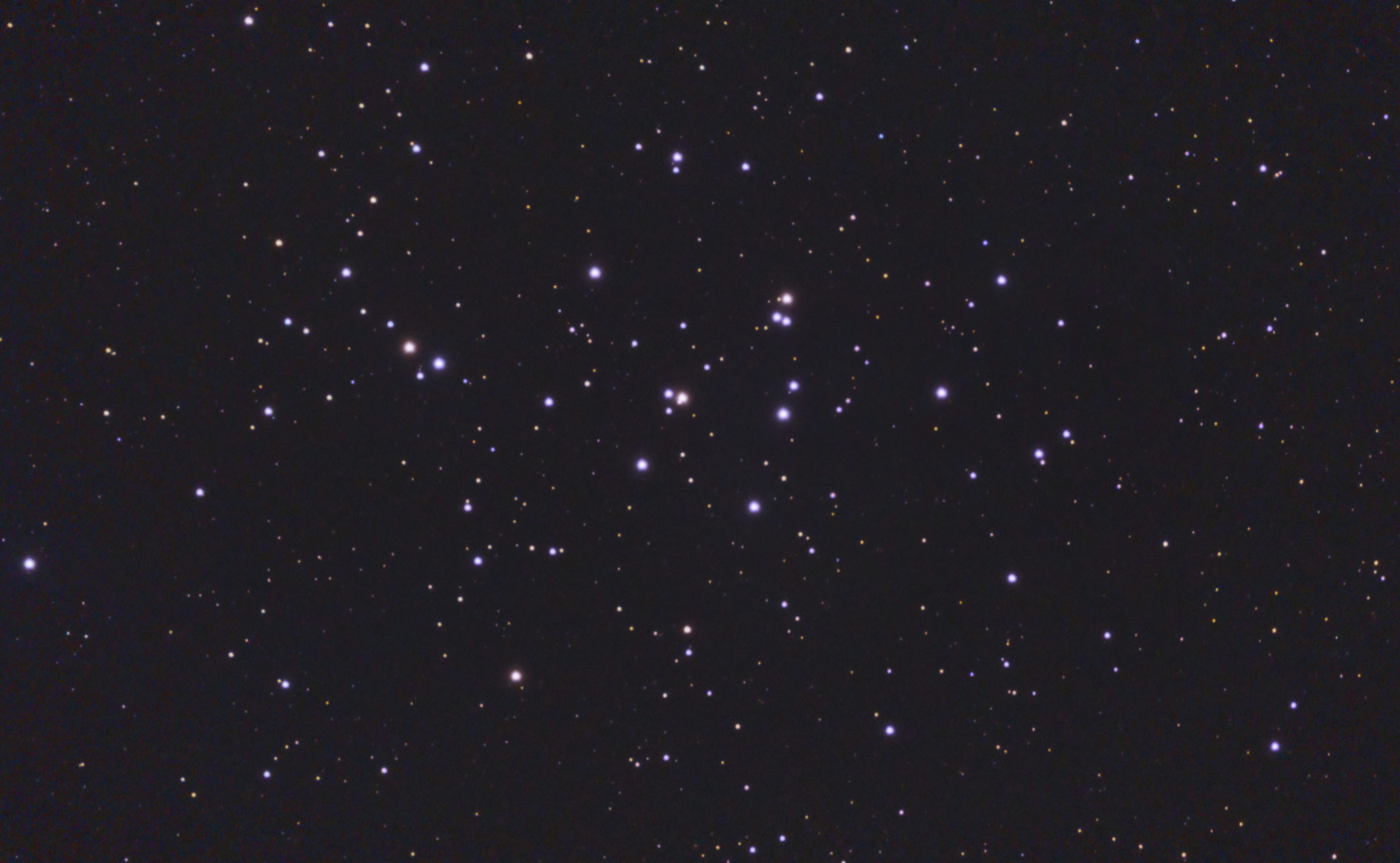
M44 Open Cluster was a mosaic and took a little over 95 minutes to capture (286 x 20 sec.) The Tadpoles (IC 410) took two nights of imaging and I let the Seestar S50 stack the resulting two sets of sub-images. It was about 4.88 hrs of exposure.
M44 Open Cluster Mosaic, 286 x 20 sec, Seestar S50.
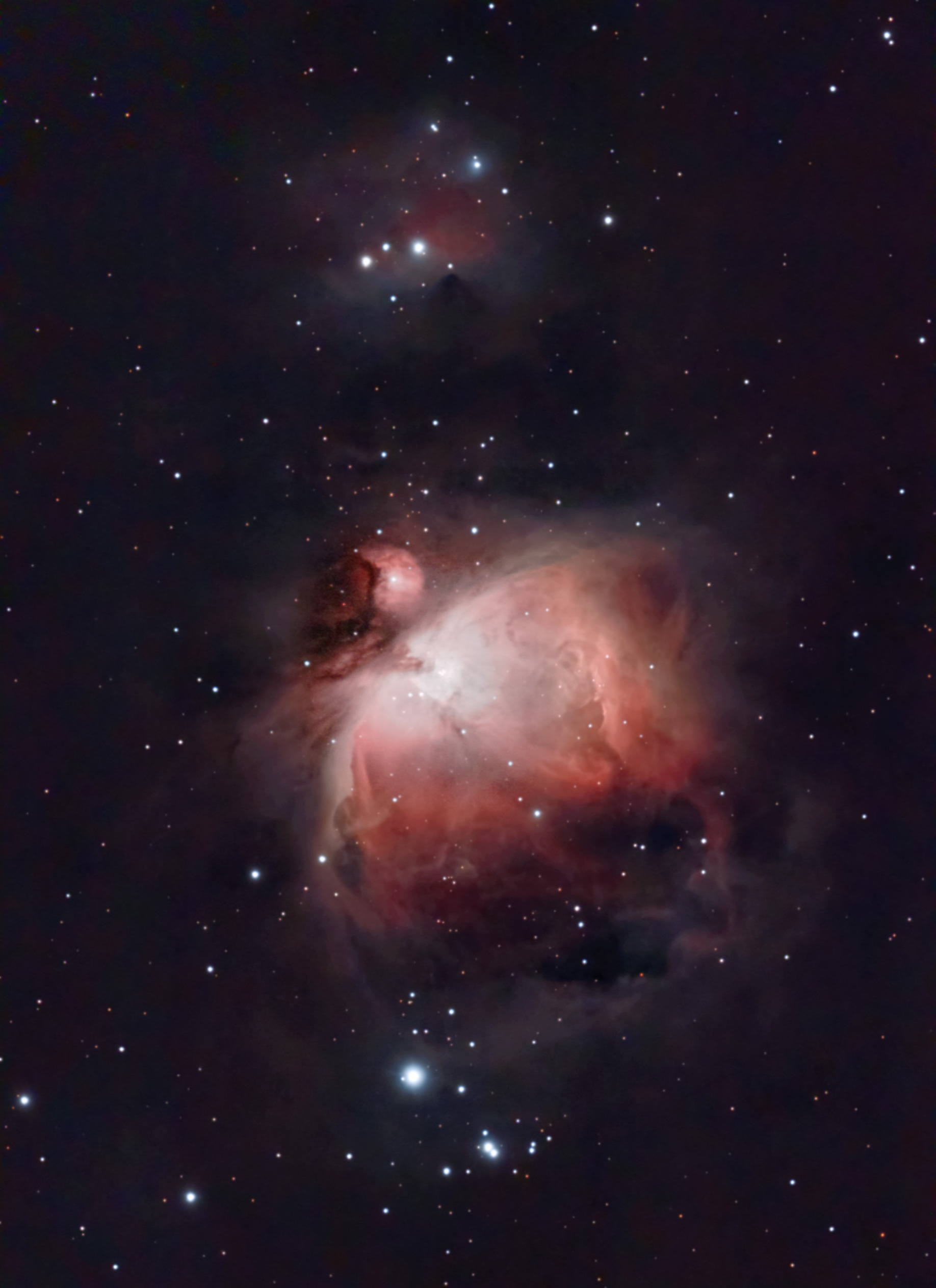
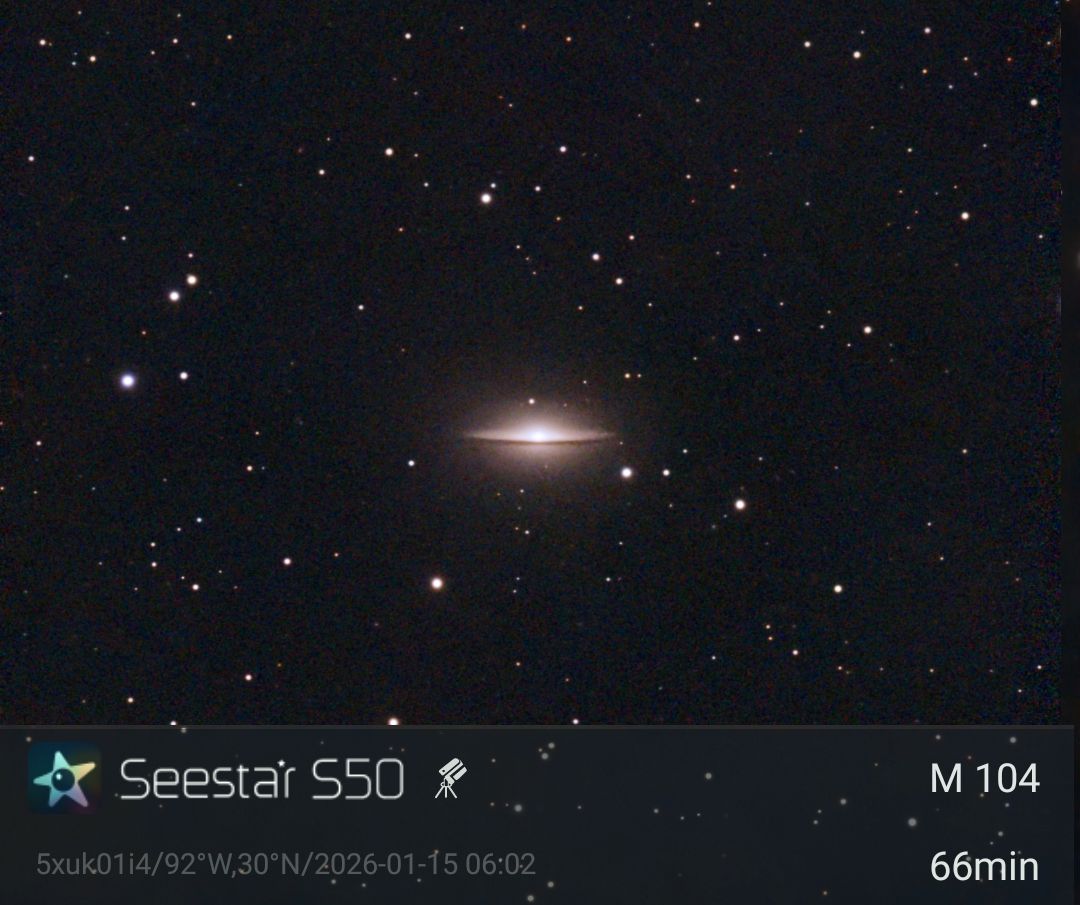
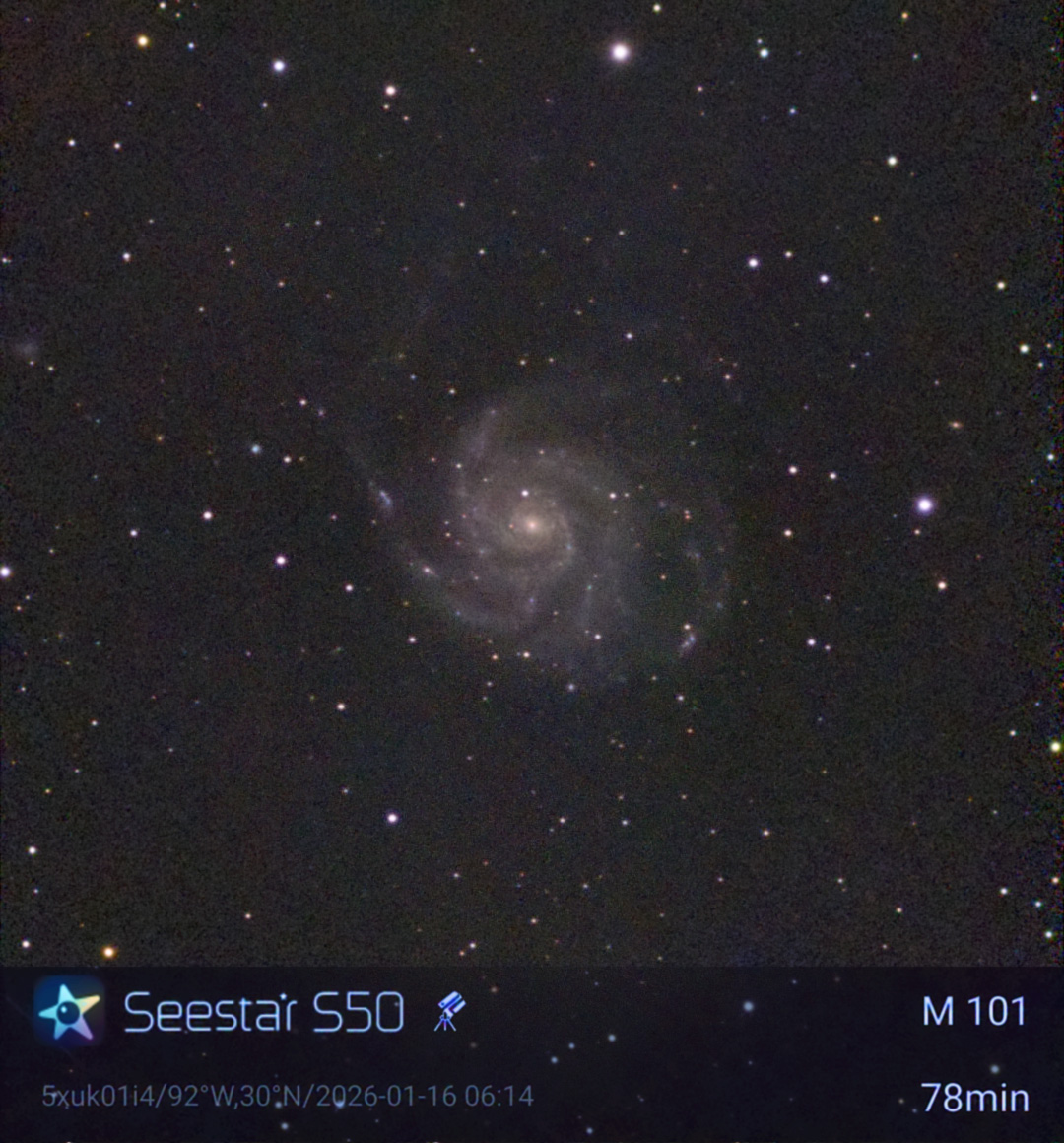
A moonless mid-month period with clear skies allowed me to get this batch of images over the course of a few nights. All were taken with the Seestar S50 in equatorial mode from the city (a Bortle 8/9 zone.)
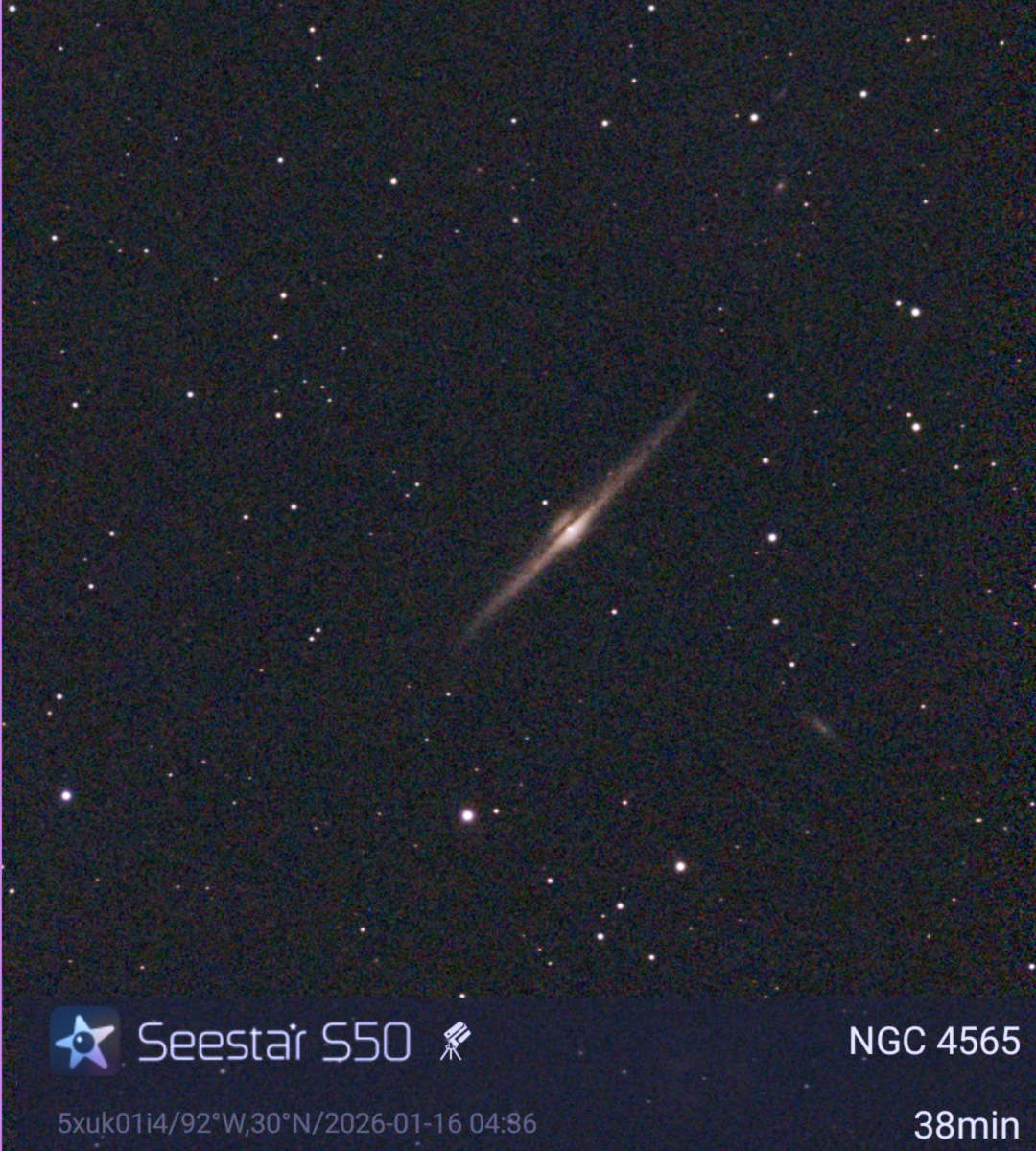
Seestar S50 Mosaic of the Orion Nebula ComplexM104 – The Sombrero GalaxyM101 Spiral GalaxyNGC 4565 Edge-On Galaxy
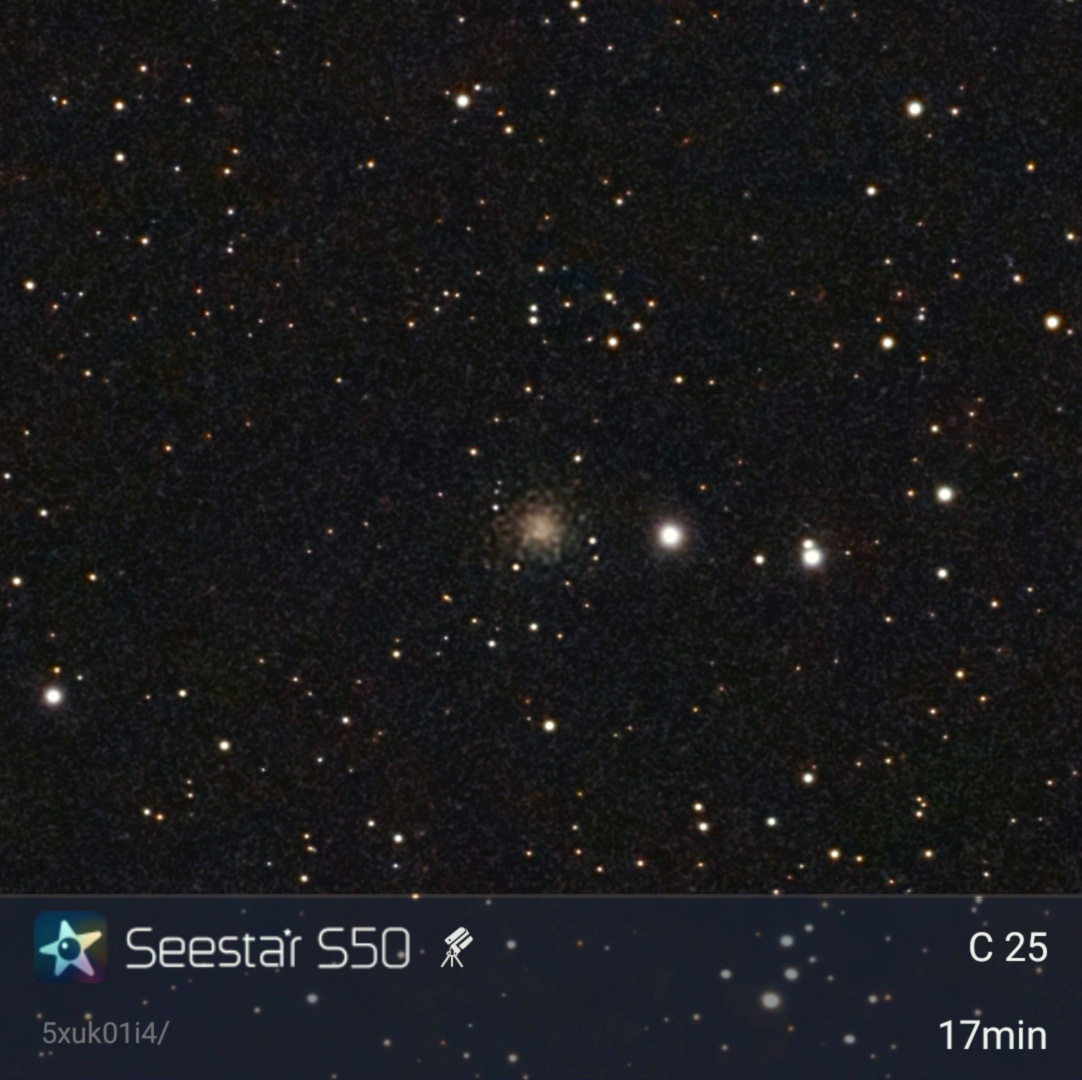
“Lynx is home to the fascinating globular cluster NGC 2419. Although visually faint and small what makes NGC 2419 special is its distance; at 275,000 light-years it’s one of the furthest known Milky Way globulars. In fact, twentieth century American astronomer Harlow Shapley nicknamed it ‘The Intergalactic Tramp’ believing it to have possibly broken away from the Milky Way and headed off into deep inter galactic space. However, recent observations indicate Shapley hypothesis was incorrect and NGC 2419 is still gravitationally bound to the Milky Way just moving in a highly eccentric orbit.” – FreeStarCharts.com
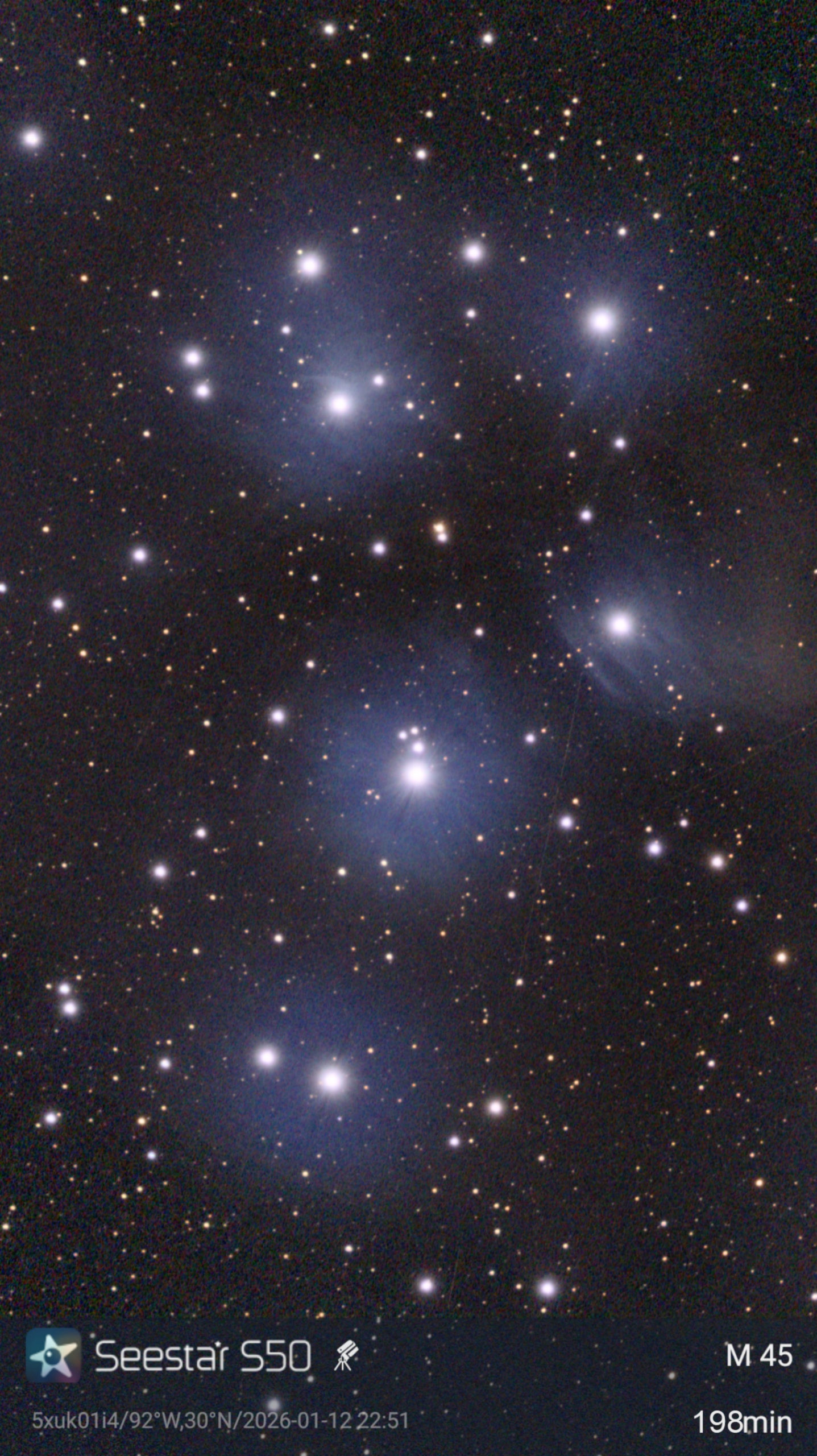
The evening of Jan 12, 2026 was was finally clear enough to do some astrophotography with the Seestar S50. First night this year. The Pleiades was high enough out of the strong LP in my area to get something decent, so I went with that. I combined what I got with 63 minutes from last November for a total of 198 minutes and below is the result:
M45 – The Pleiades
Images of Comets, Nebulae, Galaxies and Star Clusters