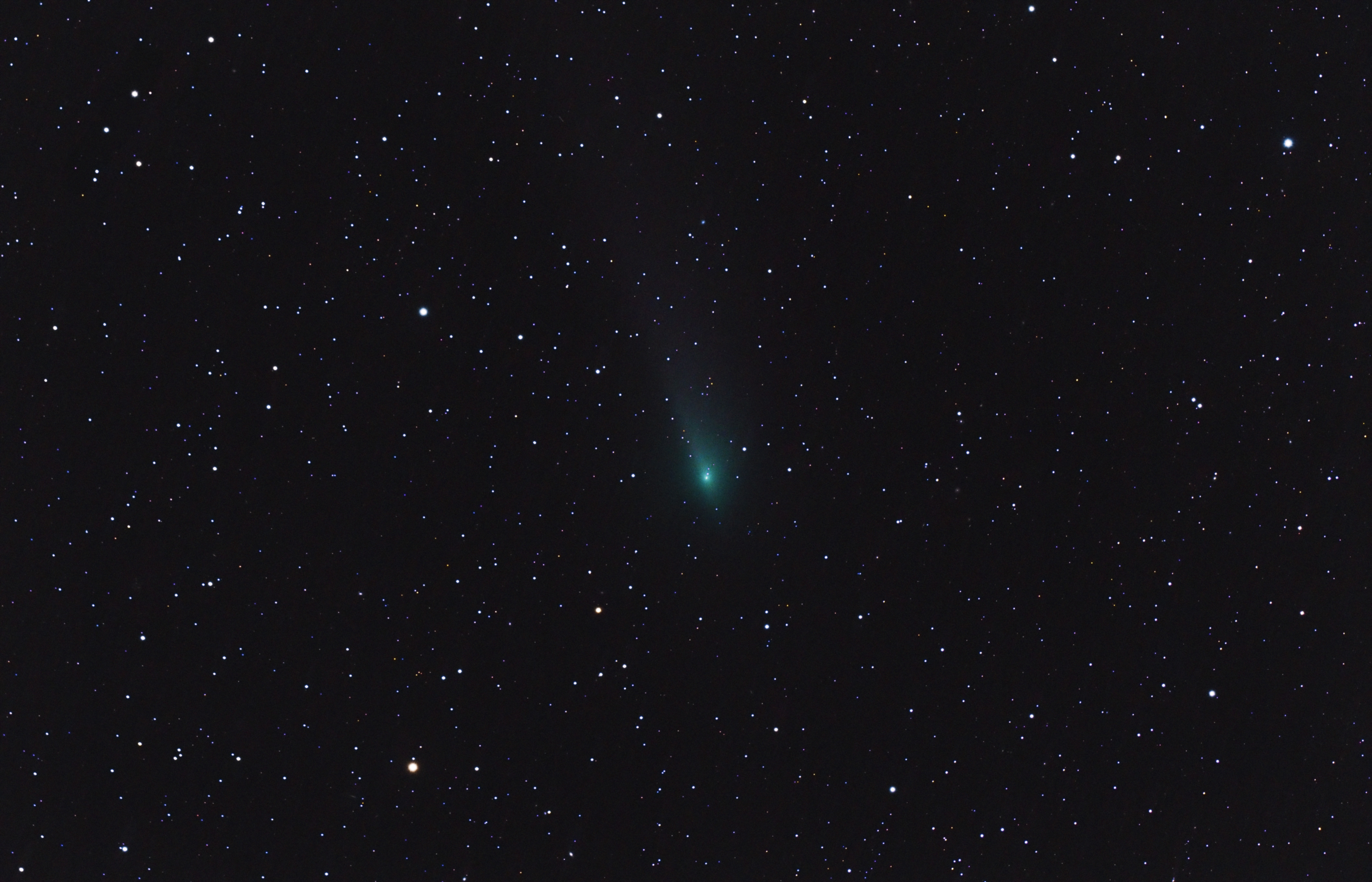
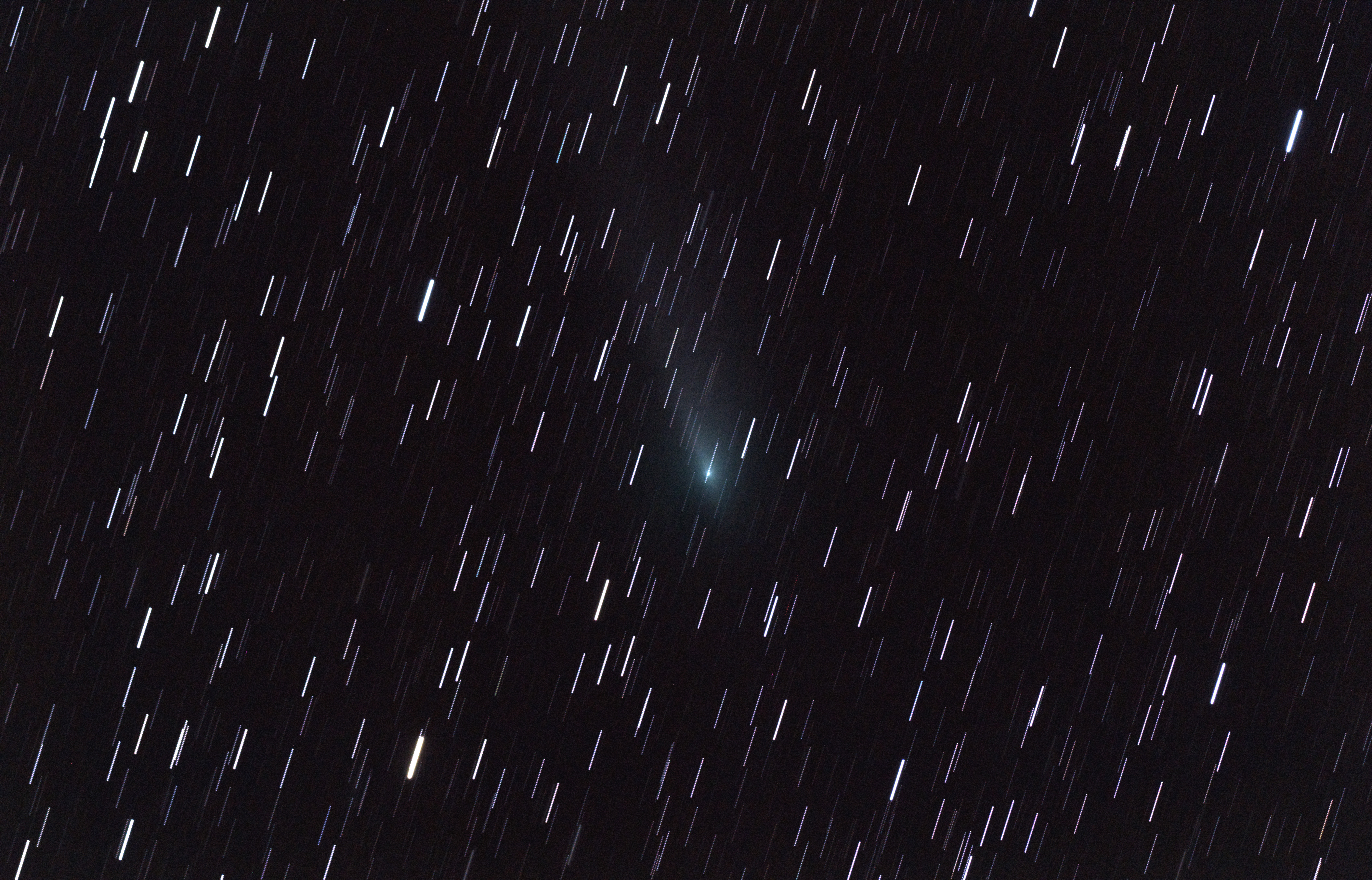
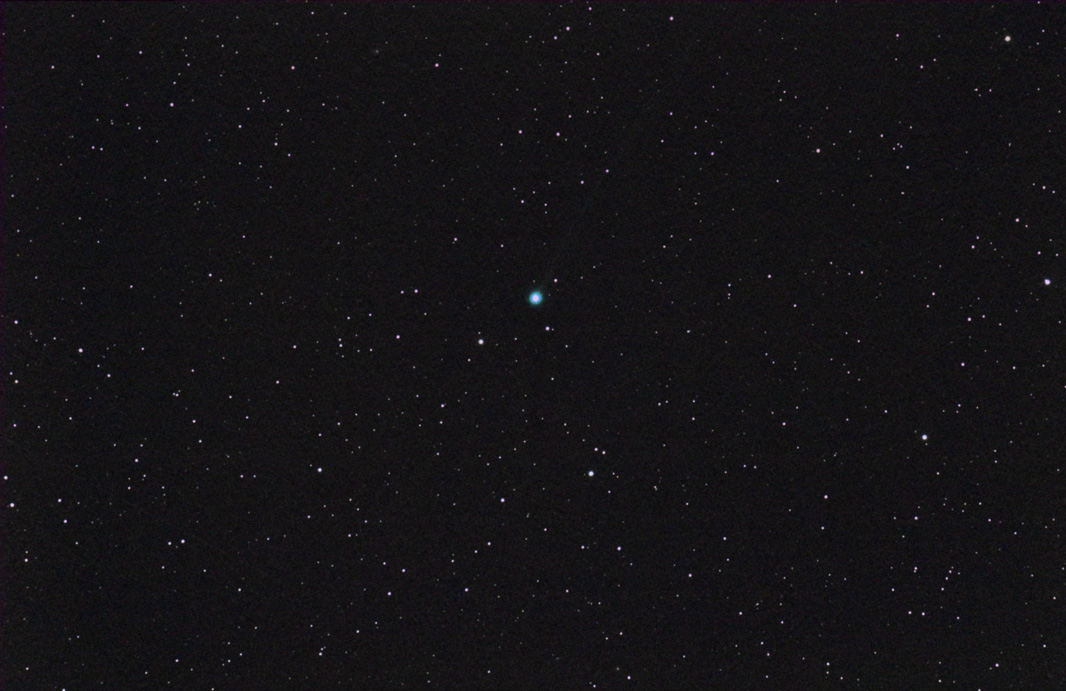
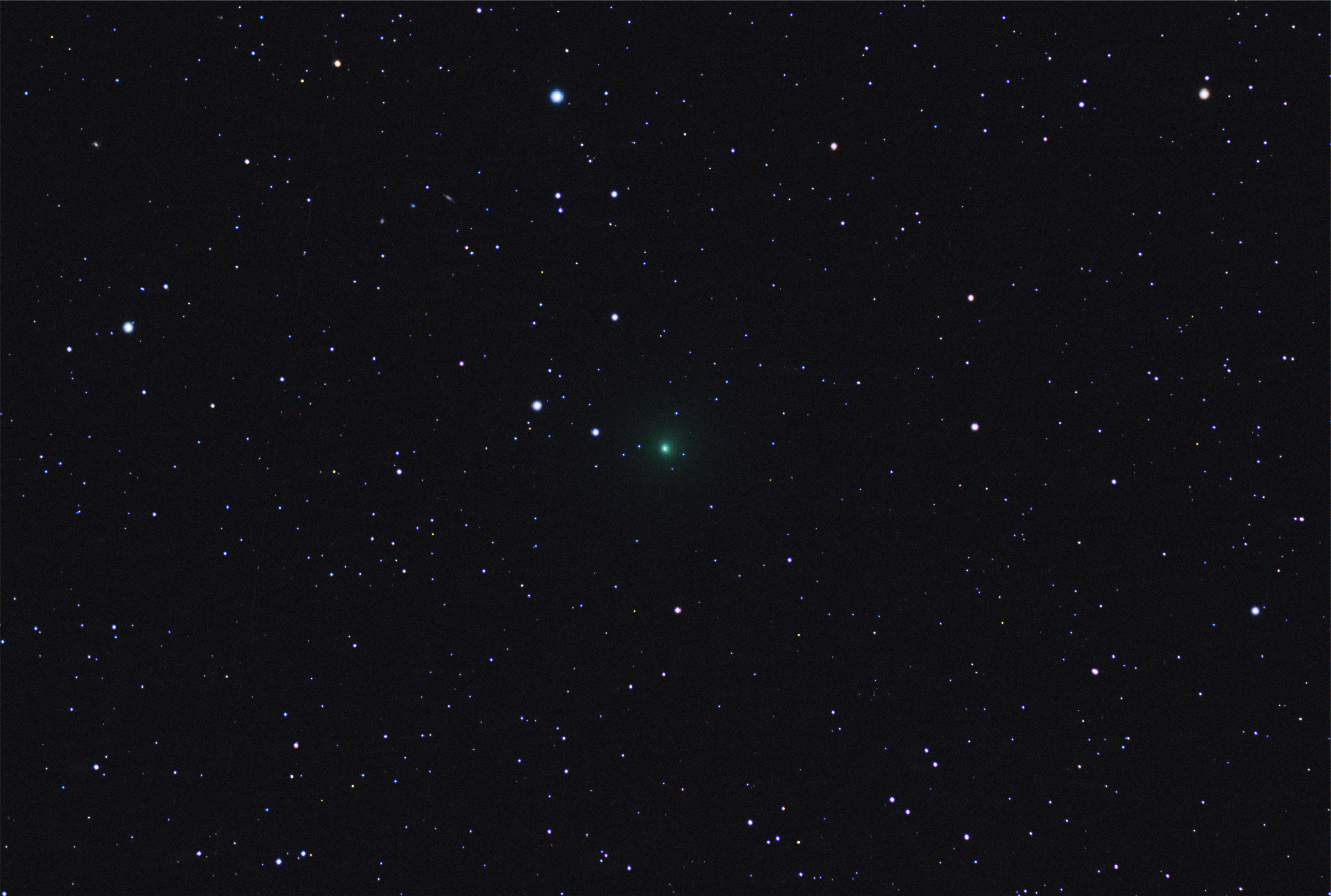
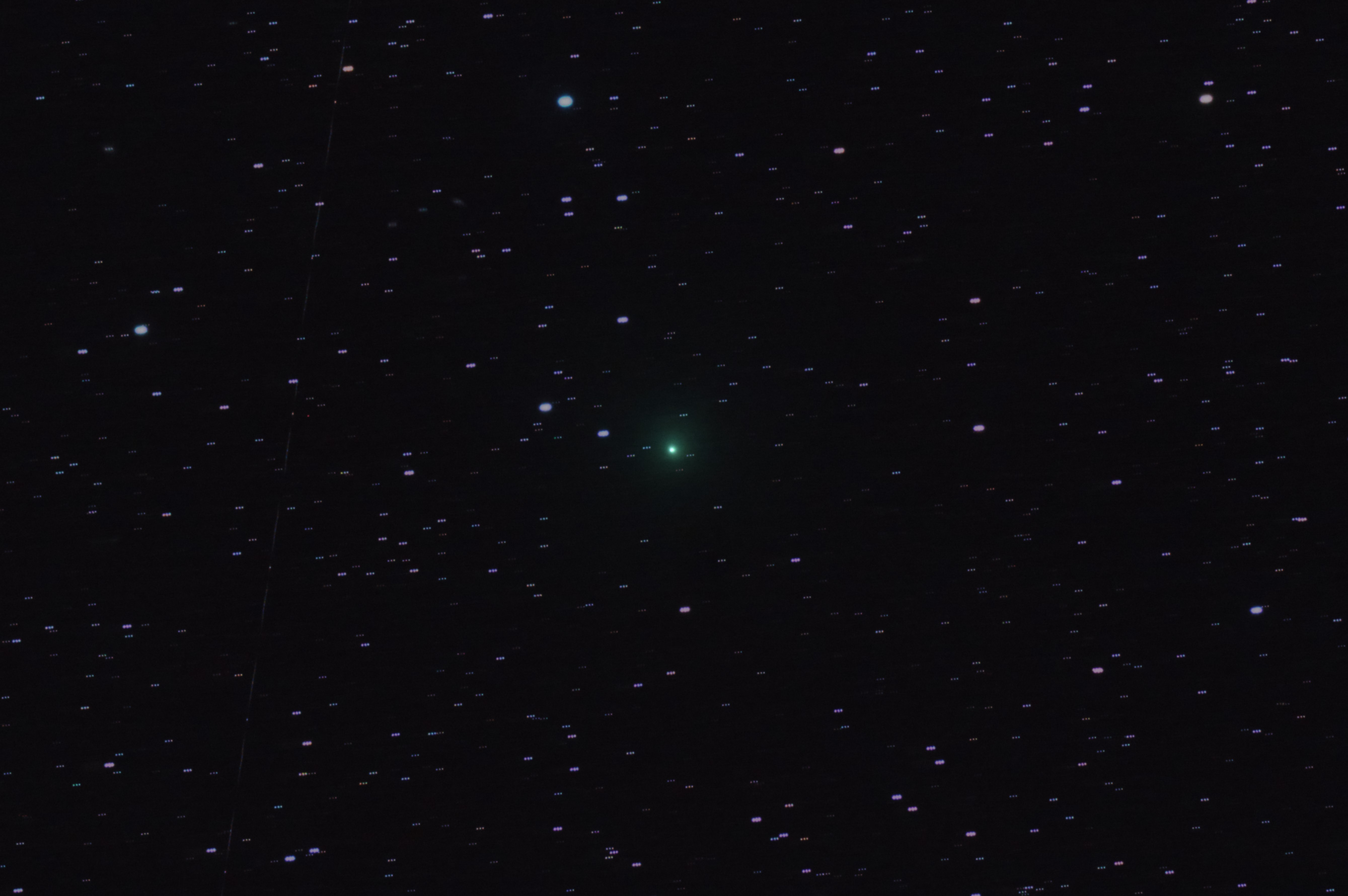
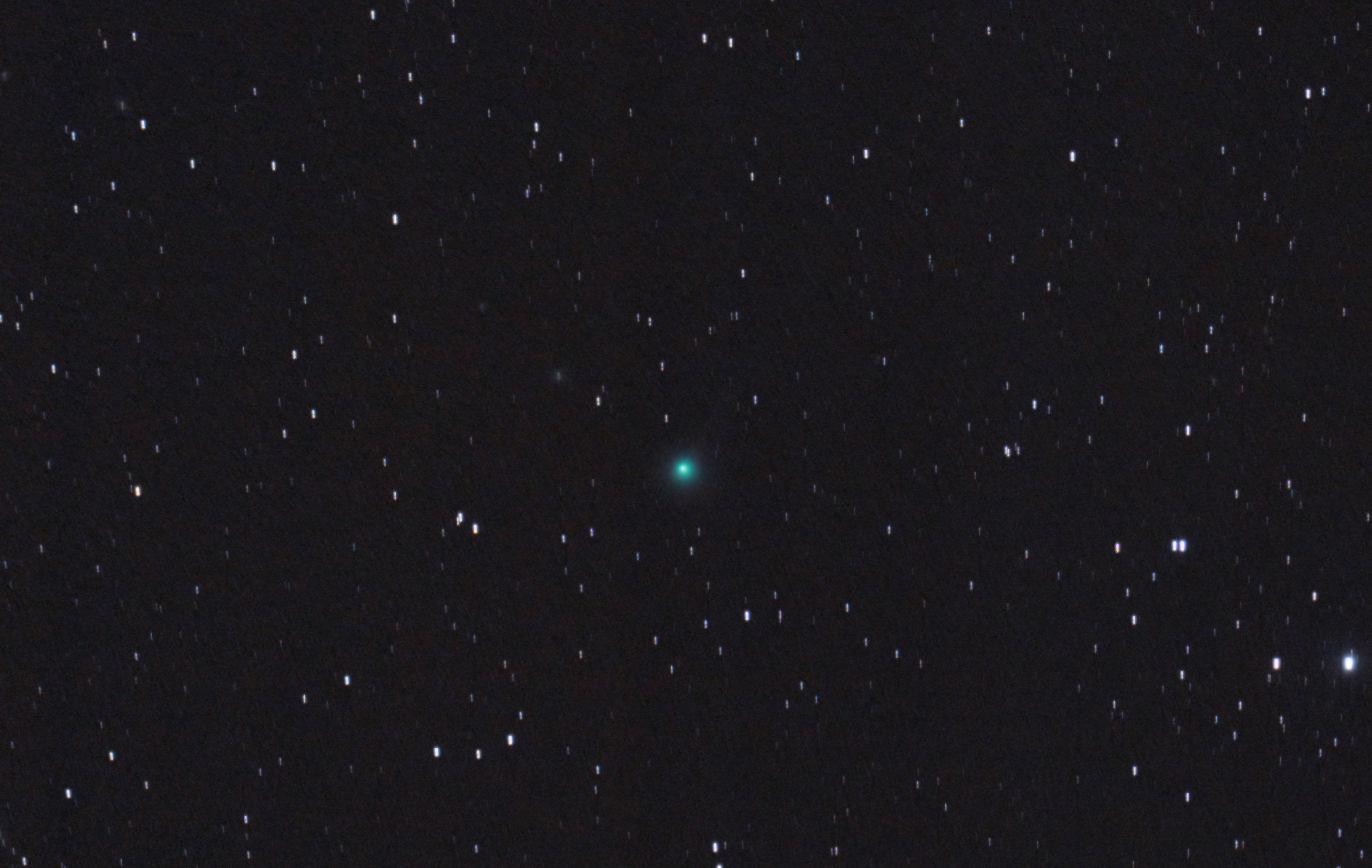
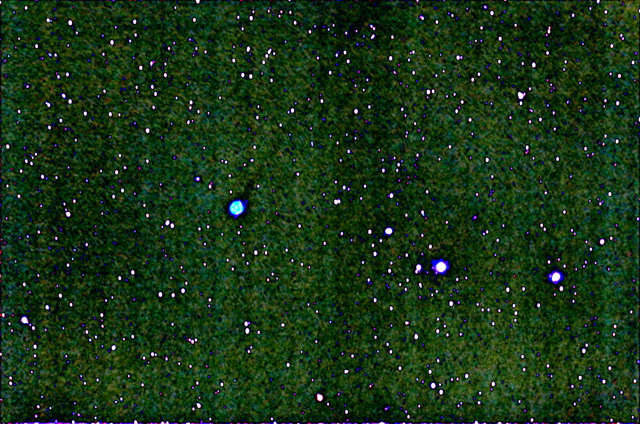
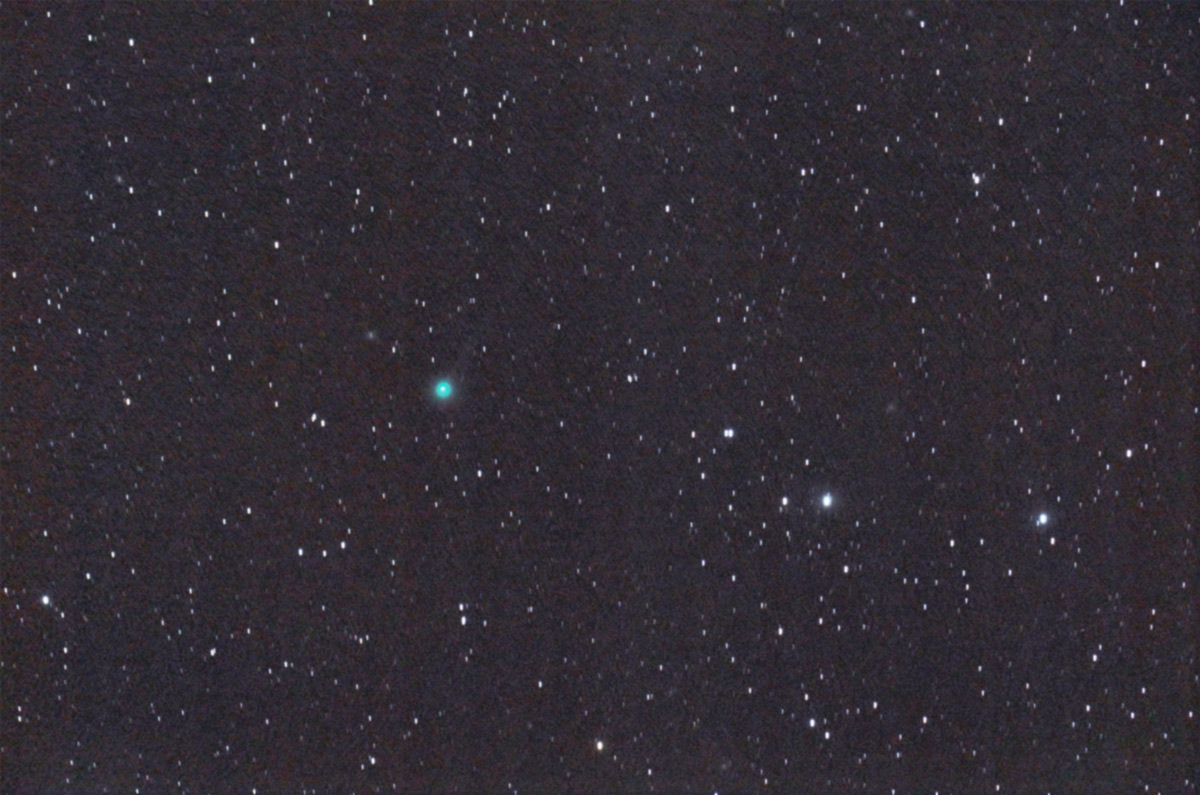
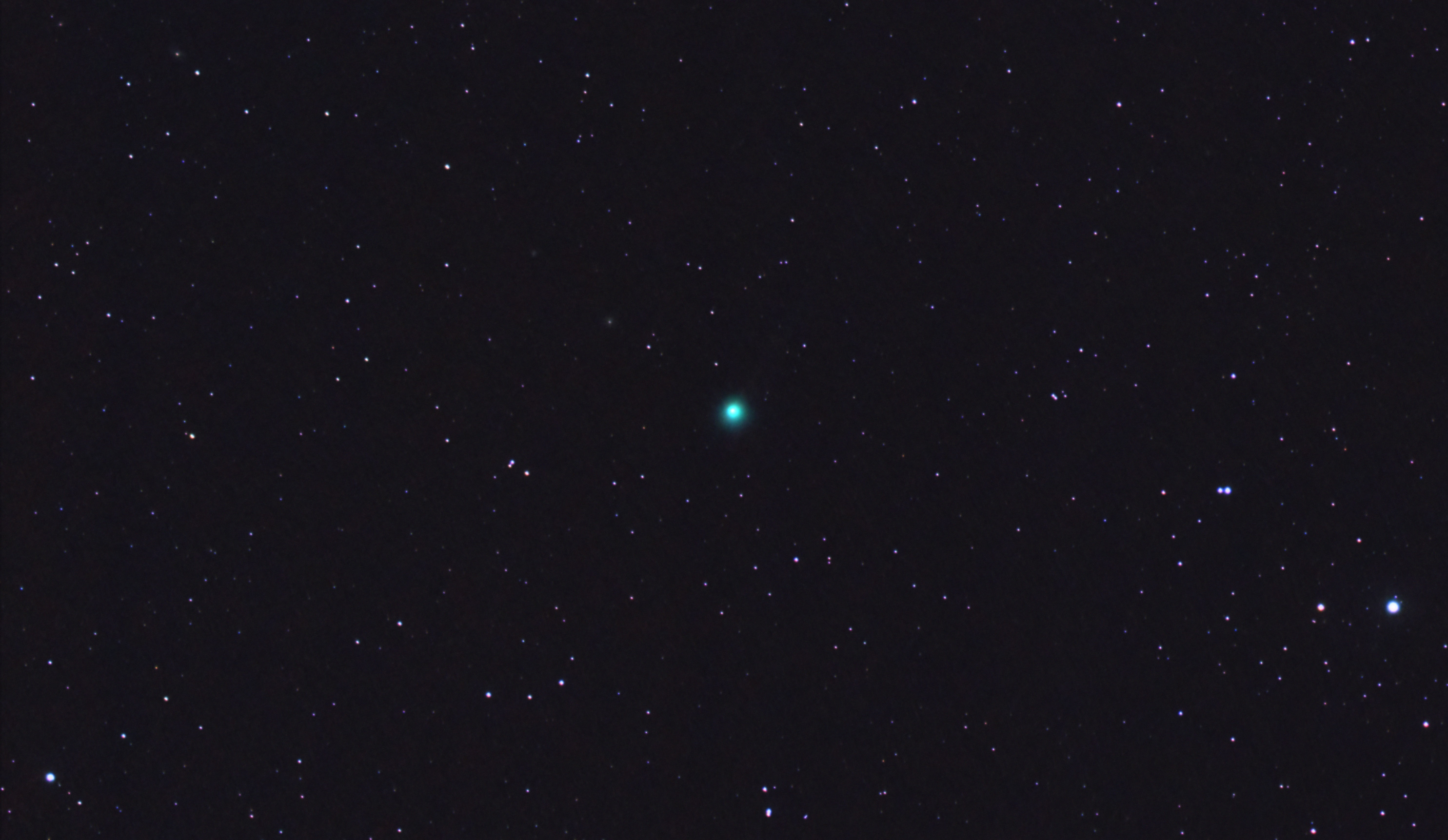
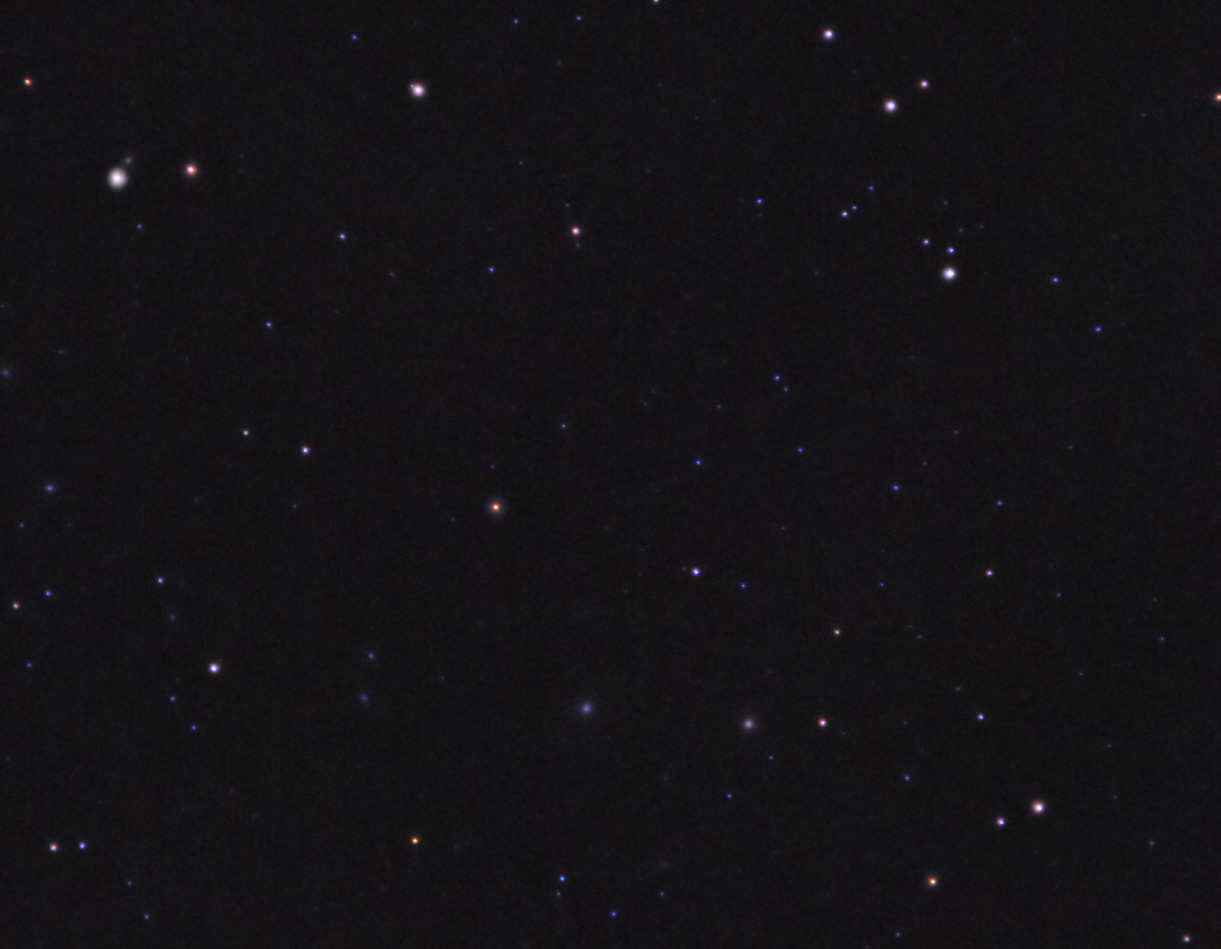
Comet 45P, Feb 26, 2017, 07:11 UT. 24×180 sec @ ISO 3200, TV-85 at F/5.6, Canon T3, Atlas EQ-G w/EQMOD.
Because of weather, I missed out on imaging Comet 45P when it was near a famous galaxy pair recently. I finally got to image it from a relatively dark sky location on Feb 26, 2017. There were no “famous” galaxies in the vicinity this night, but there were sure lots of faint fuzzies in the image to make it interesting.
The star freeze version above came out OK. Not too bad. I also did a star-streaks version and I’ve included that below.
Comet 45P on Feb 26, 2017, 07:11 UT. Star-streaks version.
Keen observers will note that there is an asteroid in the tail of Comet 45P. It can be seen in both versions. I’m pretty sure that is 5081 Sanguin (1976 WC1).
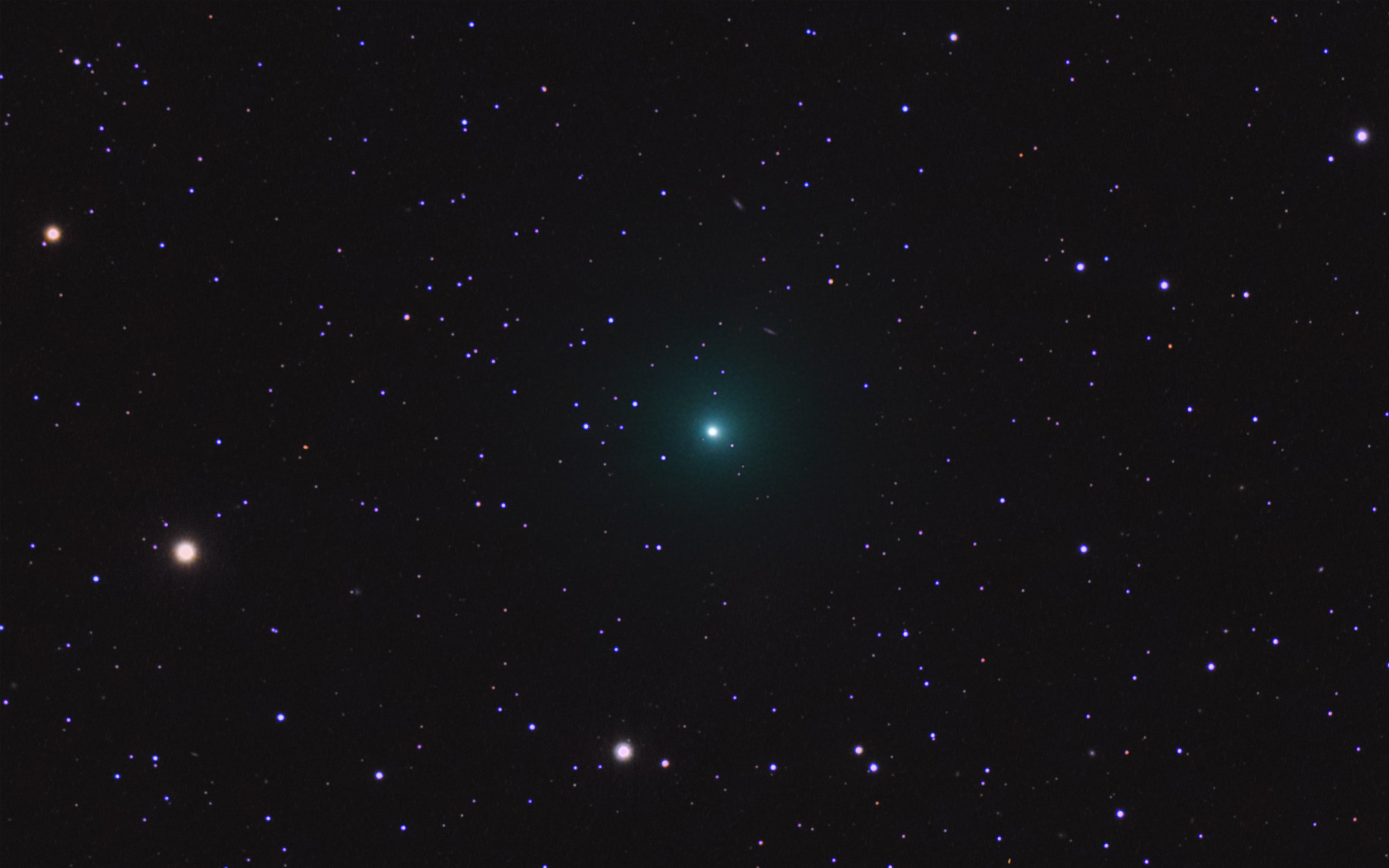
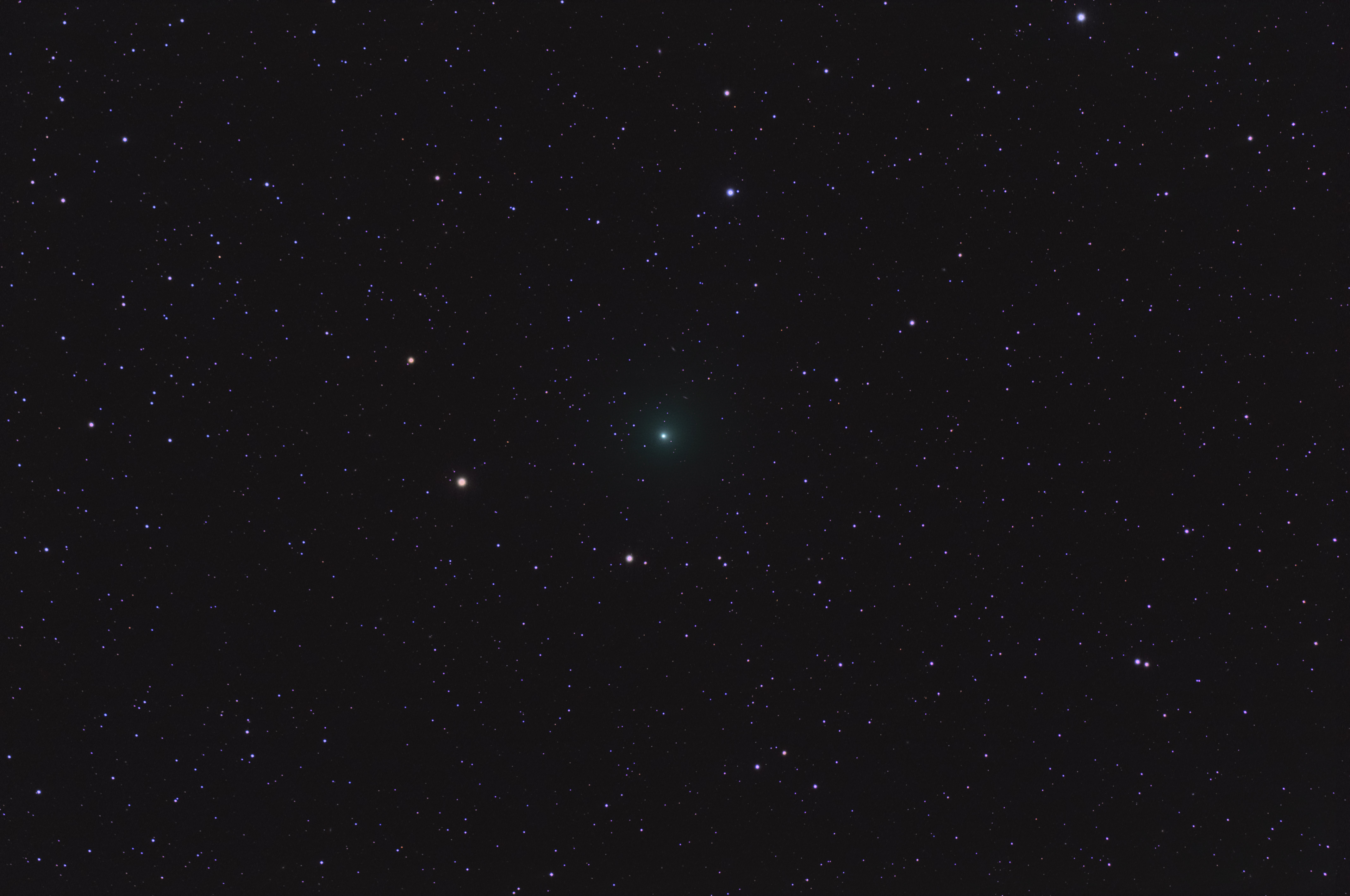
Comet 41P, Feb 26, 2017, 05:00 UT. 34×180 sec @ ISO 3200, TV-85 at F/5.6, Canon T3, Atlas EQ-G w/EQMOD. Star-Streaks close crop version.Comet 41P, Feb 26, 2017, 05:00 UT. 34×180 sec @ ISO 3200, TV-85 at F/5.6, Canon T3, Atlas EQ-G w/EQMOD. StarFreeze version.Comet 41P, Feb 26, 2017, 05:00 UT. 34×180 sec @ ISO 3200, TV-85 at F/5.6, Canon T3, Atlas EQ-G w/EQMOD. Star-Streaks version.
At about 11:00 PM CST on Saturday night, Feb 25th, I decided that I’d hit Comet 41P again. This time with a longer session, more exposure and a higher ISO. These images are the results of that endeavor.
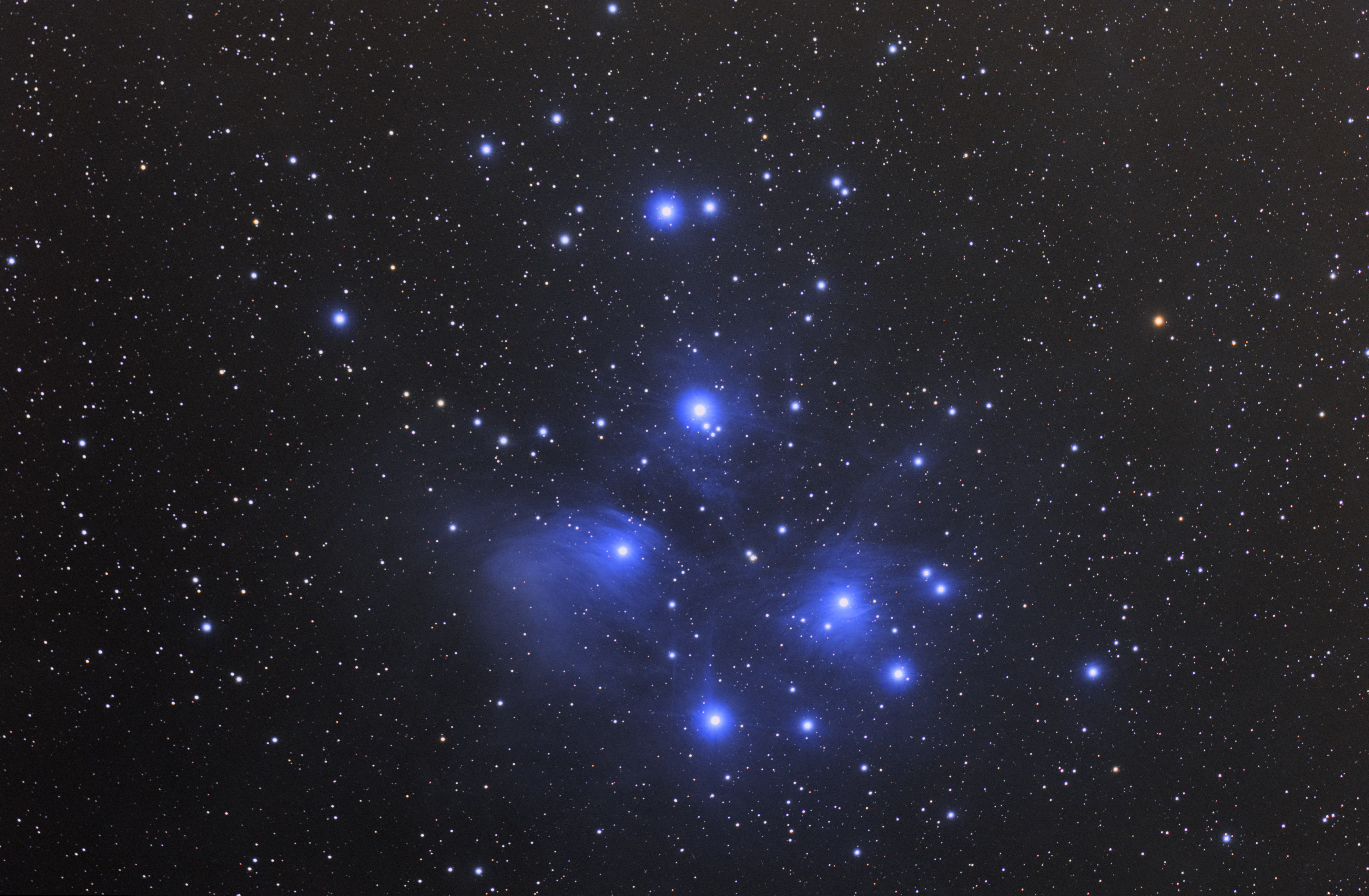
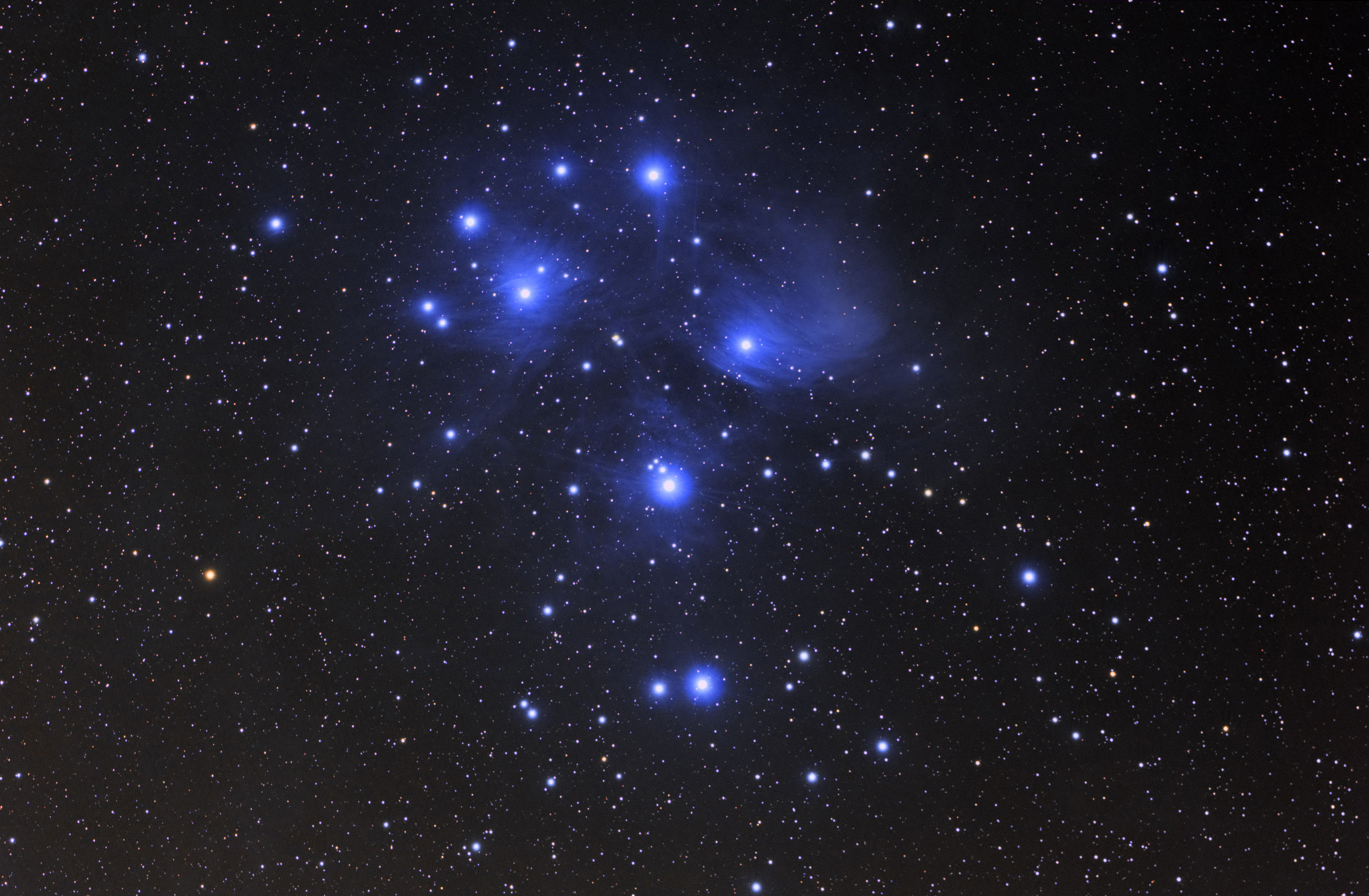
The Pleiades, Feb 25, 2017. 31×300 sec @ ISO 1600, TV-85 at F/5.6, Canon T3, Atlas EQ-G w/EQMOD.
It was a beautiful evening and I just had to shoot the Pleiades (M45) from my new dark sky site. They just looked too good from there.
I wanted see how much I could pick up with the unmodified Canon T3. It is definitely a camera that is sensitive to blues and cyan. It does comets and galaxies well enough. It is not as good as a modified camera on nebulae, unless its a reflection nebula like M45.
This is about 2.58 hours of integration – about the minimum needed to bring out that faint background nebulousity I’ve always tried to get. It is difficult to decern the true background if there are any gradients, unfortunately. There were a some here and I tried my best to minimize them. Towards the end of the set, M45 moved into the muck and a little LP from a small neighborhood to my northwest. Plus, the zodiacal light was contributing a gradient, too. It was interesting to see that, though. 🙂
Below is the normal orientation for M45 with some noise reduction thrown in. I didn’t do any to the first image. That was pretty much how it came out after stacking.
The Pleiades, Feb 25, 2017. 31×300 sec @ ISO 1600, TV-85 at F/5.6, Canon T3, Atlas EQ-G w/EQMOD. Normal orientation.
And finally, the gaudy, maxed out version:
The Pleiades, Feb 25, 2017. 31×300 sec @ ISO 1600, TV-85 at F/5.6, Canon T3, Atlas EQ-G w/EQMOD. Gaudy maxed out version.
Comet Encke on Feb 26, 2017, 01:22 UT. 1×300 sec @ ISO 1600 and 1×300 sec @ ISO 800.
I managed to get off 2 shots on Encke before it sank too low to shoot. One shot was 5 minutes @ ISO 1600 and the other was 5 minutes @ ISO 800. I added the two together and it came out like you see it above. Not great, but you can see where it stands.
Comet 41P on Feb 23, 2017, 03:34 UT. 3×360 and 24×120 sec @ ISO 1600, TV-85 at F/5.6, Canon T3, Atlas EQ-G w/EQMOD. Star Freeze version.Comet 41P on Feb 23, 2017, 03:34 UT. 3×360 and 24×120 sec @ ISO 1600, TV-85 at F/5.6, Canon T3, Atlas EQ-G w/EQMOD. Star Streaks version (3×360 subs as a base, Comet only from 24×120 subs.)
A different comet is out and about now. Periodic comet 41P is coming back around and is conveniently placed in Leo and so is up most of the night. I shot it from a darker sky location and it turned out OK, I guess. It was a little dimmer than I expected.
I was pressed for time this session, so I went with 2 minute ISO 1600 exposures to match the darks I had already taken for another object. It really needed a little longer exposure and more ISO. Next time, I’ll hit it with 3 minutes and ISO 3200, which I hope will be in two days after this was posted.
Comet 41P, Feb 23, 2017, 03:34 UT. Star Streaks version with just the 24×120 sec ISO 1600 sub-images.
They say this comet will get better during March, so I’ll probably be shooting it again soon.
The Orion Nebula on Feb 22, 2017. 1×360 sec and 5×120 sec @ ISO 1600, TV-85 at F/5.6, Canon T3, Atlas EQ-G w/EQMOD.
Man, dark skies are the best! I have a better image here with just 6 subs than with my last attempt I did using 56 sub-images taken from the middle of a metro area. You just can’t beat a good dark place when it comes to astrophotography.
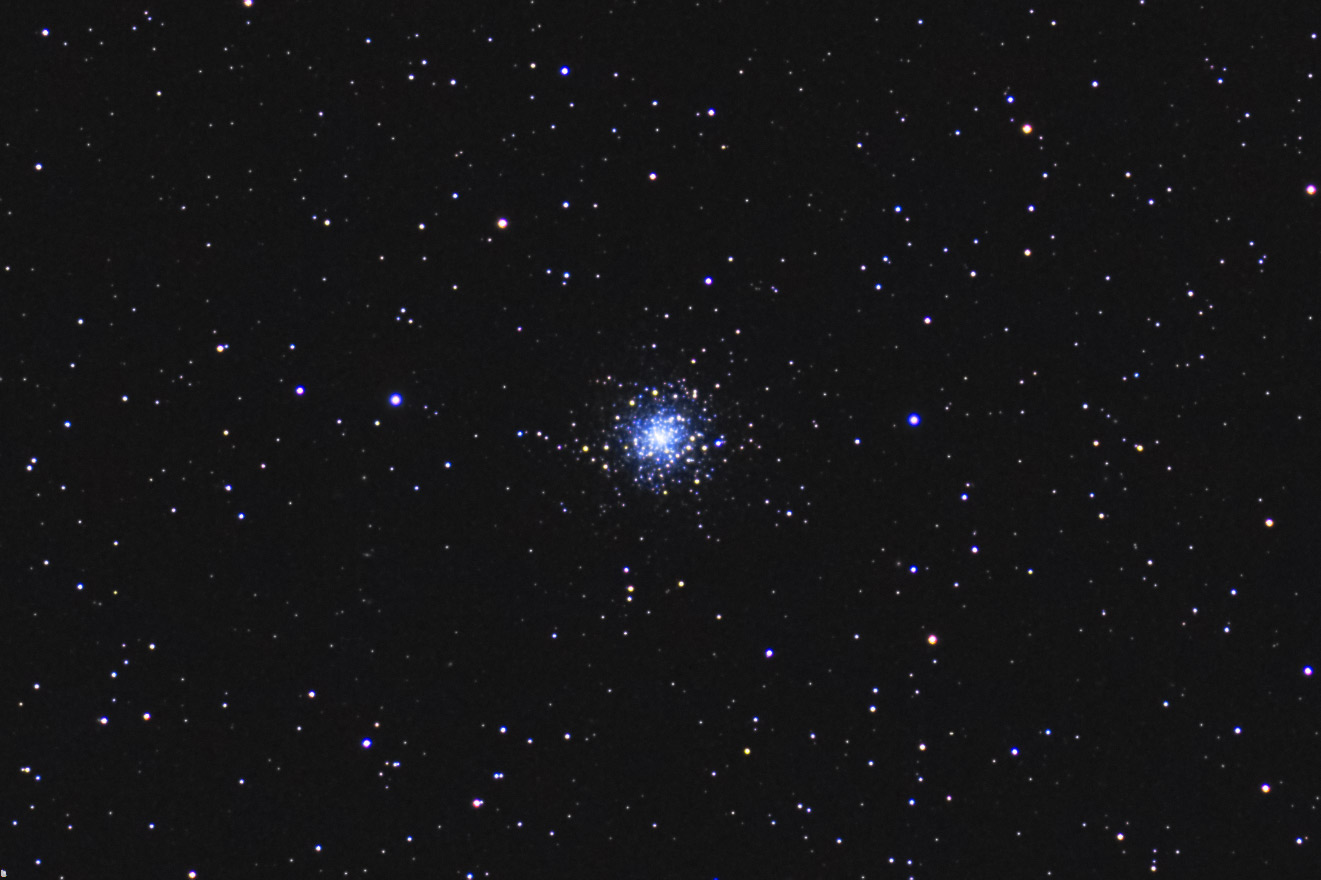
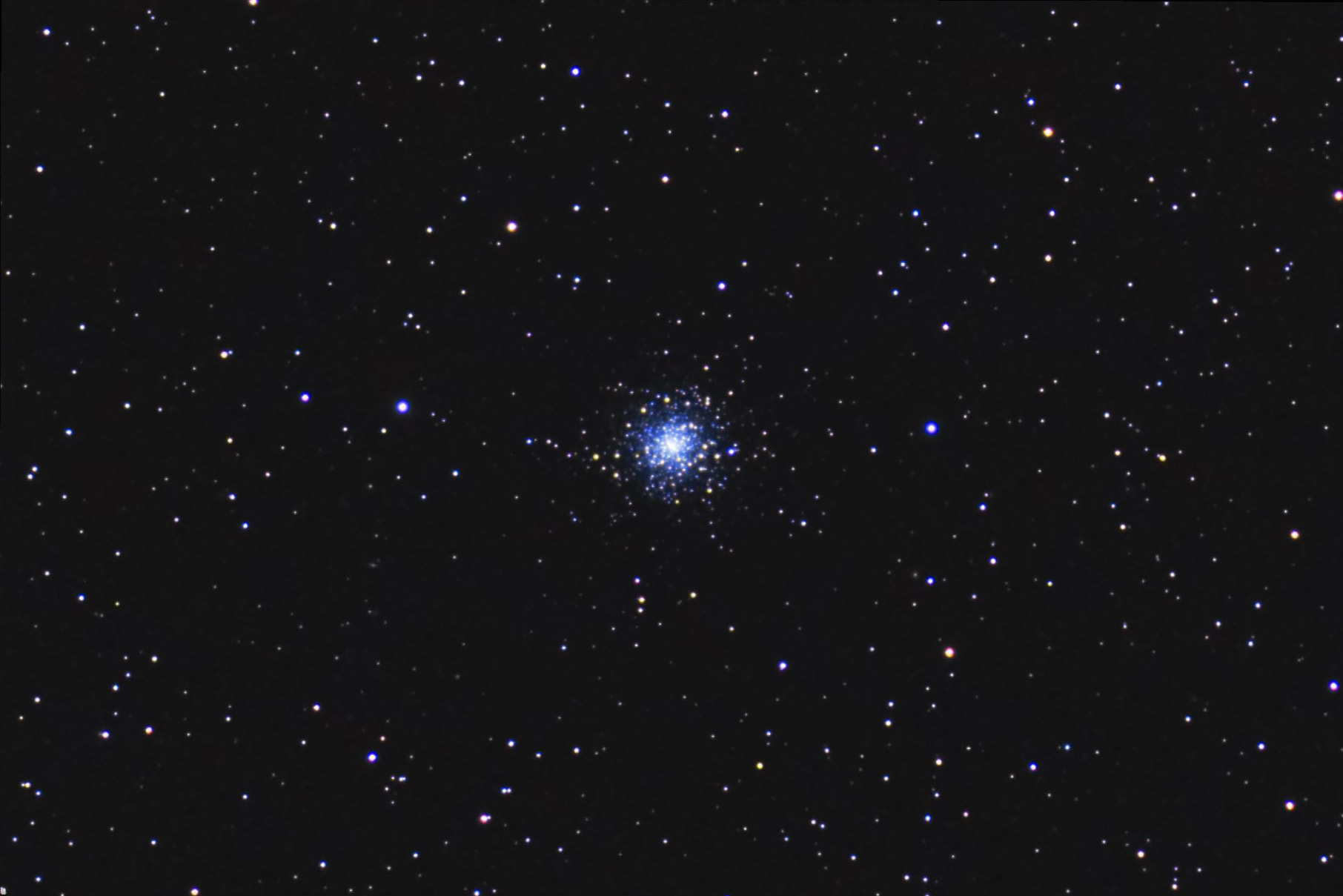
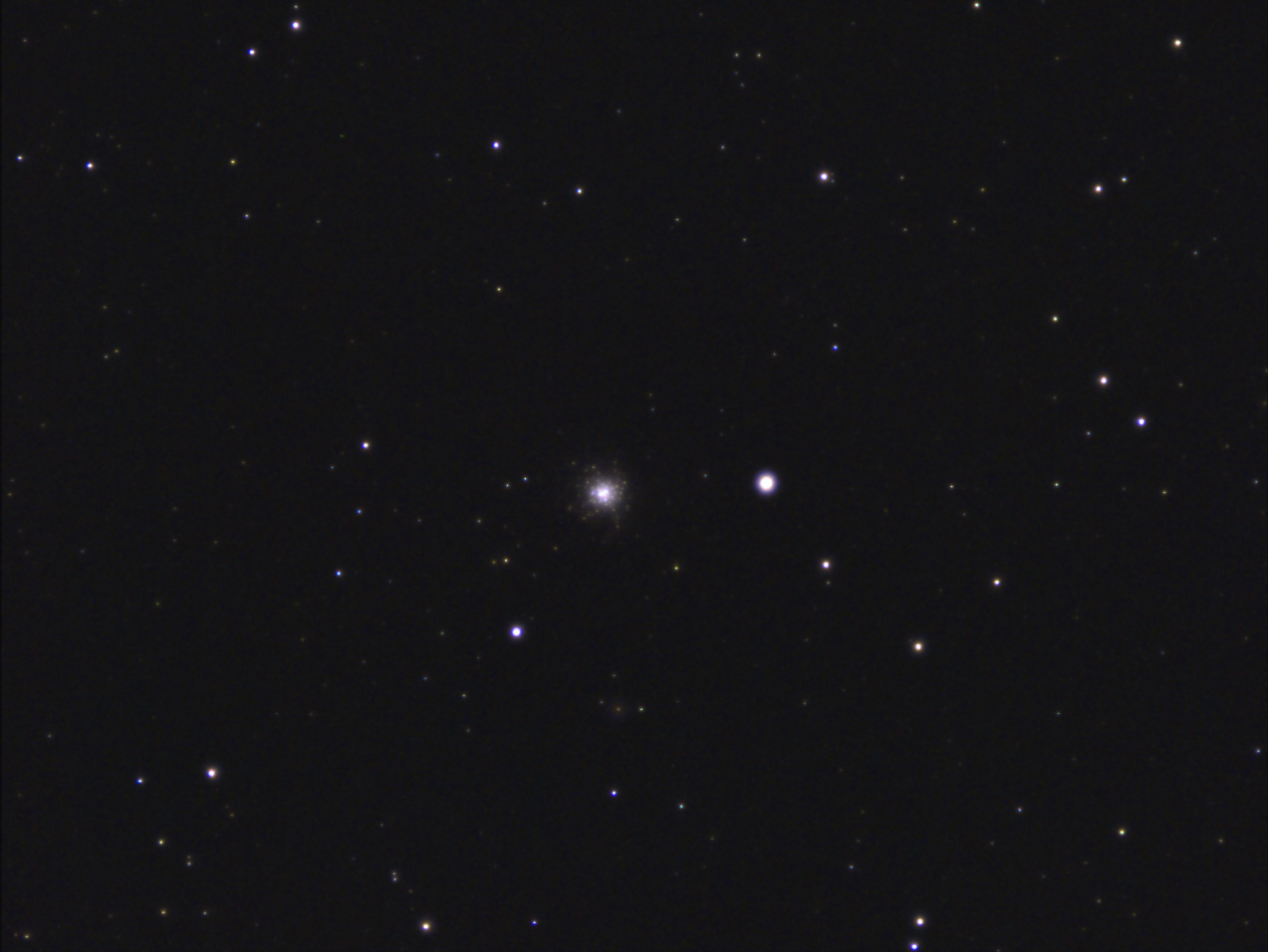
Globular Cluster M79 in Lepus, Feb 23, 2017, 02:10 UT. 18×120 sec @ ISO 1600, TV-85 at F/5.6, Canon T3, Atlas EQ-G w/EQMOD.
M79 is one of those globulars that sometimes gets glossed over for all the goodies in Orion, which is right above Lepus. I can’t remember shooting it in the past, but I may have something on it that I just don’t quite know where or when.
Update:
I found it. 10 years ago in Januarly of 2007 I shot it with an 8 inch, F/4 Schmidt-Newtonian. Here’s the combined data from that with this shot:
Combined data from 2007 and the 8″ F/4 Meade SN8 (22×60 sec @ ISO 1600) with the TV-85 shot.
This is a 100% crop of the central area of the frame. It lies in a field that is full of faint fuzzies, including NGC 1886, which is like a miniature version of famous edge-on galaxies NGC 4565 or NGC 891. It got cropped out in this view, unfortunately.
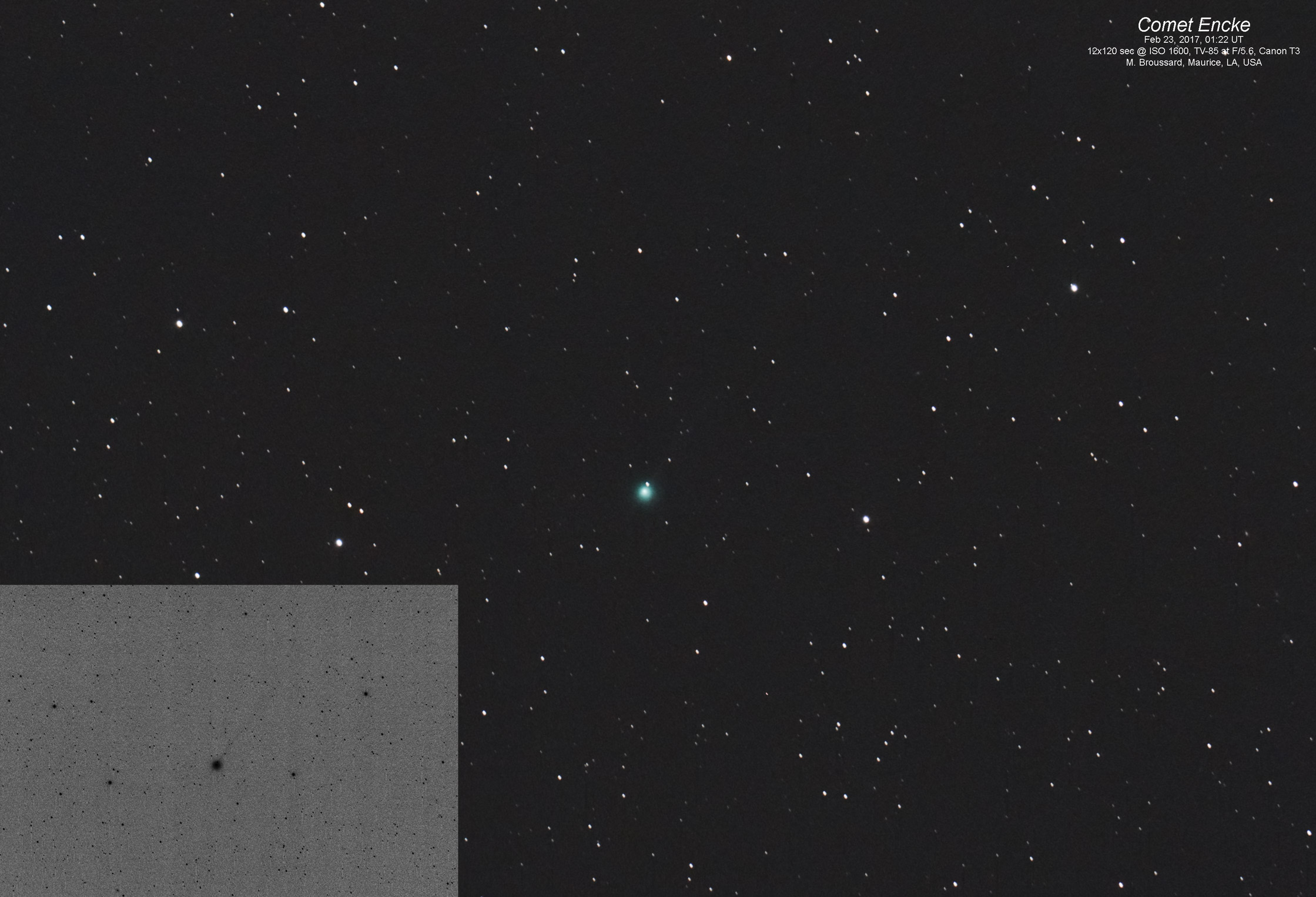
Comet Encke, Feb 23, 2017, 01:22 UT. 12×120 sec @ ISO 1600, TV-85 at F/5.6, Canon T3, Atlas EQ-G w/EQMOD.
This is probably my last Comet Encke shot for this go-around. It is so close to the horizon at the end of astronomical twilight that it is hard to get any good data. Only if the horizon is exceptionally clear from this point forward will I attempt to shoot it again.
It still shows a nice tail, despite being in the muck at the horizon. The negative insert shows the tail the best, but it is also somewhat visible even in the positive image.
I had guiding issues for this shot, so I was not expecting much of an image from the data. But, it still came out OK despite that.
Comet Encke, Feb 19, 2017, 01:02 UT (Feb 18, 2017, 7:02 PM CST.)
I did it. I drove out of the city to a new spot I found on a Light Pollution Map. It was only 30 to 40 minutes away and very dark by today’s standards. It is a dead-end Parish road with no houses for a few miles, which means I didn’t have to trespass on someone’s property. I just stopped at the end of the asphalt and setup shop. 🙂
I was able to shoot with ISO 3200 even with Comet Encke close to the horizon. It was dark enough to notice a little zodiacal light there, too. With these kinds of conditions, I was able to pick up Encke’s tail.
The data was shot in three sets. Two sets of 15×30 sec @ ISO 400 and 7×30 sec @ ISO 3200 while it was still twilight and finally a set of 37×60 sec @ ISO 3200 started just before twilight officially began. About 48 minutes total integration.
The main image has been cropped, but the enhanced negative insert is more of the full field. You can see that the tail actually goes out of the field of view. Amazing!
Alternate version without the labels or negative insert. Dynamic stretch instead of Color stretch.
Two enhancements that show tail length.
Unfortunately, Comet Encke is all I got this evening. While I was doing a better polar alignment and setting up to shoot the Horse Head, a huge fog bank rolled in quicker than I even noticed and it was thick. Oh, well… I took that as my cue and shot my calibration frames and left.
I also did a star freeze rendition and it came out ok. It just doesn’t show the tail as well as any of the above images:
Markarians Galaxy Chain Area – 30×15 sec, Ultra-Mini finder with AR0130 Toupcam color guider/camera.
Here is another one of those experiments I do. LoL. This time it was with a software program called SharpCap. It can capture images from planetary/guider cameras like the Touptek, ASI or ZWO cameras. Sharpcap’s claim to fame is the ability to stack the images you take on the fly so that you can almost get a “live-view” like experience. I thought it was neat and easy to use.
This is only 7.5 minutes worth of exposure, so it is not really that deep. But, it is interesting to be able to get this much with an under $200 camera and a small finder scope.
I also captured 7 x 15 sec exposures of M13 in a live stack. Not quite enough data in the stack for good star colors with just 1.75 minutes of exposure , unfortunately. But, it shows the globular well enough. Check it out: