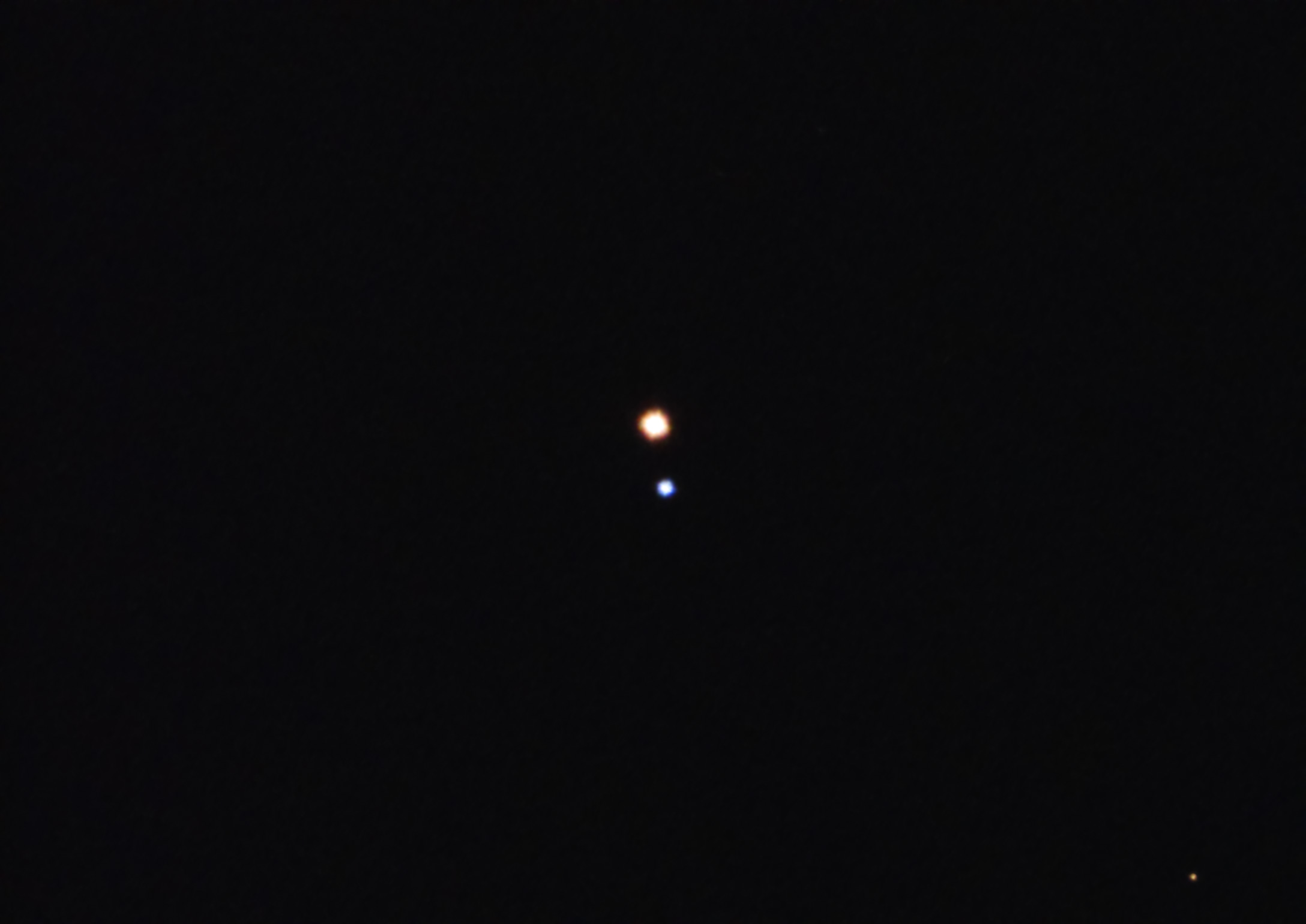
This one was just me playing around. Bad seeing and no tracking for this shot taken with a 6″ F/8 Dob. At least I got an image from the effort.

This one was just me playing around. Bad seeing and no tracking for this shot taken with a 6″ F/8 Dob. At least I got an image from the effort.
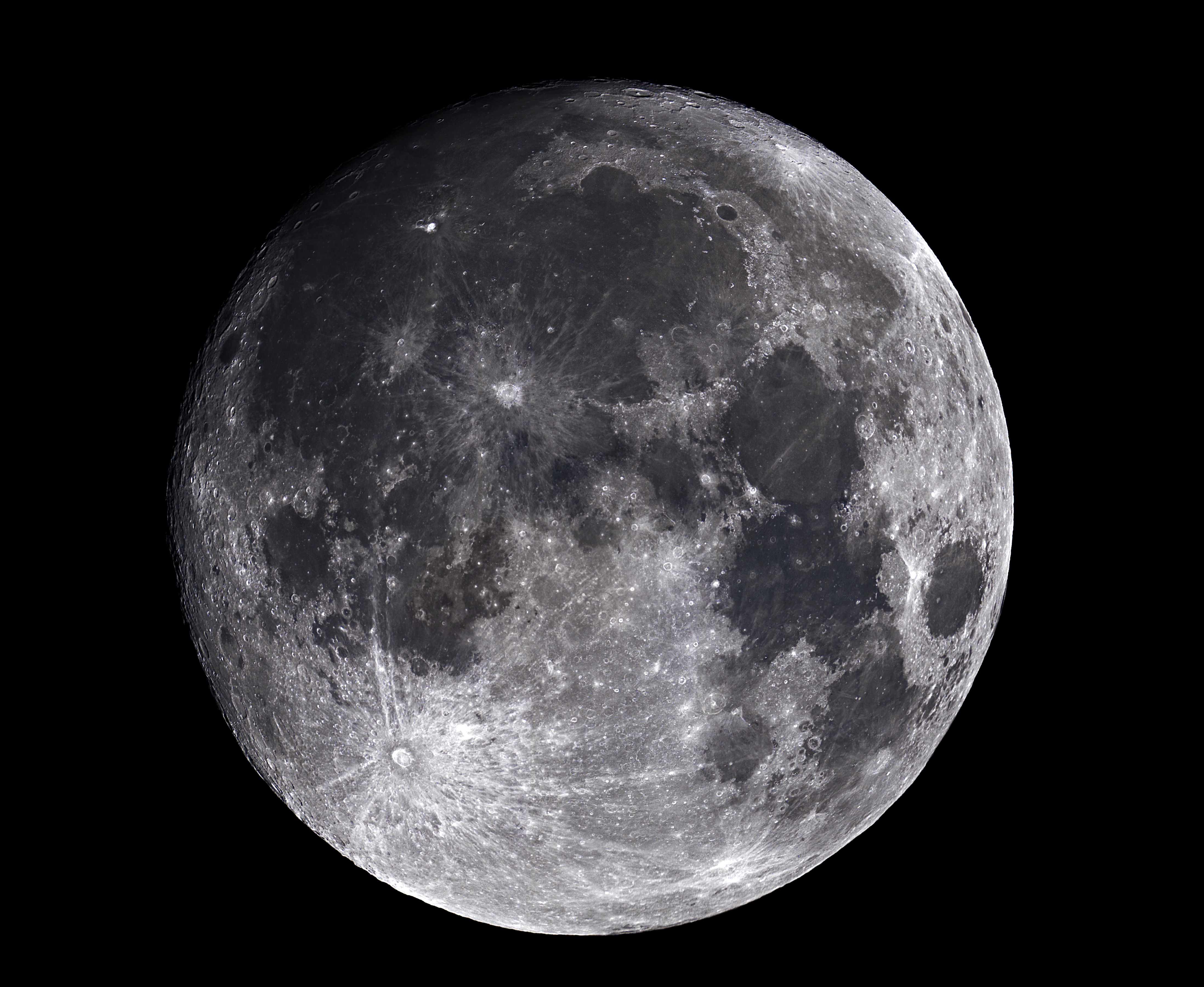
I stitched this together with a little over two dozen, 1280×960 pixel images taken with my eyepiece planetary/guider cam and a 6″ dobsonian. Reasonably good seeing this night. When I saw that the stars were barely twinkling, I figured I better get some images while the getting was good.
I let the camera take an image every two seconds while I moved the scope from bottom to top of the target and let it drift across the field of view. In all, I got about 334 images in RAW FIT format files, which I converted in IRIS. I had to debayer them to get color and they came out really red, since I don’t have that specific camera in IRIS. A Nikon seemed to be the closest match as far as conversion from RAW to RGB color. IRIS was able to apply the same color correction settings to each image in a batch mode and then I selected and manually exported select images into PSD format for PS.
It is not the best stitch-up job, since the moon rotated somewhat in the field of view between the first images and the last. But, I think it is reasonably good for a few days worth of work. I had to patch a few goofs and bad spots after the original posting. One major one I didn’t catch until a few days after posting was the original image was backwards! It seems the camera outputs mirror images in RAW format or it was possibly the FIT file format was encoded backwards. I’m not sure. I still have the RAW data, so I can put together another mosaic if I get bored one day. 🙂
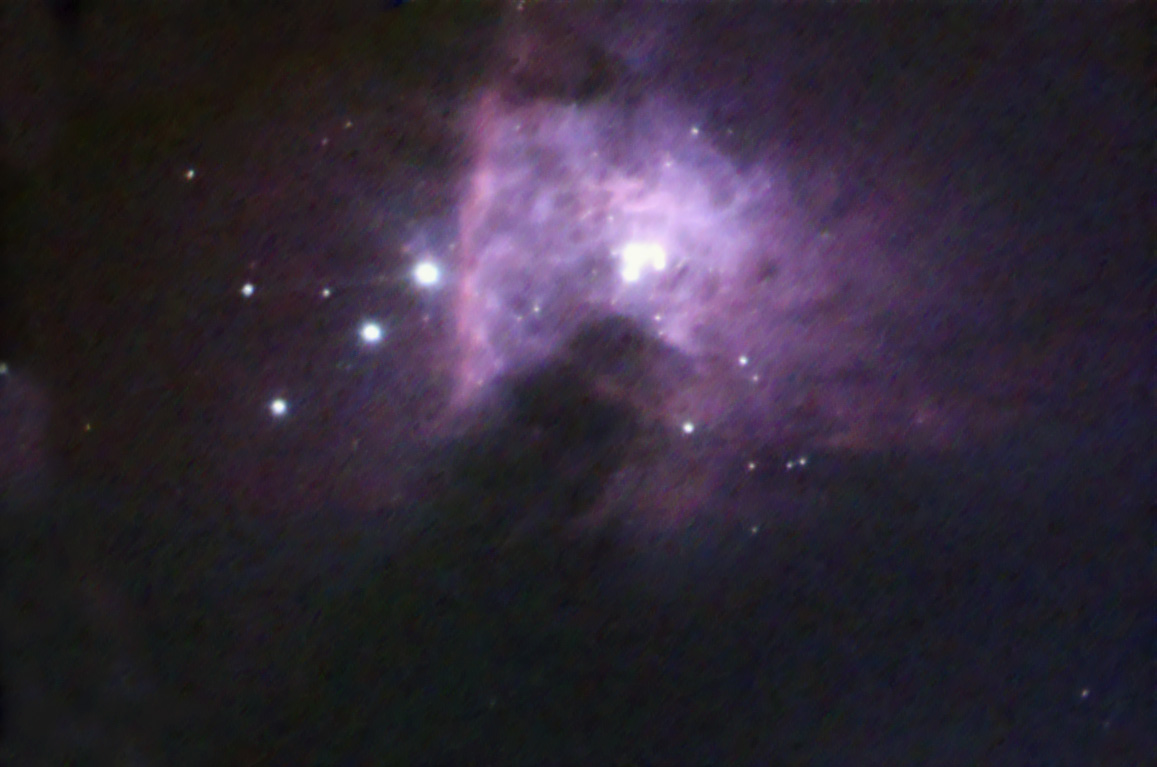
Here’s one for the personal record book – shooting the Orion Nebula with a scope that has no tracking whatsoever. It was on a Dobsonian mount.
I used an eyepiece camera in video mode and just let M42 drift through the field while I tried to get the most video frames possible. I think I got between 35 and 70 frames for each video. Out of 8 or 9 videos taken, two of the AVI files were good enough to try stacking select frames for a better image.
I used 16 frames from one video and 16 from another video. Each set was stacked in IRIS with the planetary work process for AVI videos, then the two images were combined in PS.
The results are poor compared to what is possible with a tracking mount. But, I knew it could be done with the right technique and I just had to try. 🙂
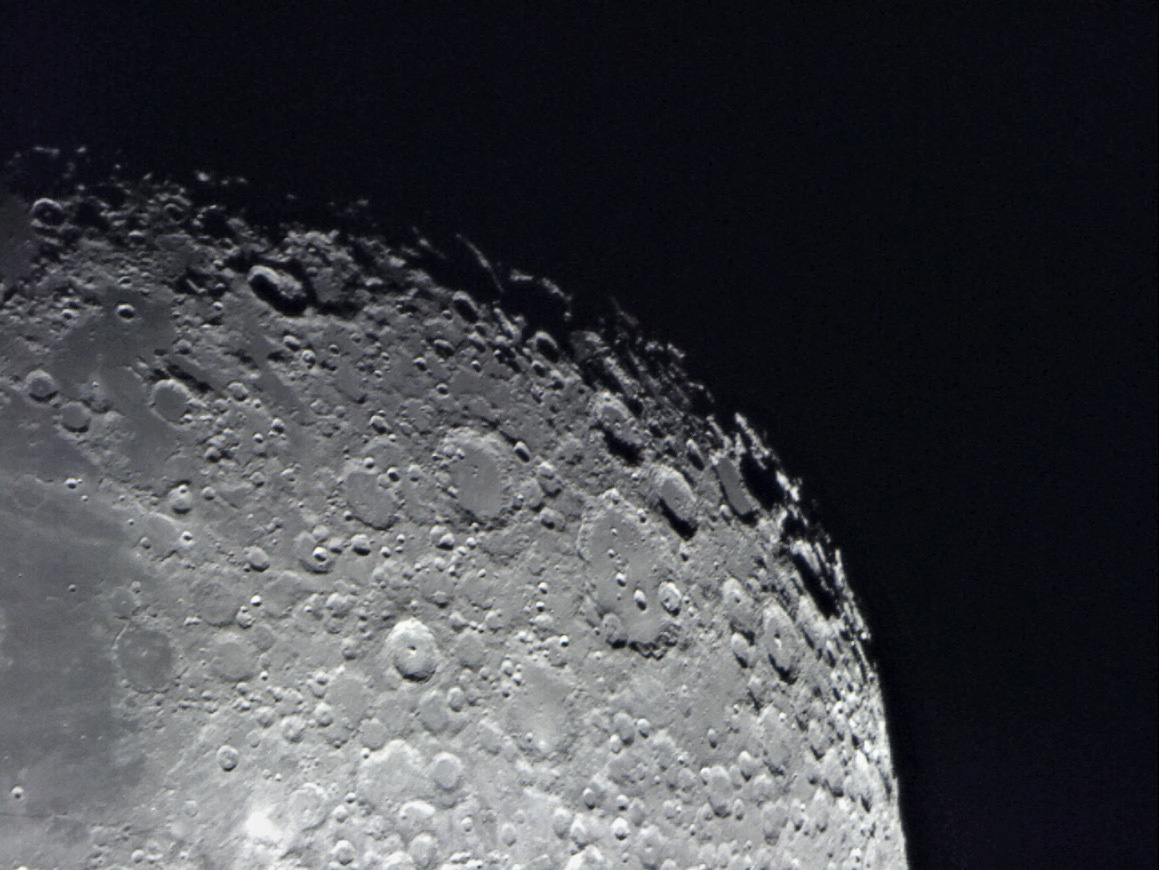
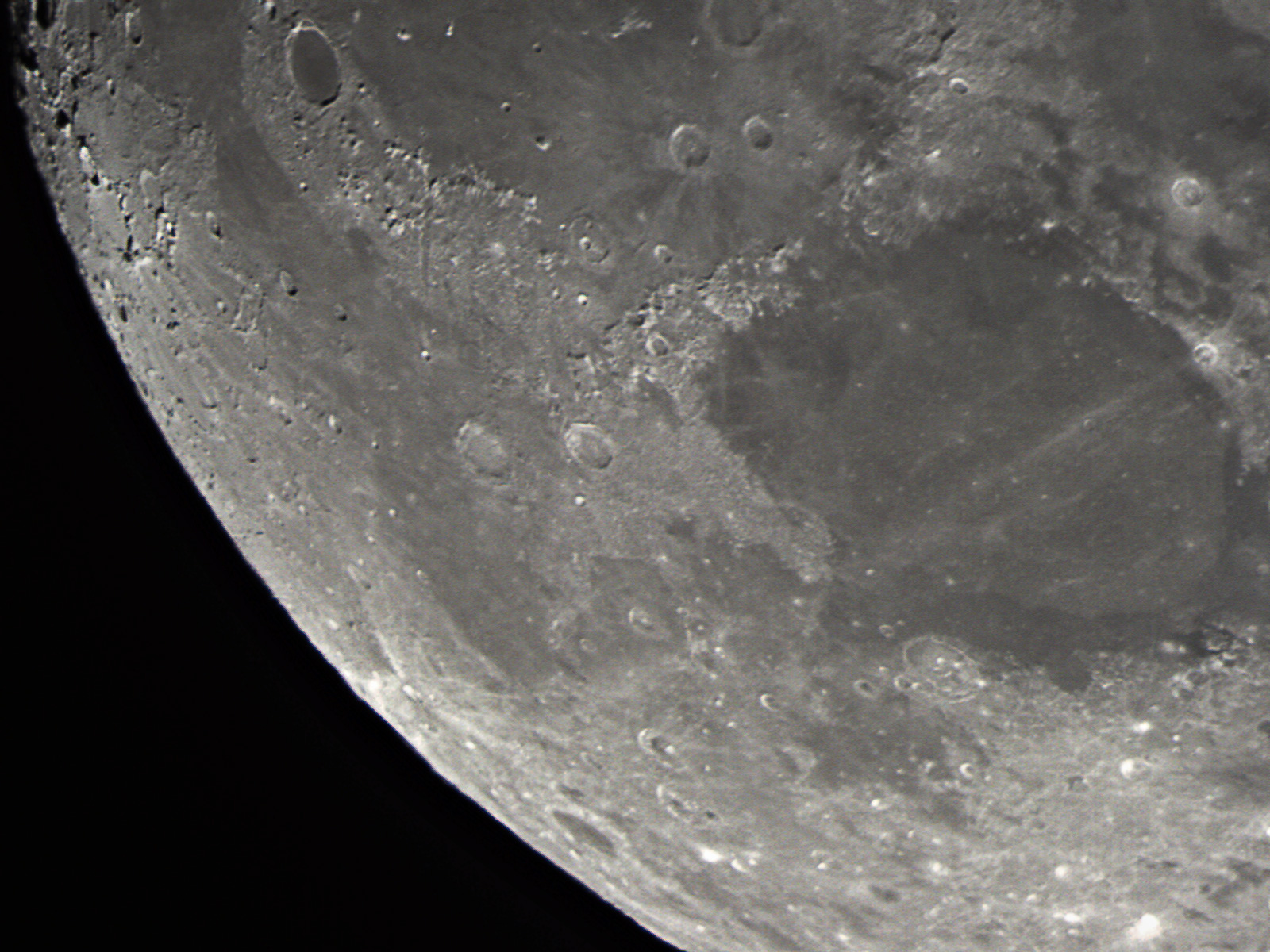
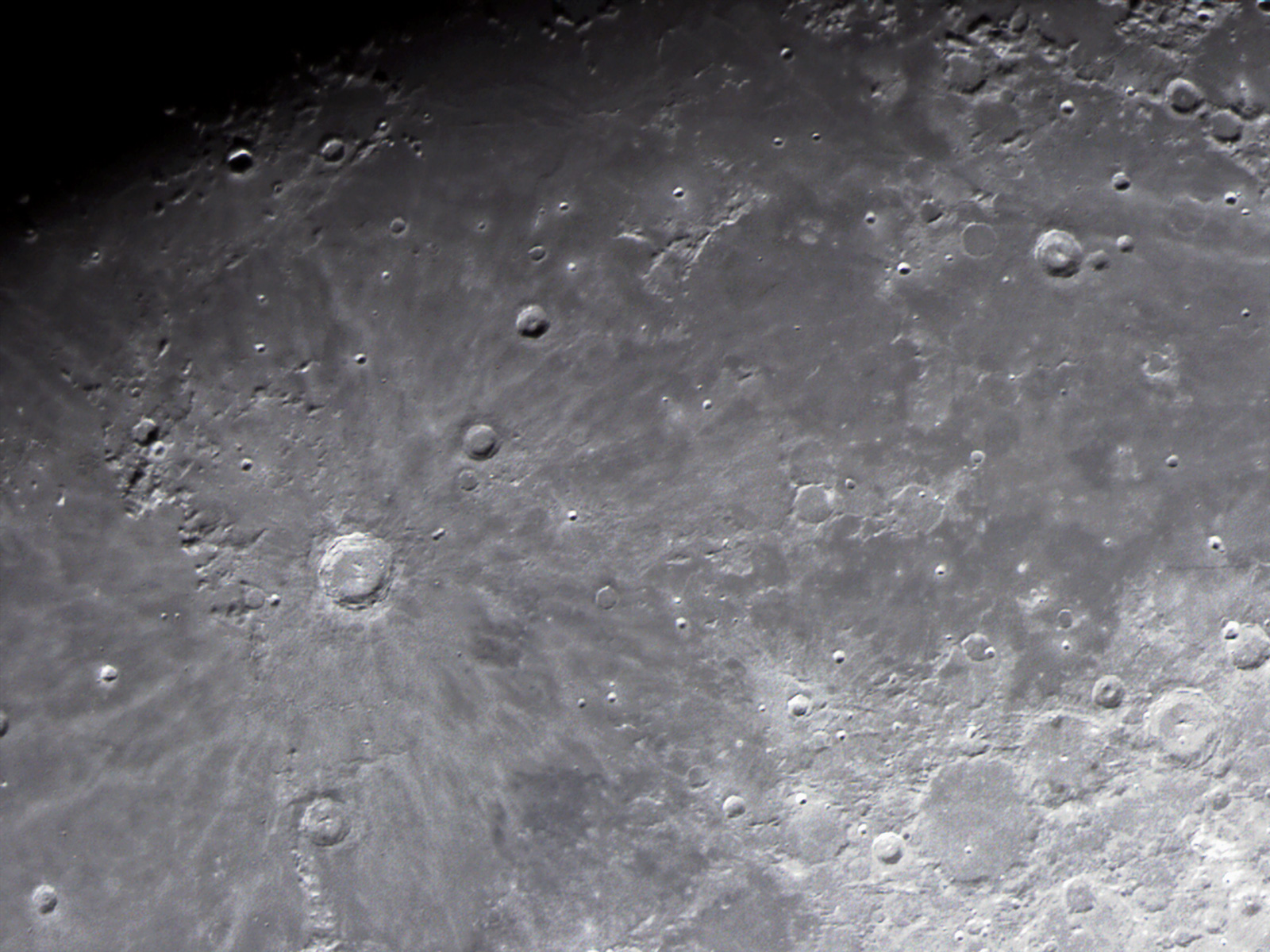
A new camera was used to take these new images of the moon. A six inch Newtonian on a Dobsonian mount was used, so there was no tracking. The camera used was an Aptina-based, AR0130 1.2Mp sensor eyepiece cam. It has good low-light capability and a wide exposure range.
I hope to use it as a guide camera on a tracking mount and do double duty as a planetary/moon camera when hooked to one of my bigger scopes. I can also use it to take some deep sky images with various other lenses or smaller scopes. With the right scope, these types of cameras work great for small objects like planetary nebulae and small galaxies.
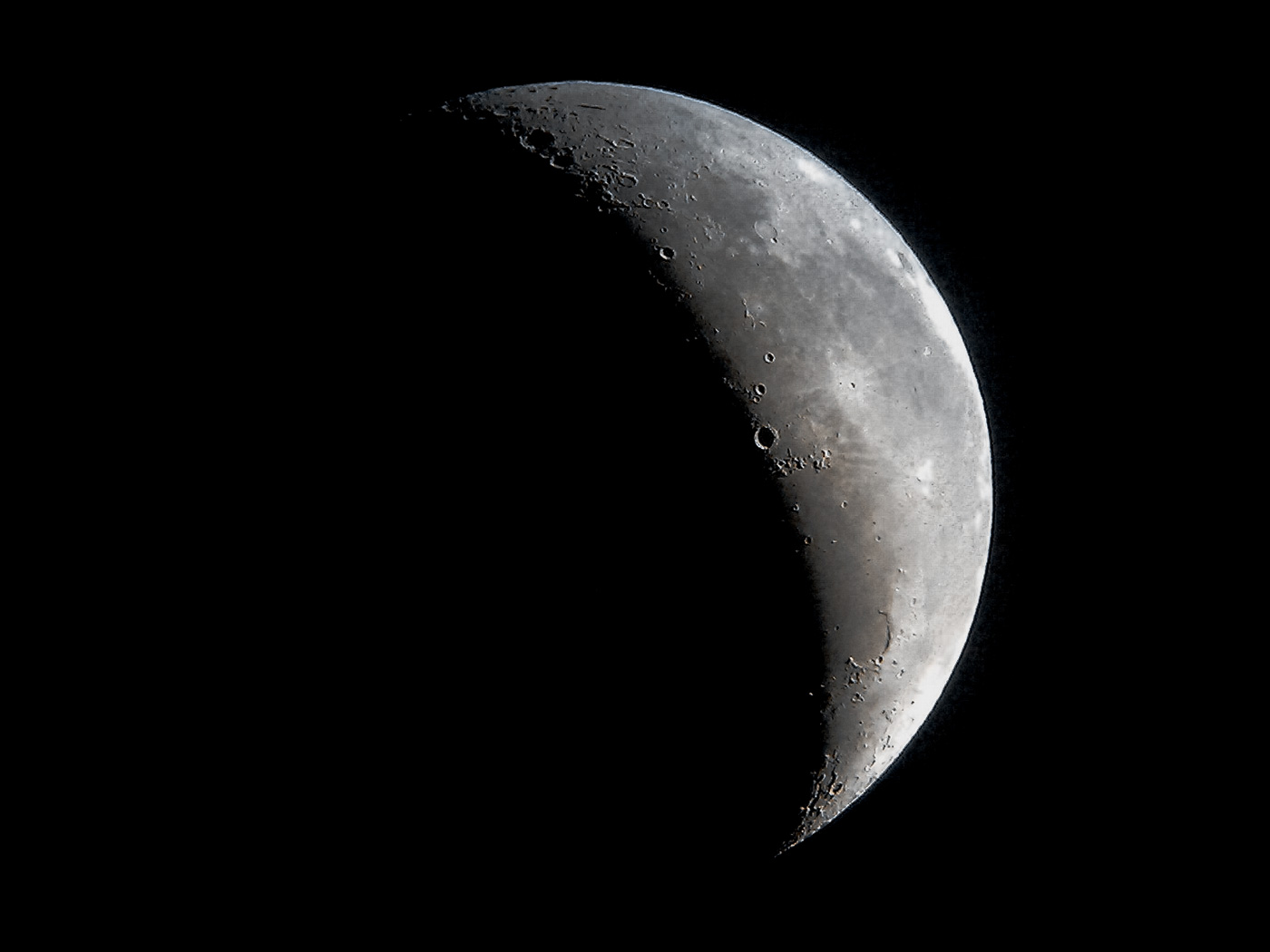
I took this shot on the morning of September 25, 2016. I was trying out my new Smartphone Digiscoping Adapter, which is a mount for most kinds of camera phones to a telescope.
The adapter was hooked to a 6″ F/8 Dobsonian with a 25mm Plossl eyepiece. This device just clamps onto the barrel of any eyepiece and gets the lens of the camera phone centered right over the Continue reading Crescent Moon, Sep 25, 2016
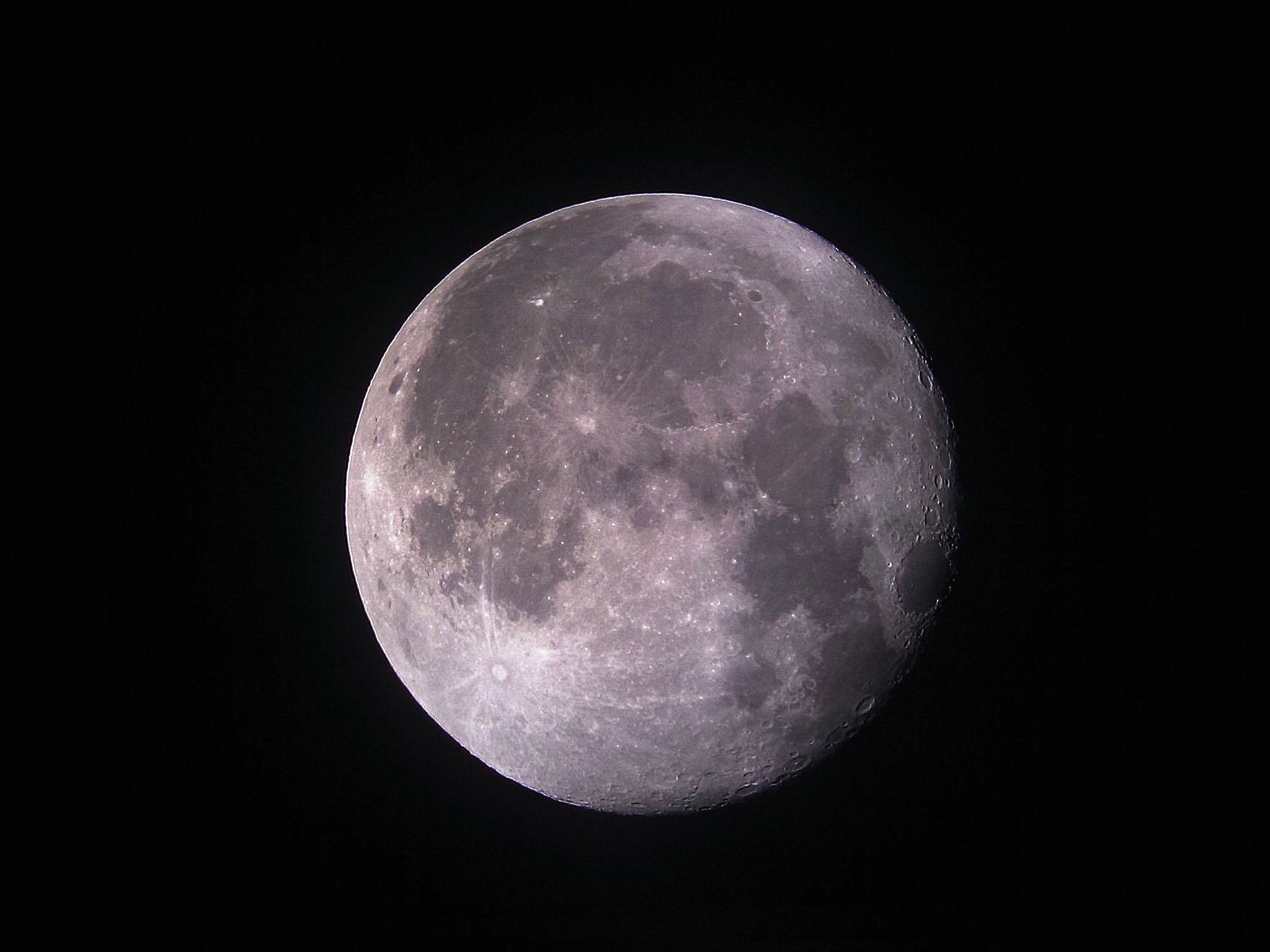
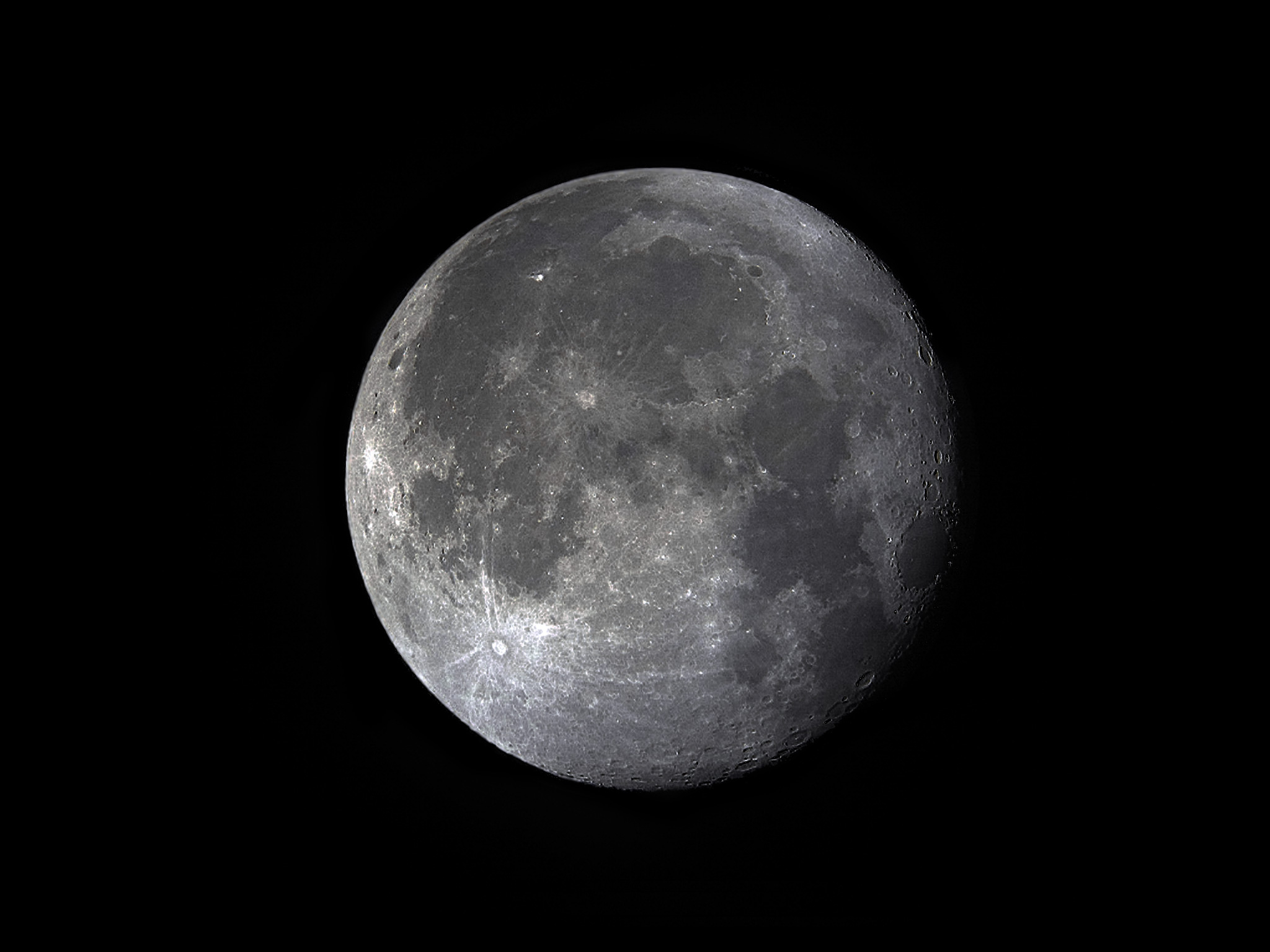
This is an afocal eyepiece projection image using a 25mm Plossl eyepiece, a 6 inch F/8 Newtonian and a HTC 3.2 megapixel camera phone. The first image was sharpened in IRIS, then exported into PS and sharpened/enhanced some more. The second image is maxed out sharpening, slightly overdone, perhaps. lol
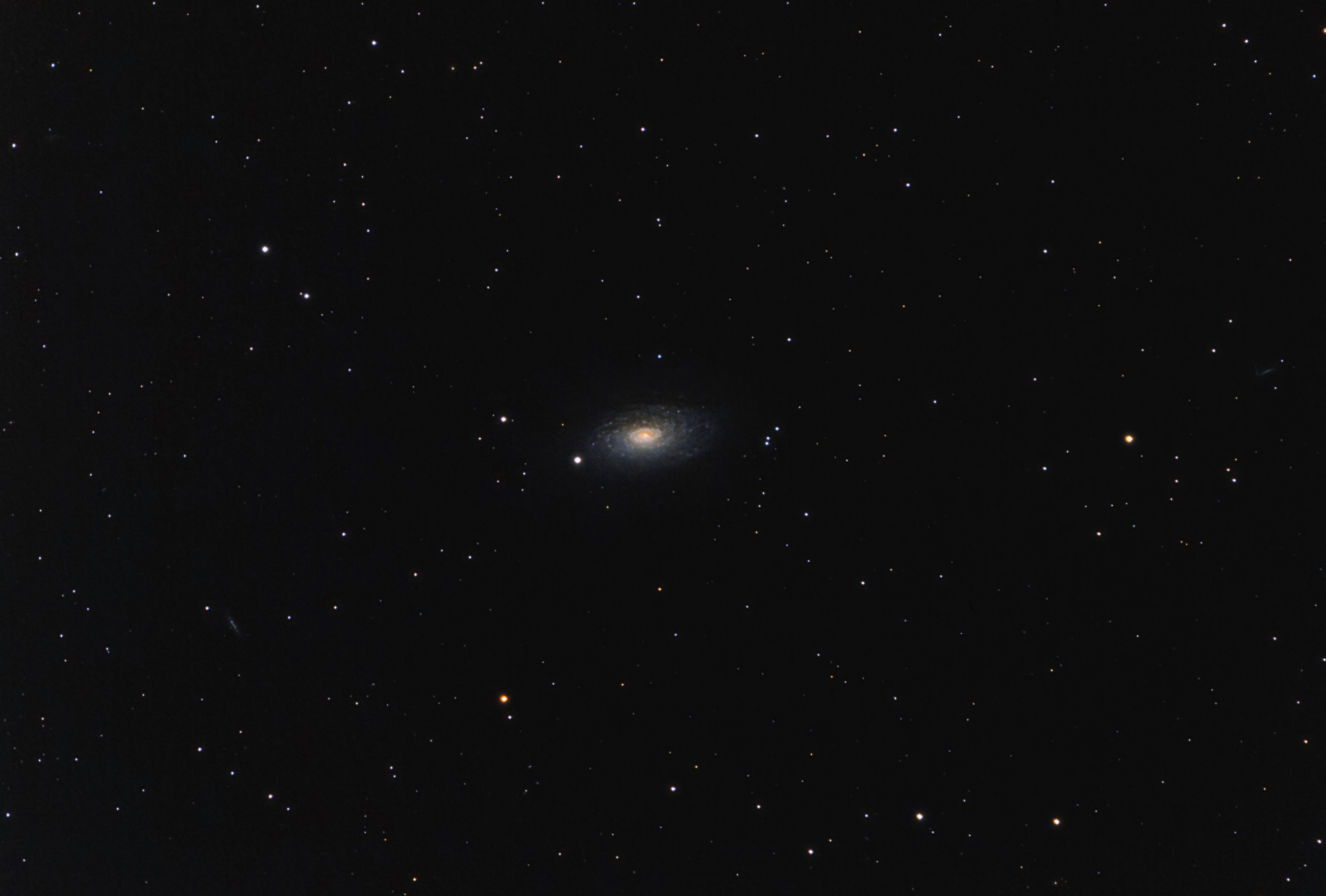
Here is a makeover of M63 from data taken in 2007. I boosted the color saturation and decreased the star brightness slightly. Plus, I worked on the star-shapes to get them more round. This was pretty decent data for ISO 800 and 35 subs.
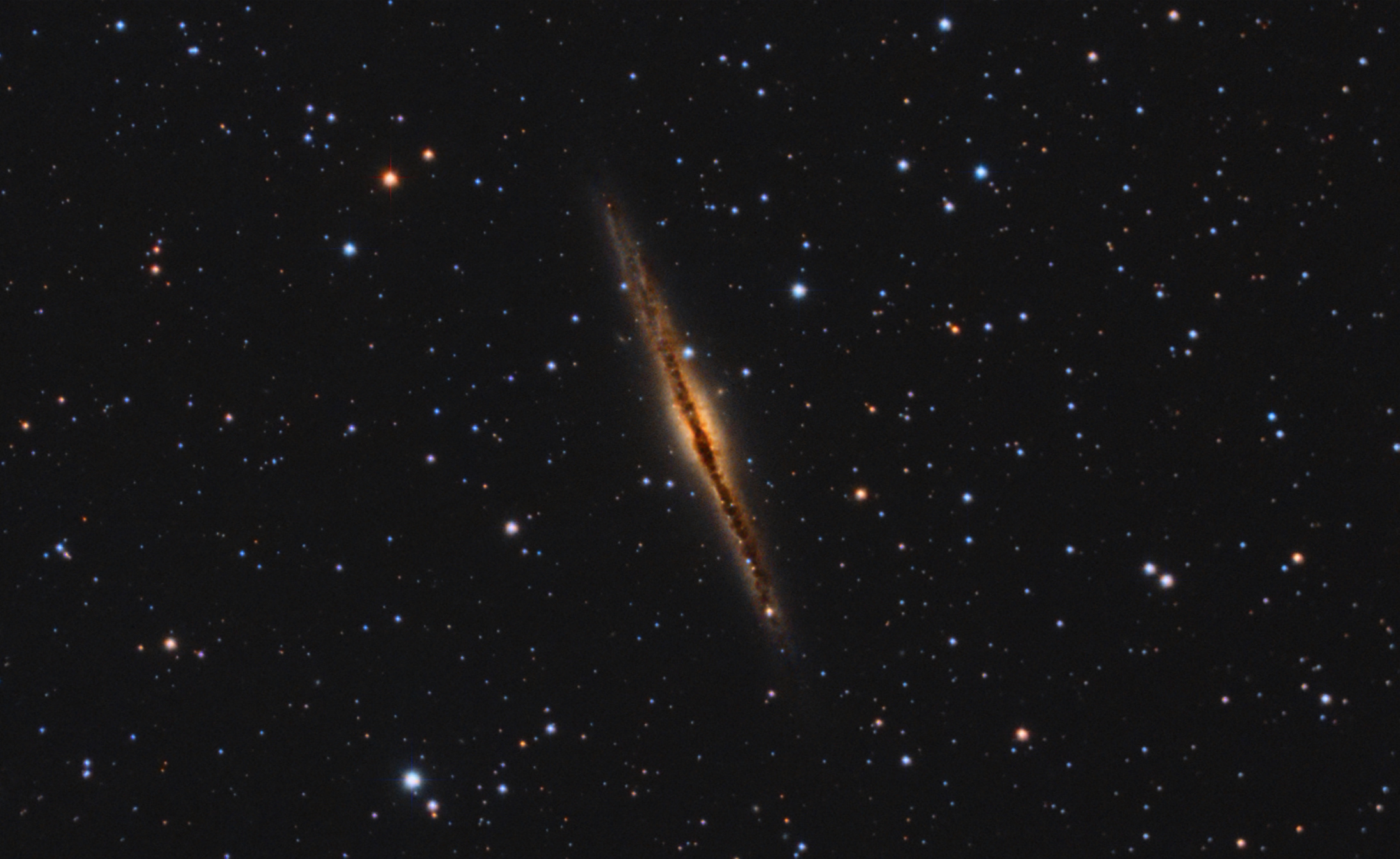
Finally, I think I got the data blended for this image as best as possible with the least amount of artifacts. Two images from a 6 inch Schmidt-Newt were combined with one of my more recent C-8 images of the galaxy. I used Registar to scale and align each of the 3 images and then blended them in PS manually.
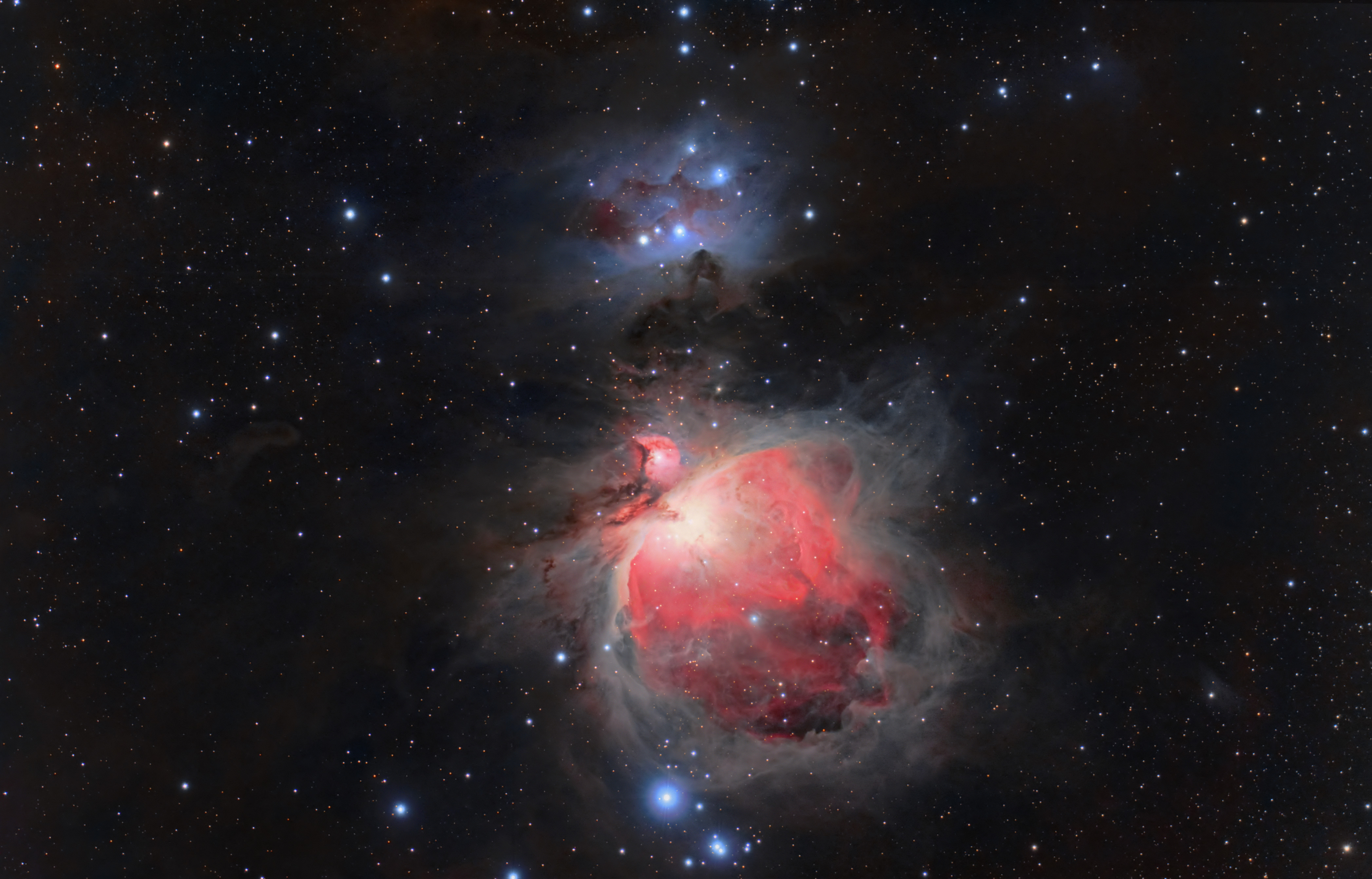
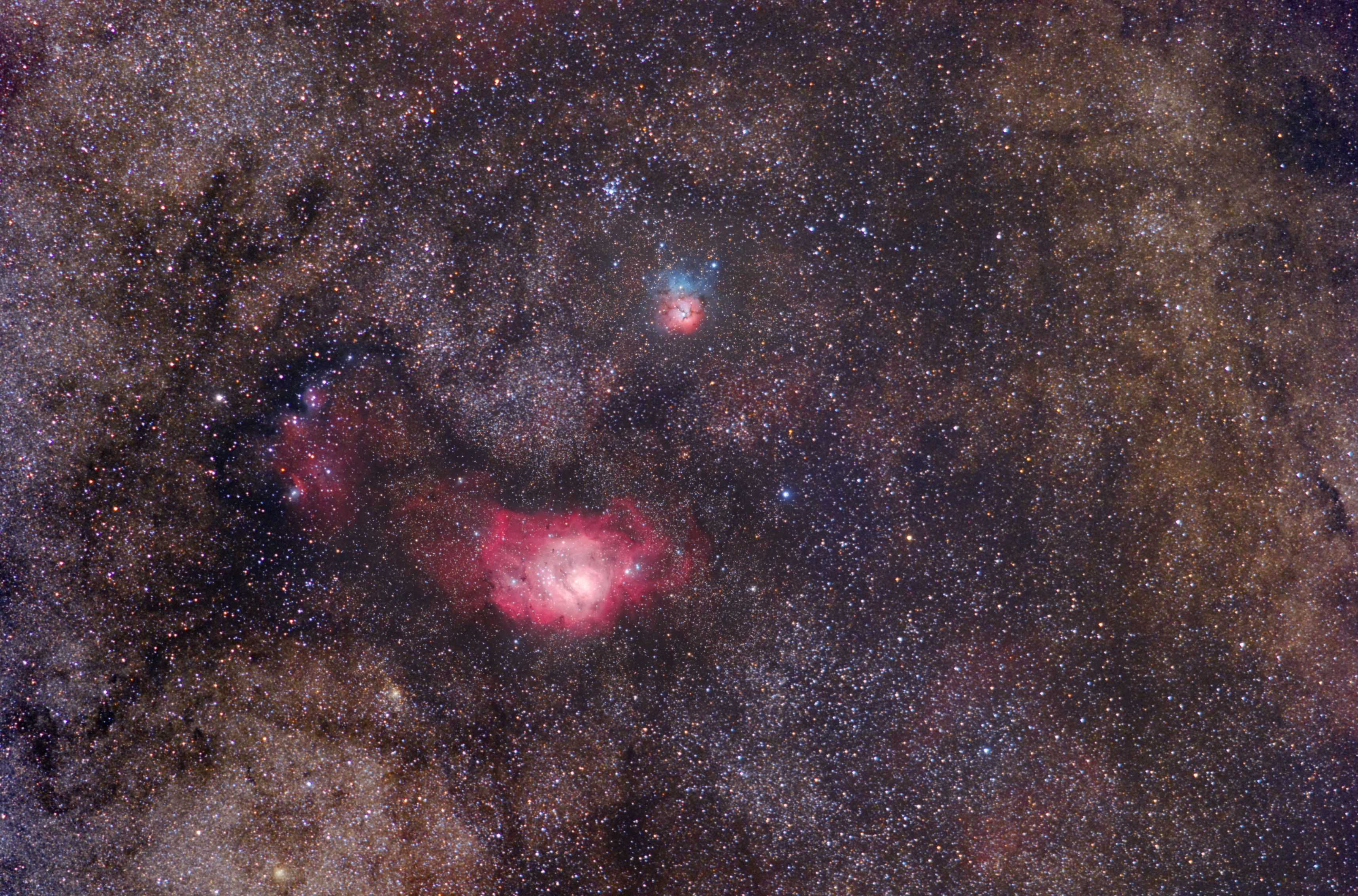
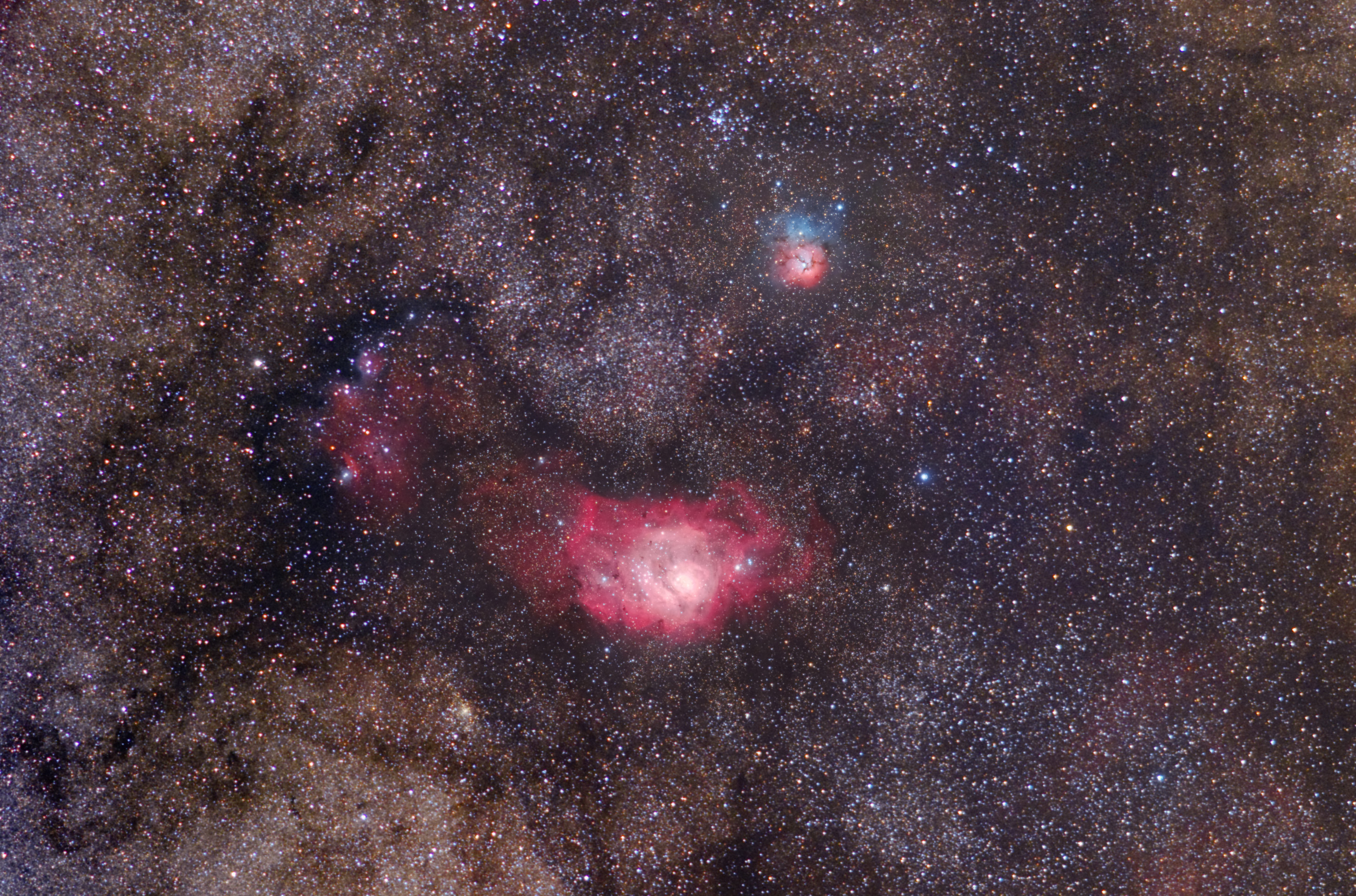
Here’s a rework of an image with data from higher resolution images overlayed on a base image that was taken with my 200mm F/2.8 Canon telephoto lens. The overlay images were closeups of M8 and M20 taken with the TV-85 telescope.