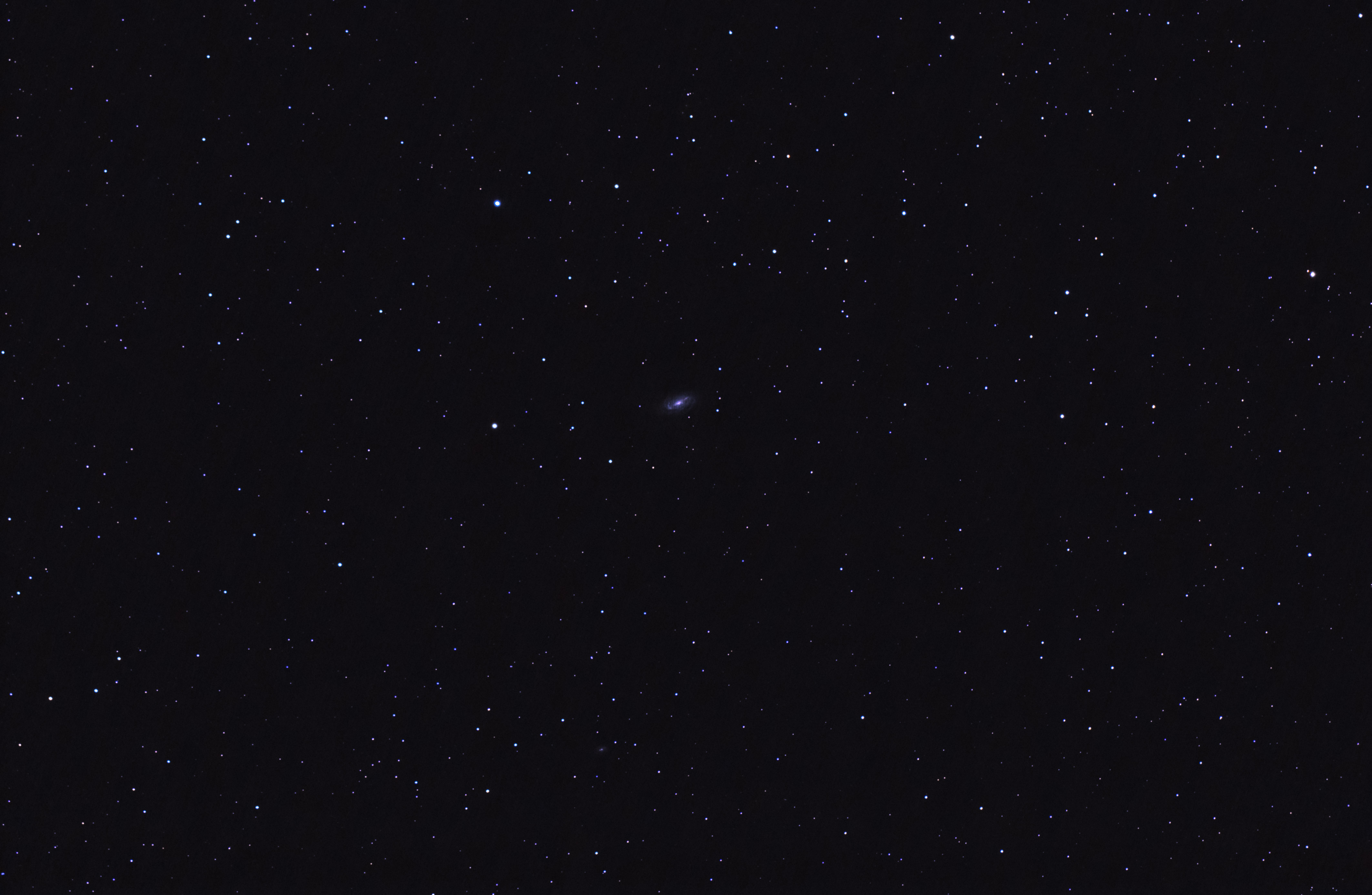
NGC 2903 on Feb 15, 2017. 38×180 @ ISO 200, TV-85 at F/5.6, Canon T3, Atlas EQ-G w/EQMOD.
I needed to test guiding with exposures of 3 minutes or longer, so I used NGC 2903 since it was in a convenient location. This size object needs more image scale to show it better, of course. But, I kind of like the wide view that shows the galaxy and star field in context.
Btw, in this image, north is to the left. Also, if you noticed, another small galaxy, NGC 2916, is also visible in this image. It is below and slightly left of NGC 2903 in this view.
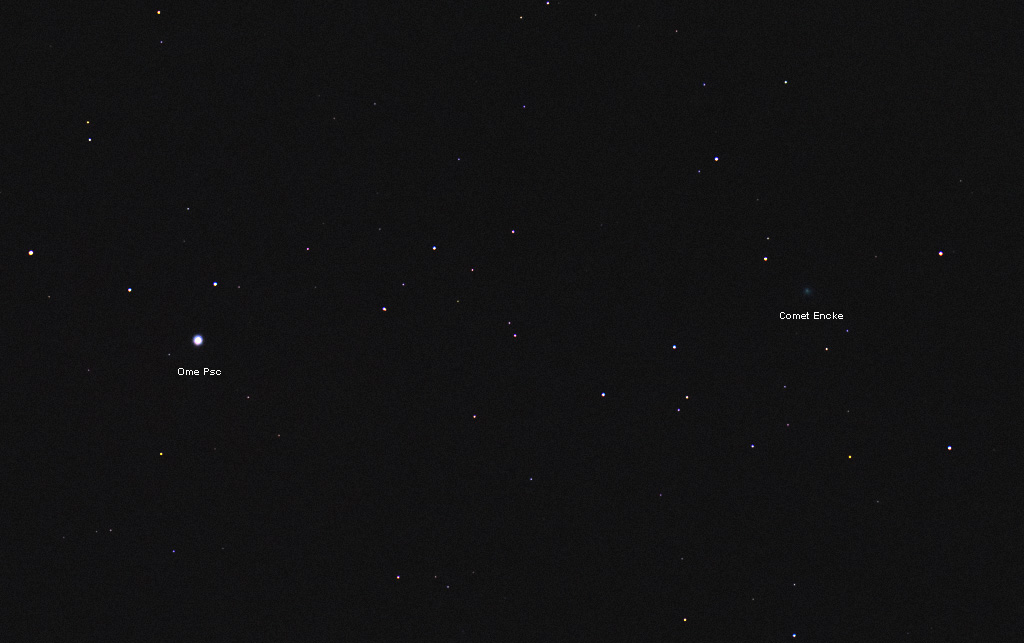
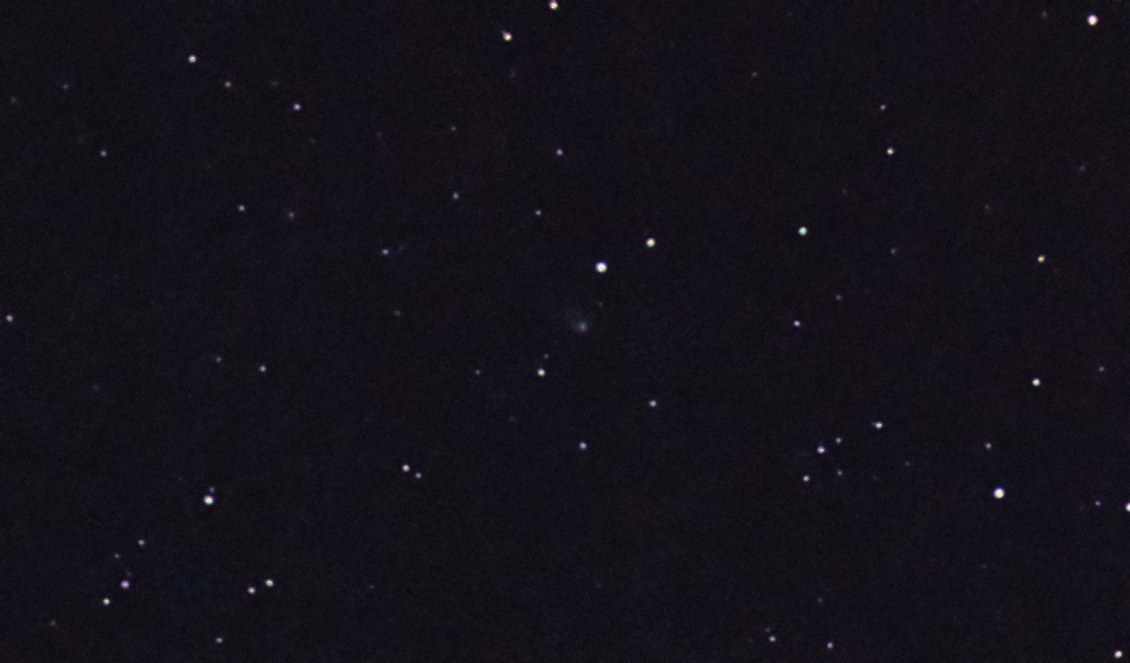
Comet Encke and Ome Pisces on Feb 16, 2017 00:54 UT. 16×30 sec @ ISO 200, TV-85 at F/5.6, Canon T3, Atlas EQ-G w/EQMOD.
Not much to look at here. Comet Encke was next to one of the brighter stars in Pisces and deep in the muck and haze of LP and poor transparency skies. I was lucky to get even this much.
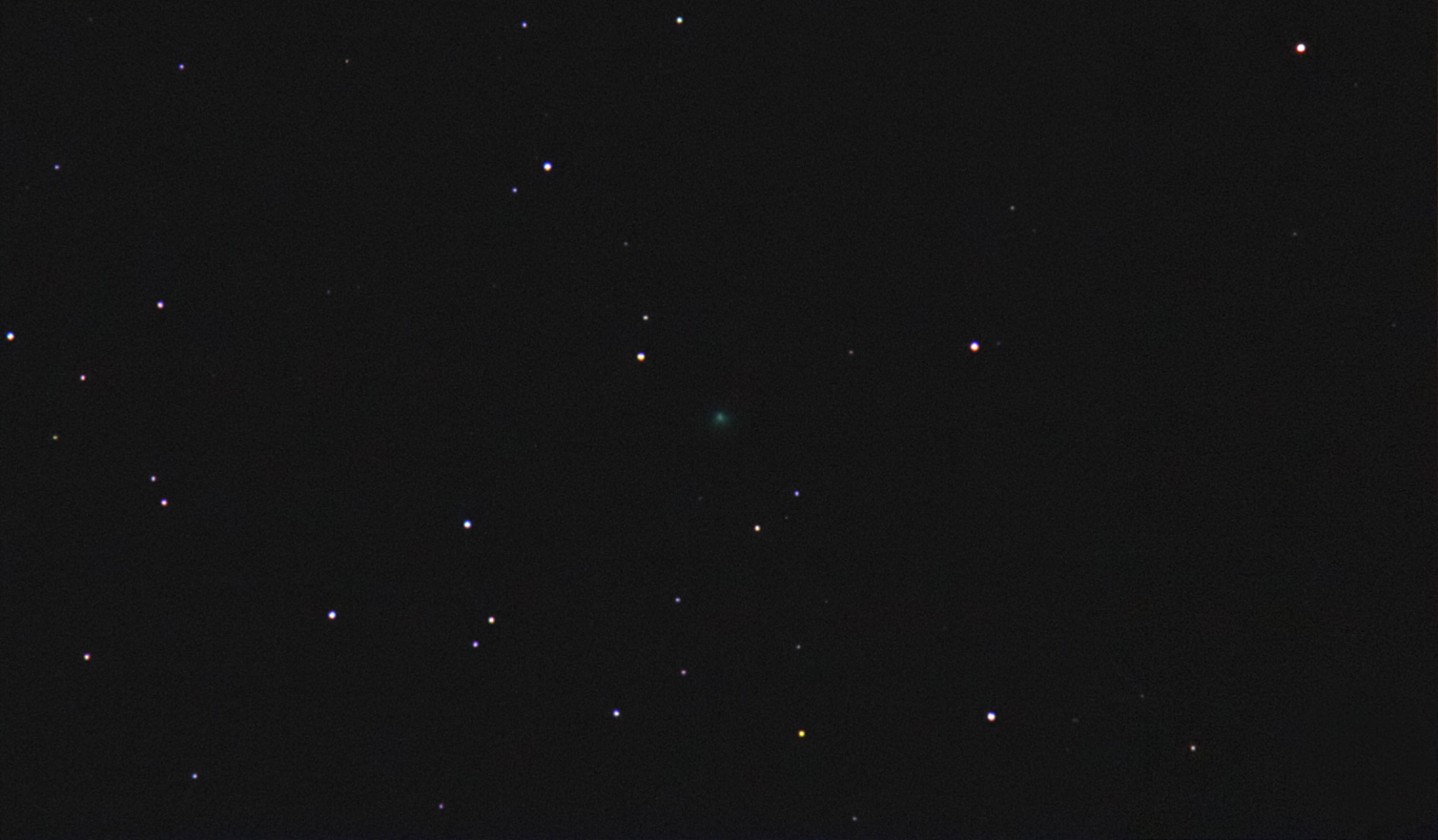
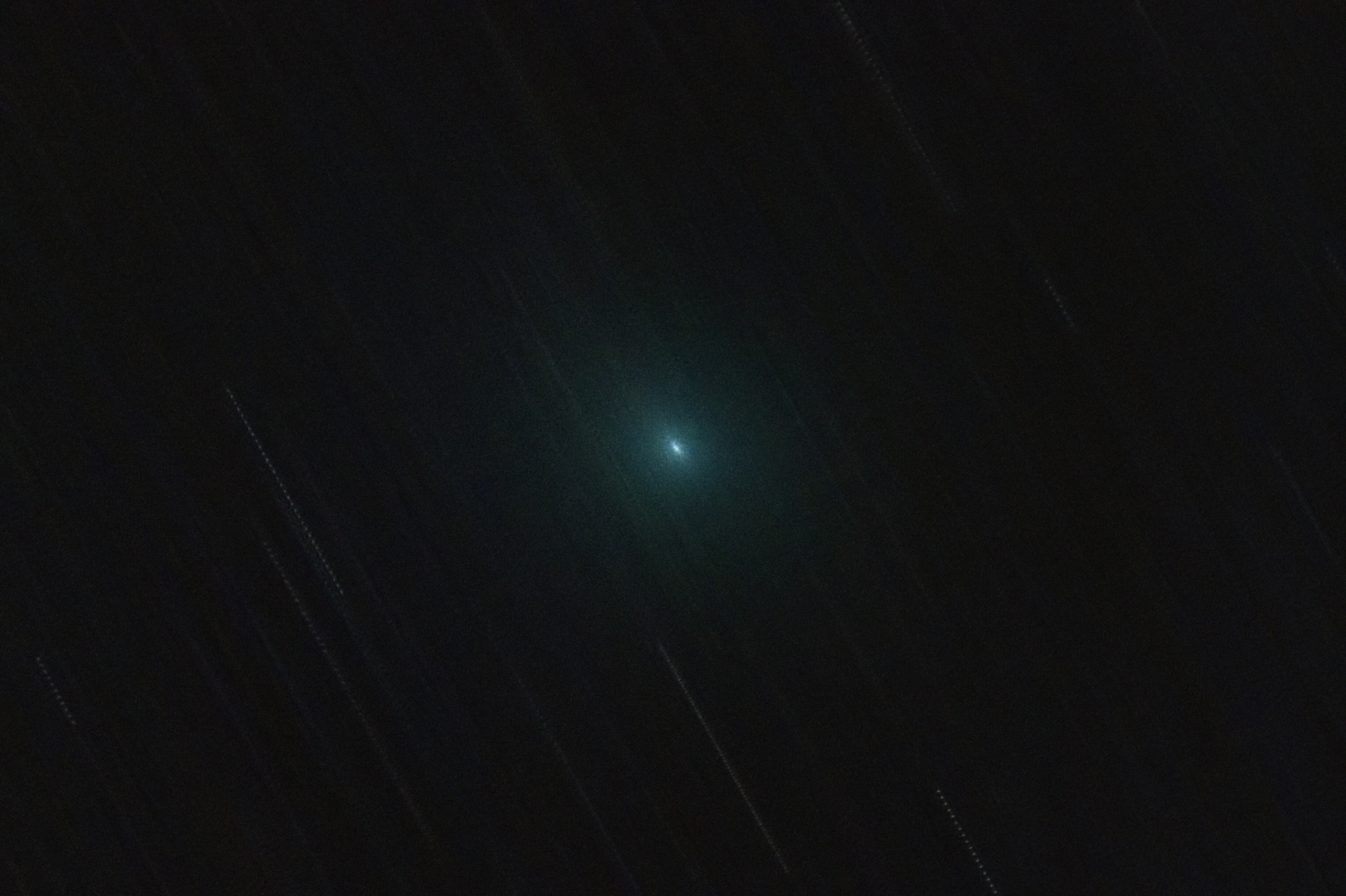
Here’s just the comet centered in a close crop that excludes the bright star:
Comet Encke. 16×30 sec @ ISO 200 plus 4×30 sec @ ISO 100, Televue TV-85 at F/5.6, Canon T3, Atlas EQ-G w/EQMOD.
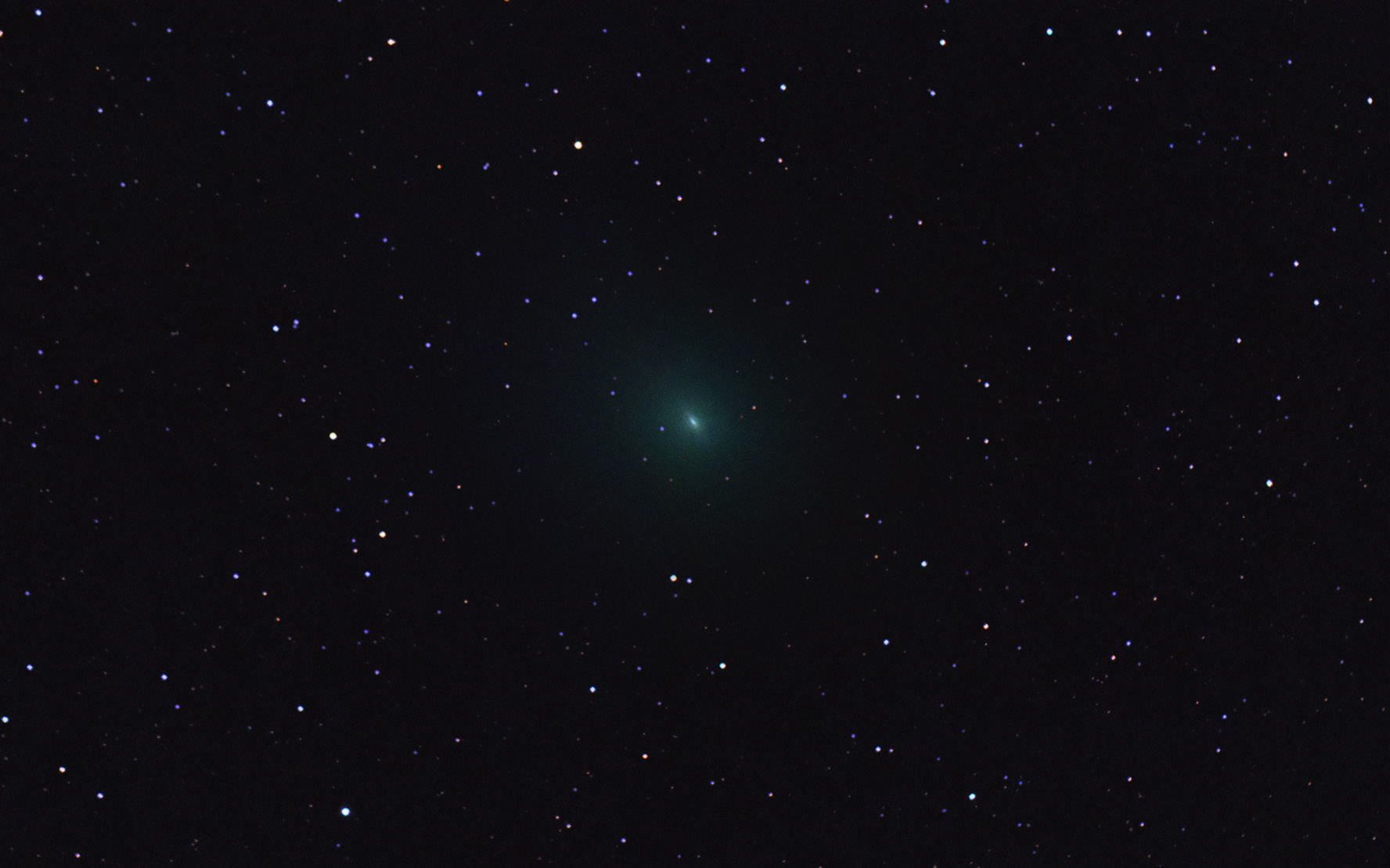
Comet 45P, Feb 10, 2017, 09:54 UT. 52×60 sec @ ISO 800, TV-85 at F/5.6, Canon T3, Atlas EQ-G w/EQMOD. StarFreeze version.
Taken in bright moonlight and bad LP in the hours before dawn on Feb 10, 2017. 45P is so dim that it barely showed up in the sub-images. I almost thought I was not in the right place. Luckily, I kept the scope pointed at that spot and kept shooting images until daylight.
Comet Johnson on Feb 10, 2017, 08:46 UT. 14×60 sec @ ISO 400, TV-85 at F/5.6, Canon T3, Atlas EQ-G w/EQMOD.
I had time for just a quick peek at Comet Johnson before moving on to my main target, Comet 45P. It was not at an optimum spot and ISO 400 maxed out at 60 sec exposures with all the LP and moonlight. So, it was not very deep and has noise and low color. But, at least I can see that not much has changed since the last time I shot it. This is supposed to be the next photogenic comet, coming this summer to a sky right above you. 🙂
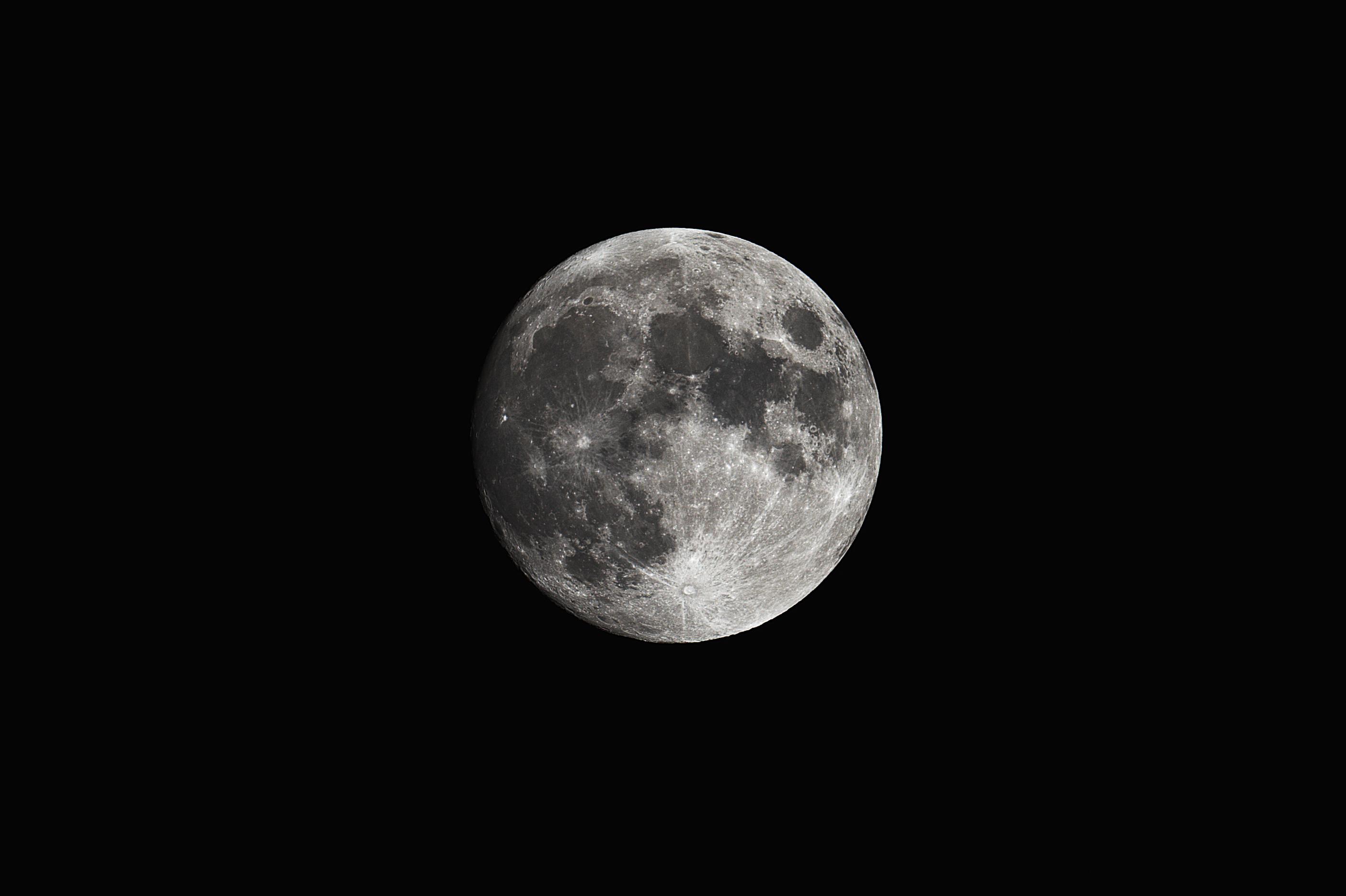
The Full Moon Feb 9, 2017, (Feb 10, 2017, 01:23 UT.) 6 frames @ 1/800th sec stacked. TV-85 at F/5.6, Canon T3, Atlas EQ-G w/EQMOD.
This is six frames taken at 1/800 sec @ ISO 100 using the TV-85/Canon T3 combo. I did an offset removal on each frame in IRIS and then median stacked them. One round of sharpening and wavelets in IRIS, too, but that was it. Contrast adjustment in PS and then posted here.
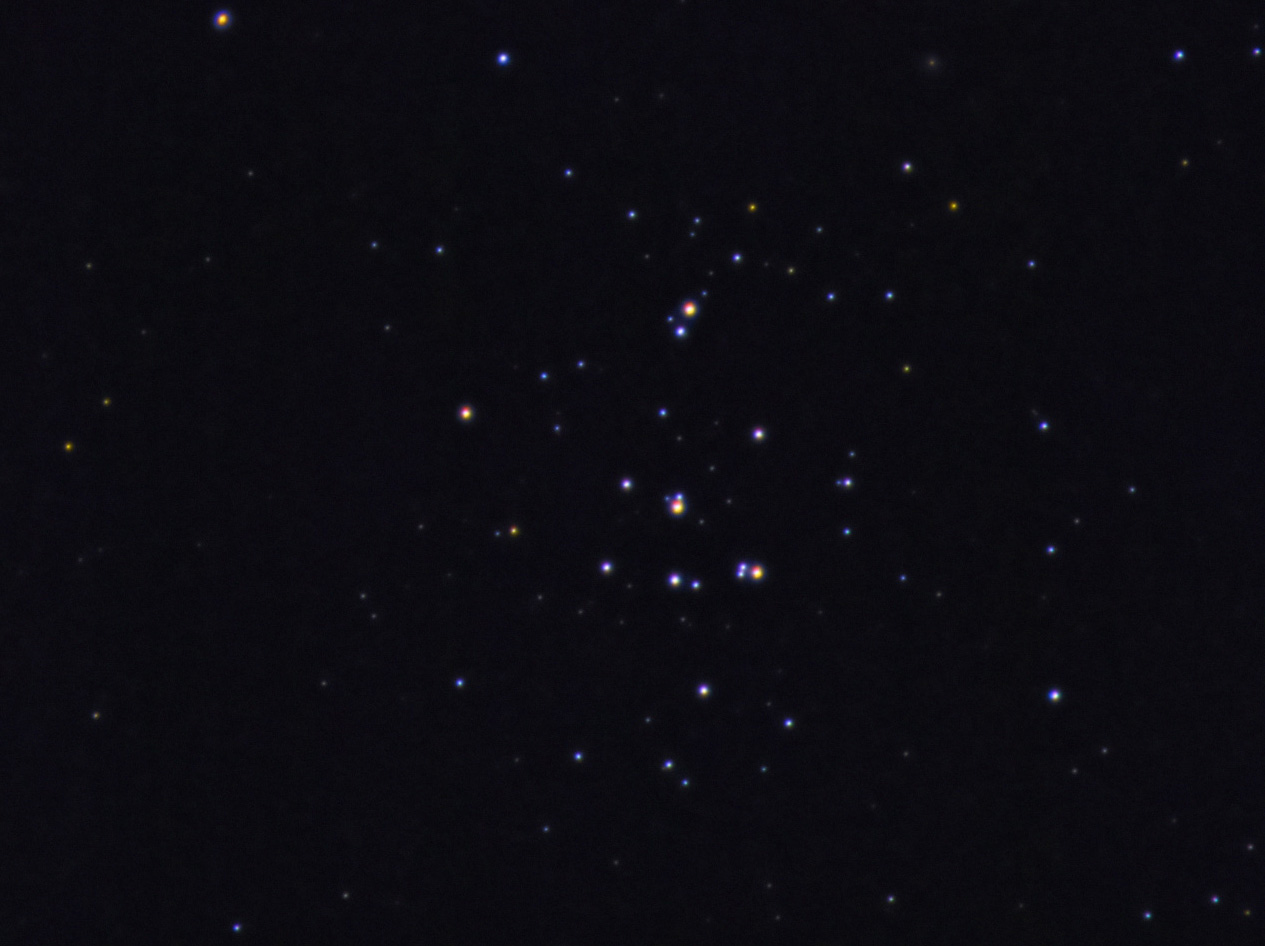
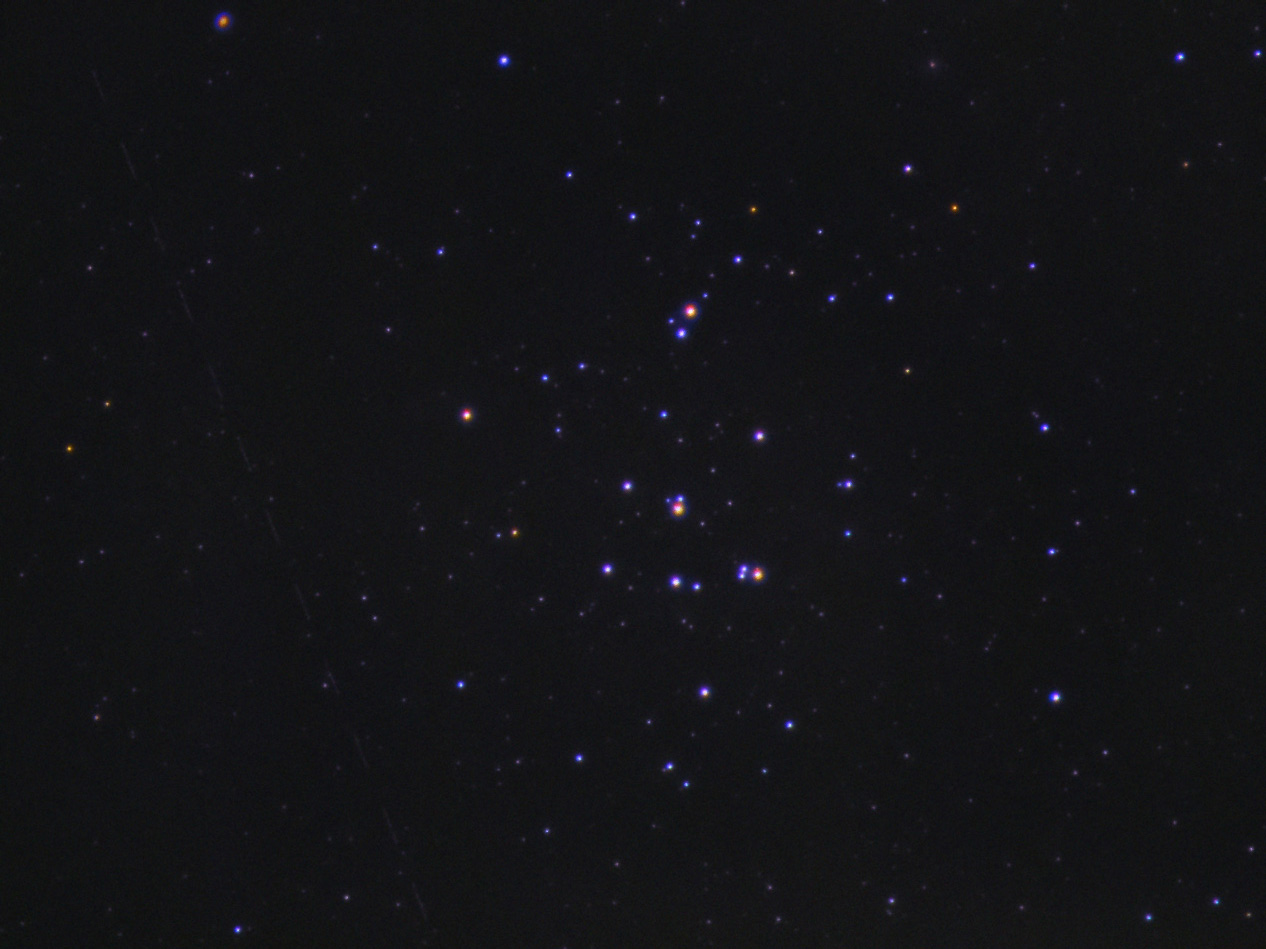
The Beehive Cluster – M44 in Cancer. 59×5 sec, Orion Ultra-Mini 30mm F/4.3 guidescope, Toupcam AR130 Color guide camera.
Here’s something I’ve been wanting to try. I used my new guidescope and color guide camera combo to take images of the Beehive in Cancer. It looked great on the screen with 5 second exposures.
I used the ToupSky capture software, which shoots continuous frames and saves each frame in an AVI movie file. Then, I imported the AVI file into IRIS and treated the data like I was processing a planetary image. It worked great and it was fast to process, too.
Color balance could be better, but I think I can fix that before I start recording by tweaking the settings in the ToupSky software. Now that I know it can be done, I’ll probably try this again the next time the weather is clear.
For fun, I combined the above image with one taken with my TV-85 back in 2015. Check it out:
TV-85 data combined with the Ultra-Mini Guidescope/Toupcam combo.
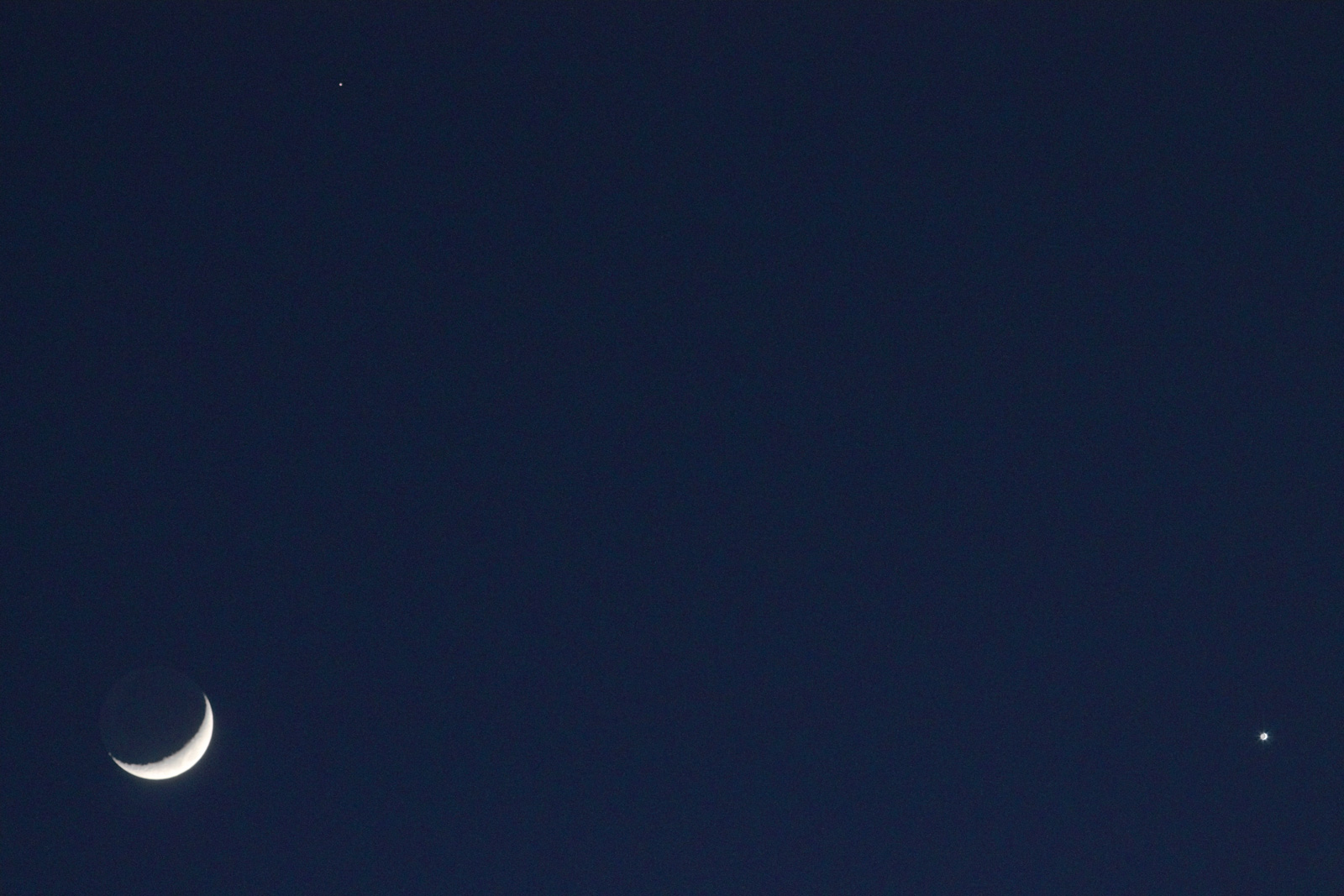
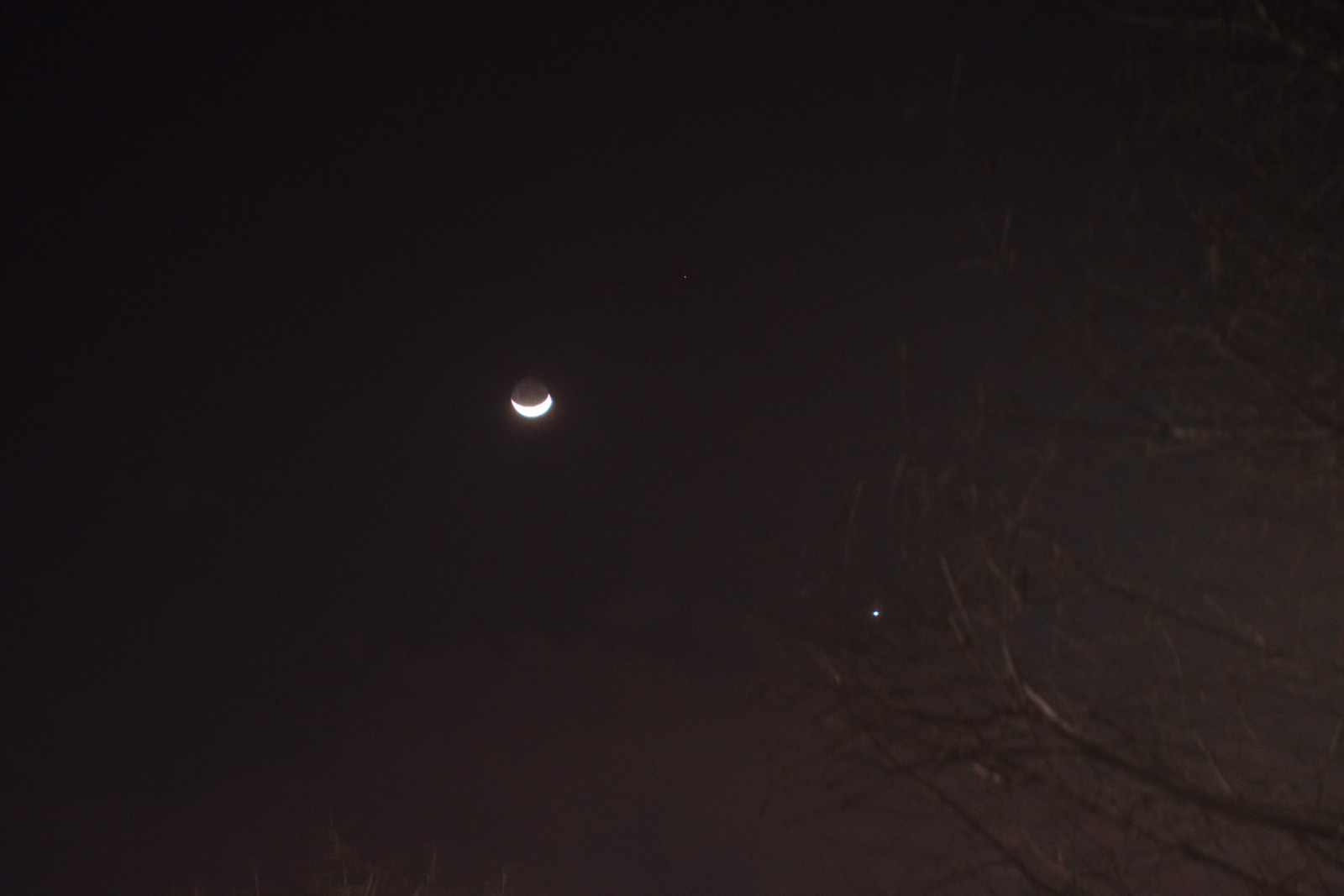
Moon, Venus and Mars on Jan 31, 2017. Canon T3 and a Canon 200mmm telephoto lens set at F/4. Exposure was 1/100th sec @ ISO 3200.
A beautiful conjunction of the moon and two planets made the last evening of Jan 2017 quite nice. The Moon joined Venus and Mars on this evening and I just had to get some shots.
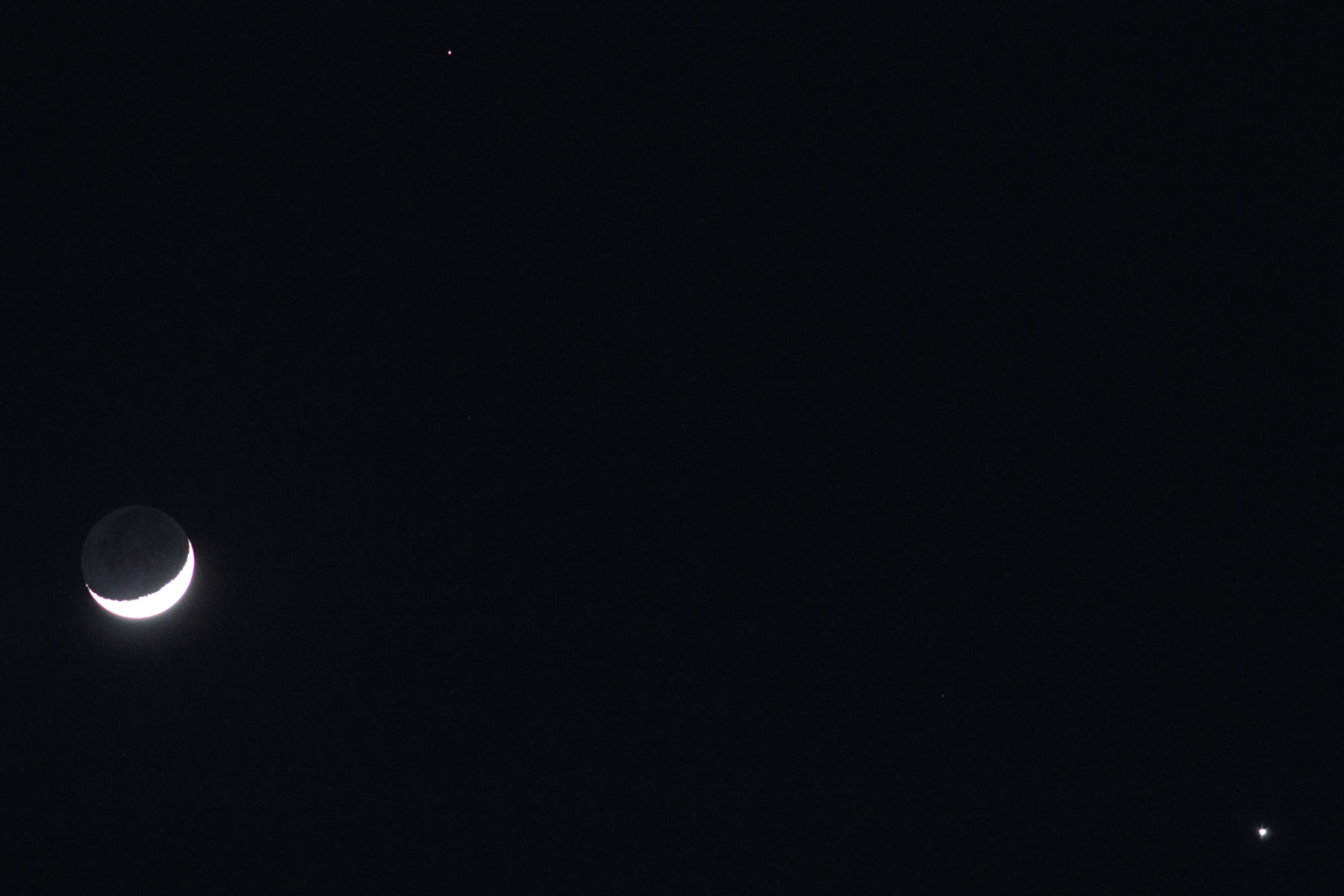
Moon, Venus and Mars on Jan 31, 2017. Canon T3 and a Canon 200mmm telephoto lens set at F/2.8. Exposure was 1/40th sec @ ISO 3200.
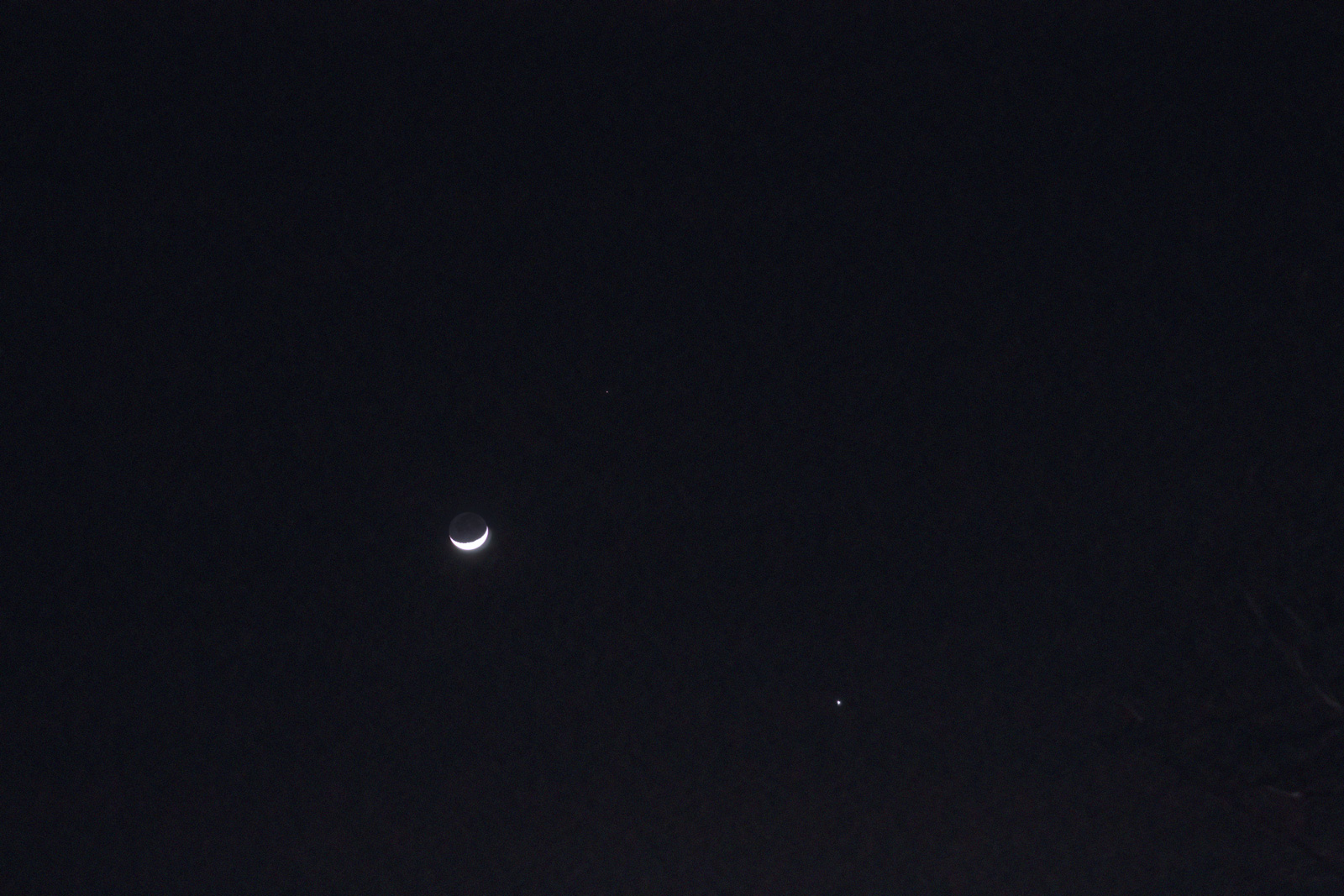
I could have used a tripod for these, but I took the images by propping the camera on the top of a car. Consequently, I had lots of rejected images due to motion blur. But, luckily, I got a three steady ones that were good enough to post. The forth image below was a repair job, but it came out OK after correcting it for my unsteady hands. 🙂
Moon, Venus and Mars on Jan 31, 2017. Canon T3 and a Sigma 28-70 Zoom, 70mm at F/4. Exposure was 1/60th sec @ ISO 3200.Moon, Venus and Mars on Jan 31, 2017. Canon T3 and a Sigma 28-70 Zoom, 70mm at F/4. Exposure was 1/4th sec @ ISO 3200.
These last two are actually composites. The one right above had motion blur and as mentioned previously, I was able to fix it. But, fixing it messed up the trees. So, I had to composite the good trees back in from the original. In the second image above, the moon was replaced with a better version from the 200mm lens.
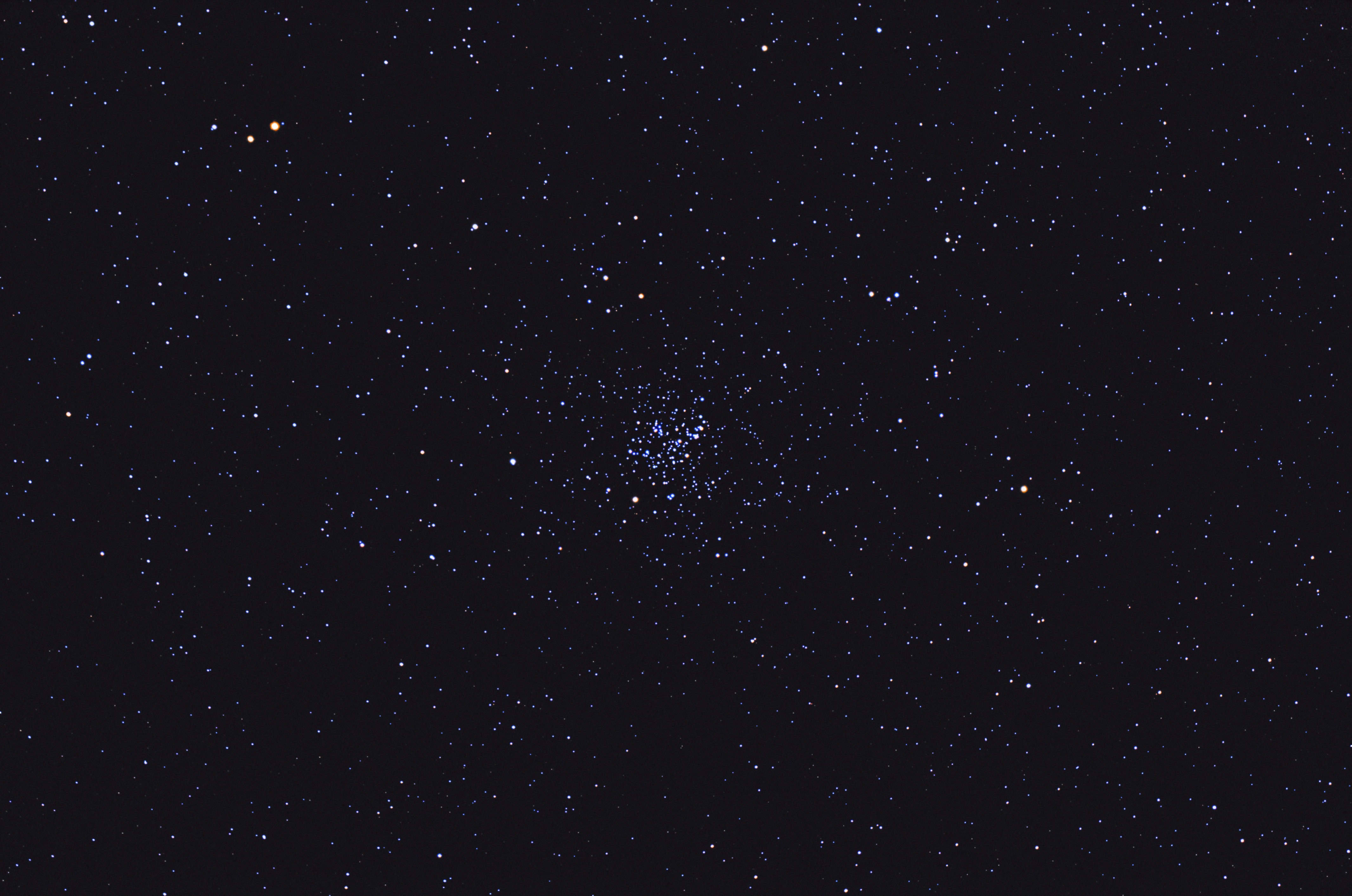
M67 Open Cluster in Cancer. Taken on Jan 29, 2017. 38×60 sec @ ISO 400, TV-85 at F/5.6, Canon T3, Atlas EQ-G w/EQMOD.
With the heavy light pollution (LP) I’ve had to deal with where I’m imaging from lately, I decided a few open clusters would be better targets than anything too faint like nebulae and galaxies. At around 10:30 pm on this particular night, M67 was in perfect position to be imaged.
The LP limited me to 1 minute exposures at ISO 400, so it is not a very deep image. Getting rid of the LP in processing knocks the colors out and I had to work hard to get a little of the colors back. Oh, well… at least I’m able to get something useful out of the data.
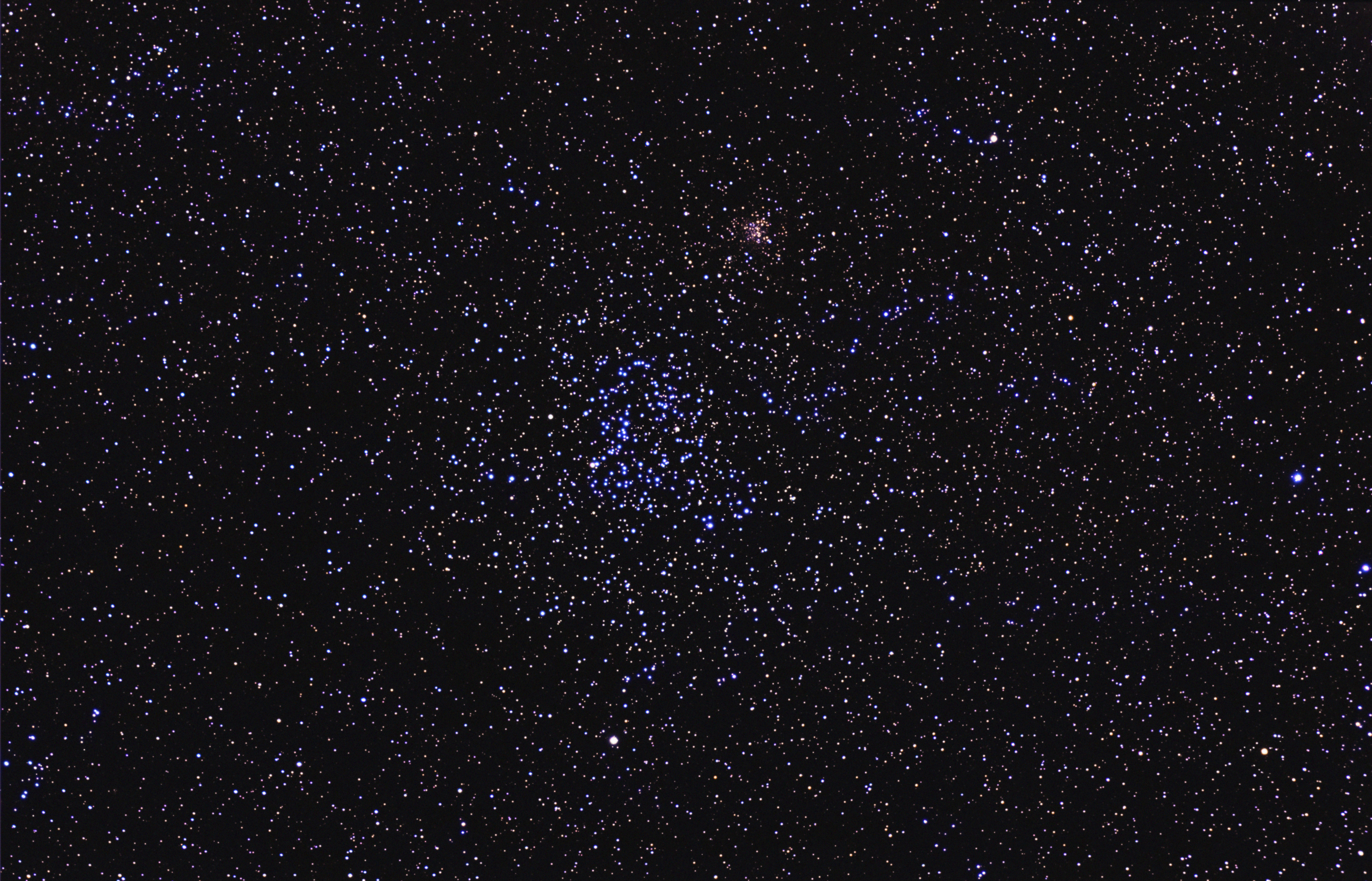
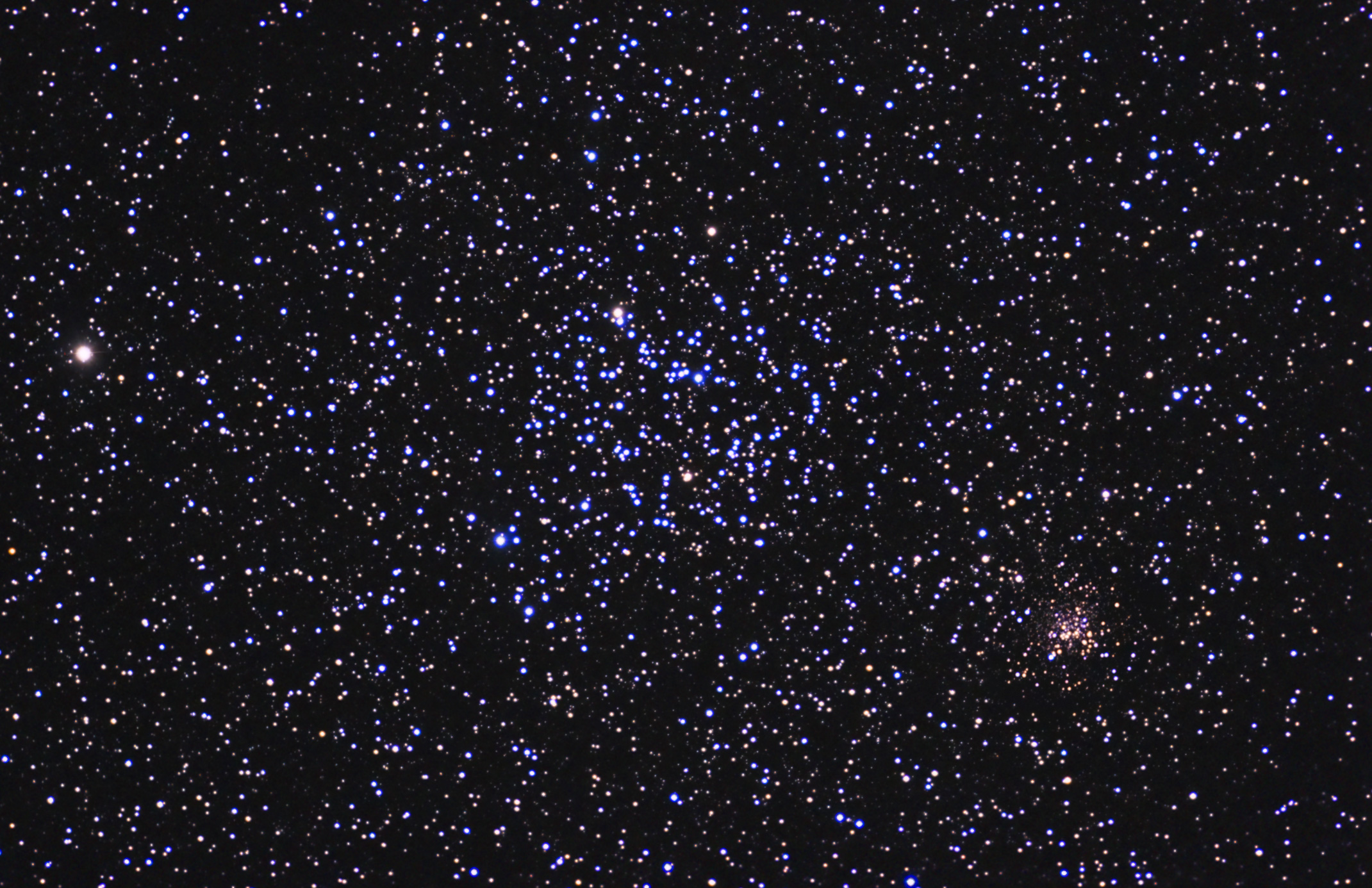
M35 on Jan 29, 2017. Full frame. 50×60 sec @ ISO 400, TV-85 at F/5.6, Canon T3, Atlas EQ-G w/EQMOD.M35 on Jan 29, 2017. Cropped and rotated north up. 50×60 sec @ ISO 400, TV-85 at F/5.6, Canon T3, Atlas EQ-G w/EQMOD. Additional 50% blend with image from SN-8.
Two versions of data obtained on Jan 29, 2017 in very light polluted conditions. The full frame is oriented north to the left and the crop has been rotated to north is up.
Images of Comets, Nebulae, Galaxies and Star Clusters