On Feb 16th, I went to a darker site with a Bortle rating of about 5/6. It borders on Bortle 4 in the south-southwest. I got the comet again, M45 and some more tests with the Milky Way mode camera, as the Seestar refers to it.
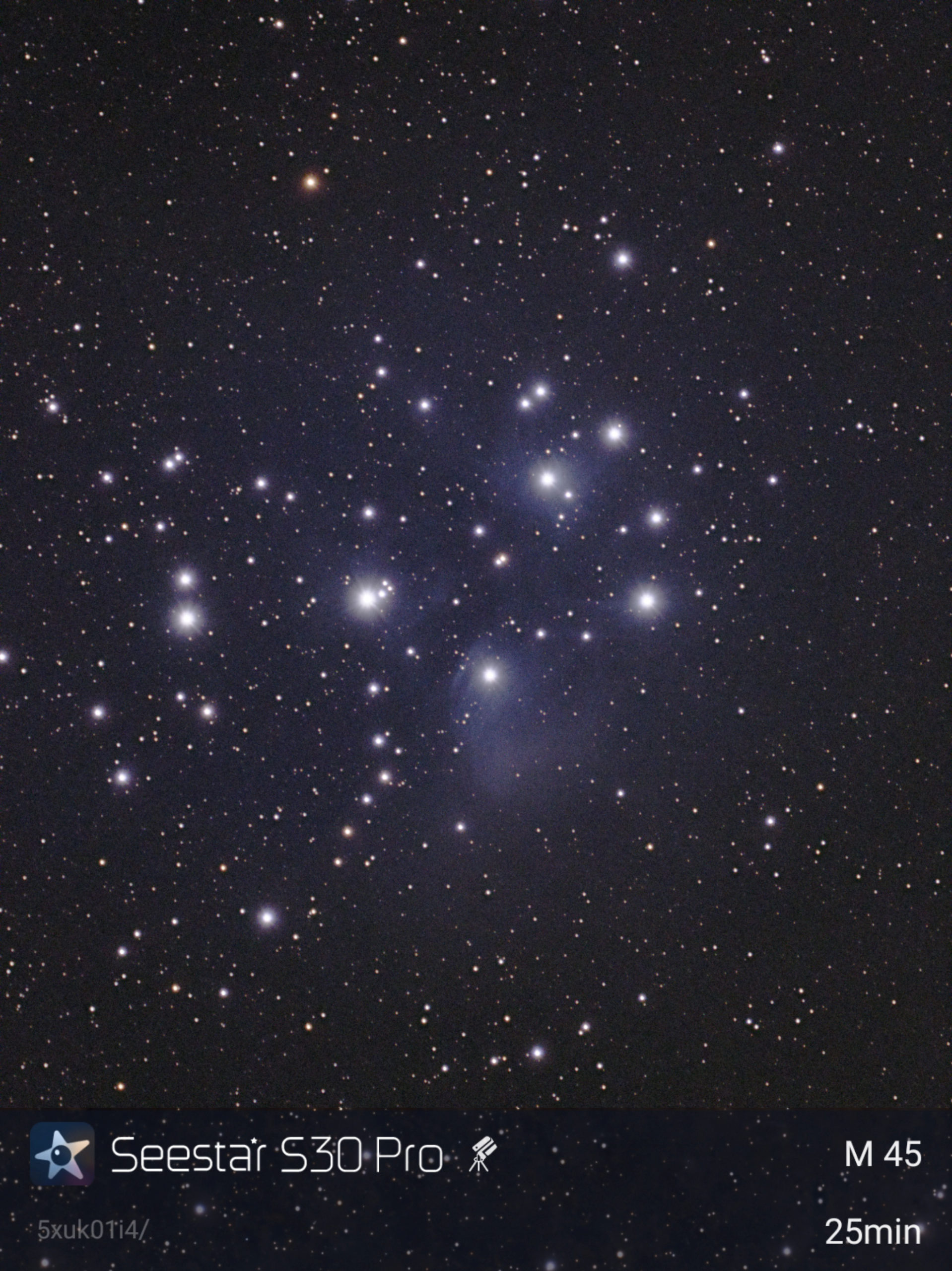
The Deep Sky image for this night was the Pleiades. I let it run for only 25 minutes, since it looked like dew was forming on the lens.
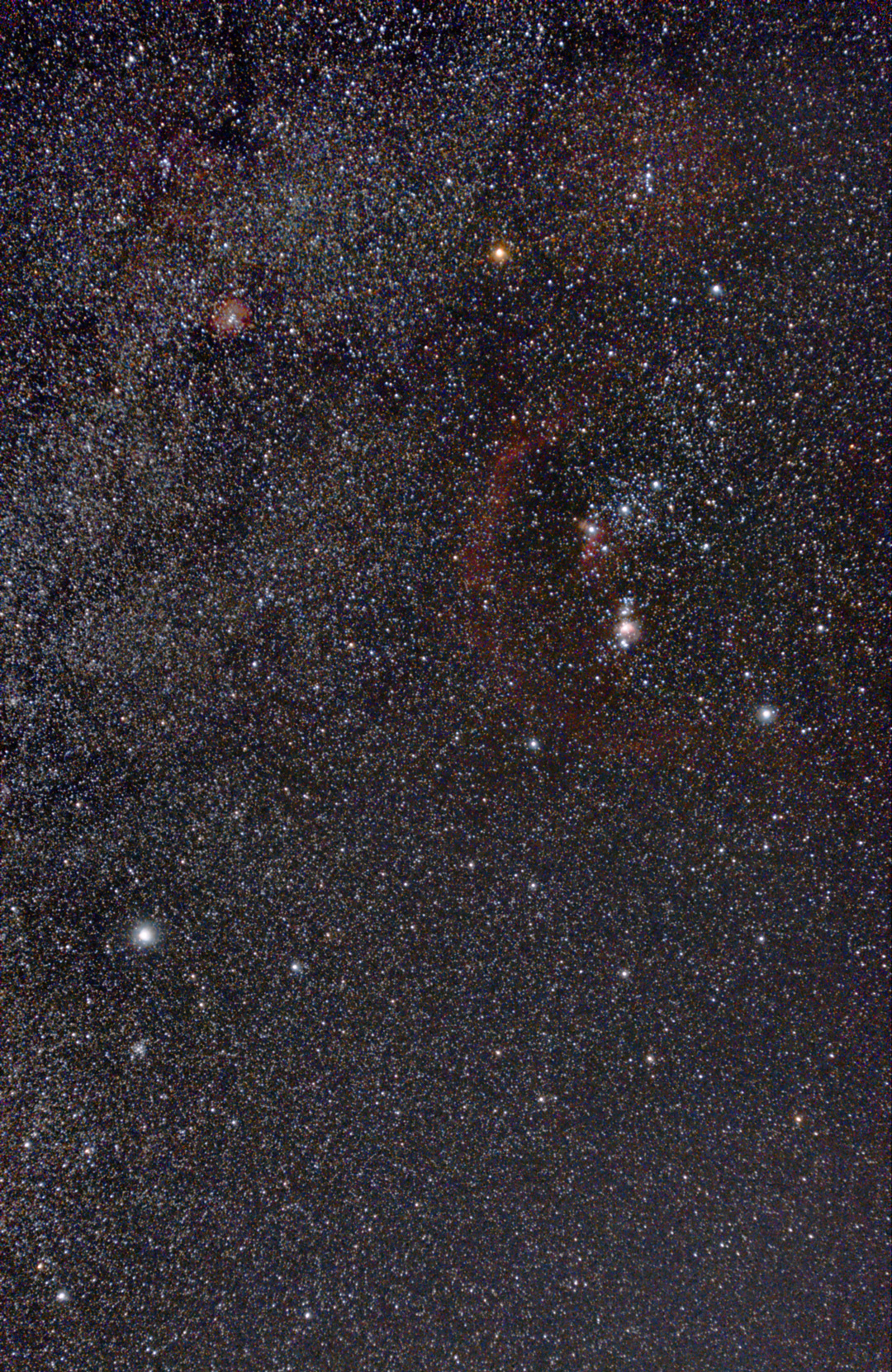
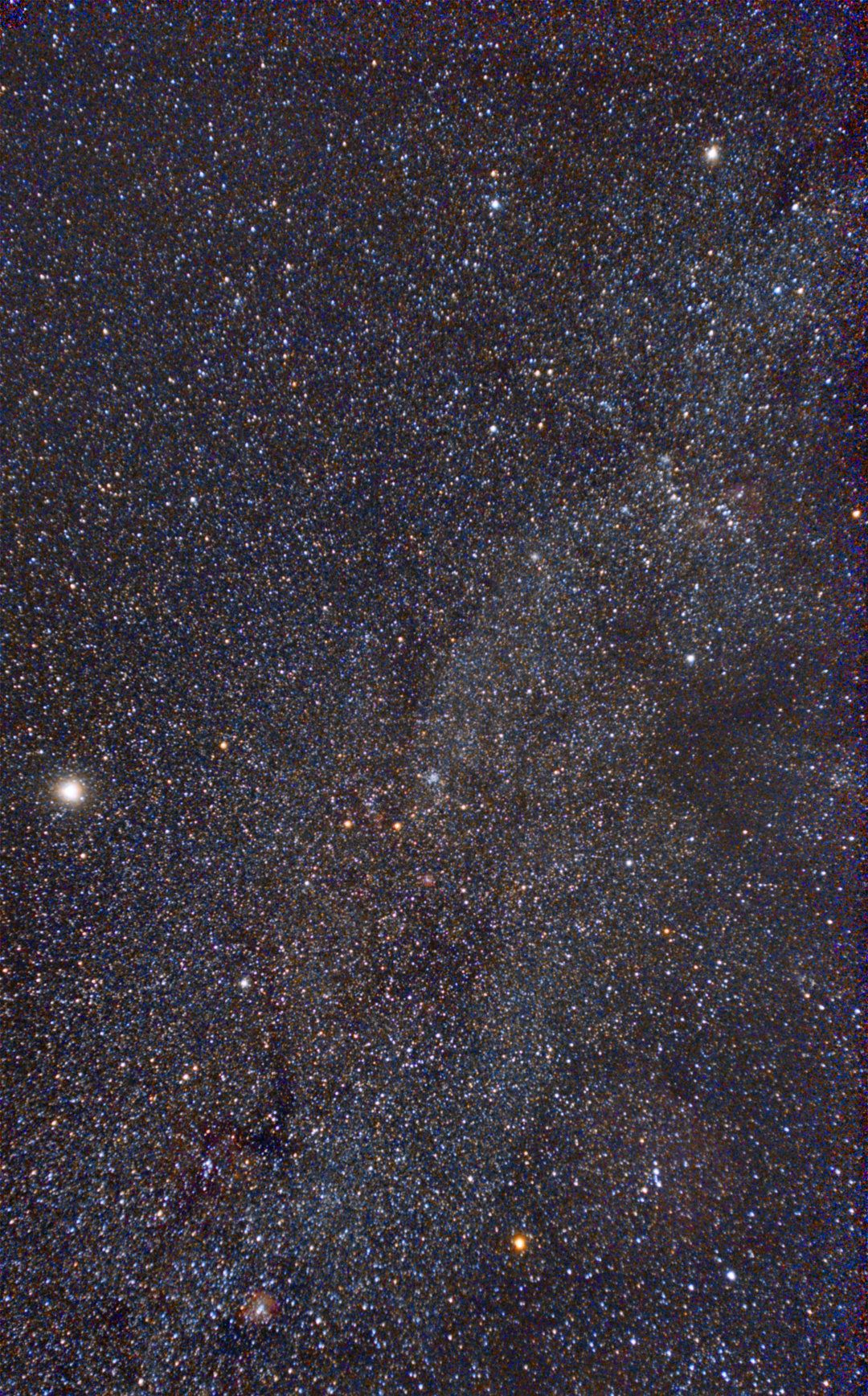
For the wide angle lens, I went back to the Orion area and was able to point it much more south to include Canis Major with Sirius dominating towards the bottom left. Very dark part of the sky at this location, so it was a good test.
Orion and Canis Major area. 60 x 30 sec, Seestar S30 Pro.
Another try of the Pleiades area:
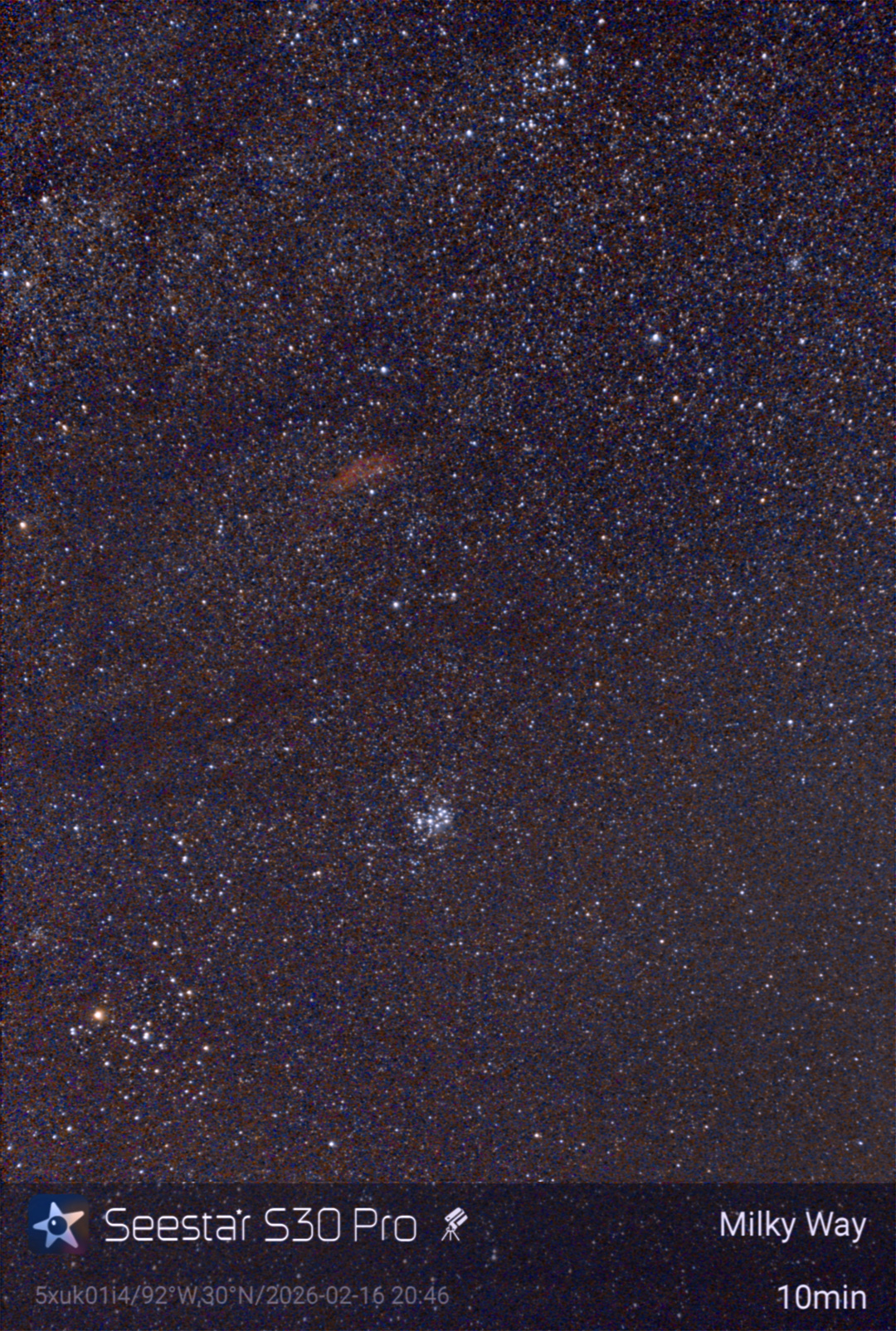
Taurus and Perseus area, featuring the Pleiades and the California Nebula. 20×30 sec.
Finally, this last one was nothern Orion and parts of Gemini.
Northern Orion, Gemini, featuring Jupiter to the left. 25 x 60 sec, Seestar S30 Pro.
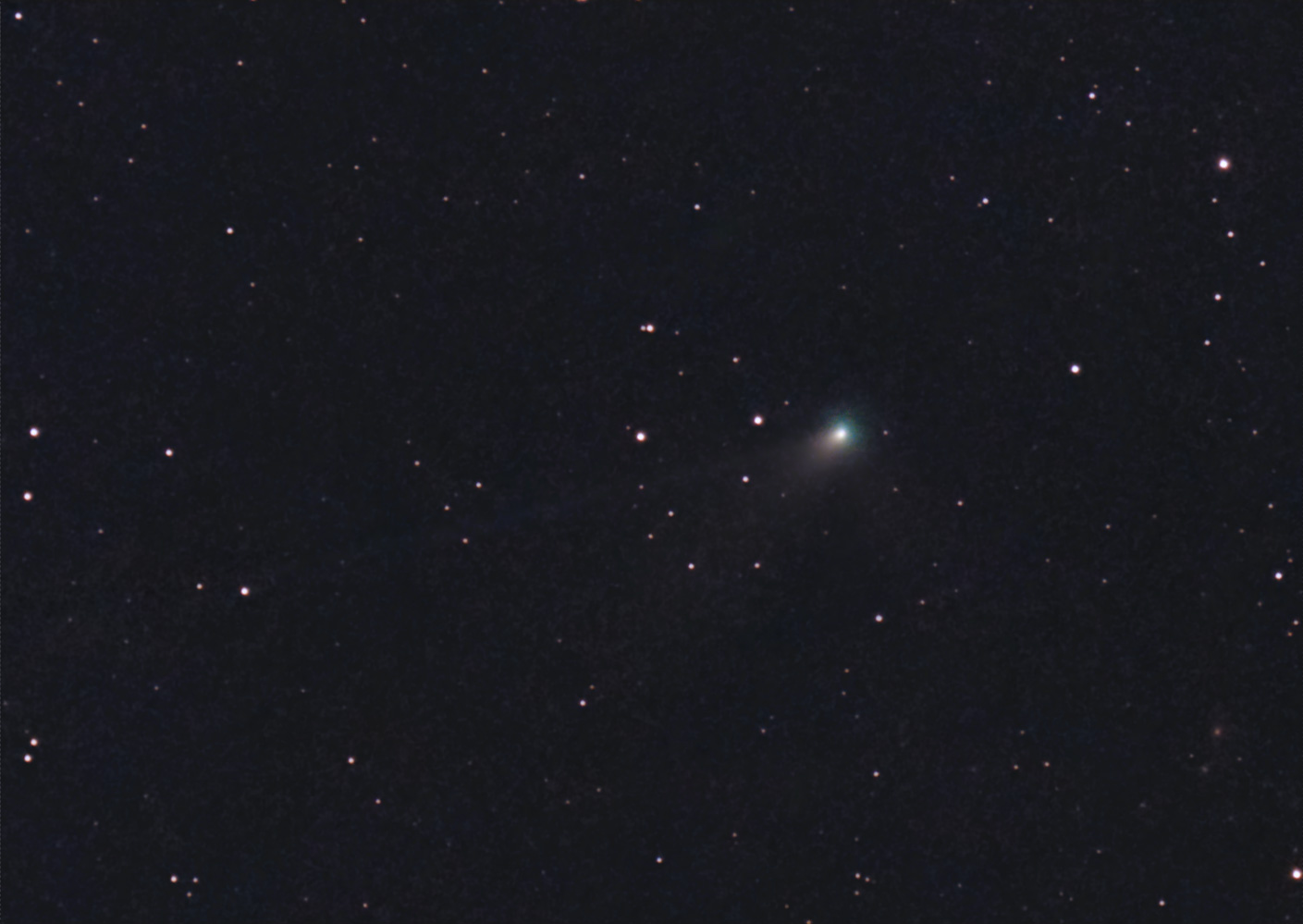
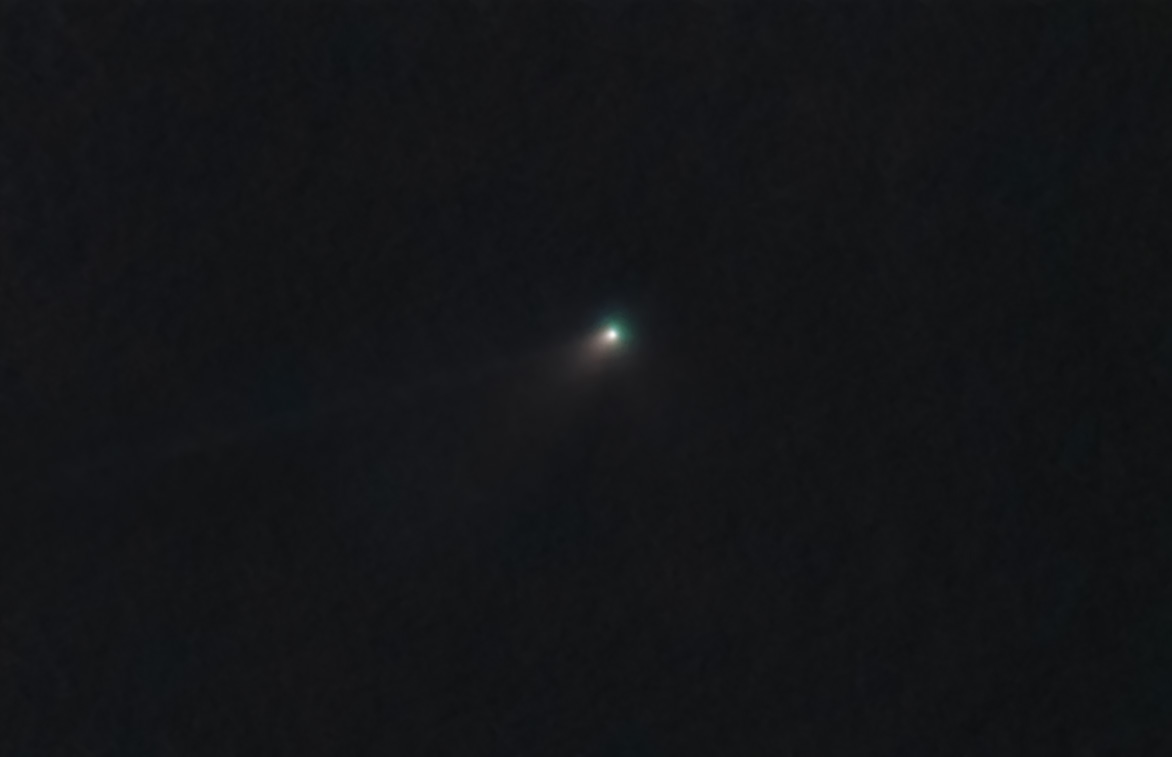
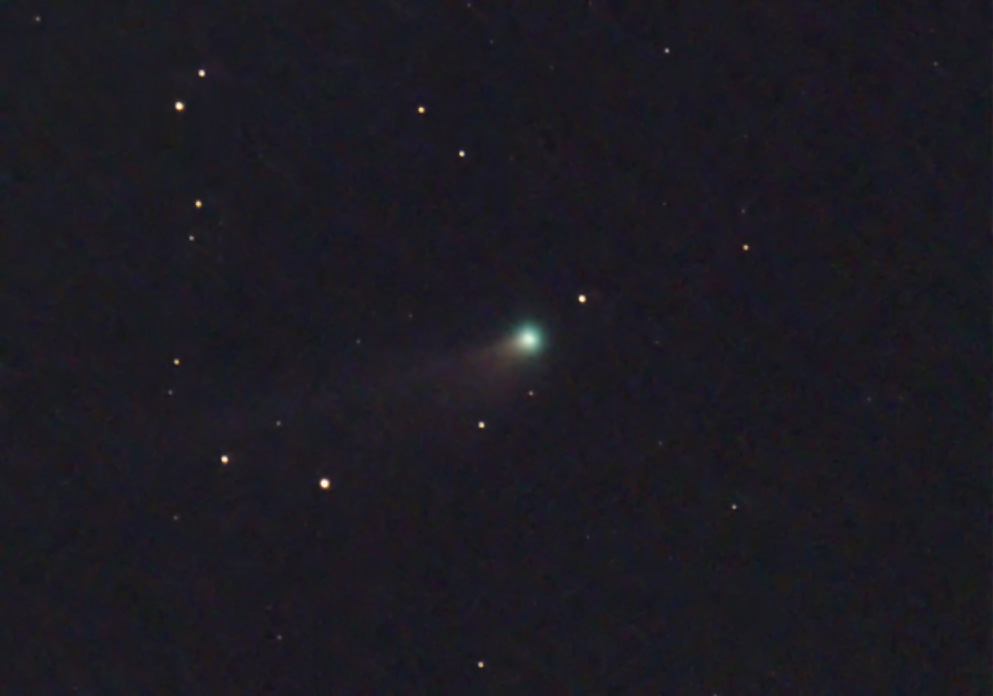
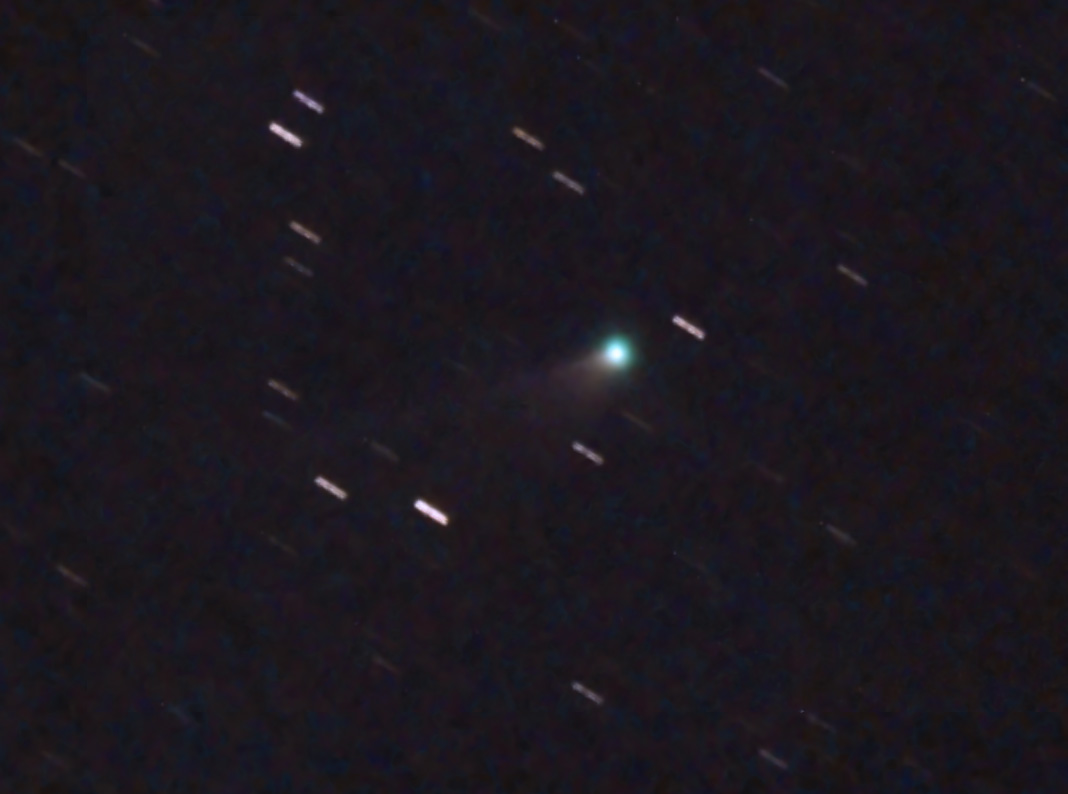
My first chance to get out of the city and into the country (Bortle 6/7 skies) with the new smart telescope was Feb 15th, 2026. My first target was Comet C/2024 E3 (Wierzchos). I managed to get 50 frames of 20 sec each, even though the comet was very low to the horizon in the southwest. I generated a star-freeze and star-streaks set of images with that data. Those are below:
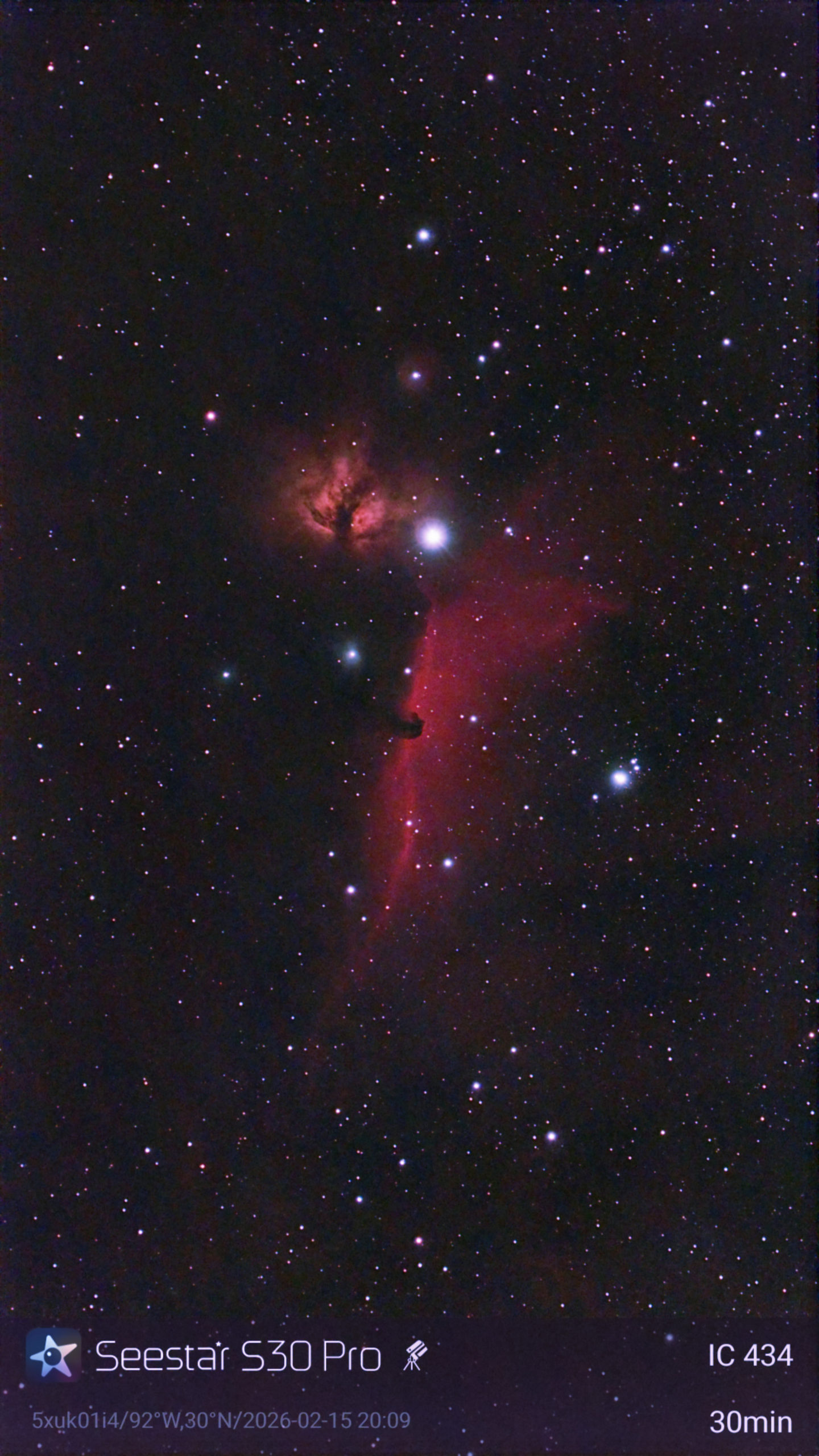
Next, I switched out of comet imaging mode and into Deep Sky mode. I picked the Horse Head Nebula as my next target and let it run for 30 minutes. It did fairly well, as you can see:
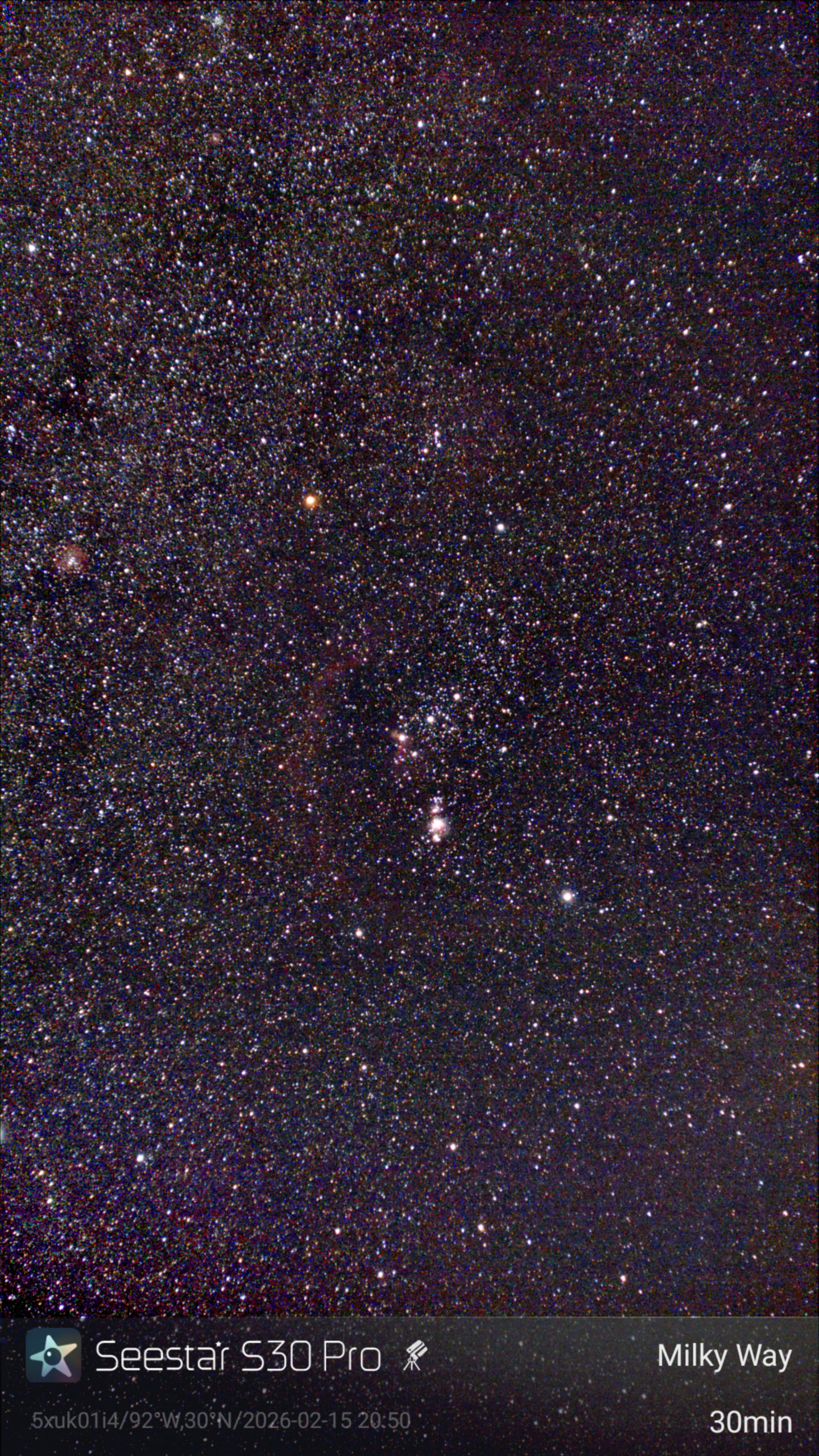
For the next step in my testing of this new scope, I switched to the wide-angle lens and took some images of a large swath of sky. It was my first time using this camera. I left the scope pointing where it was (the Horse Head) and did another 30 minute run:
Not too bad of a night for Bortle 5/7 skies and it being a short imaging session before a work day.
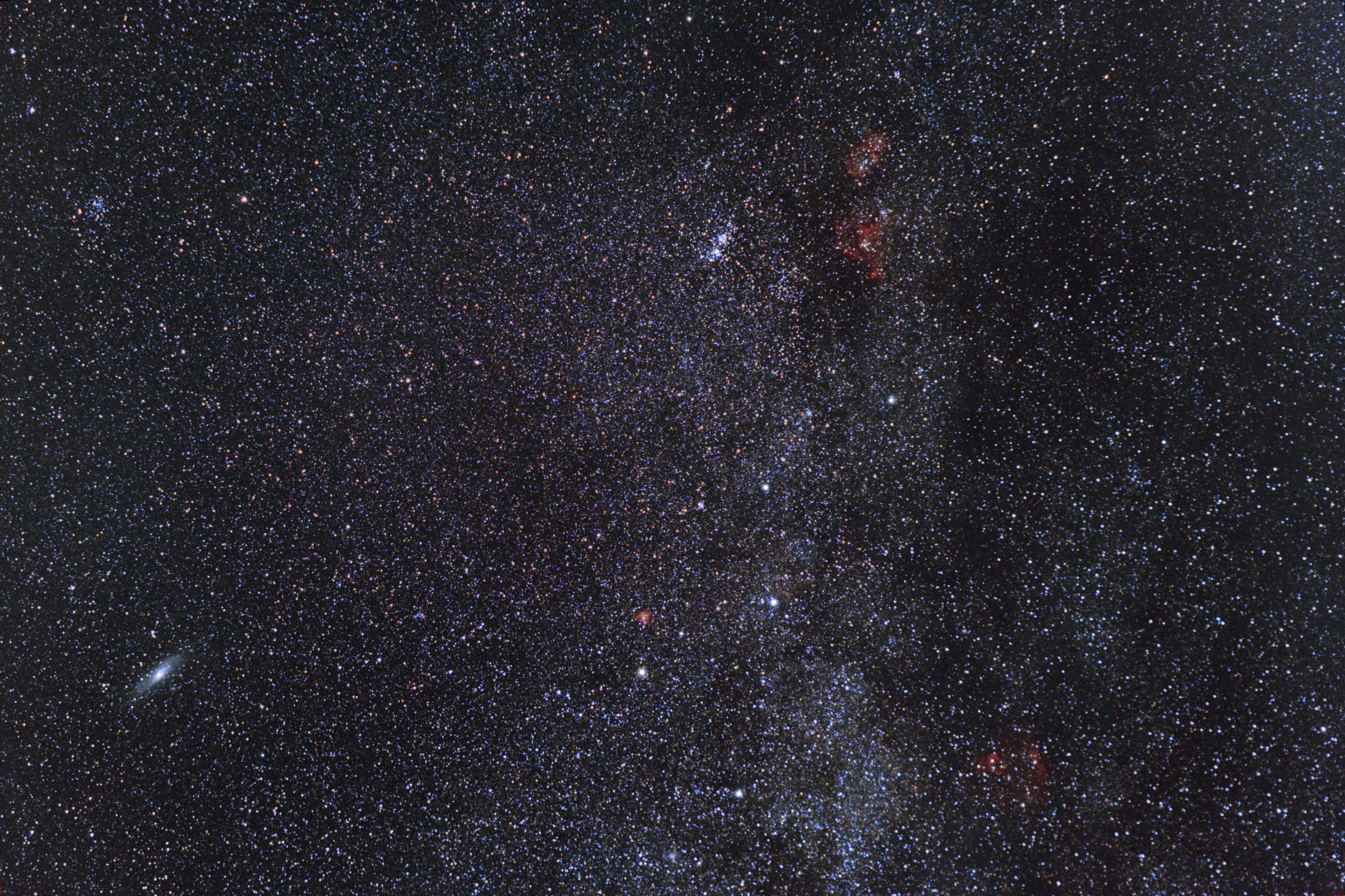
Cassiopeia region including M31, wide angle view. 6×300 sec @ ISO 1600, Sigma 28-70 Zoom at 28mm, F/2.8, Astronomic CLS filter. North is to the right in this view.
By luck I framed this one with M31 and the Cassiopeia region and got all the good nebulae that were in the area to boot. You can see the Heart and Soul Nebulae, the PacMan Nebula, emission nebula NGC 7822, and other smaller nebulae like the one near Gamma Cass. The Double Cluster is there along with lots of other open clusters.
It is not the best lens and I did do some distortion correction in PS. It was a little difficult to process since this was the first time I used the Astronomik CLS filter. Before, I had one light pollution filter and two cameras, so I finally got another one so they both have one. All I need now is a small mount for light loads like the setup I used here and I could get two cameras going at the same time. Yeah, buddy! 🙂
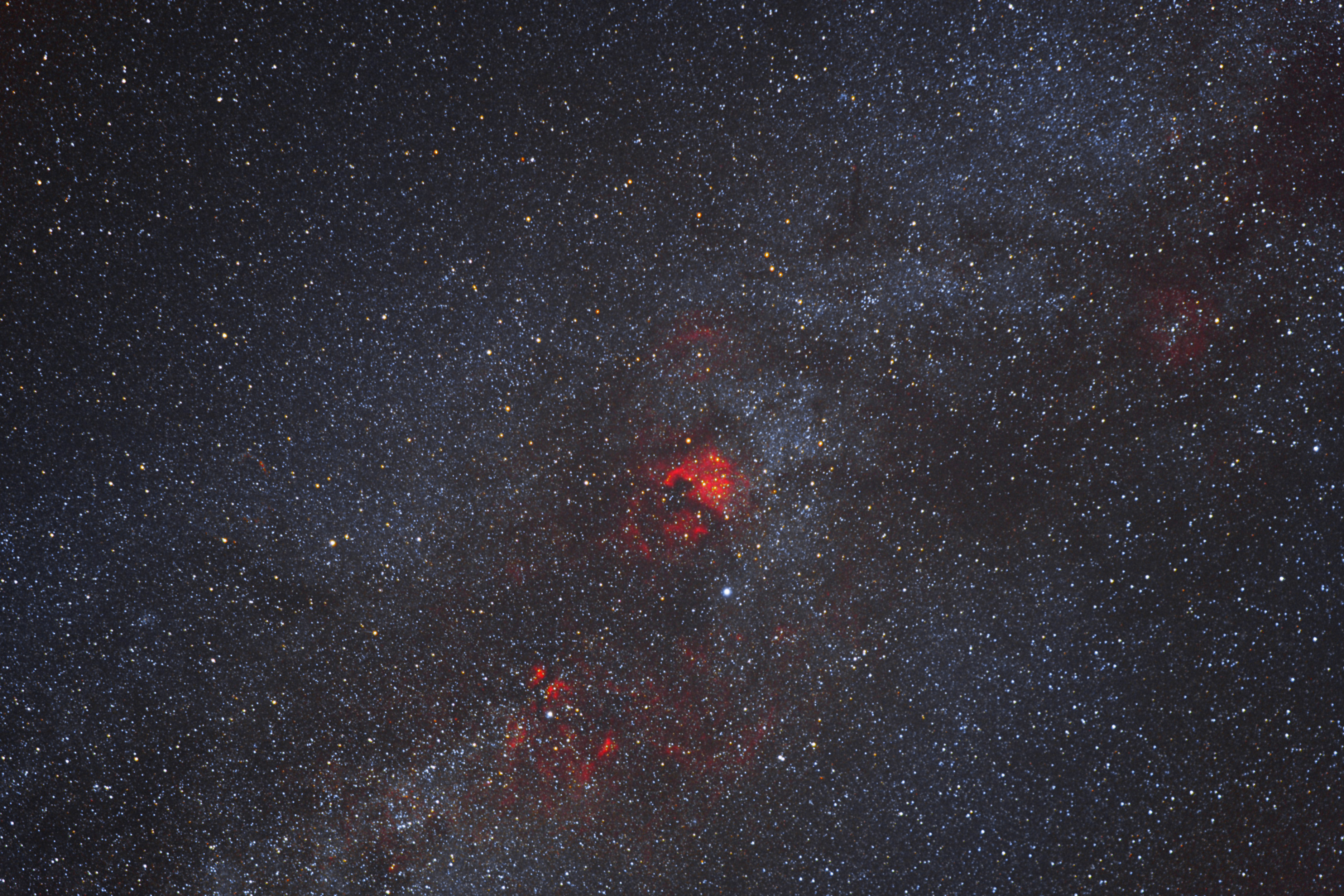
The North American Nebula Area. 10×300 sec @ ISO 1600, modified Canon XS, Astronomik CLS filter, Sigma Zoom 28-70 at 28mm, F/2.8.
I salvaged what I could of this one. I had problems with the acquisition of the sub-images and it was mainly caused by dew. I had to wipe the lens down several times and every time I did, the focus or focal length changed. I was able to fix it by installing a dew heater strip on the lens, but that was not until the next set.
I gave up on these after an hour of fighting it. I should have installed the heater before shooting, but I was in a rush to get data and there was not any dew problems in the beginning.
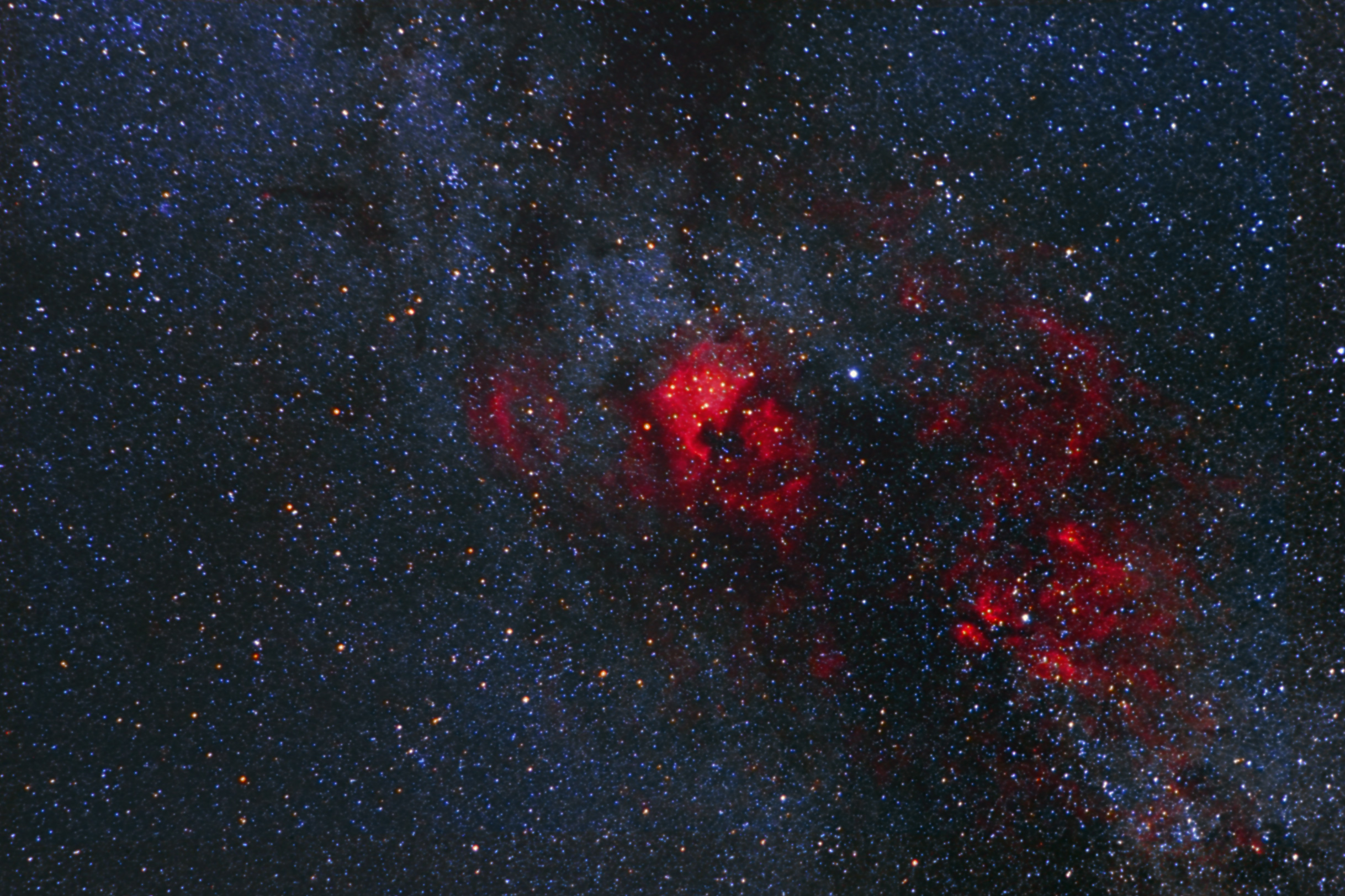
But, at least I got something out of it. Anyway, here’s a portrait orientation version of the data with North at the top:
The North American Nebula Area. 10×300 sec @ ISO 1600, modified Canon XS, Astronomik CLS filter, Sigma Zoom 28-70 at 28mm, F/2.8. Portrait version.
And here is a close crop of the central region:
The North American Nebula Area. 10×300 sec @ ISO 1600, modified Canon XS, Astronomik CLS filter, Sigma Zoom 28-70 at 28mm, F/2.8. Close crop.
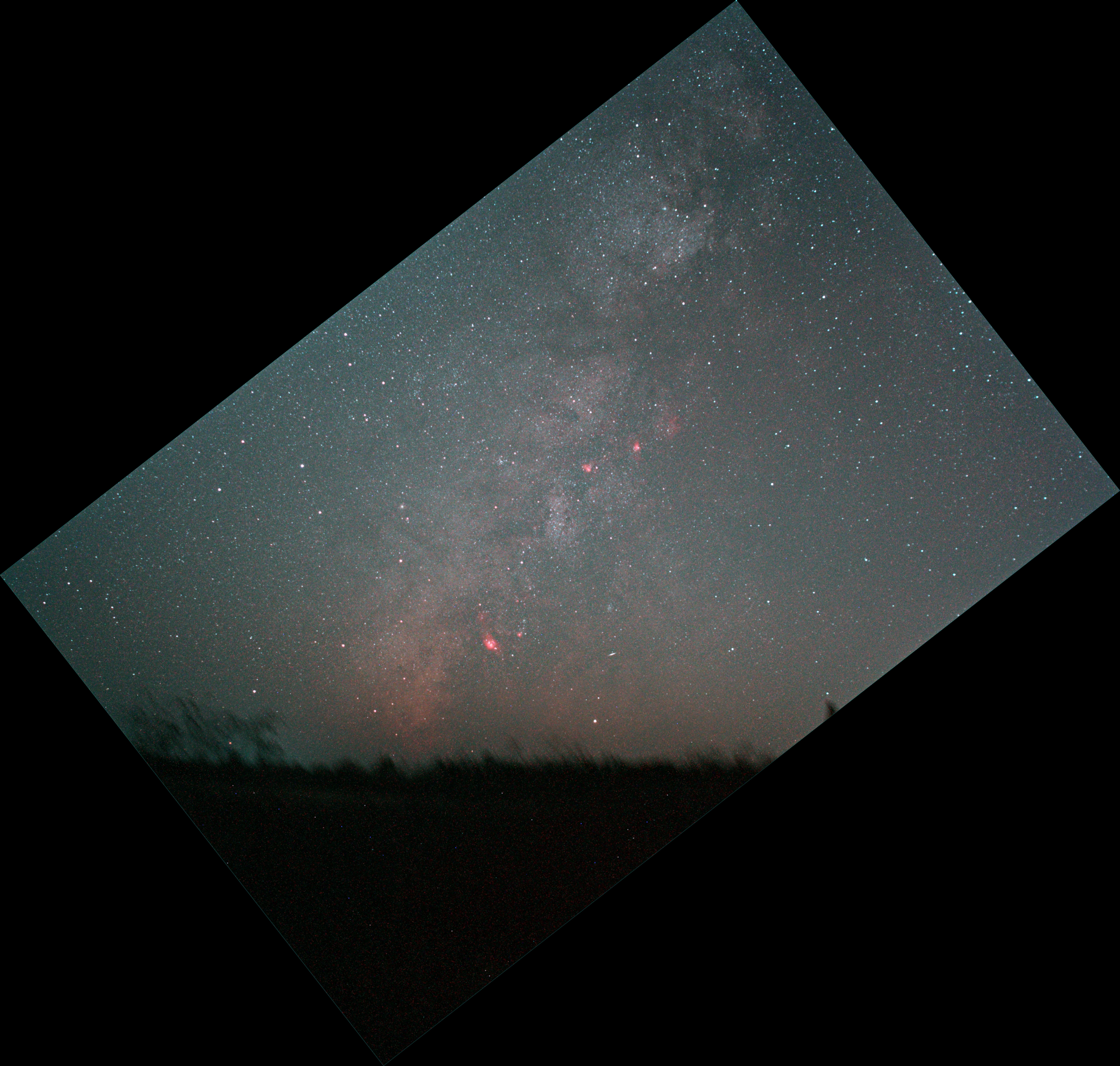
1st shot of the night and I caught a small meteor. 1×180 sec @ ISO 1600, Canon XS (Modified,) Sigma 28-70 Zoom at 28mm, F/2.8, Astronomik CLS filter. No calibration or processing of this image, except to set the black point and rotate the canvas.
Instead of my usual dead-end road site, I drove a few more miles west of there to a new site I’ve been wanting to try out. It is only 50 minutes total trip time and you get a borderline Bortle 3/4 site with a really dark southern and southwestern horizon.
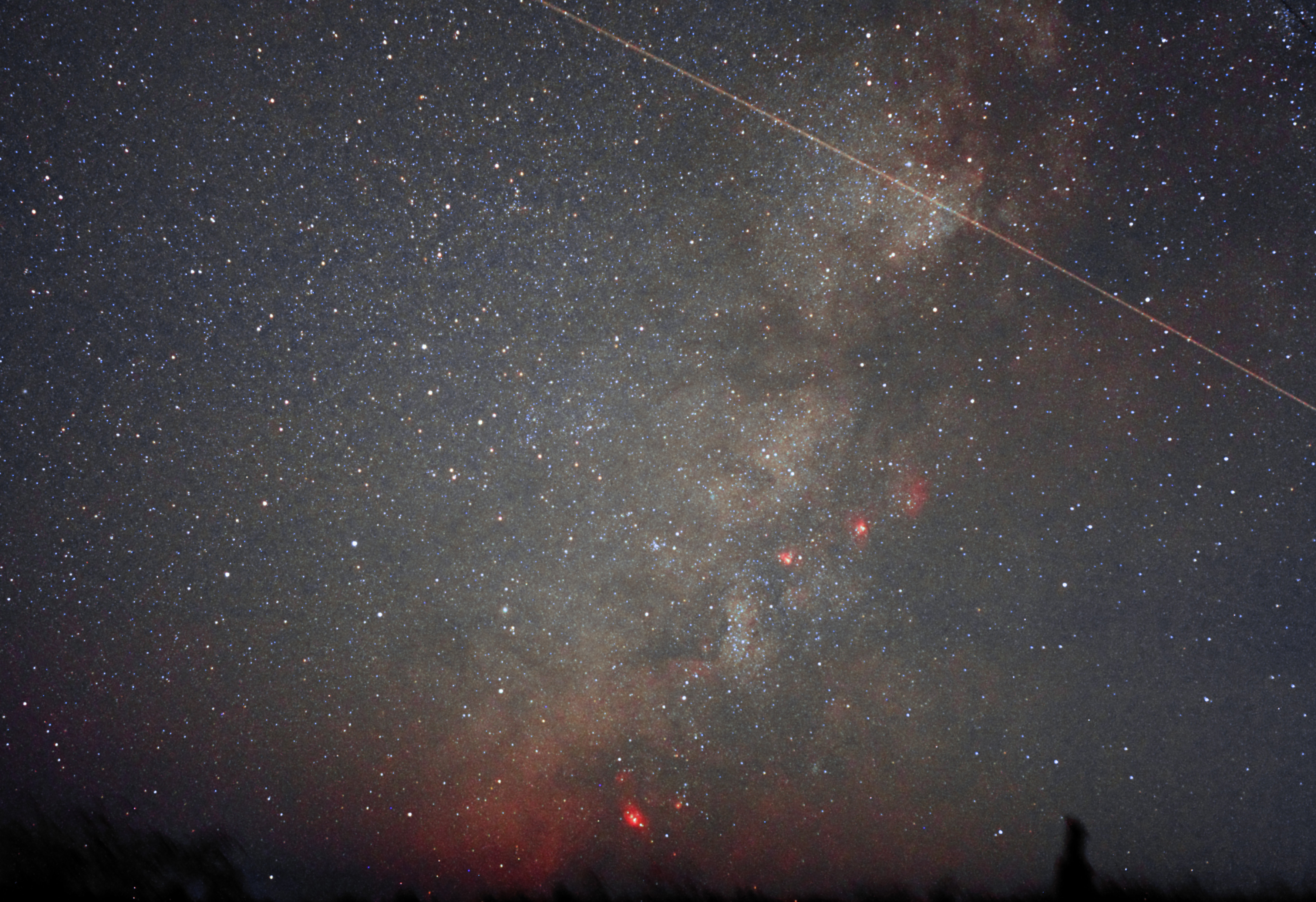
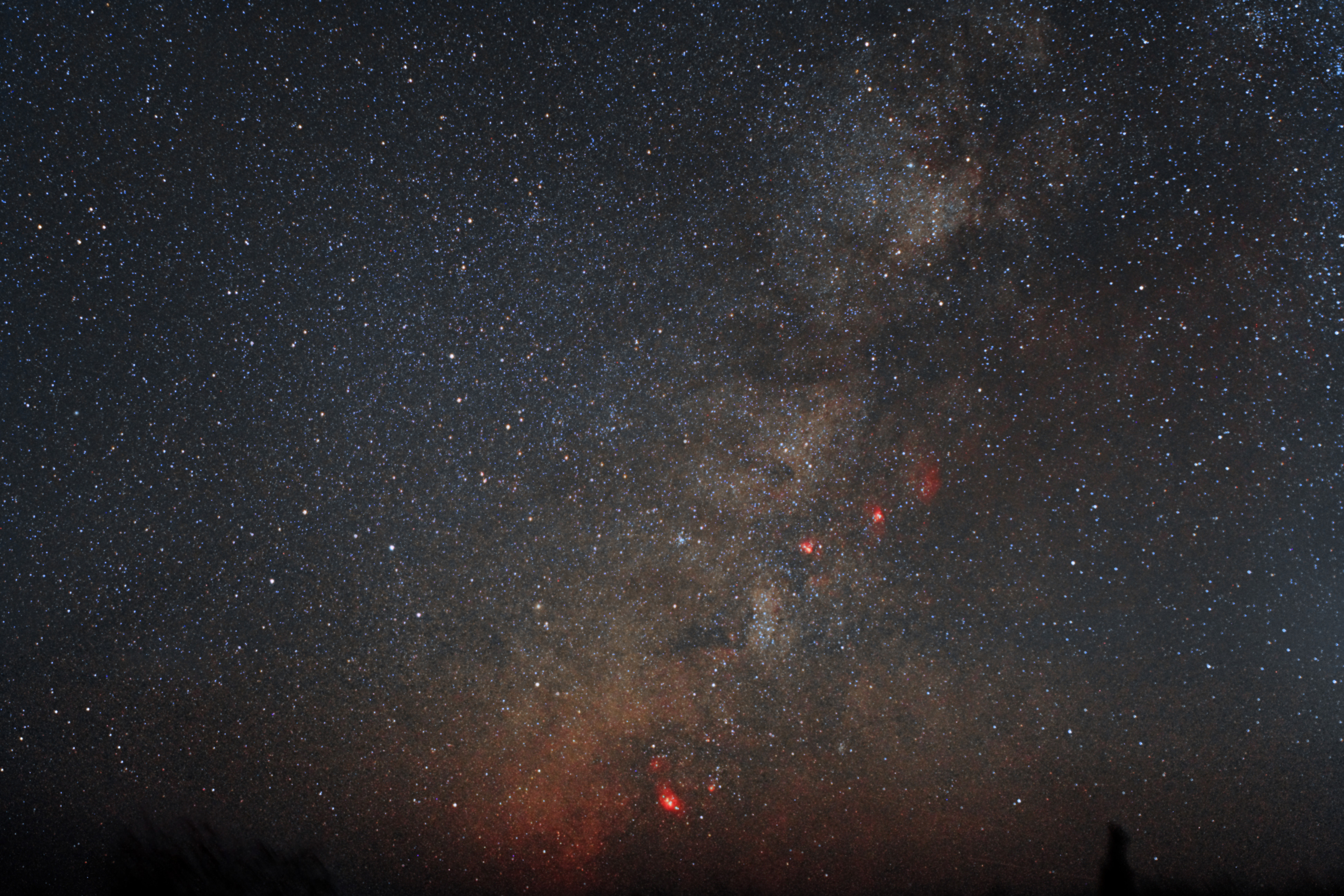
Milky Way. 1×180 sec @ ISO 1600, modified Canon XS, Astronomik CLS filter, Sigma Zoom 28-70 at 28mm, F/2.8.
The west is pretty dark, too, but there are various small light domes from the west-northwest to the north. The northeast has a larger light dome from a metro area in that direction and the east has some smaller ones here and there. There is a line of trees from the southeast to the northeast which blocks the LP from those areas, which is good. But, it would not be the best place to shoot early morning comets, for instance, since you can’t see the eastern horizon very well because of those trees.
Milky Way. 8×180 sec @ ISO 1600, modified Canon XS, Astronomik CLS filter, Sigma Zoom 28-70 at 28mm, F/2.8. Used the 1×180 sec image as a base and it is mostly the bottom part of the image.
It is definitely dark there. Rated a 0.22 radiance level on a light pollution map. At one point, I might have glimpsed M33 naked eye, but I was not sure. If it would have been more towards the west I’m pretty sure I could have seen it. Moonrise was at midnight, so I quit early and did not get a chance to try for M33 when it was in that area of the sky. Maybe next time! 😉
Crop of the Central Regions, 2×180 sec @ ISO 1600. Same lens and camera as the other images.
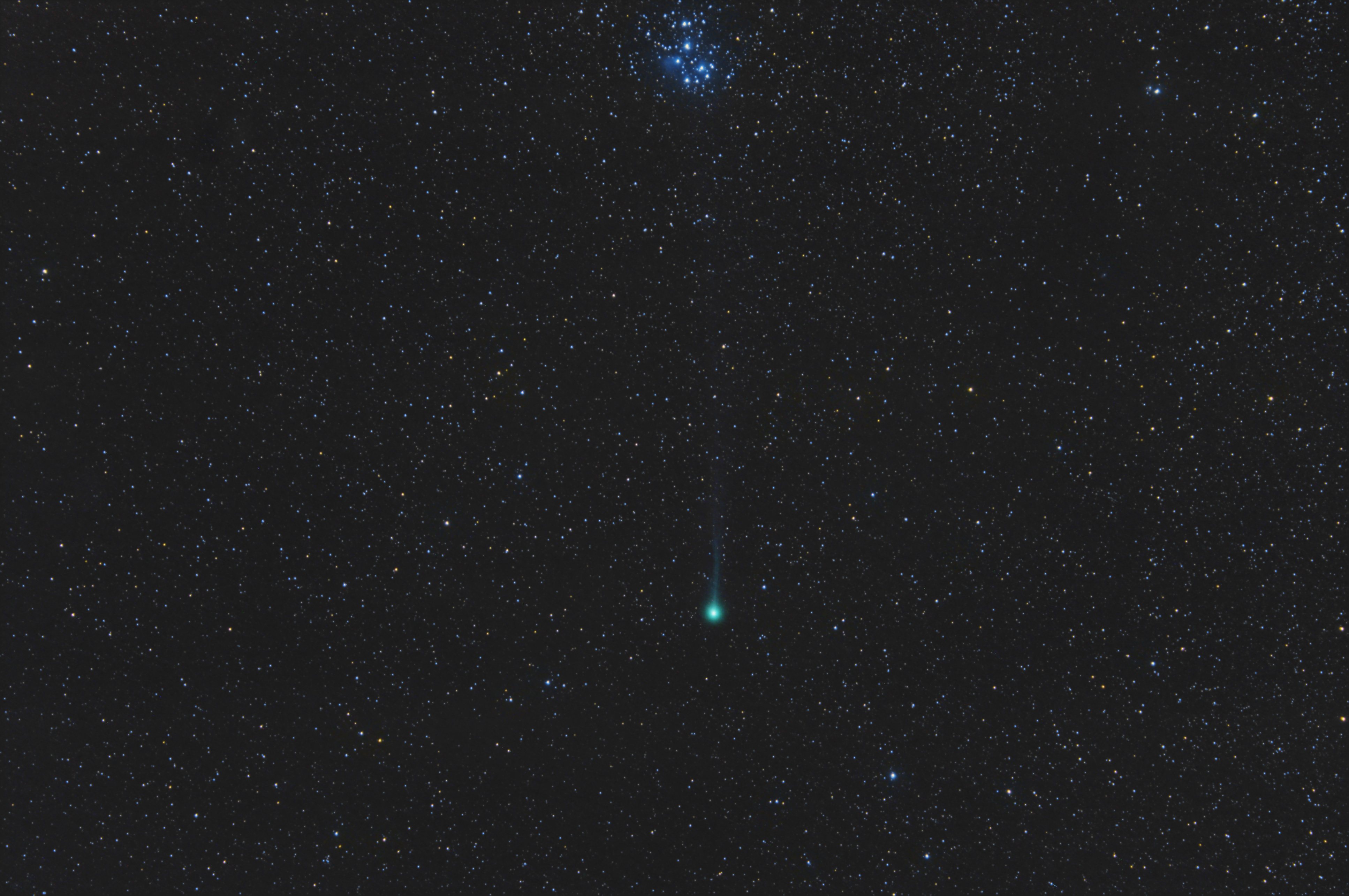
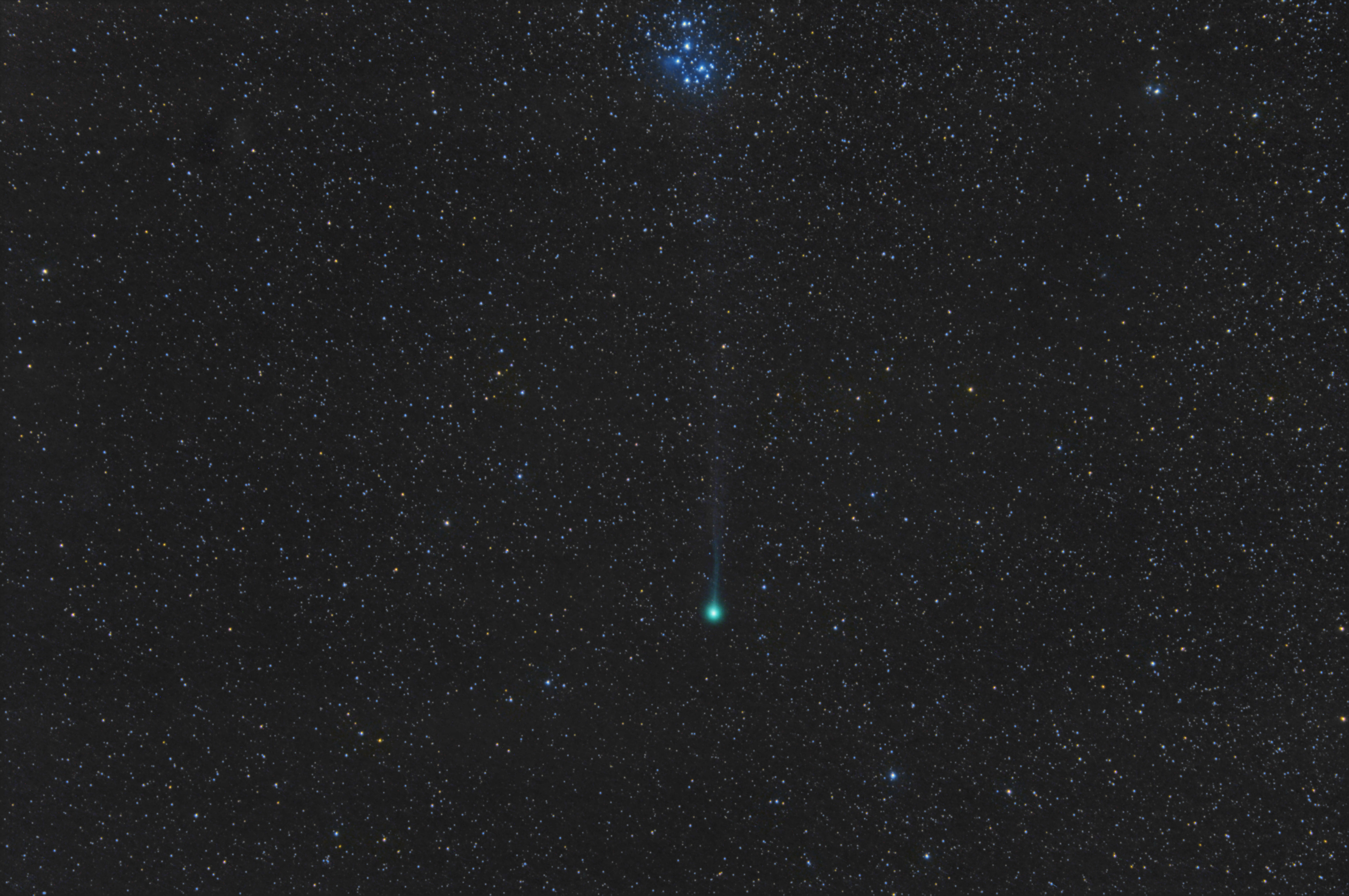
Comet Lovejoy Q2 & The Pleiades. 16×480 sec @ ISO 1600, Canon 18-55mm Telephoto at 55mm, F/5.6,, Lumicon Deep Sky Filter, modified Canon XS. Dark version.omet Lovejoy Q2 & The Pleiades. 16×480 sec @ ISO 1600, Canon 18-55mm Telephoto at 55mm, F/5.6,, Lumicon Deep Sky Filter, modified Canon XS. Lighter version.
The Canon kit lens that came with my camera sat unused for so long, I figured I should at least test it a bit for astro use. This is the second time I used it. But, no matter how hard I tried, the focus was never very good and I had to repair the misshapen stars in Photoshop.
Orion’s Belt w/Canon 200mm telephoto at F/2.8, 13×120 sec @ ISO 1600, Lumicon Deep Sky Filter, Canon XS (modifed.)
It was very clear on this night at one point and Lovejoy had set, so I shot a few sub-images of Orion’s Belt to kill some time. Although the Lumicon Deep Sky filter lets me go deep, brighter stars have ghost reflections off the filter and I had to clone them out. There’s still a few remnants of them left.
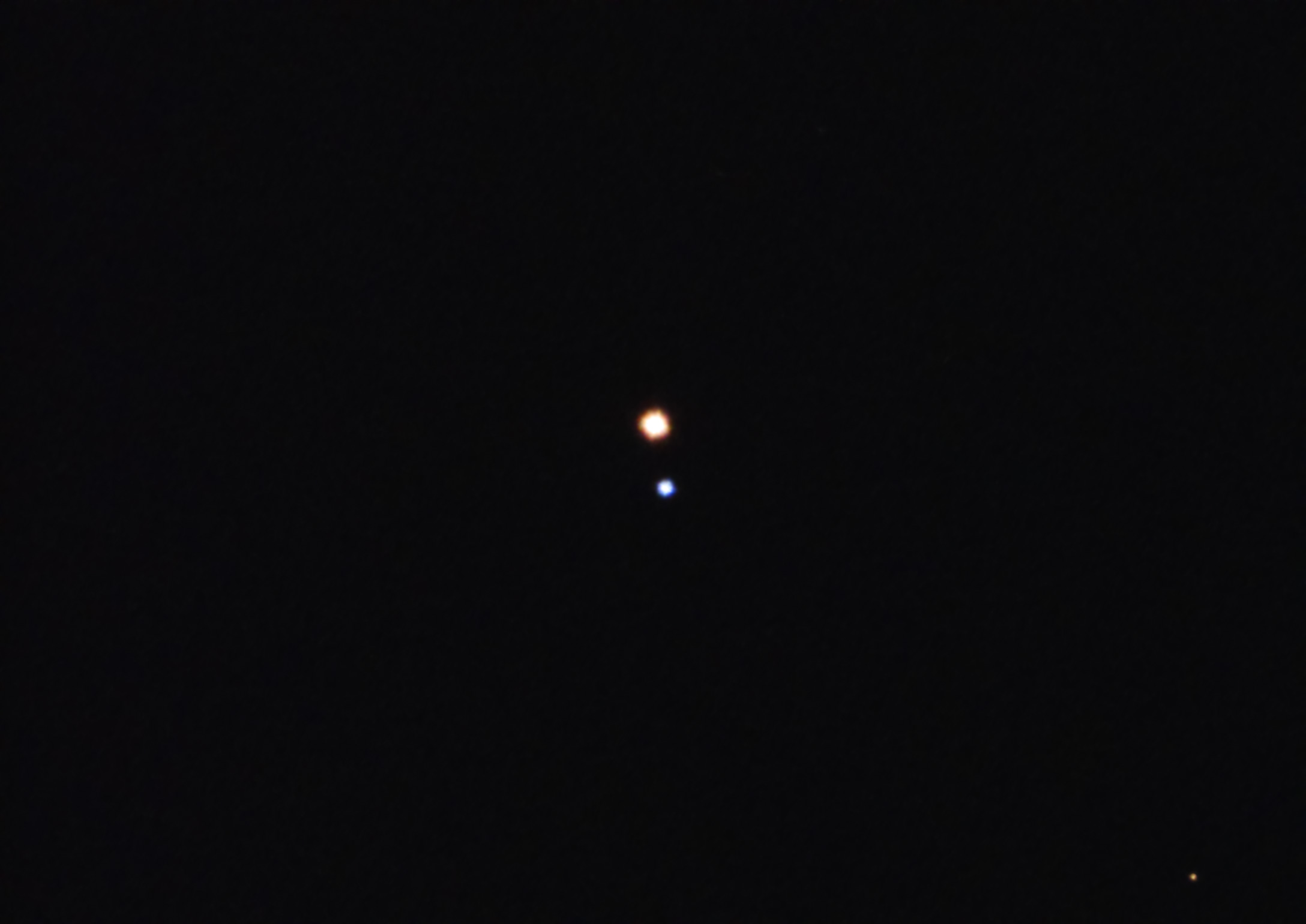
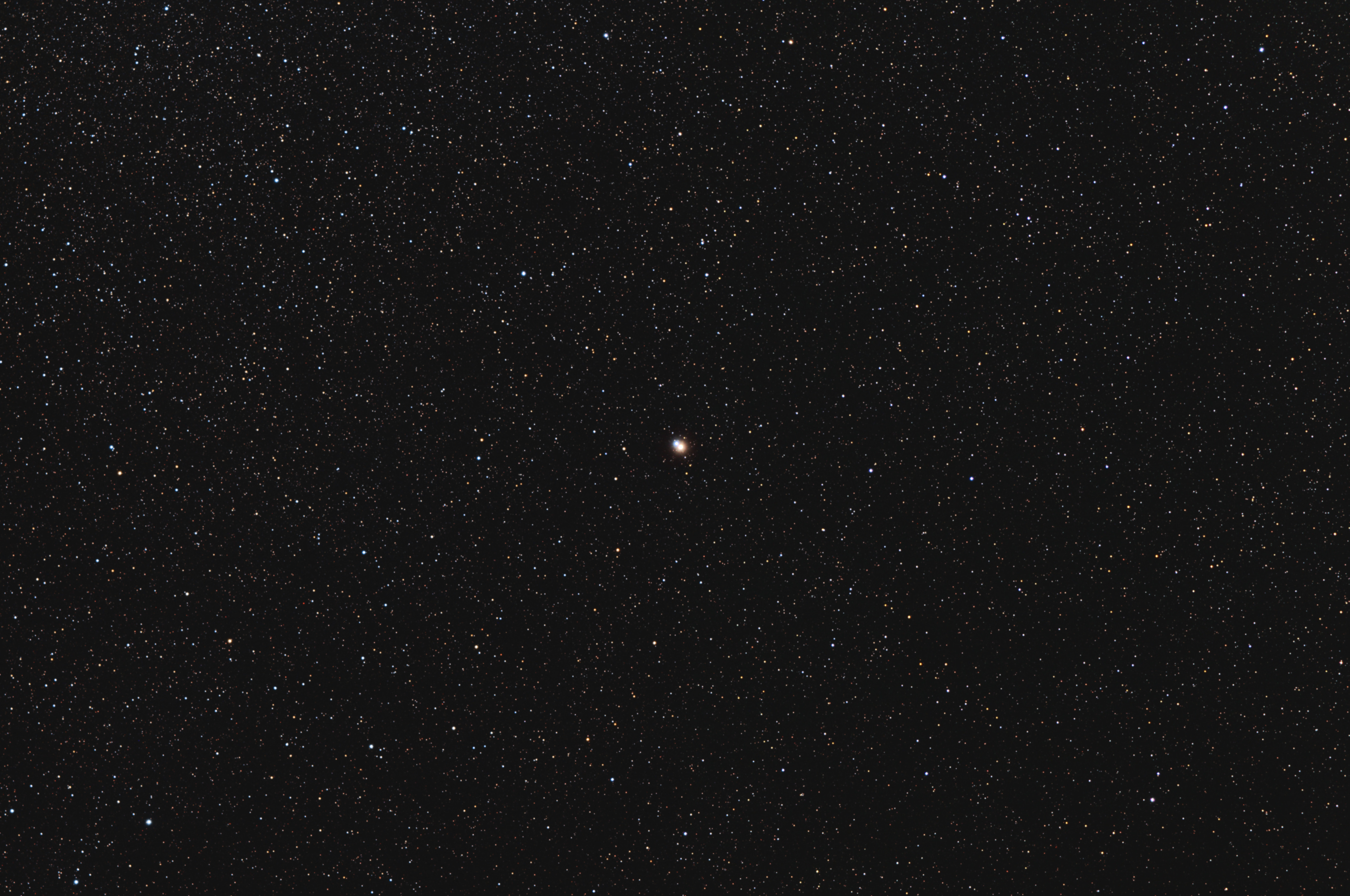
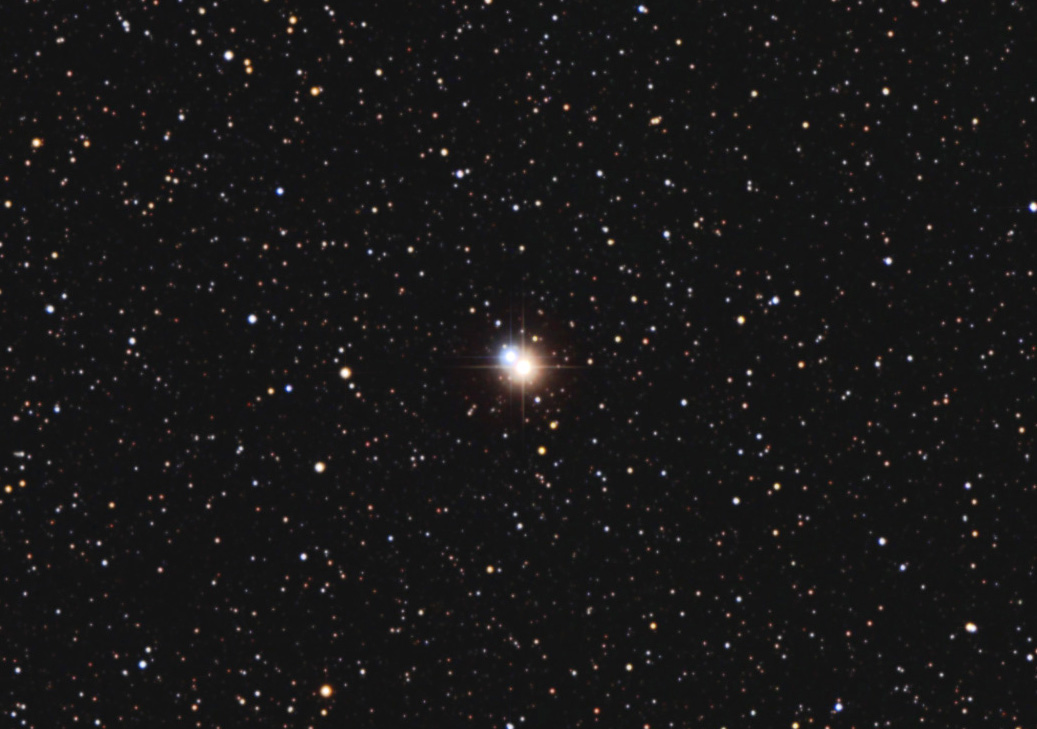
Albireo on Oct 31, 2014. 20×60 sec @ ISO 400, TV-85 at F/5.6, IDAS-LPS, Modified Canon T3.Albireo on Oct 31, 2014. Close-up crop.
I started off Halloween night by imaging Albireo, an amazing double star in Cygnus. It was during twilight and there was also some moonlight, so I went with ISO 400 so that I could do 1 minute exposures and get good color and depth.
Images of Comets, Nebulae, Galaxies and Star Clusters