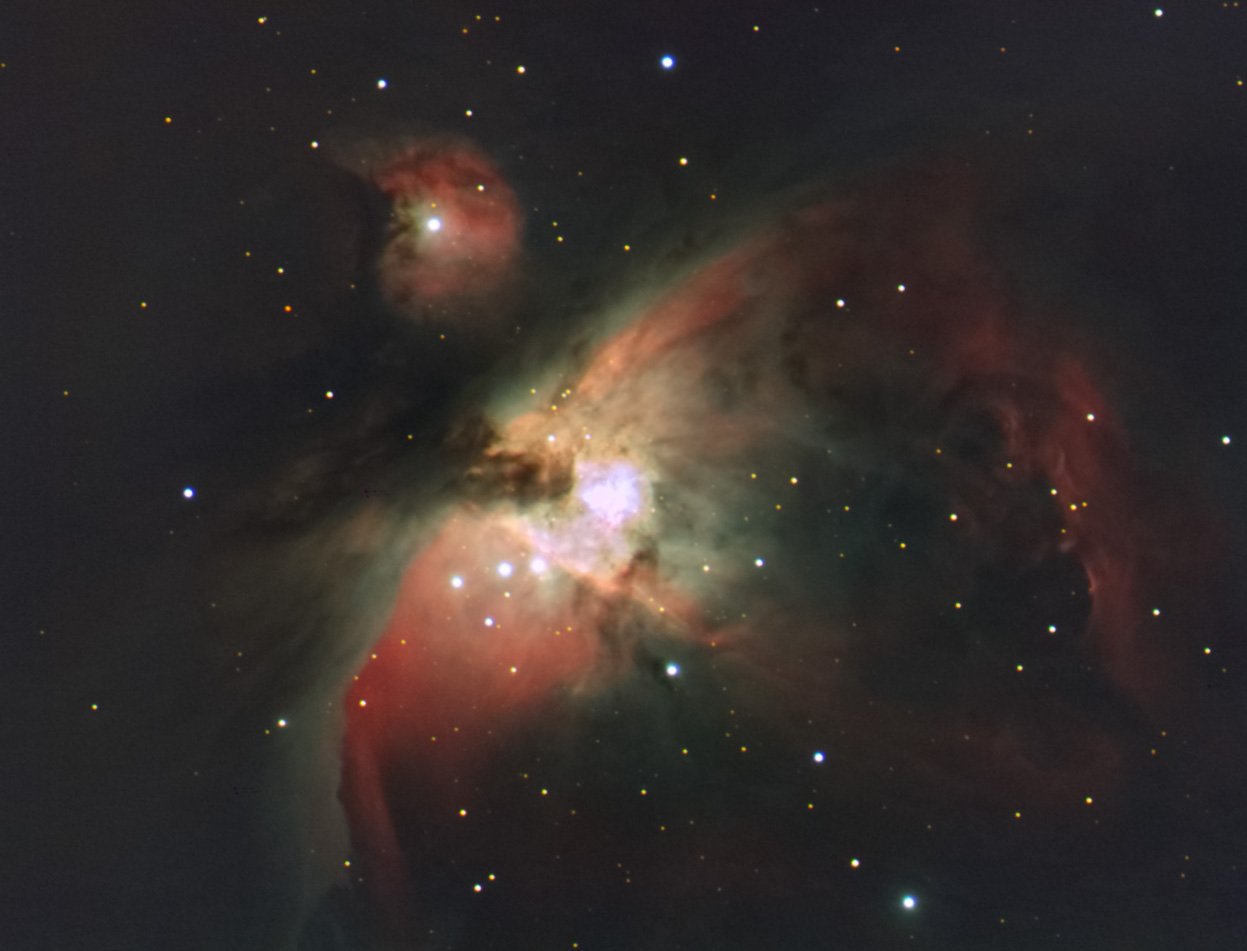
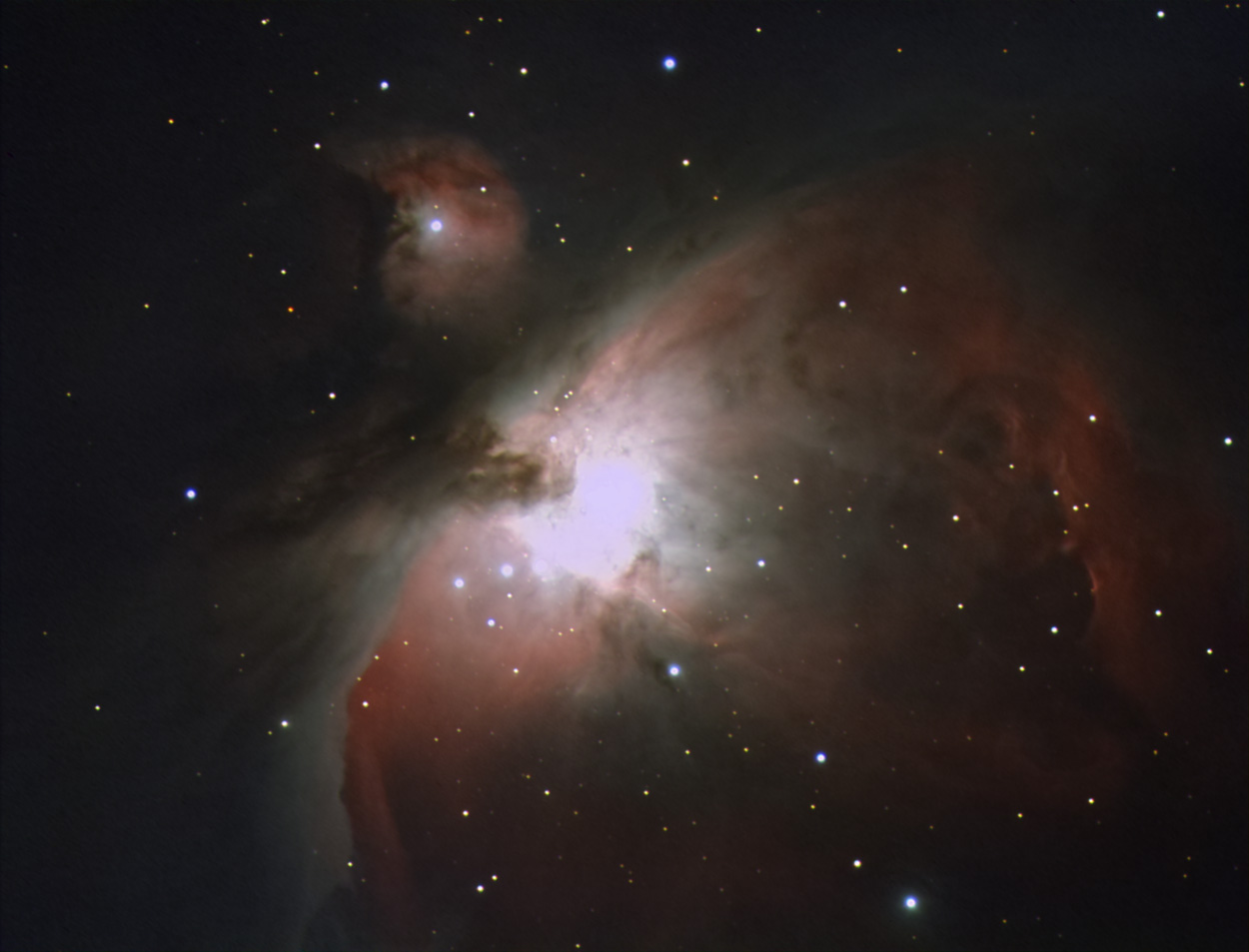
M42 taken with an Rising Tech Sony IMX 224 camera and 100×4 second and 200×8 second sub-images. TV-85 at F/5.6, Atlas EQ-G w/EQMOD, PHD Guiding2 and Sharpcap 2.9.The data from above with an additional 400 frames added in Sharpcap, making it a 700-subs image. Kinda reminds me of my old planetary imaging days. lol
Who knew just a few years ago that I would be shooting 8 second sub-images and building up images that rival my best efforts with a DSLR camera and 180 second sub-images. Now, all I have to do is save up for one of these new breed of Sony CMOS cameras with lots more mega-pixels that can match the resolutions I get with my Canon cameras. They are not too costly anymore and the results speak for themselves.
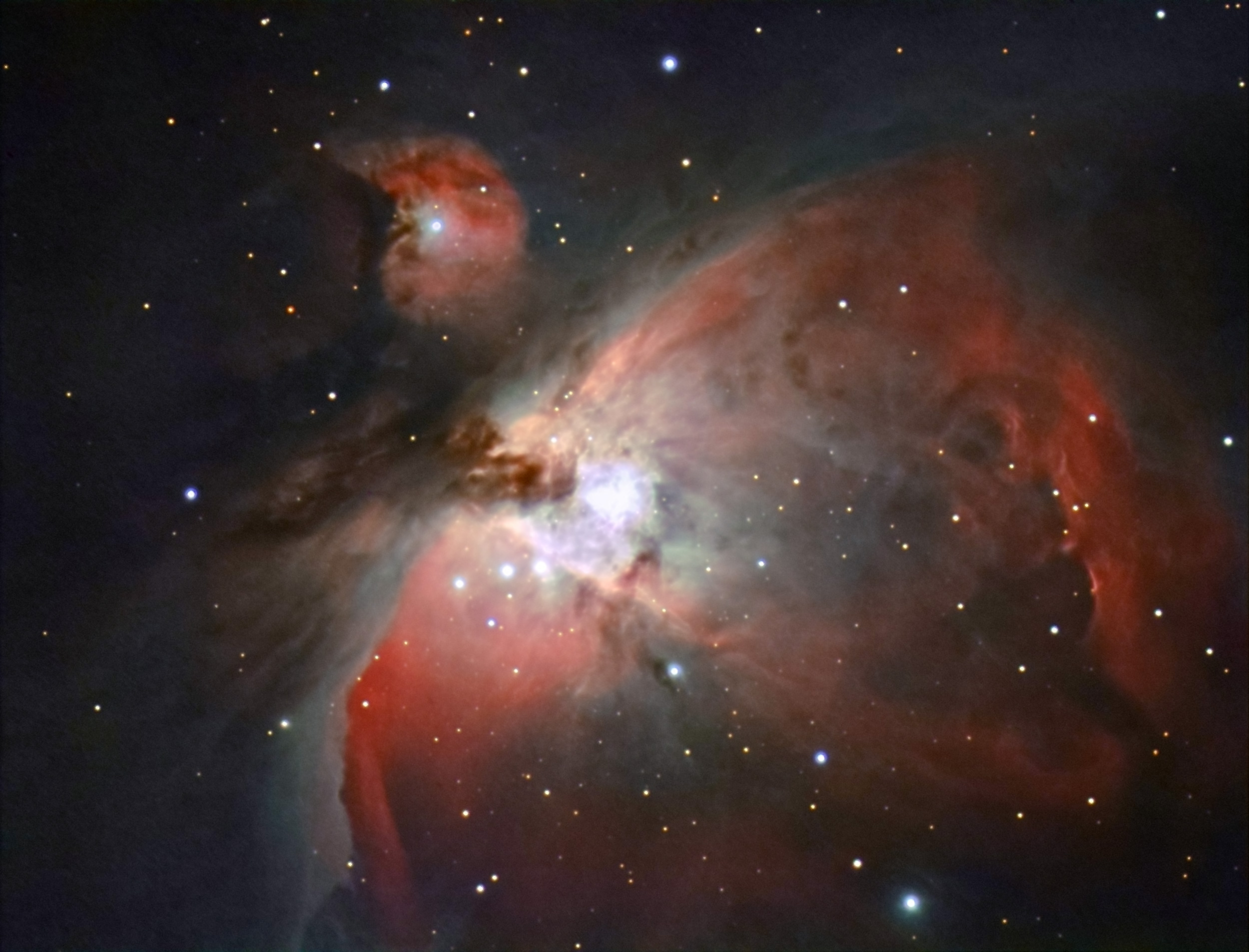
Blended rendition of the 700 subs image using the central region of the 300 frame image and some of its color.
BTW, this was shot with the bright moon nearby. I got him, too, though! 🙂
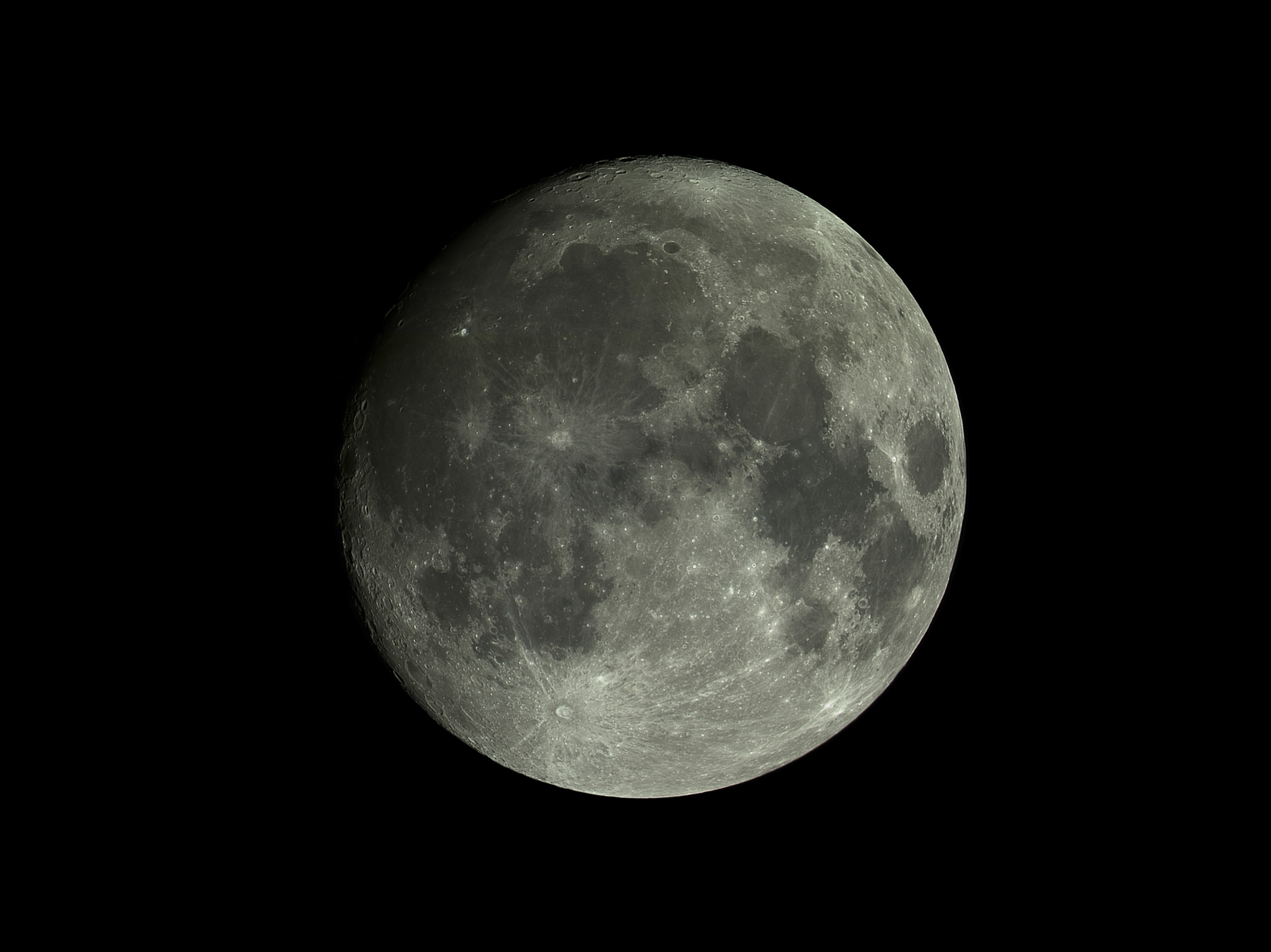
The Moon on Nov 30, 2017. 2 panel mosaic of 50 frames each, TV-85 at F/5.6, Toupcam Sony IMX224 eyepiece camera.
On Thursday, November 30, 2017 I tried my luck with “lucky imaging” of the moon. I set the capture to 100 frames each and took top, middle and bottom images of a waxing moon a few days from full.
I ended up using only the top and bottom panels since there was enough overlap with the TV-85 and the Toupcam IMX224 camera in those two panels. Each panel is the best 50 frames.
After a basic levels adjustment for all layers , I used the wavelets filter in the Astra Image Photoshop plug-in to do an initial sharpening of the merged image and then a SmartSharpen filter to finish it off. No other processing was done to the image beyond the above.
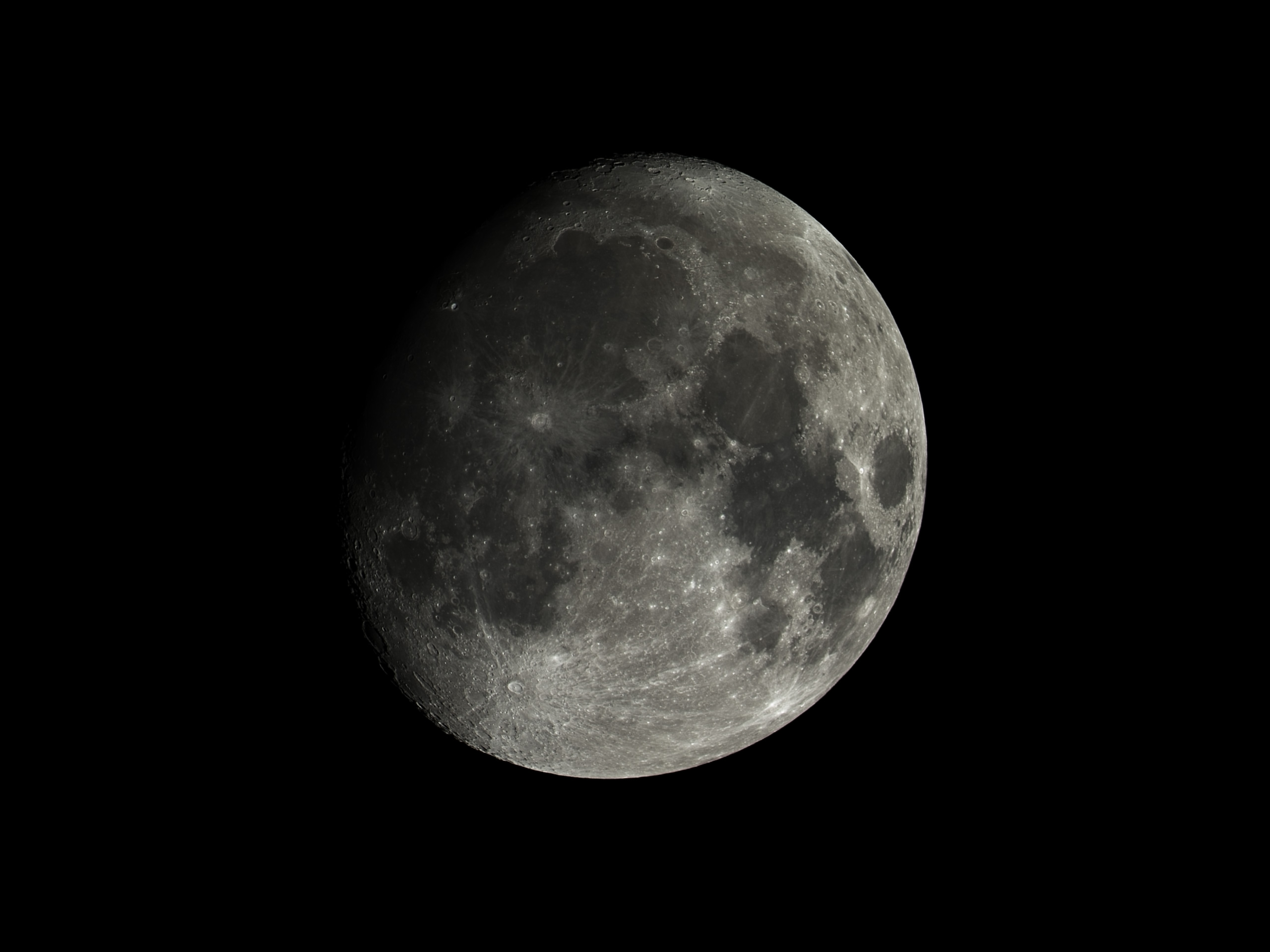
Update: Friday, Dec 1, 2017 moon image with the same setup as the above.
The Moon on Dec 1, 2017. 2-panel mosaic with 100 frames per panel. It was taken with a TV-85 at F/5.6 and a Rising Tech Sony IMX 225 CMOS camera.
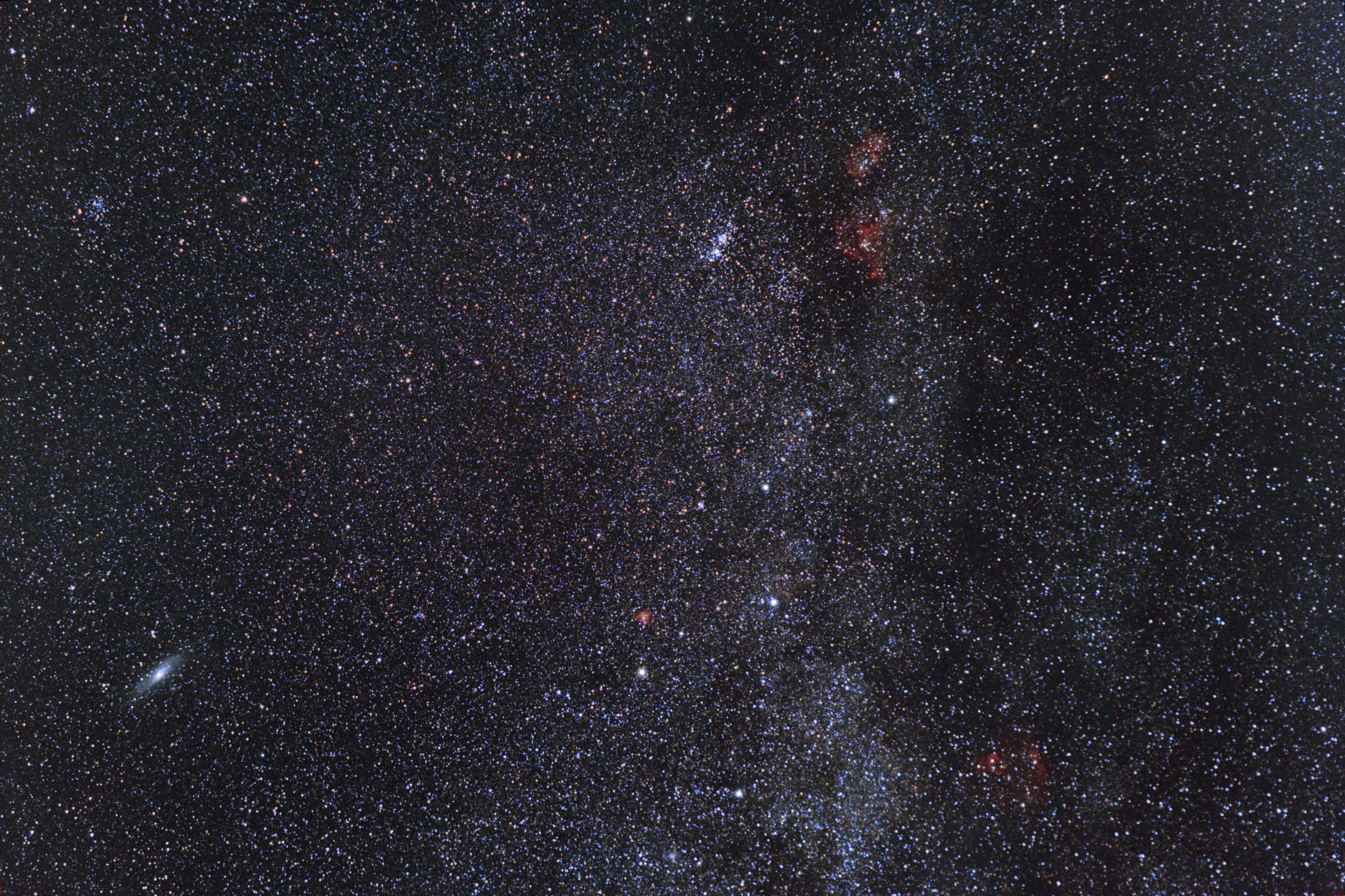
Cassiopeia region including M31, wide angle view. 6×300 sec @ ISO 1600, Sigma 28-70 Zoom at 28mm, F/2.8, Astronomic CLS filter. North is to the right in this view.
By luck I framed this one with M31 and the Cassiopeia region and got all the good nebulae that were in the area to boot. You can see the Heart and Soul Nebulae, the PacMan Nebula, emission nebula NGC 7822, and other smaller nebulae like the one near Gamma Cass. The Double Cluster is there along with lots of other open clusters.
It is not the best lens and I did do some distortion correction in PS. It was a little difficult to process since this was the first time I used the Astronomik CLS filter. Before, I had one light pollution filter and two cameras, so I finally got another one so they both have one. All I need now is a small mount for light loads like the setup I used here and I could get two cameras going at the same time. Yeah, buddy! 🙂
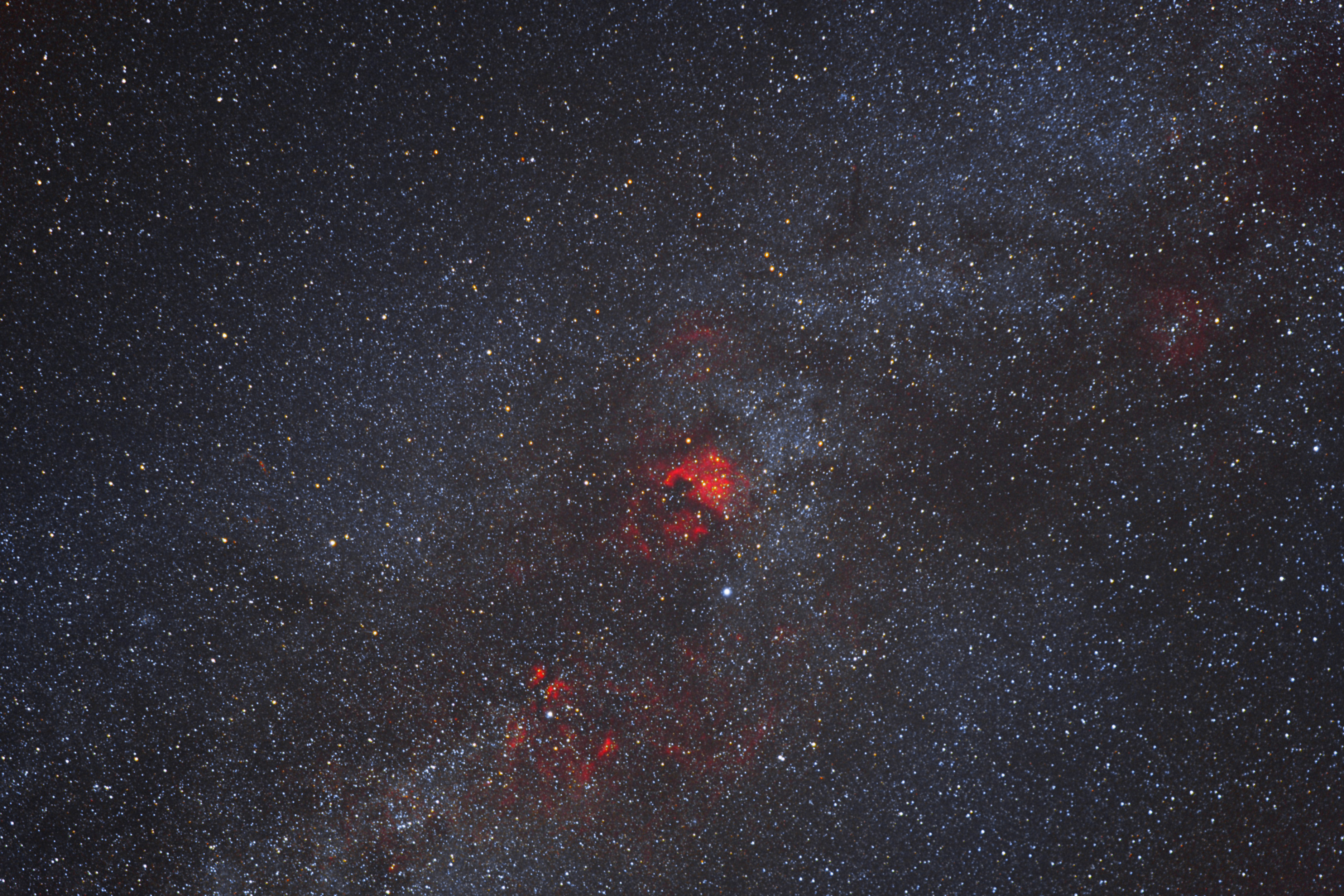
The North American Nebula Area. 10×300 sec @ ISO 1600, modified Canon XS, Astronomik CLS filter, Sigma Zoom 28-70 at 28mm, F/2.8.
I salvaged what I could of this one. I had problems with the acquisition of the sub-images and it was mainly caused by dew. I had to wipe the lens down several times and every time I did, the focus or focal length changed. I was able to fix it by installing a dew heater strip on the lens, but that was not until the next set.
I gave up on these after an hour of fighting it. I should have installed the heater before shooting, but I was in a rush to get data and there was not any dew problems in the beginning.
But, at least I got something out of it. Anyway, here’s a portrait orientation version of the data with North at the top:
The North American Nebula Area. 10×300 sec @ ISO 1600, modified Canon XS, Astronomik CLS filter, Sigma Zoom 28-70 at 28mm, F/2.8. Portrait version.
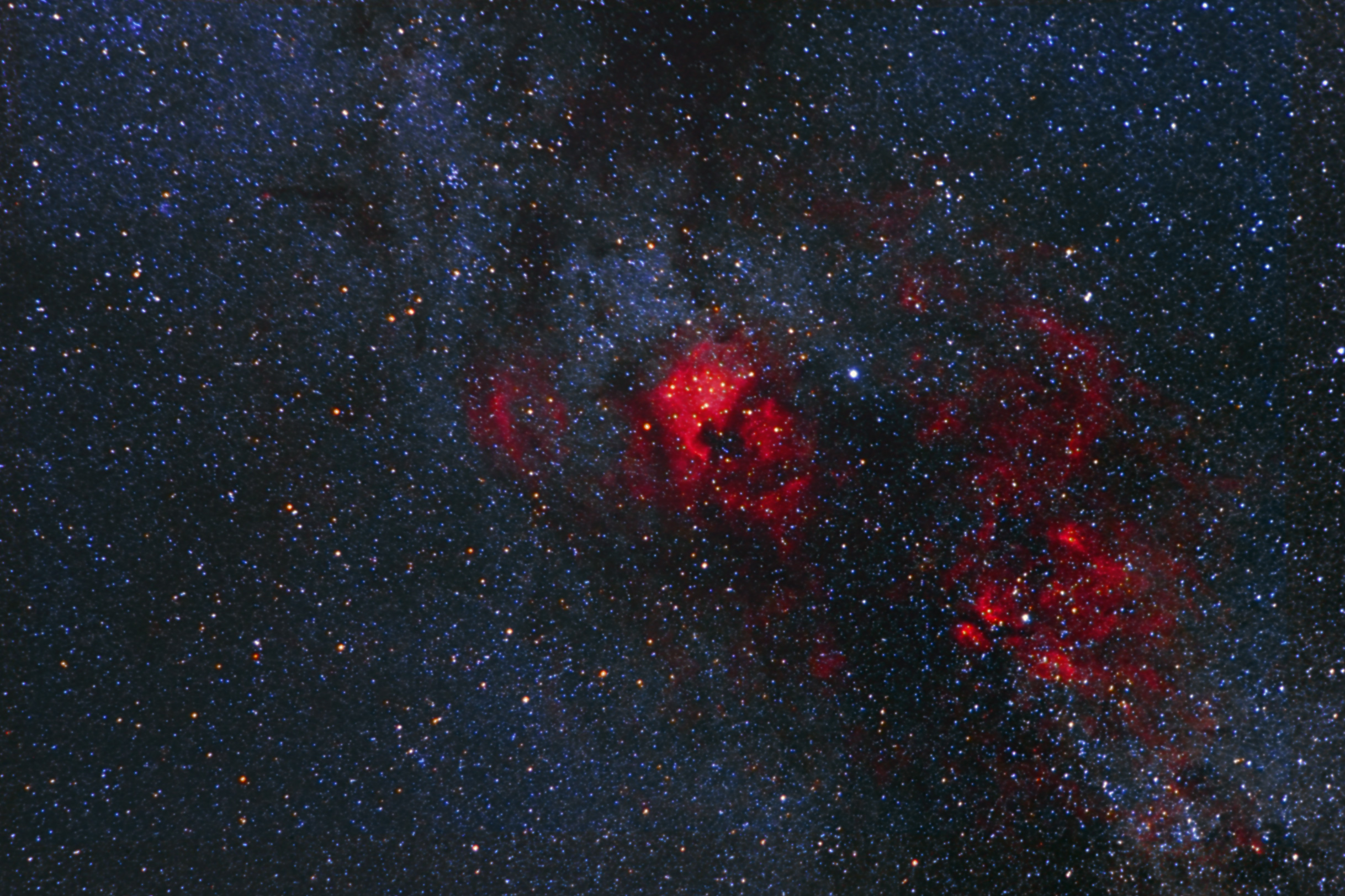
And here is a close crop of the central region:
The North American Nebula Area. 10×300 sec @ ISO 1600, modified Canon XS, Astronomik CLS filter, Sigma Zoom 28-70 at 28mm, F/2.8. Close crop.
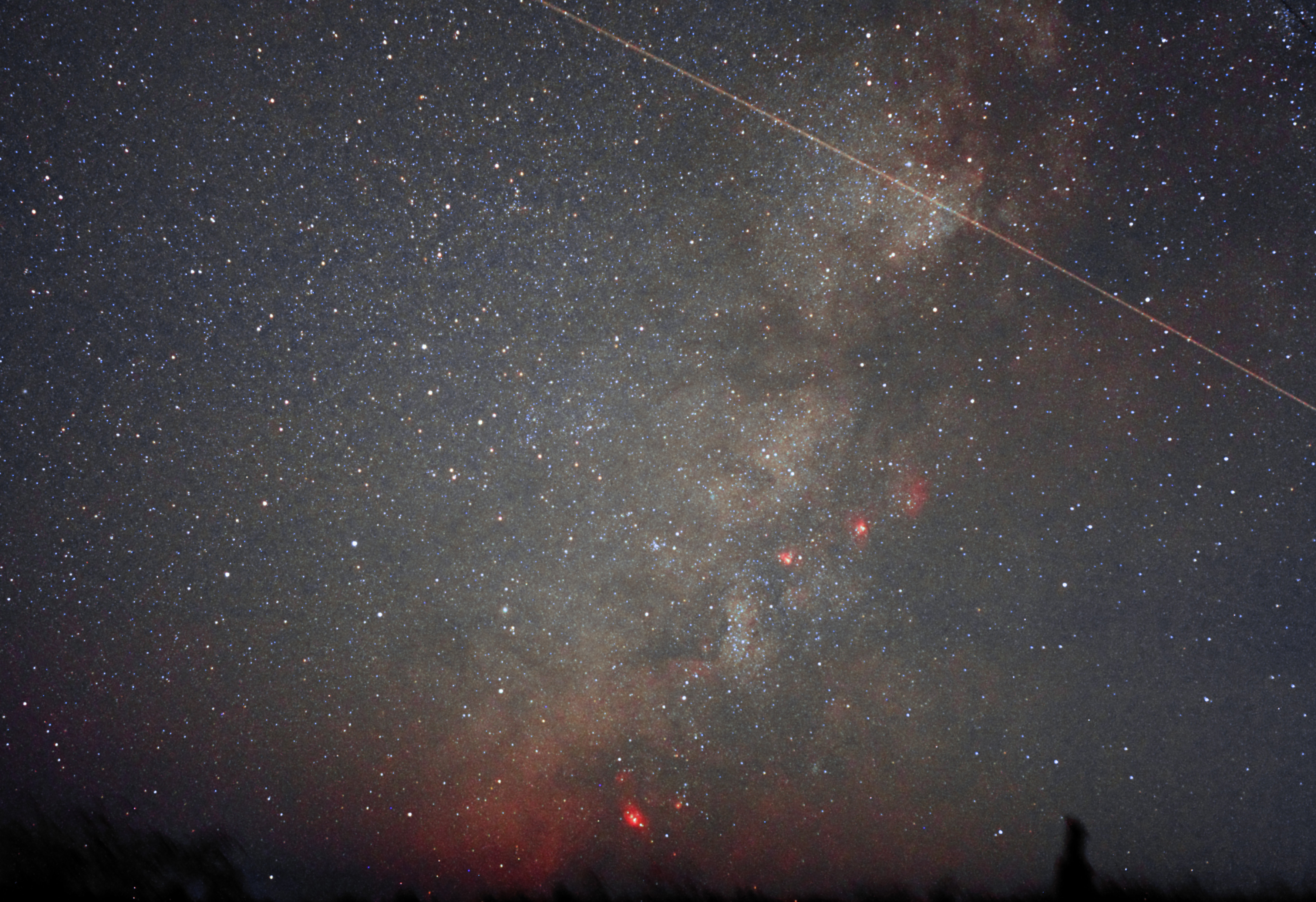
1st shot of the night and I caught a small meteor. 1×180 sec @ ISO 1600, Canon XS (Modified,) Sigma 28-70 Zoom at 28mm, F/2.8, Astronomik CLS filter. No calibration or processing of this image, except to set the black point and rotate the canvas.
Instead of my usual dead-end road site, I drove a few more miles west of there to a new site I’ve been wanting to try out. It is only 50 minutes total trip time and you get a borderline Bortle 3/4 site with a really dark southern and southwestern horizon.
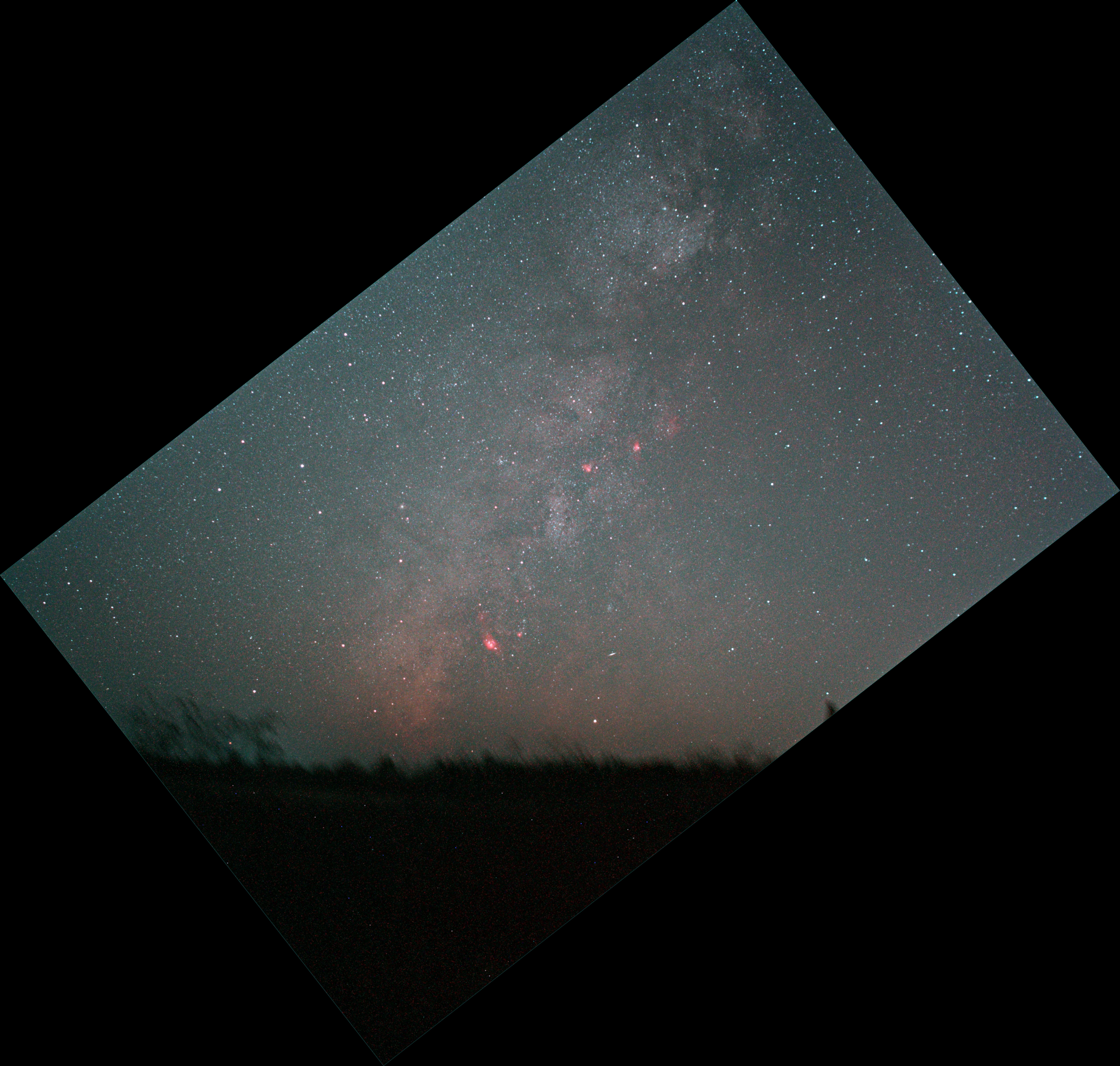
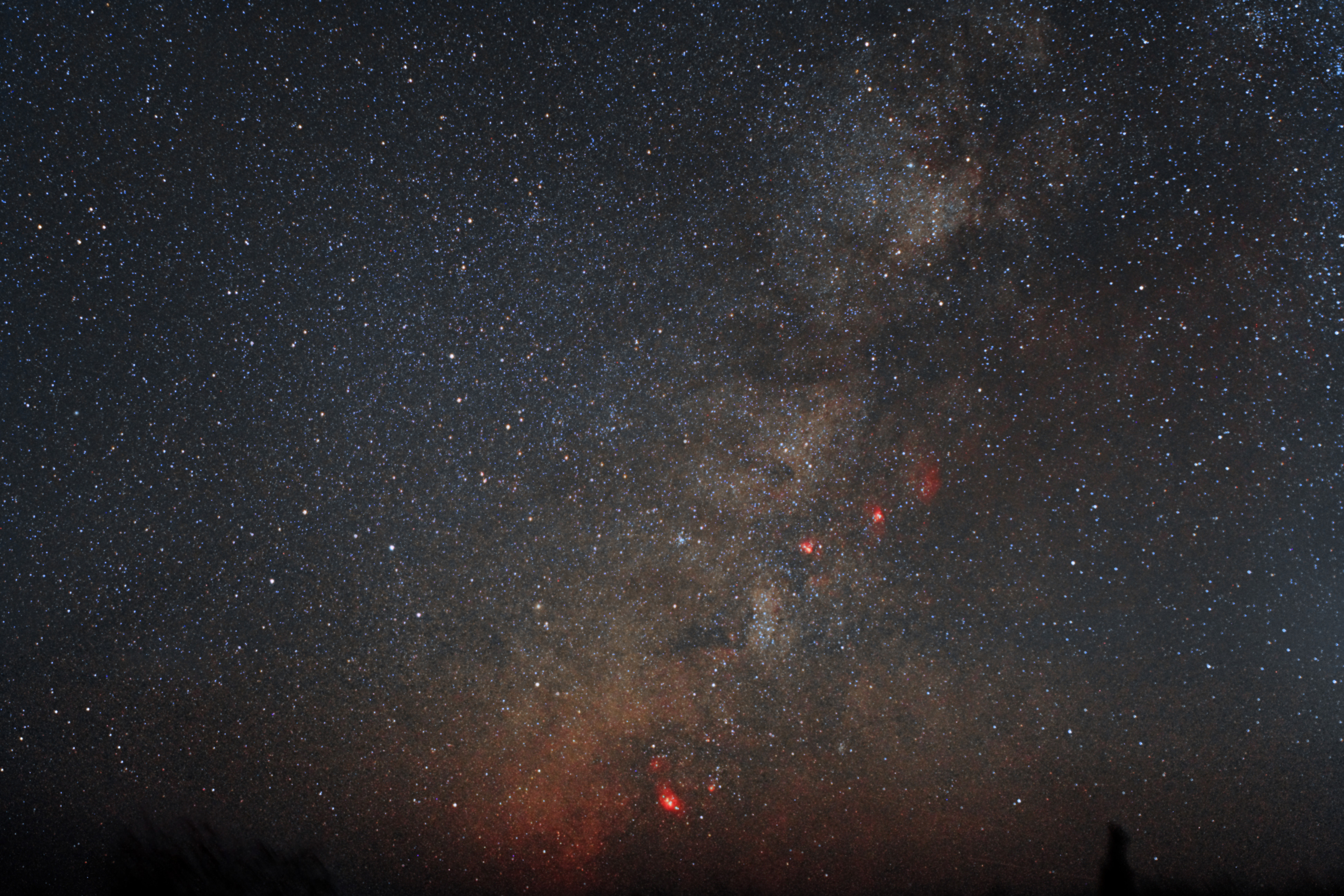
Milky Way. 1×180 sec @ ISO 1600, modified Canon XS, Astronomik CLS filter, Sigma Zoom 28-70 at 28mm, F/2.8.
The west is pretty dark, too, but there are various small light domes from the west-northwest to the north. The northeast has a larger light dome from a metro area in that direction and the east has some smaller ones here and there. There is a line of trees from the southeast to the northeast which blocks the LP from those areas, which is good. But, it would not be the best place to shoot early morning comets, for instance, since you can’t see the eastern horizon very well because of those trees.
Milky Way. 8×180 sec @ ISO 1600, modified Canon XS, Astronomik CLS filter, Sigma Zoom 28-70 at 28mm, F/2.8. Used the 1×180 sec image as a base and it is mostly the bottom part of the image.
It is definitely dark there. Rated a 0.22 radiance level on a light pollution map. At one point, I might have glimpsed M33 naked eye, but I was not sure. If it would have been more towards the west I’m pretty sure I could have seen it. Moonrise was at midnight, so I quit early and did not get a chance to try for M33 when it was in that area of the sky. Maybe next time! 😉
Crop of the Central Regions, 2×180 sec @ ISO 1600. Same lens and camera as the other images.
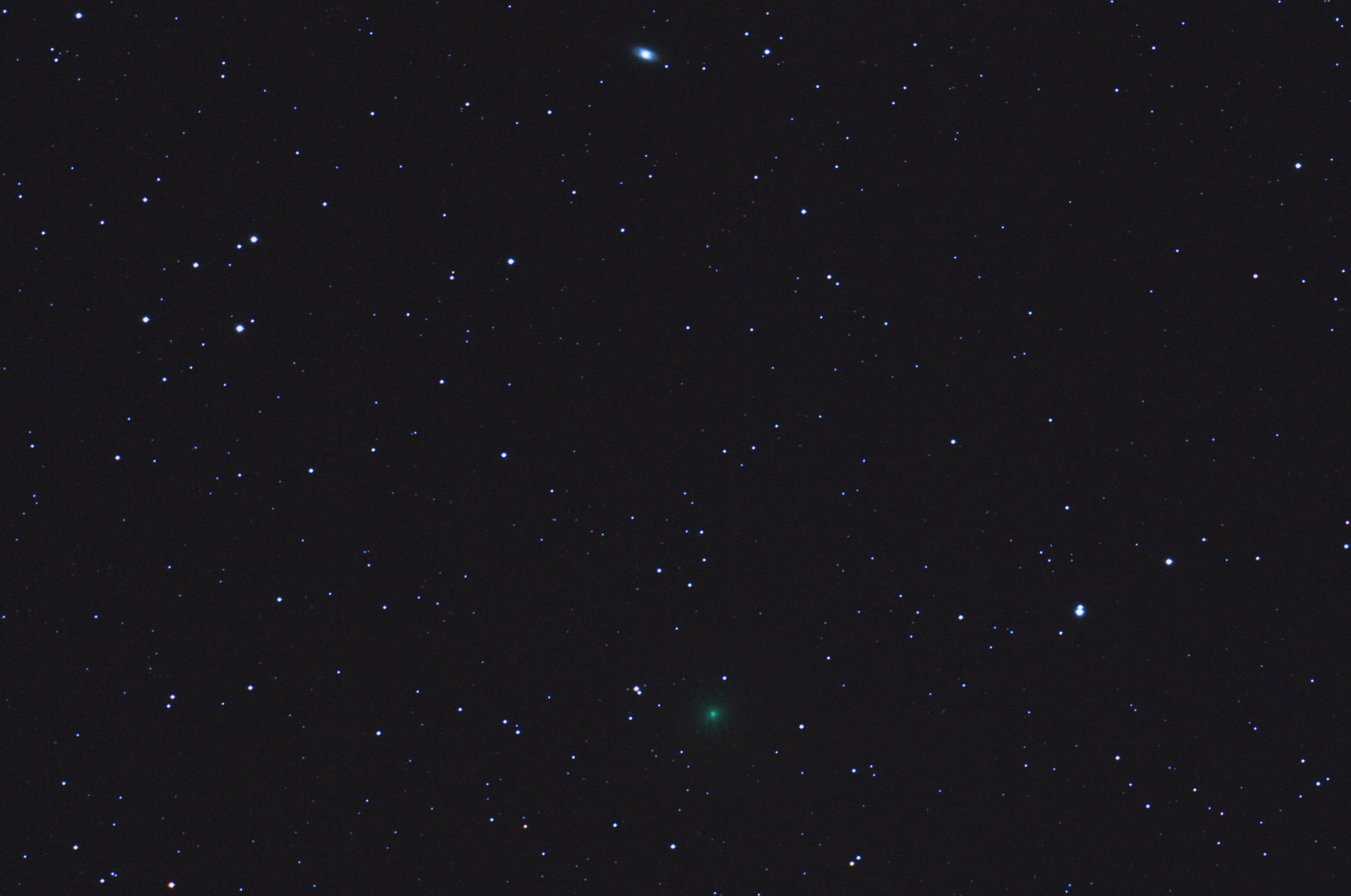
24P/Schuamasse and NGC 3489. 27×180 sec @ ISO 3200, IDAS-LPS, TV-85 at F/5.6, Canon T3.
Not much detail for periodic comet 24P/Schaumasse, which was low to the horizon over a stronger LP dome when I started taking the sub-images for this shot. I thought it might have a discernible tail that my camera might pick up since Cartes du Ceil showed it with one. LoL! Unfortunately, no software (or humans) can predict exactly what comets will do, which is why they make such good astrophotography targets. 😉
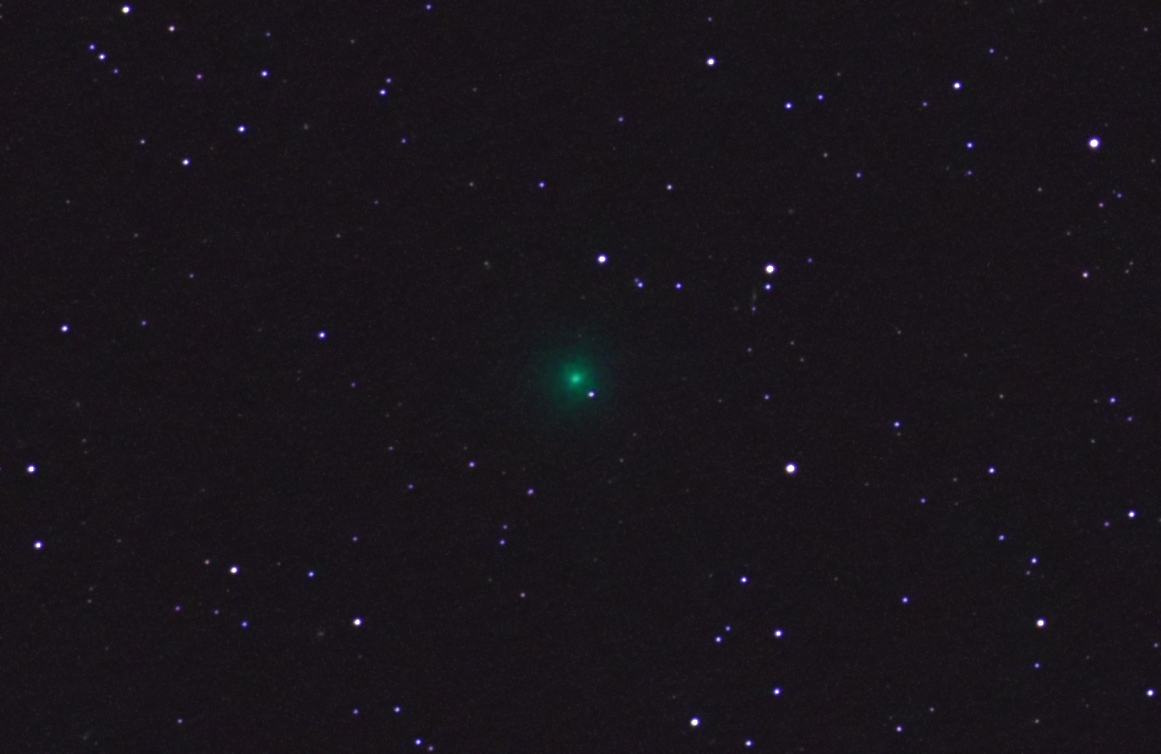
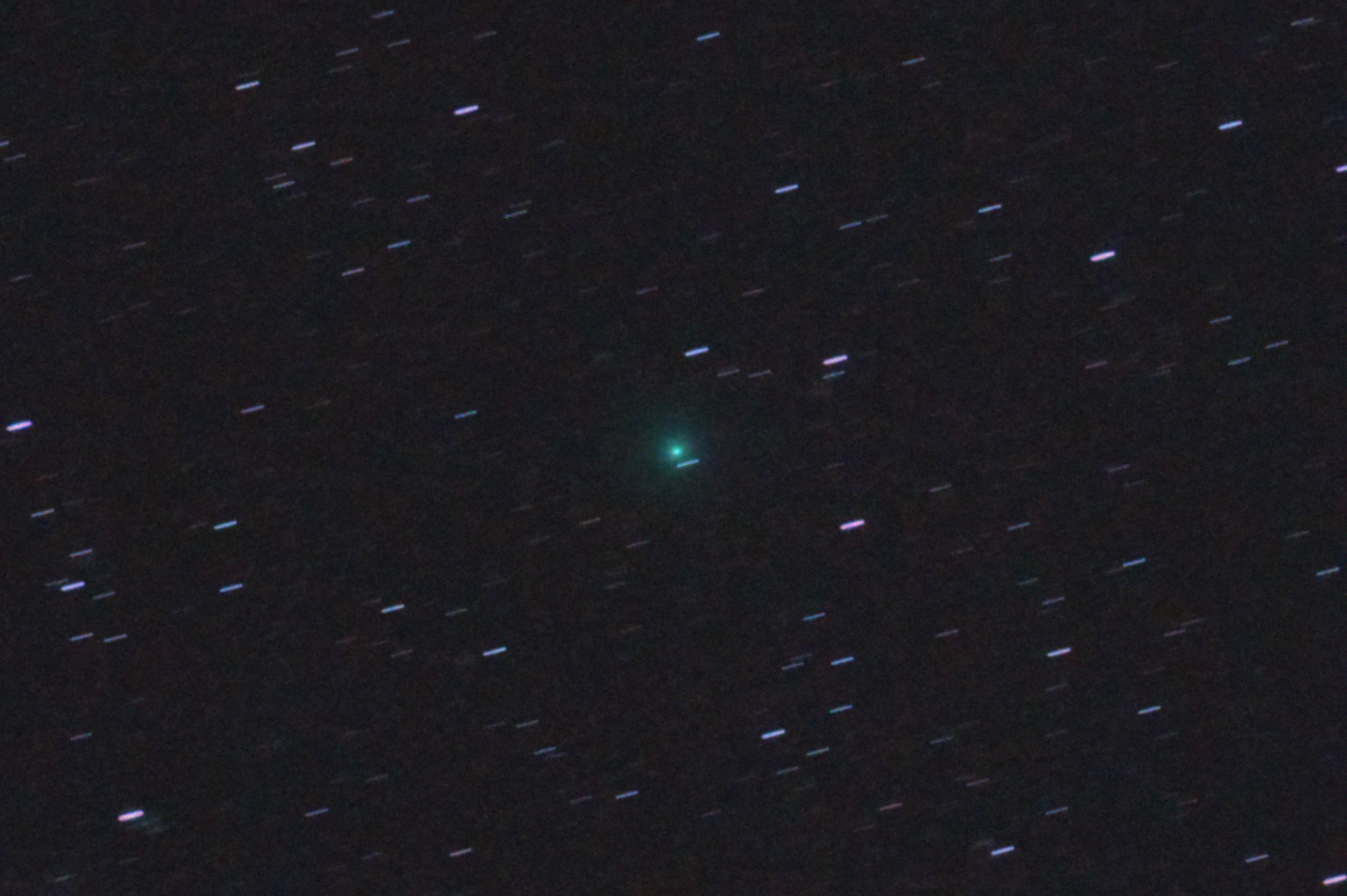
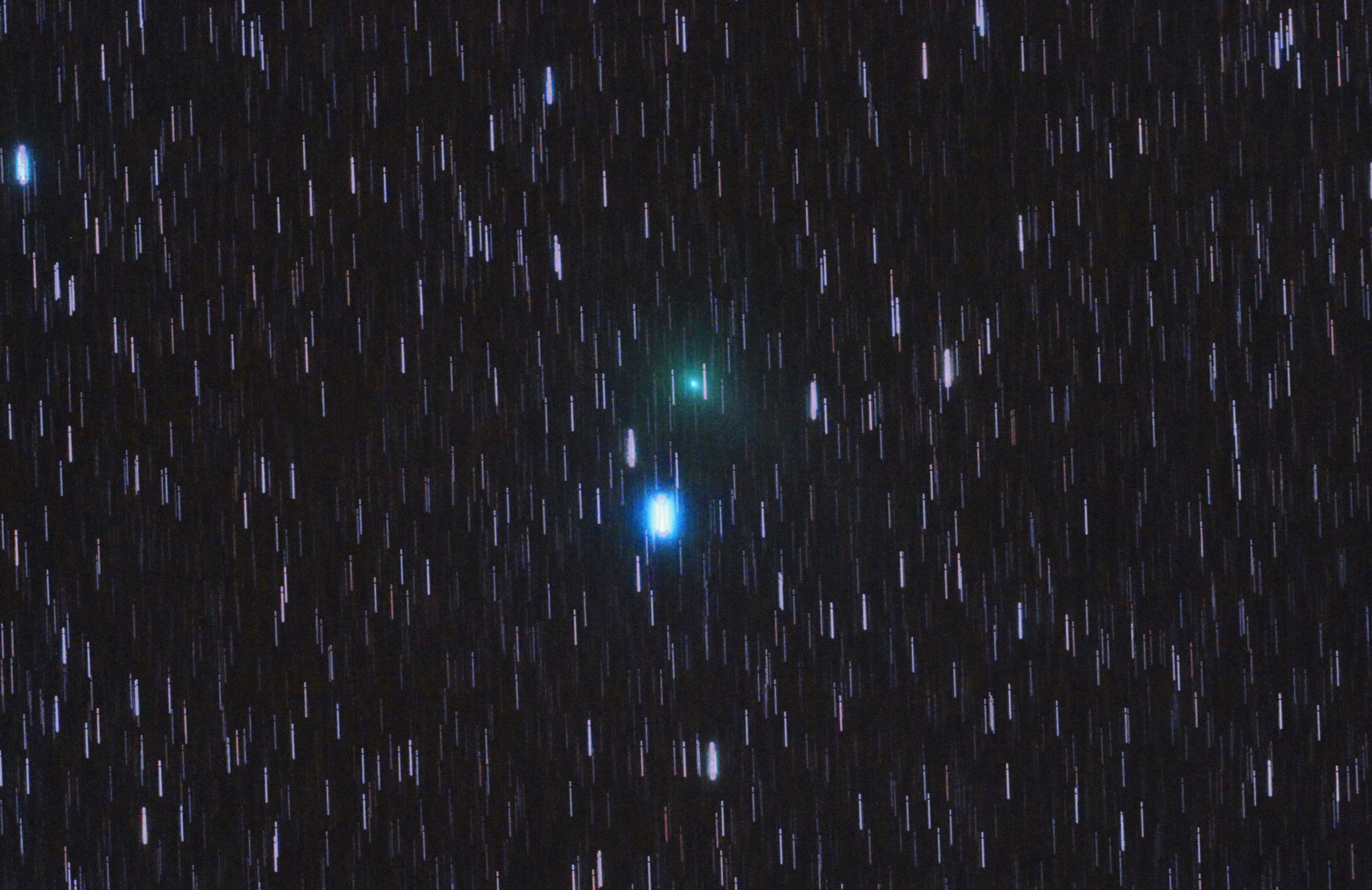
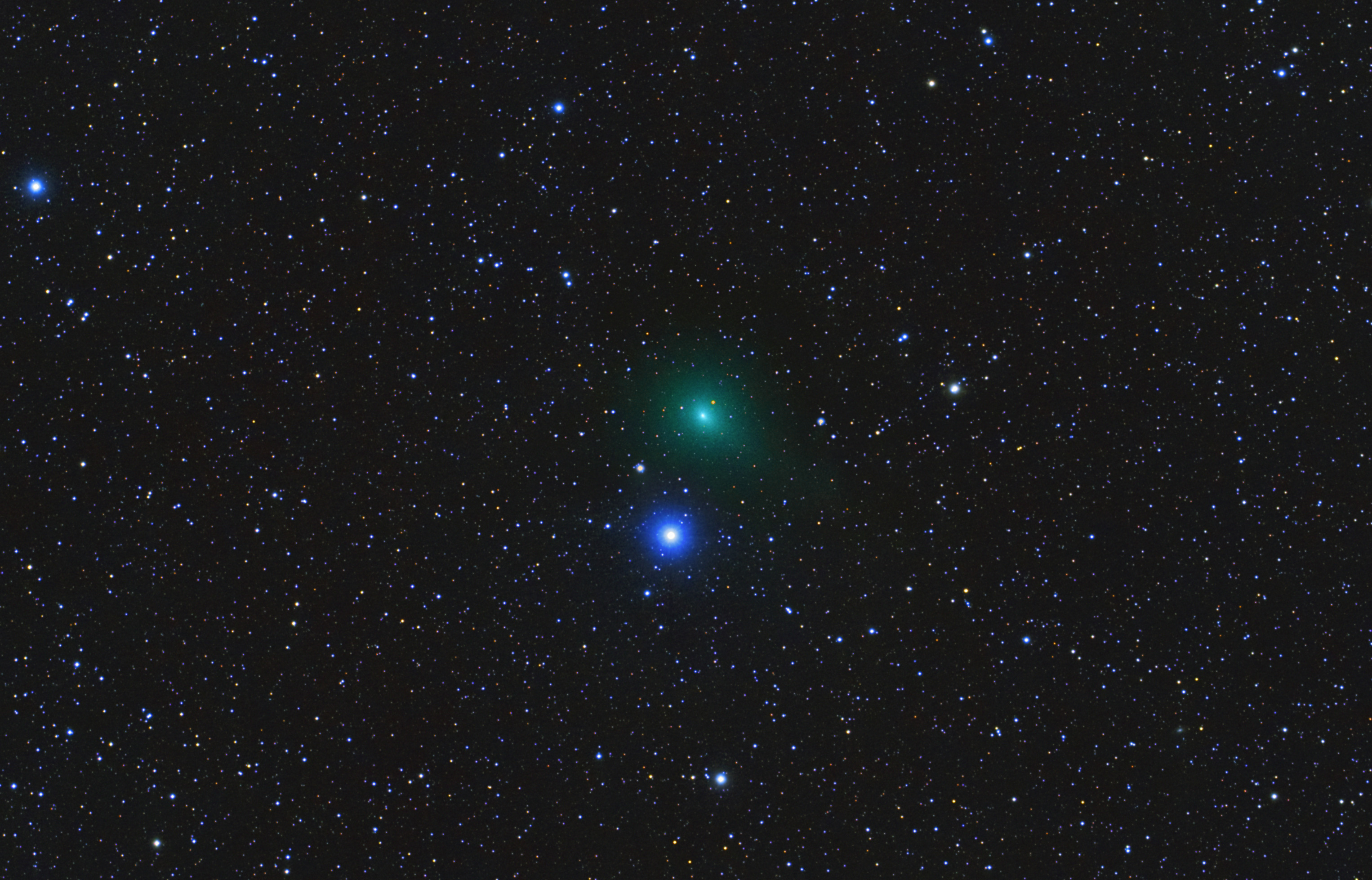
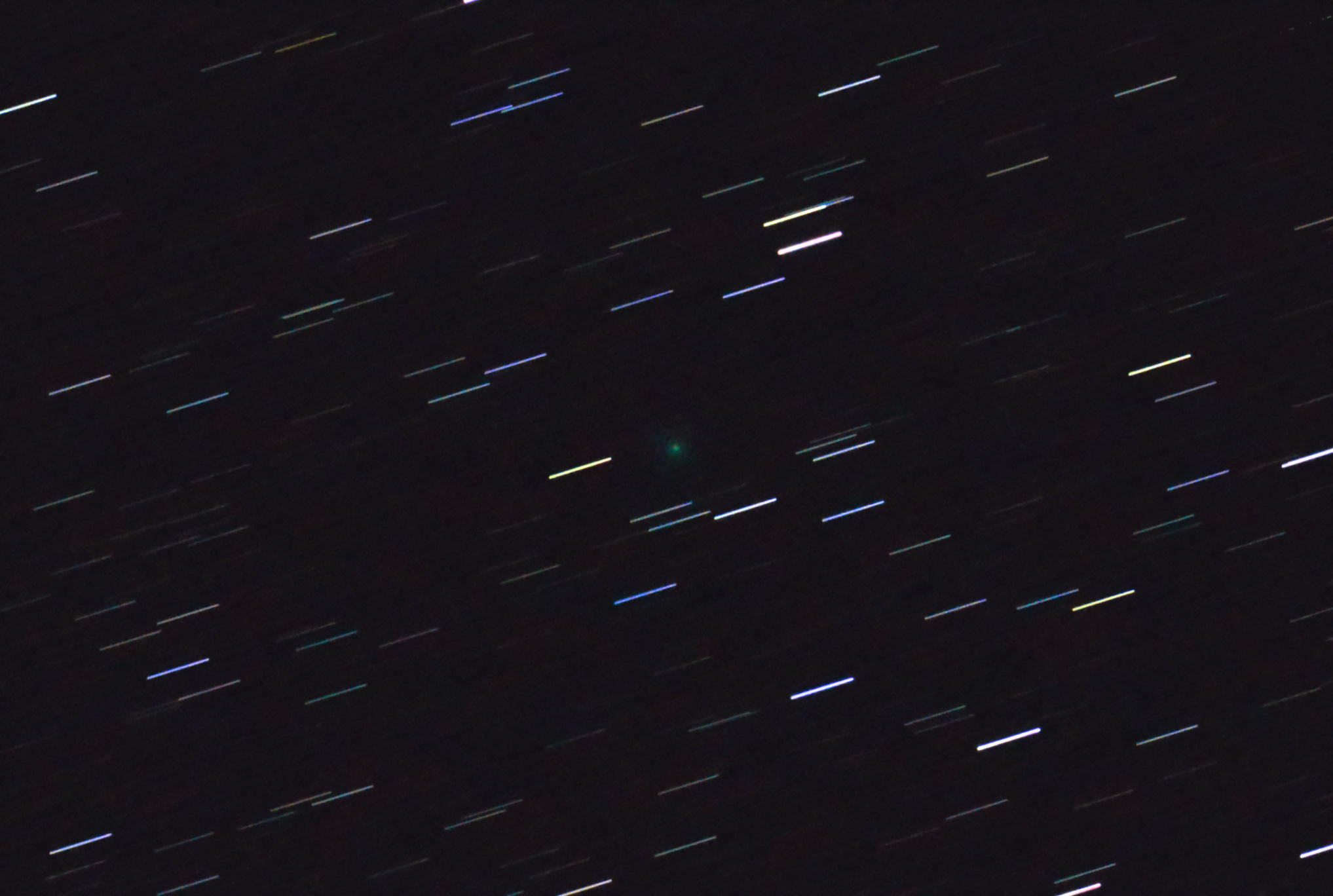
62P/Tsuchinshan on Oct 29, 2017, 09:17 UT. 8×180 sec @ ISO 3200, TV-85 at F/5.6, Canon T3, IDAS-LPS. Star-Freeze version. Close-crop at 100% resolution.62P/Tsuchinshan on Oct 29, 2017, 09:17 UT. 8×180 sec @ ISO 3200, TV-85 at F/5.6, Canon T3, IDAS-LPS. Star-Streaks version. Cropped.
Here is a quickie of 62P/Tsuchinshan. Only 8 sub-images, but it went deep enough to pick up a few faint fuzzies. The comet was predicted to be dim, so I was not expecting much from it. My main target this night was another comet just a few degrees away, which is why I did not spend much time on this guy. But, it looks promising and I might try for it again soon.
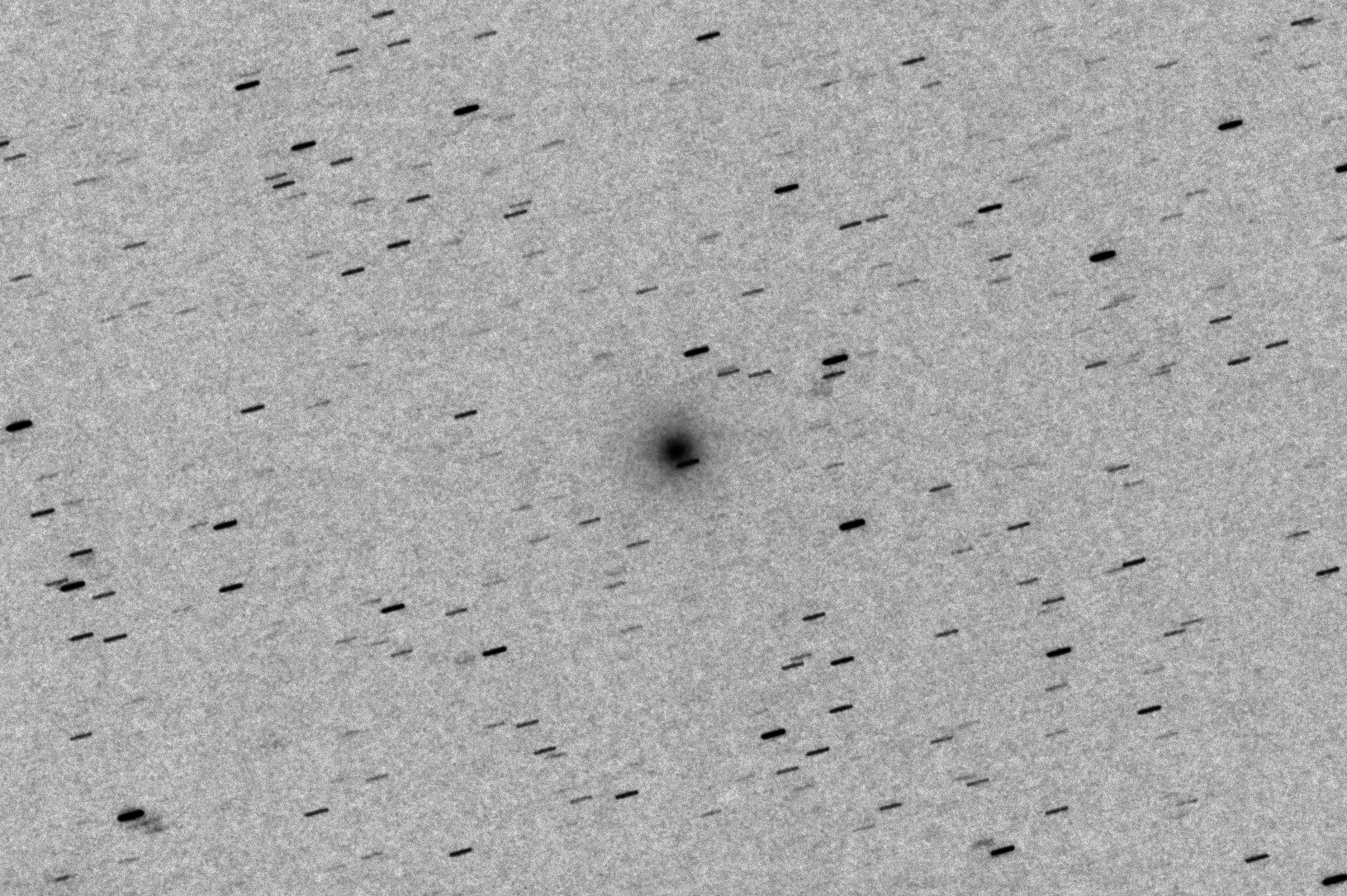
There is something weird about this stack, though. Some sort of artifact, maybe? It looks like two tails, but I can’t be sure. Its more apparent in a negative view of the star-streaks image:
62P_Tsuchinshan Star Streaks version negative view.
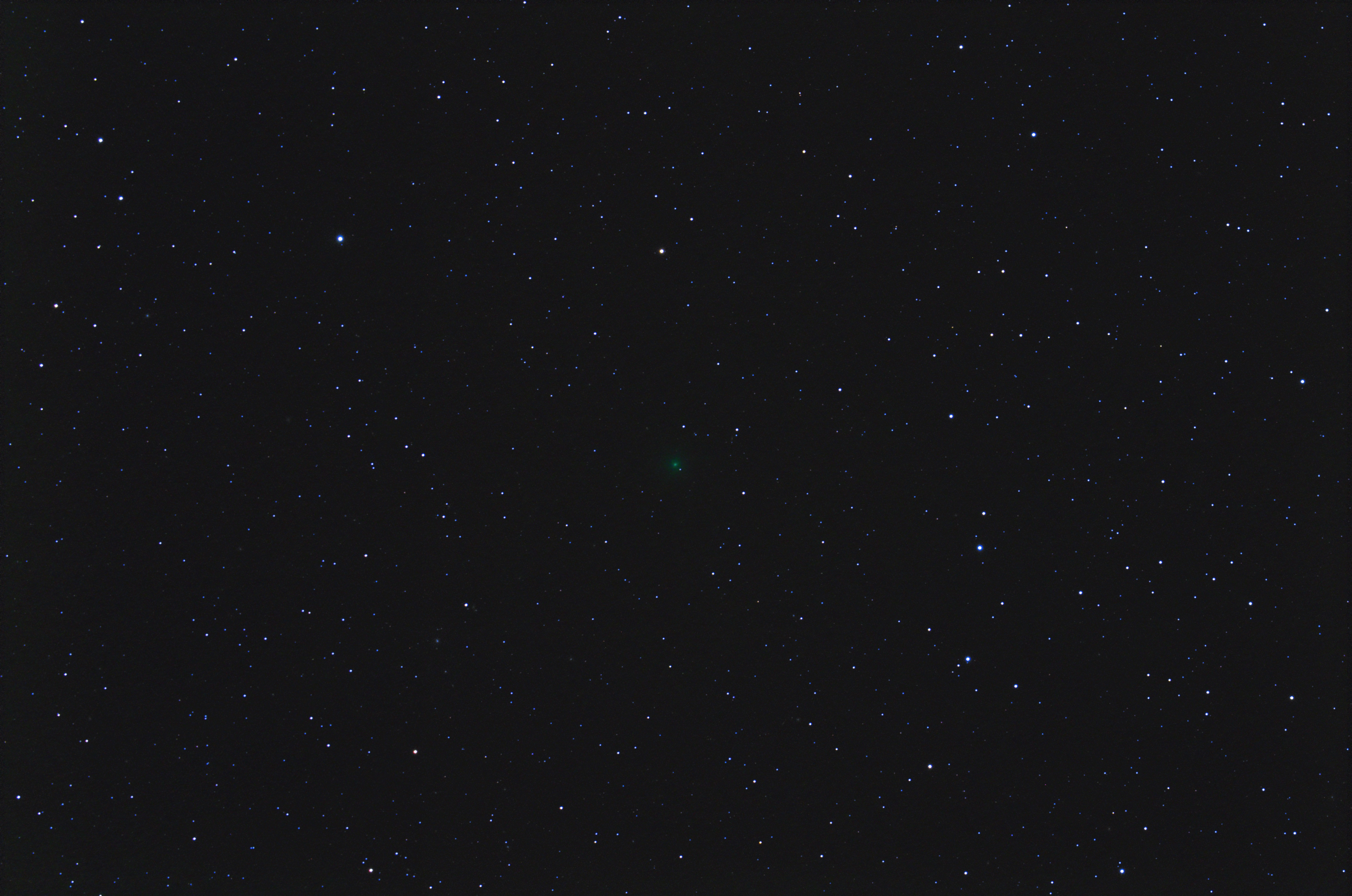
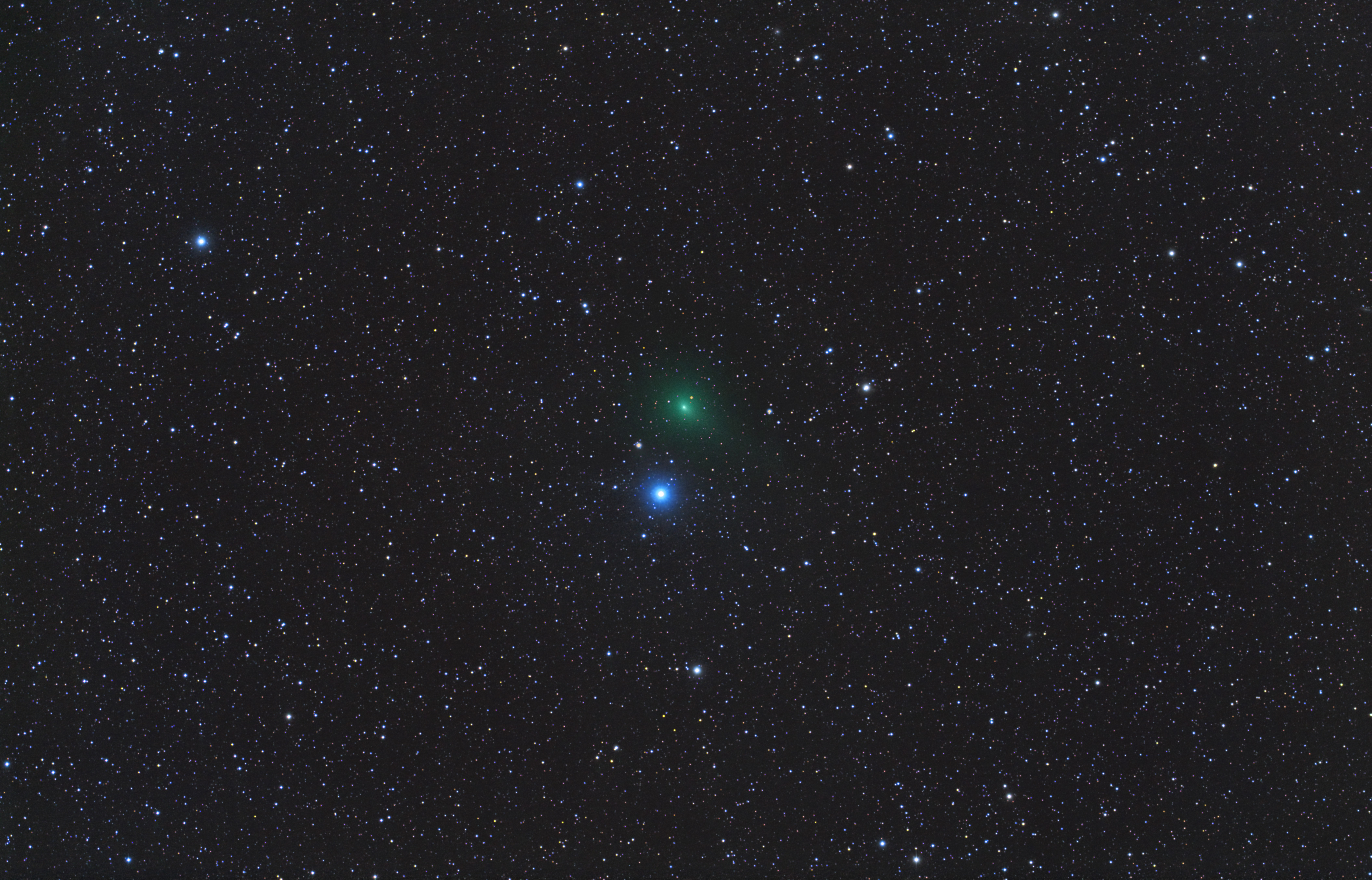
I also have a full-field, star-freeze view at 100% resolution. It is more “pristine” than the other images with only minimal processing :
62P/Tsuchinshan on Oct 29, 2017, 09:17 UT. 8×180 sec @ ISO 3200, TV-85 at F/5.6, Canon T3, IDAS-LPS.
C/2017 O1 ( ASASSN ) on Oct 29, 2017, 05:40 UT. 21×180 sec @ ISO 1600, IDAS-LPS, Canon T4, TV-85 at F/5.6.
On this night, I drove out of the city to a semi-dark spot about 30 minutes away. It was forecast to be very transparent, according to ClearkDarkSky.com. Moonset was near 1:00 AM on Sunday morning, Oct 29, 2017, so I setup and took advantage of the dark time that was left and managed to shoot 3 comets before sunrise.
The first one was Comet Asassn. I processed it and created an initial star-streaks version, since it is the easiest to do. I still had a set of ISO 3200 sub-images to add in, but it looked fine to me with just the ISO 1600 data, so I left it as is. Plus, the two data sets did not mesh well with so many stars and the differing exposure times.
For the star-freeze version, I did add in the ISO 3200 data, which was 36×180 sec. Check it out:
Comet Asassn. 36×180 sec @ ISO 3200 and 21×180 sec @ ISO 1600. TV-85 at F/5.6, Canon T3, IDAS-LPS filter. Cropped version.
Here is the full-field version of the above with a slightly different color balance and saturation level:
Comet Asassn. 36×180 sec @ ISO 3200 and 21×180 sec @ ISO 1600. TV-85 at F/5.6, Canon T3, IDAS-LPS filter.
Comet 24P/Schaumasse on Oct 24, 2017. 38×120 sec @ ISO 200, TV-85 at F/5.6, Canon T3.
This is one of those early morning comets that are low to the horizon at dawn and very dim. Consequently, 2 minute sub-images at ISO 200 barely picked it up from the Bortle Red Zone glow I was shooting in.
I could easily see two 11th magnitude galaxies nearby in the sub-images, but this guy was barely visible. I think it is supposed to get brighter before too long. I will try again for it if and when it does.
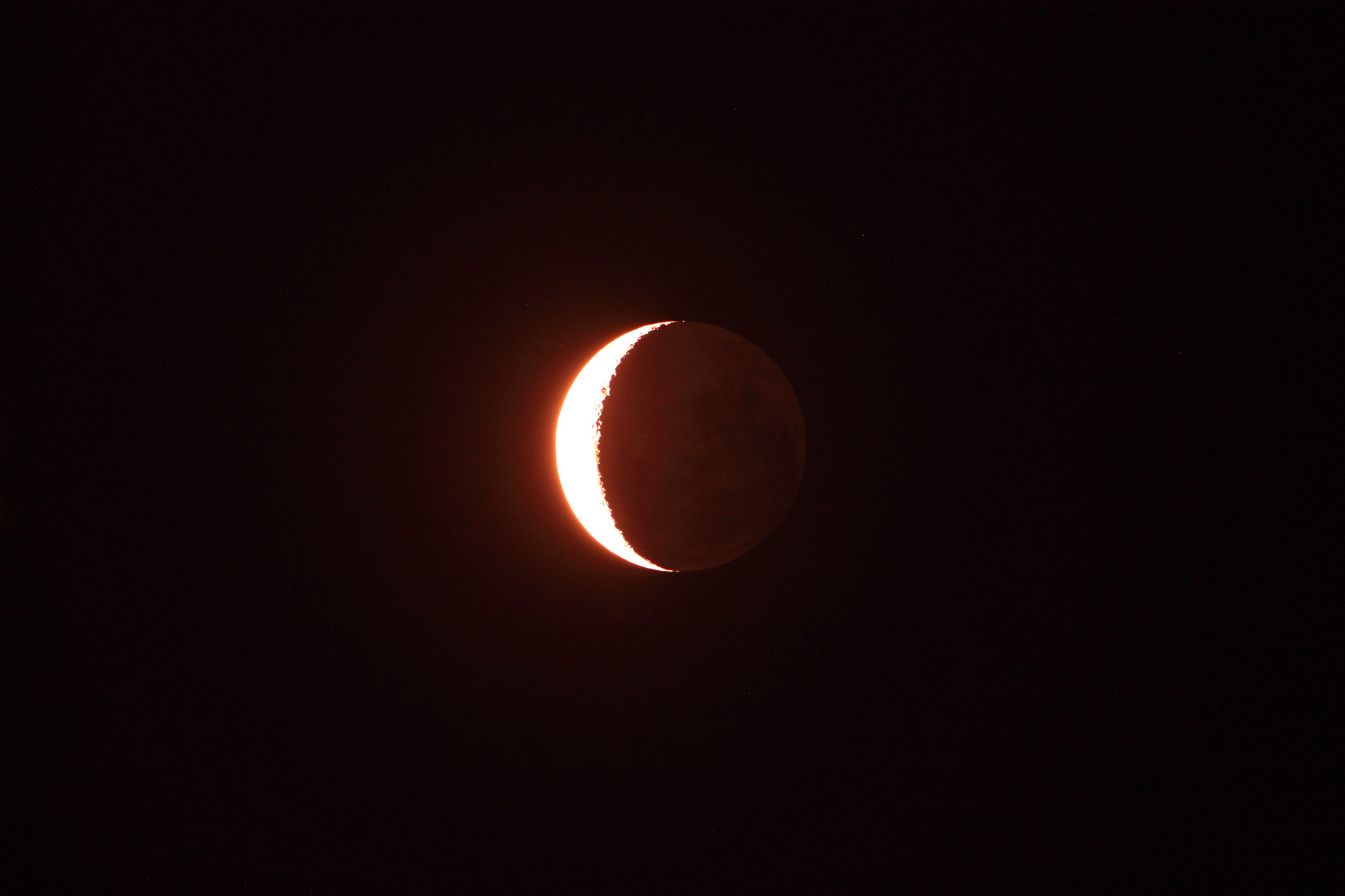
The Moon on Oct 23, 2017. 1 x 0.5 sec @ ISO 400, TV-85 at F/5.6, Canon T3.
The moon was low and setting in the west when I took this shot. Earth-shine was very pretty and I tried to capture how it looked, but the bright part always gets over-exposed. But, you get the idea. 🙂
Images of Comets, Nebulae, Galaxies and Star Clusters