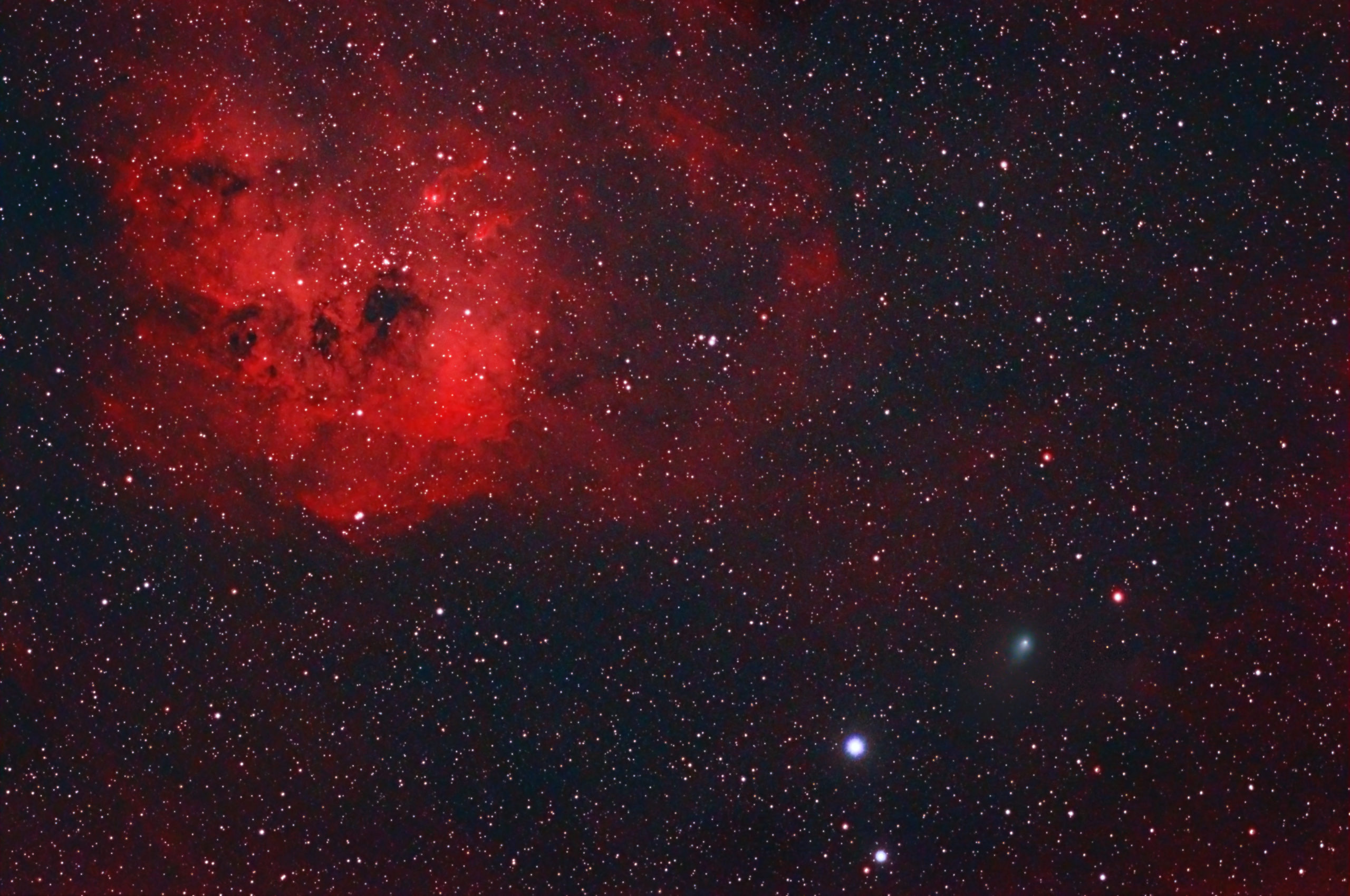
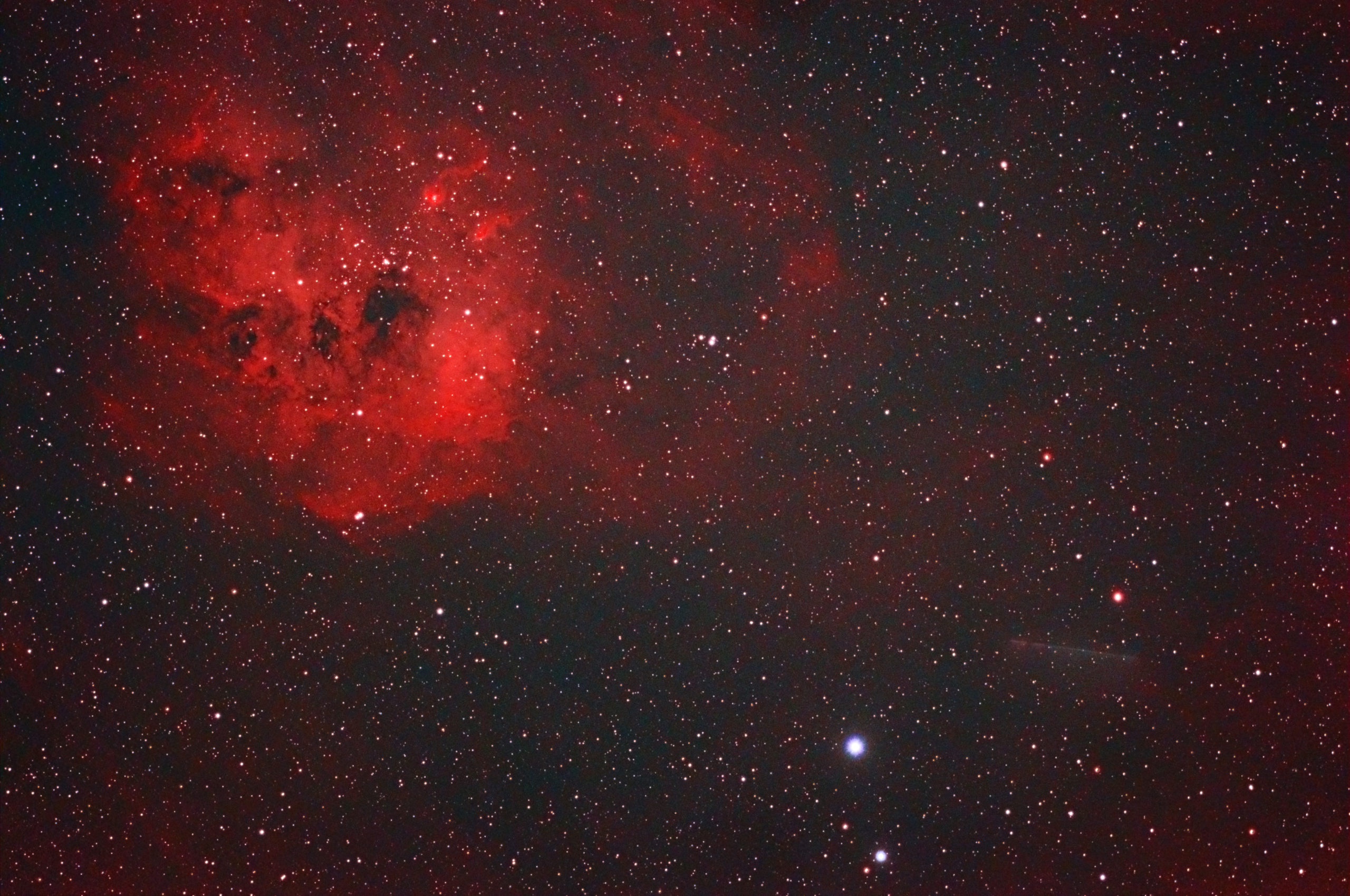
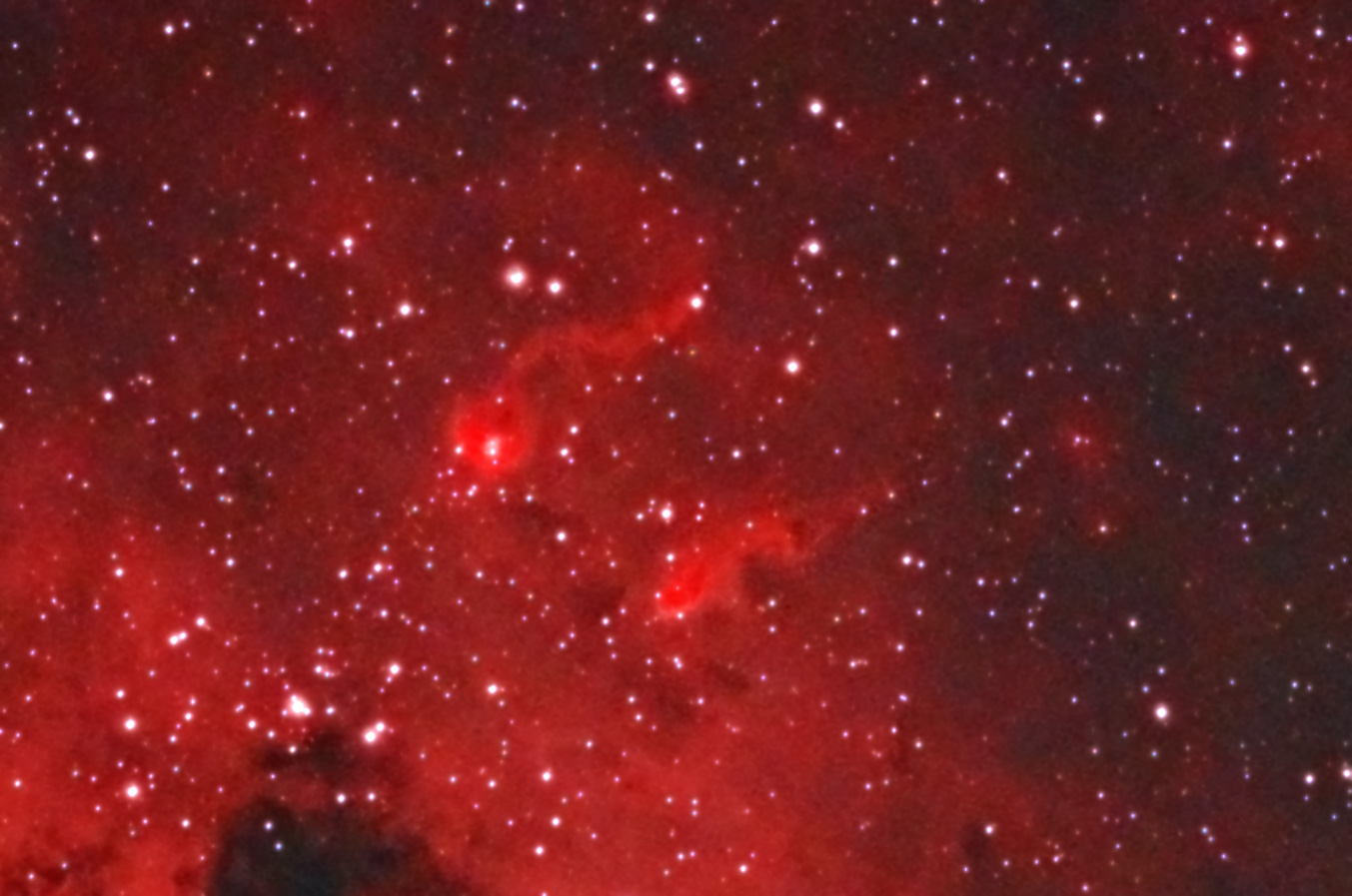
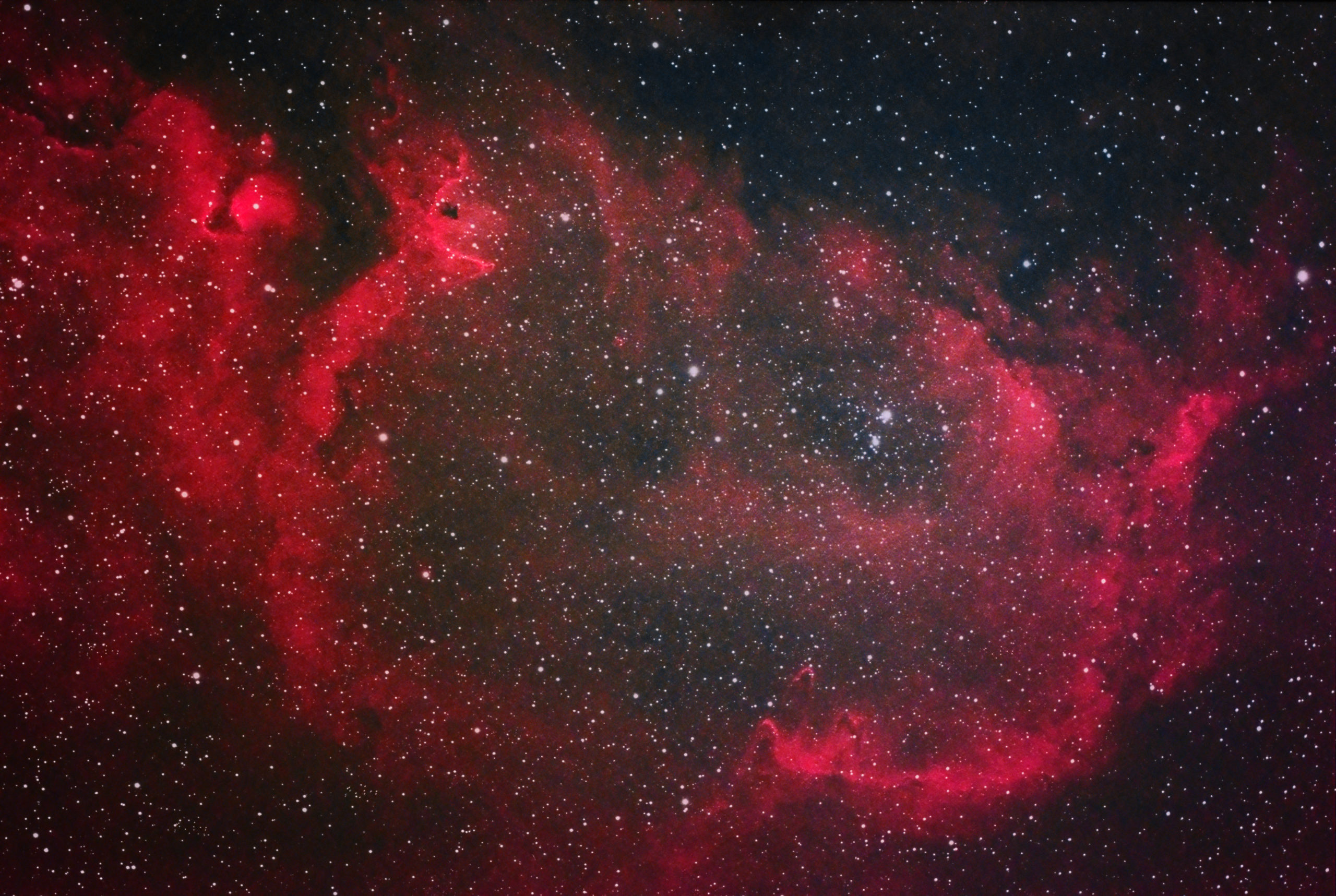
IC 410, The Tadpoles and Comet ATLAS. 3 hours in 60 x 3 minute sub-images. QHY183c at -20C, Optolong L-eNhance, Televue TV-85 at F/5.6. Star-Freeze Version.IC 410, The Tadpoles and Comet ATLAS. 3 hours in 60 x 3 minute sub-images. QHY183c at -20C, Optolong L-eNhance, Televue TV-85 at F/5.6.Tadpoles Detail View
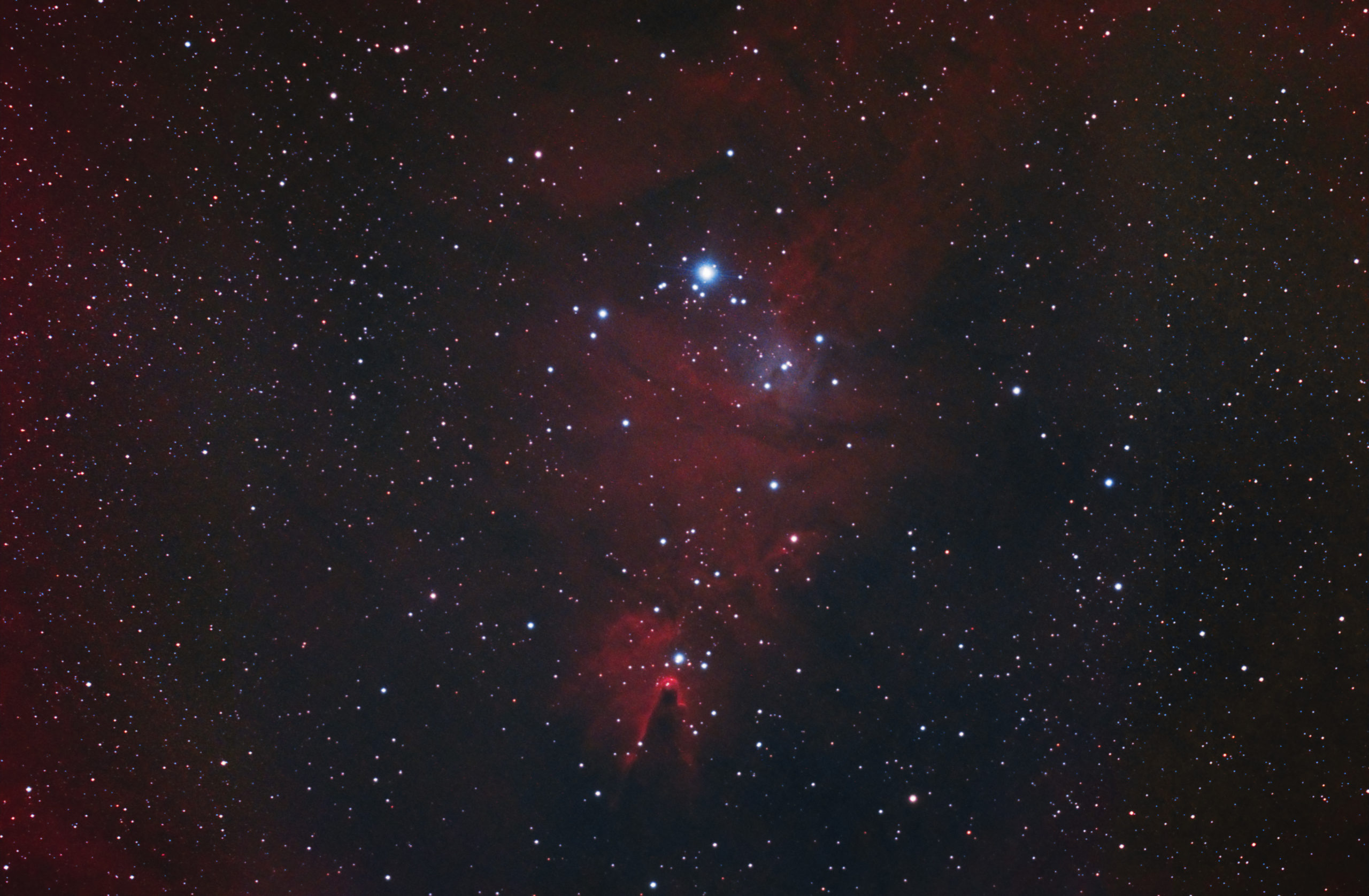
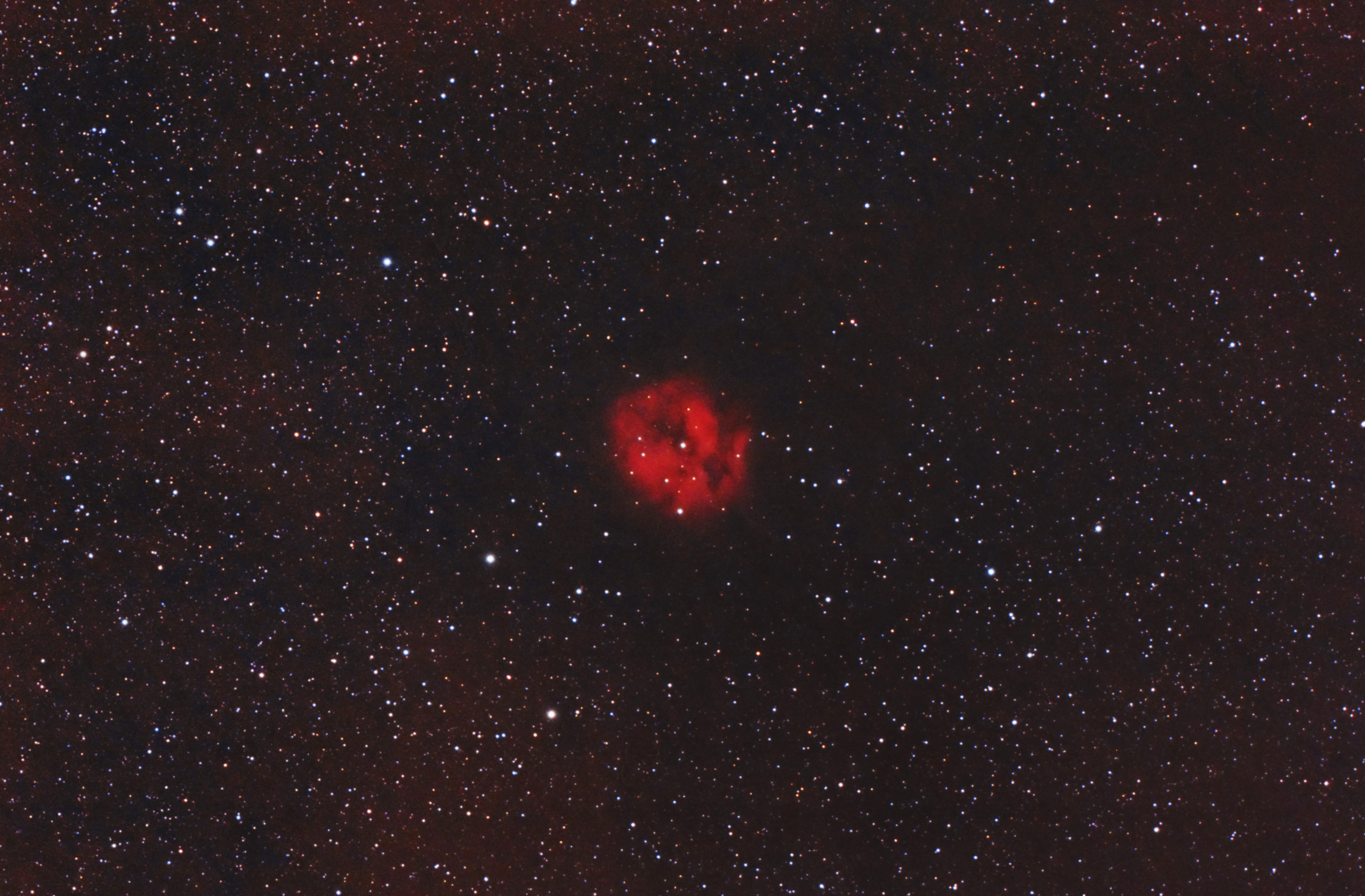
Christmas Tree Cluster and Cone Nebula – 183×30 sec, gain 42, offset 42, and 49×120 sec in 2 runs, 30×120 and 19×120. Bortle Red zone metro conditions, but clear and above average transparency skies. Seeing was average. QHY183c camera cooled to -15C. gain 20, offset 100, an L-eNhance filter and Televue TV-85 at F/5.6. Sharpcap 3.2 for acquisition. Taken Dec 1, 2020 during a full moon night.
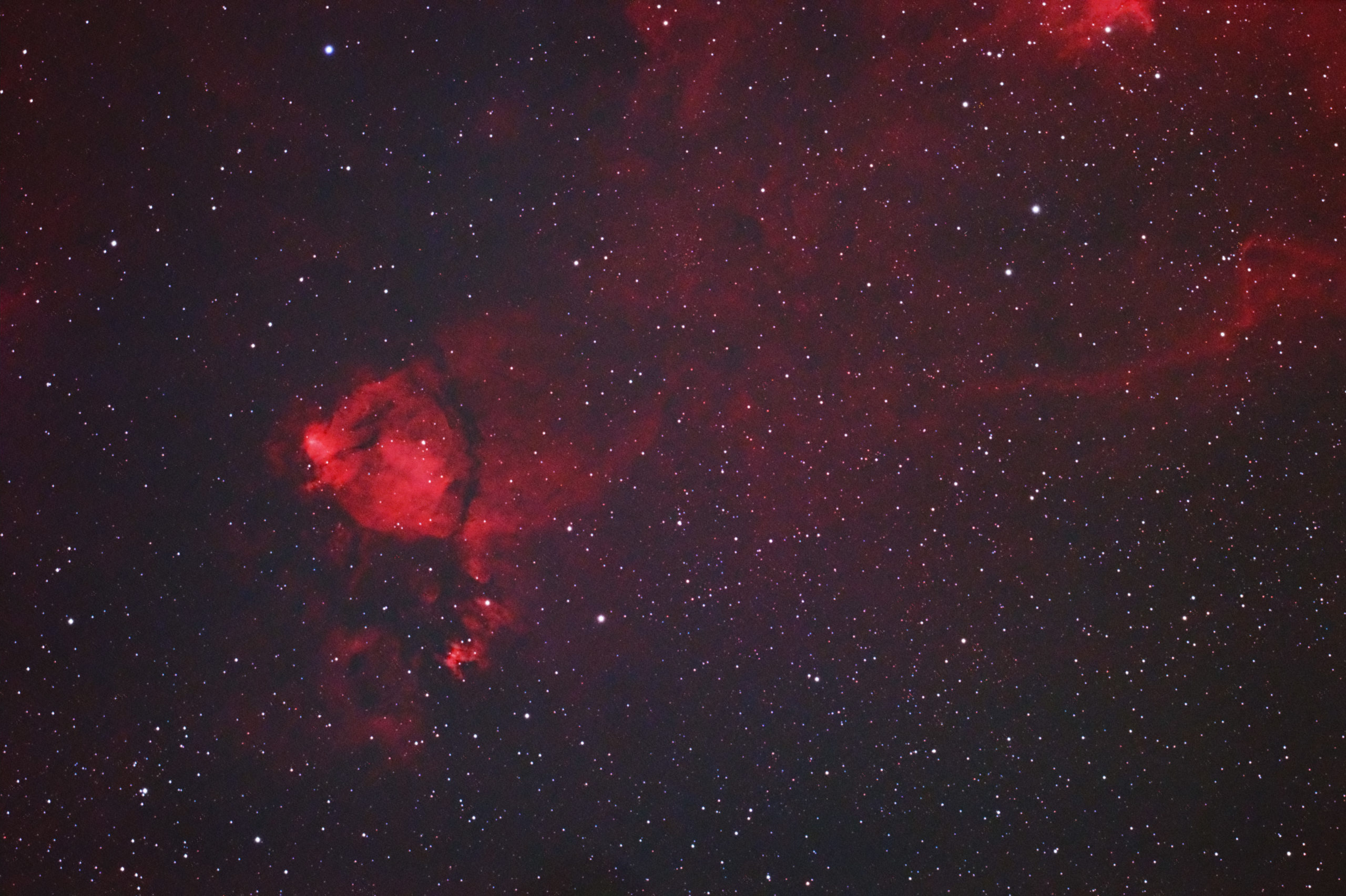
IC1795, NGC896, Tombaugh 4 and Mel 15 with parts of IC805, otherwise known as the Heart Nebula. 60×60 sec, Gain 25, Offset 100, QHY183c at -15C, Optolong L-eNhance filter, Televue TV-85 at F/5.6.
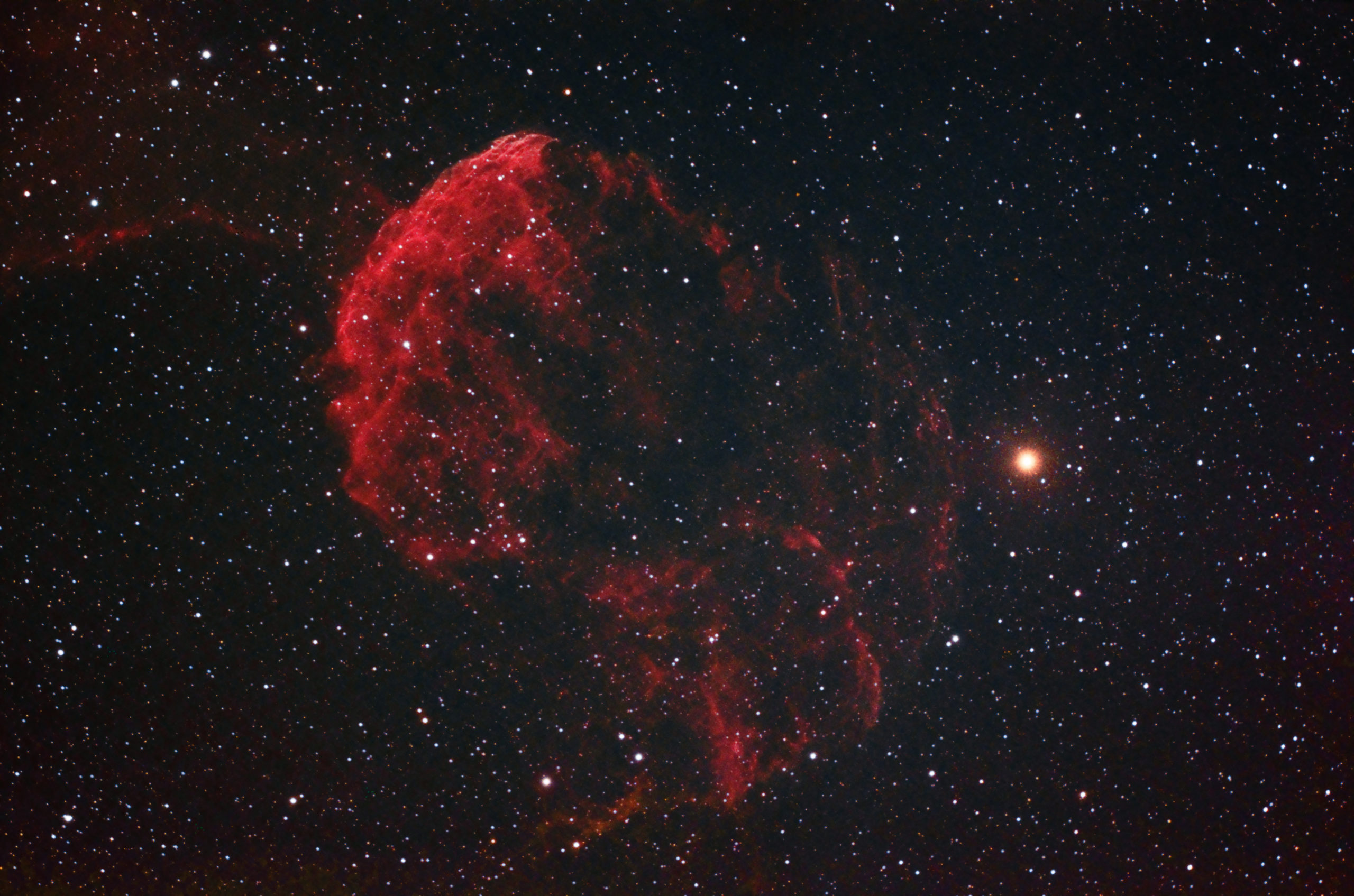
Jellyfish Nebula on Nov 24, 2020. 46×120 sec at 20 Gain and 100 Offset, added 237×30 sec @ Gain 37, offset 15, QHY183c at -15C, L-eNhance filter, Televue TV-85 at F/5.6.
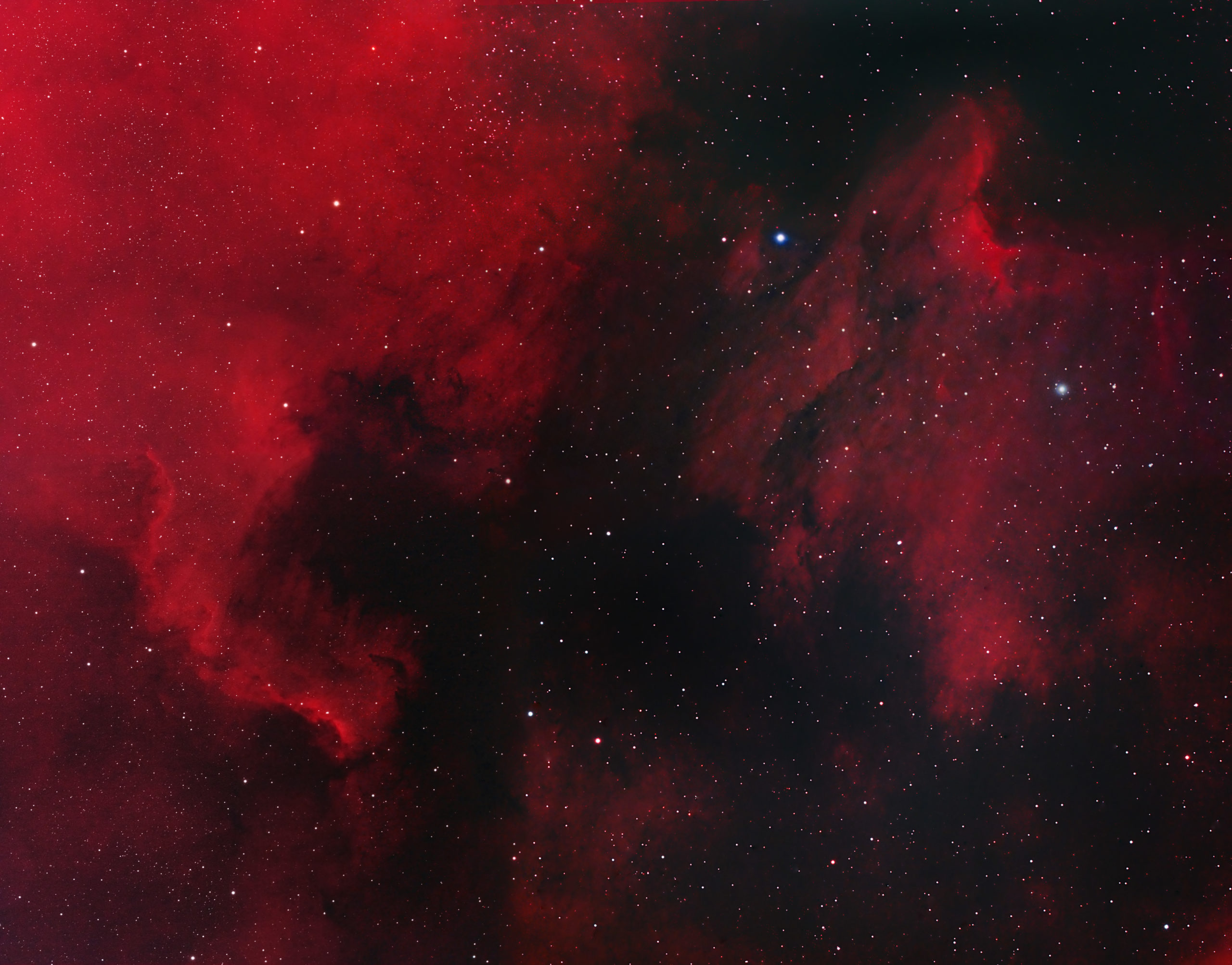
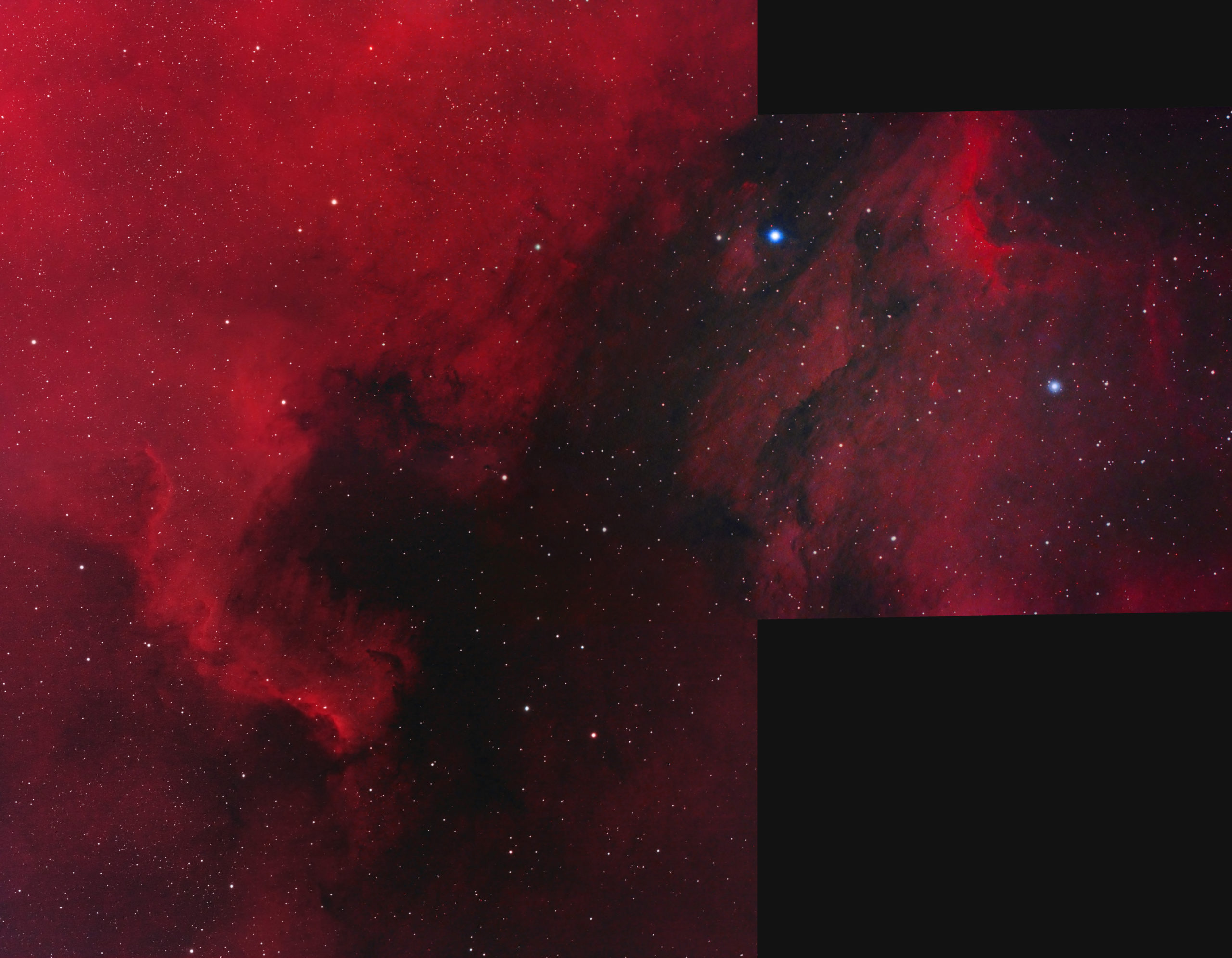
North America Nebula, Pelican Nebula Mosaic Preview
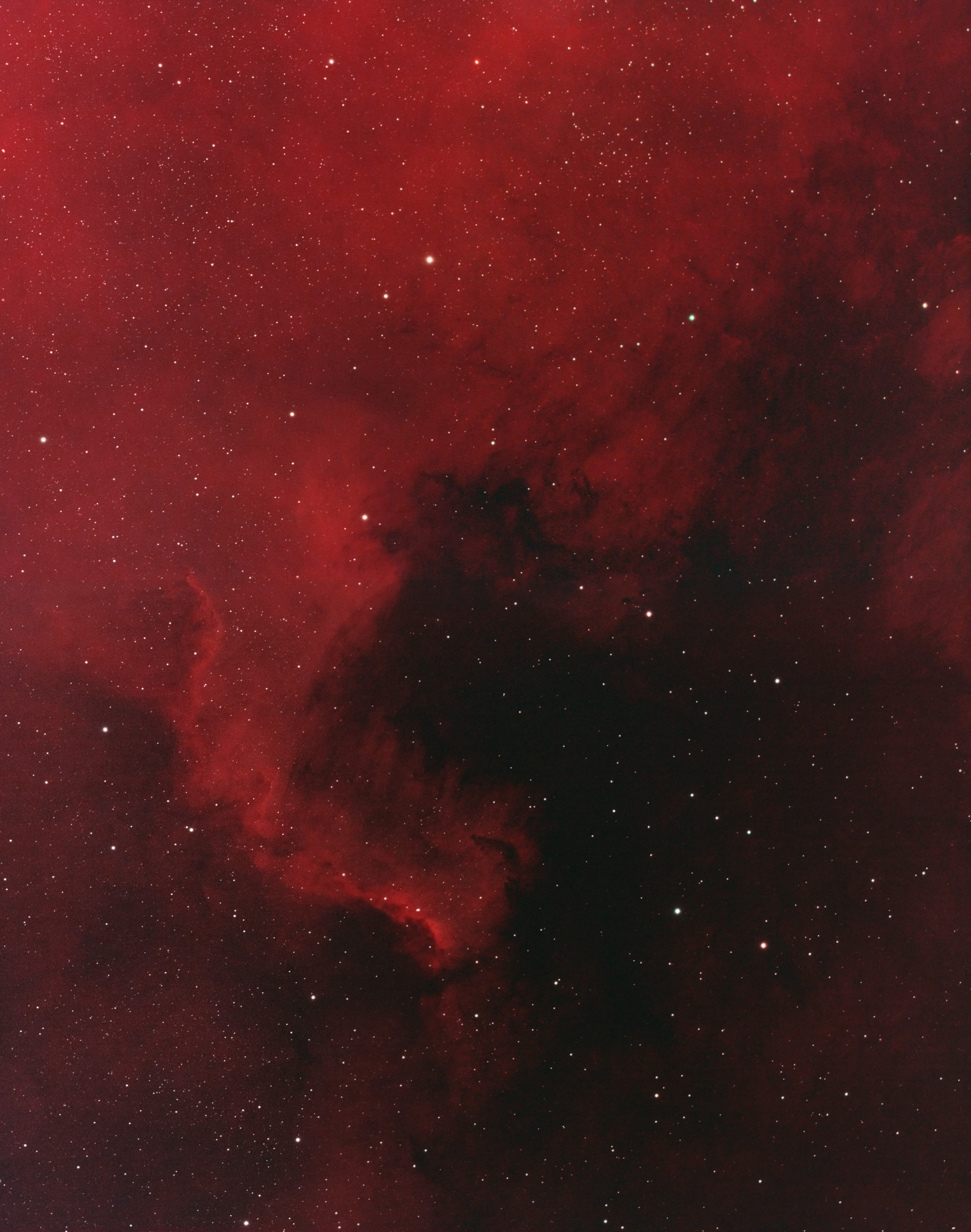
Above is the start of the mosaic. 3 Panels that will probably be six before it is all said and done. Below is just the North America Part, unfinished since I need to get the top of the nebula. Click to see it at 50% of the full resolution.
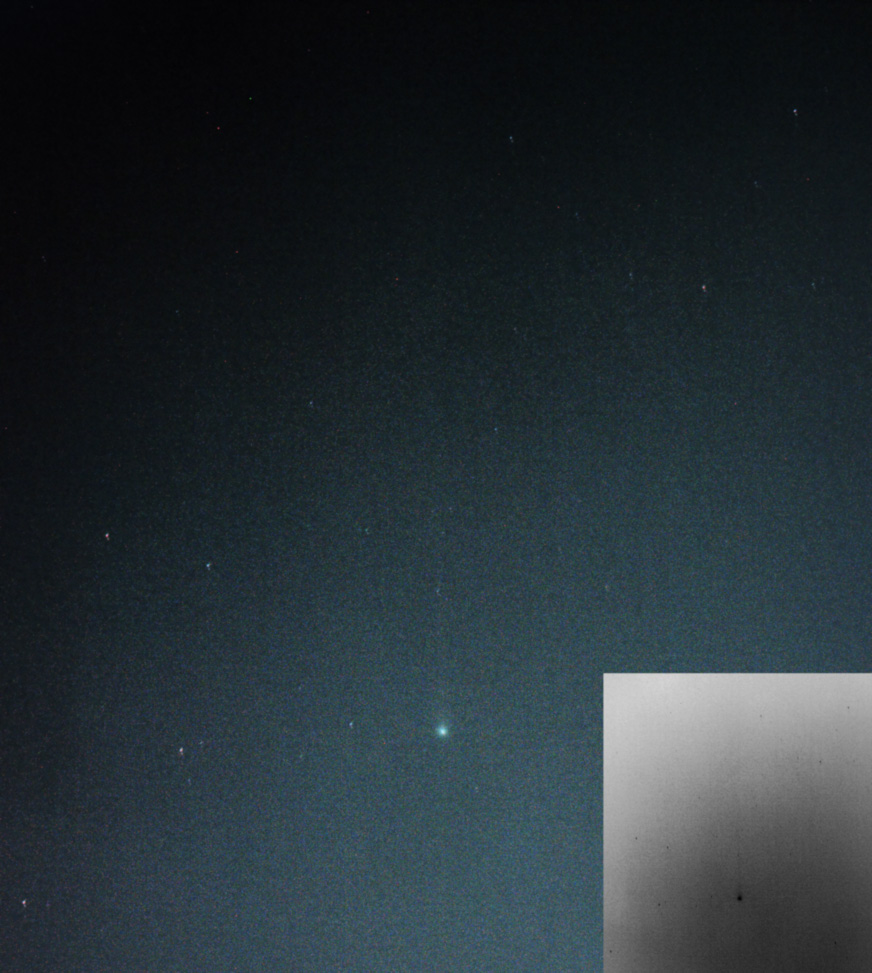
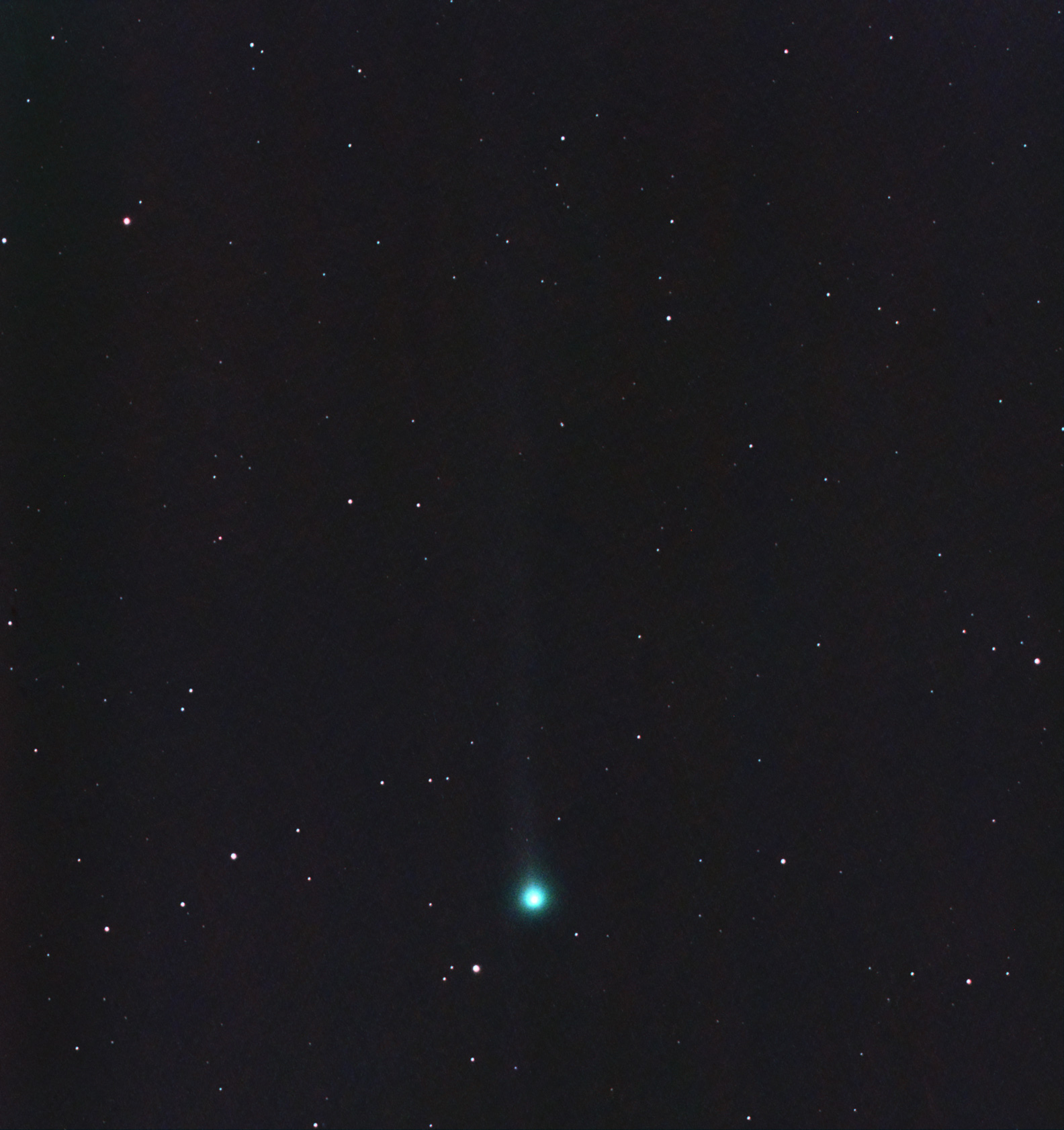
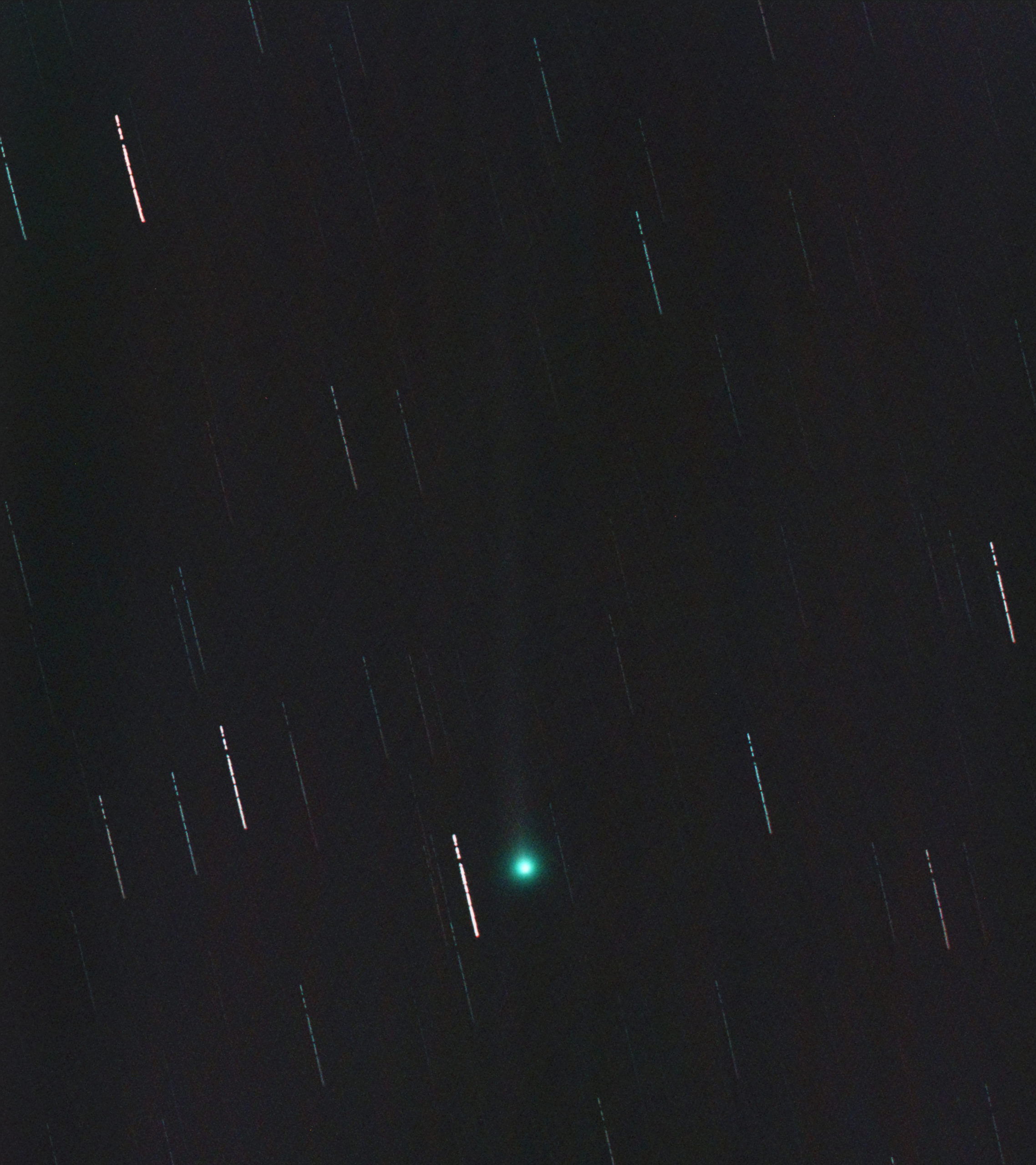
Comet Erasmus (C/2020 S3) on Nov 22, 2020, 4:50 AM to 5:40 AM. 50×60 sec sub-images captured in SharpCap 3.2, QHY183c at -20C cooling, Gain 20, Offset 200, Optolong L-eNhance filter, Televue TV-85 at F/5.6, dark, flat, bias calibration, Metro area, Bortle 7-8 zone, clear and average transparency, seeing was poor for comet elevation (under 12 degrees.) Star-Freeze version.
Comet Erasmus (C/2020 S3) on Nov 22, 2020, 4:50 AM to 5:40 AM. 50×60 sec sub-images captured in SharpCap 3.2, QHY183c at -20C cooling, Gain 20, Offset 200, Optolong L-eNhance filter, Televue TV-85 at F/5.6, dark, flat, bias calibration, Metro area, Bortle 7-8 zone, clear and average transparency, seeing was poor for comet elevation (under 12 degrees.)
New comet discovered in September, 2020 in the morning sky at twilight. Very low and very hard to image from the metro area I’m in. I used an Optolong L-eNhance filter, which helped beat back the terrible LP I had to image through when it was less than 12 degrees above the horizon.
Images of Comets, Nebulae, Galaxies and Star Clusters