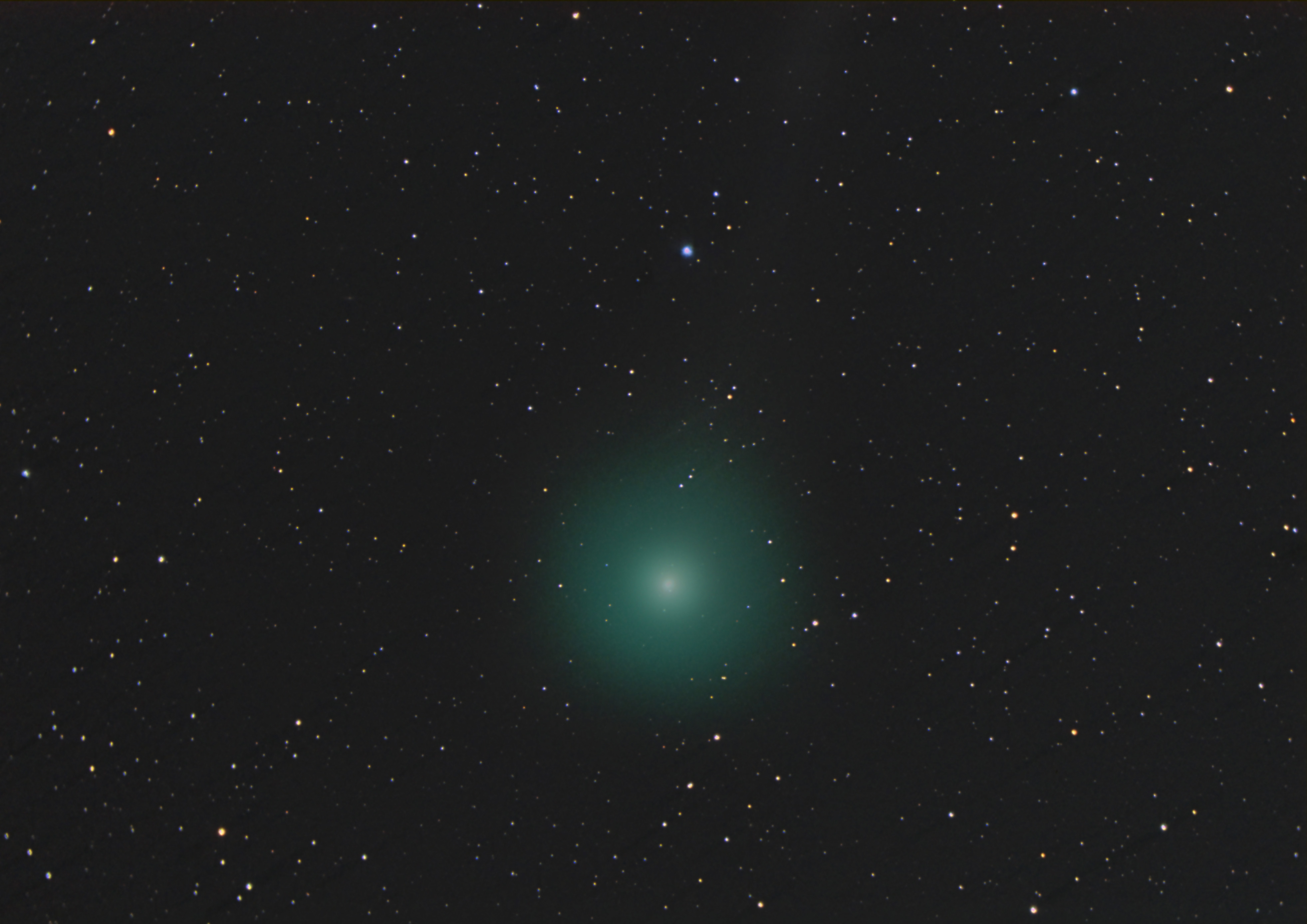
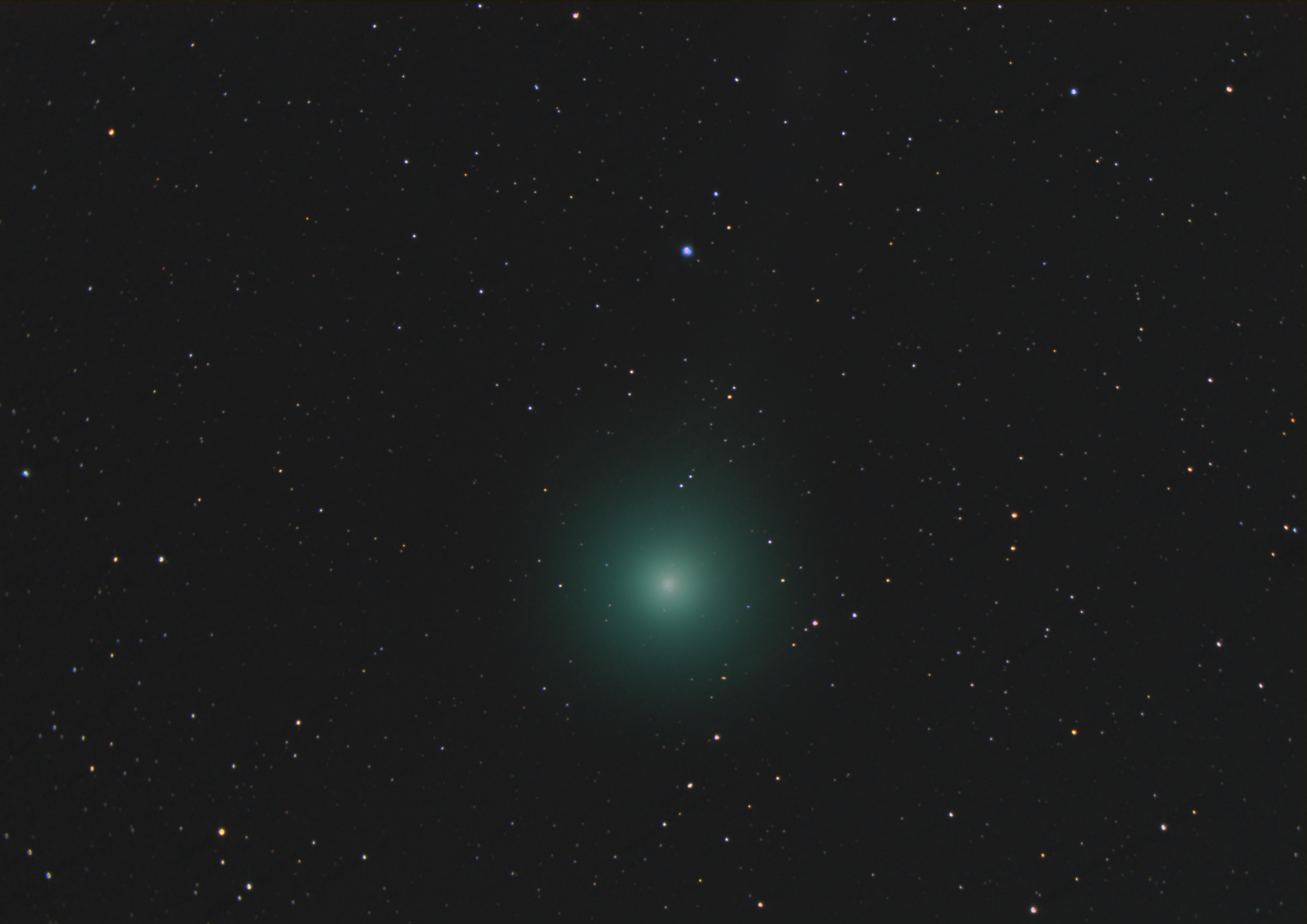
C/2014 Q2 (Lovejoy) on Dec 17, 2014. 20×180 sec @ ISO 3200, C8 at F/6.3, IDAS-LPS, modified Canon T3. Light version.C/2014 Q2 (Lovejoy) on Dec 17, 2014. 20×180 sec @ ISO 3200, C8 at F/6.3, IDAS-LPS, modified Canon T3. Dark version.
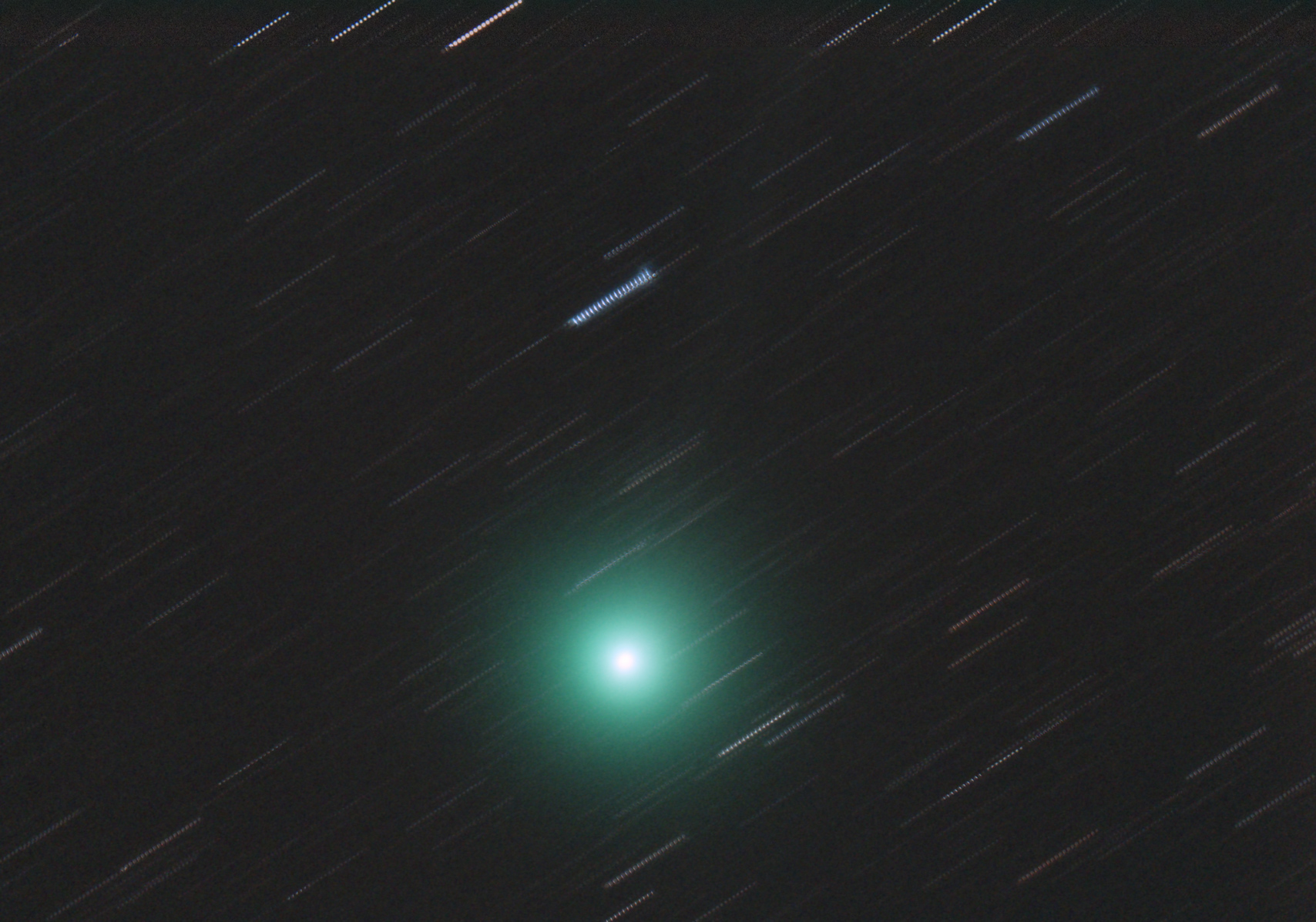
Finally, a clear night and no trees obstructing the view! Comet C/2014 Q2 (Lovejoy) was out and easily spotted in binoculars. I did some 3 minute exposures and they showed it as a large bright coma and a very faint tail. The light and dark images above are a quick processing job on the sub-images I obtained. Below is a star streak version of the same data that shows the extent of the coma better.
C/2014 Q2 (Lovejoy) on Dec 17, 2014. 20×180 sec @ ISO 3200, C8 at F/6.3, IDAS-LPS, modified Canon T3.
Here is all 20 sub-images I managed to shoot in a quick additive stack. The tail is there but very faint. There was some smearing of the pseudo-nucleus with 3 minute exposures, but I needed to go that long to get a bit of that faint tail.
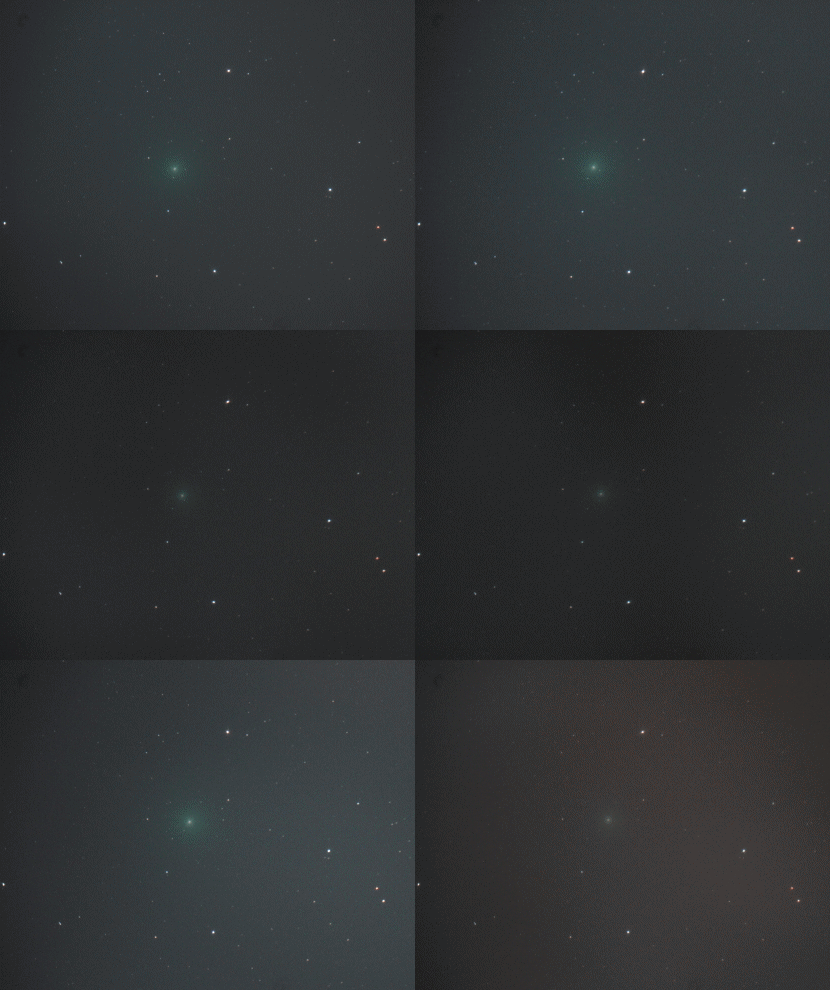
C/2014 Q2 (Lovejoy) on Dec 12, 2014, 08:20 UT. 41×120 sec @ ISO 1600, C8 at F/6.3, IDAS-LPS, Canon T3 (modified.)
Well, I got my first images of Comet Lovejoy, C/2014 Q2, but unfortunately, they were all shots that had tree branches in them. The comet was still too low for my location at the time the shots were taken. I have since chopped the trees down that were causing this mess, so hopefully I’ll get something better in the near future. The above animation was all I could salvage from the images.
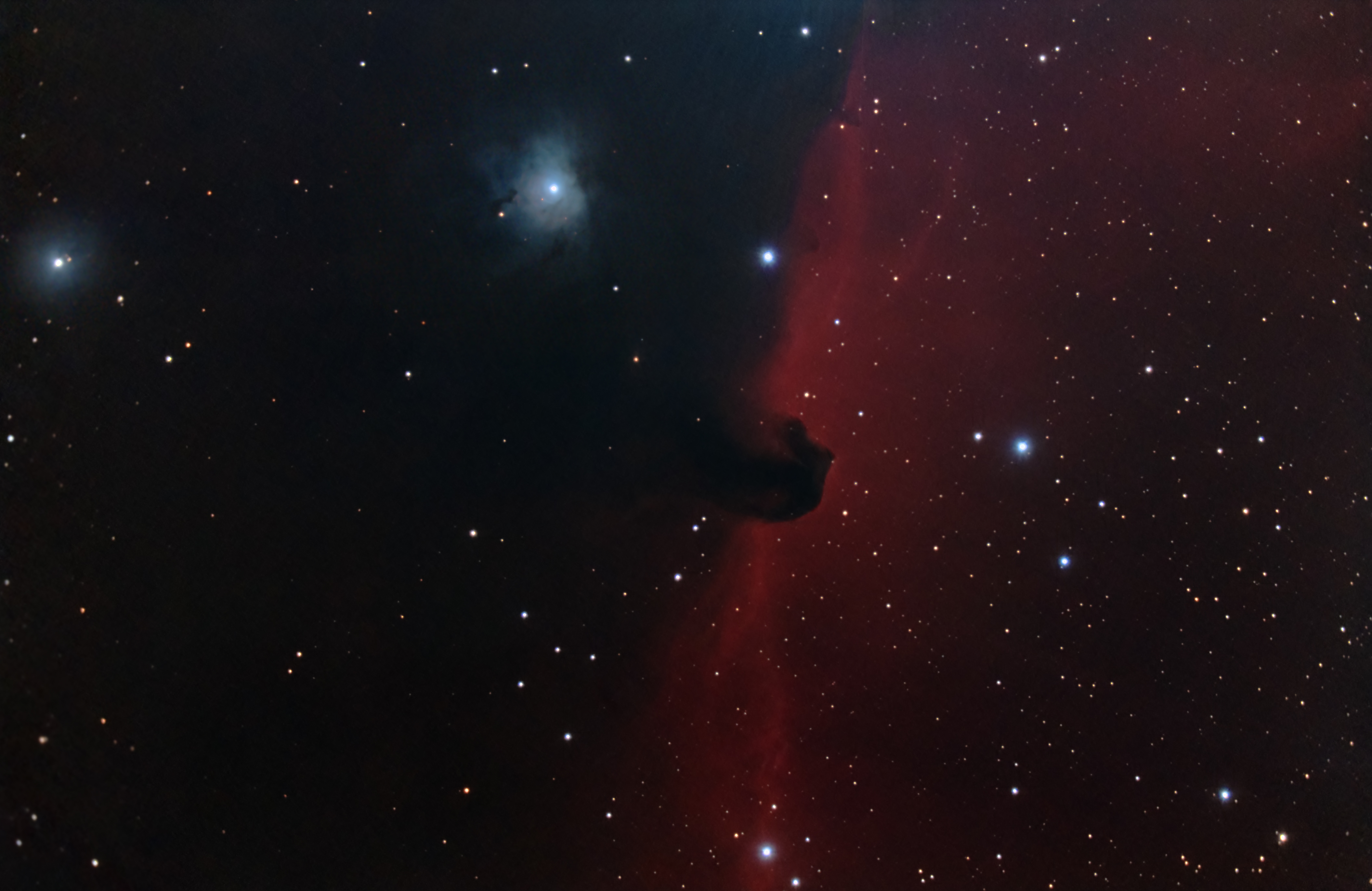
The Horse Head Nebula on Dec 1, 2014. 33×300 sec @ ISO 1600, C8 at F/6.3, IDAS-LPS, Canon T3 (modifed.)
After the moon had set on Dec 1, 2014, I decided to let the camera and guiding run while I slept and take images of the Horse Head Nebula region. I managed to get 33 good sub-images before the clouds messed up the tracking.
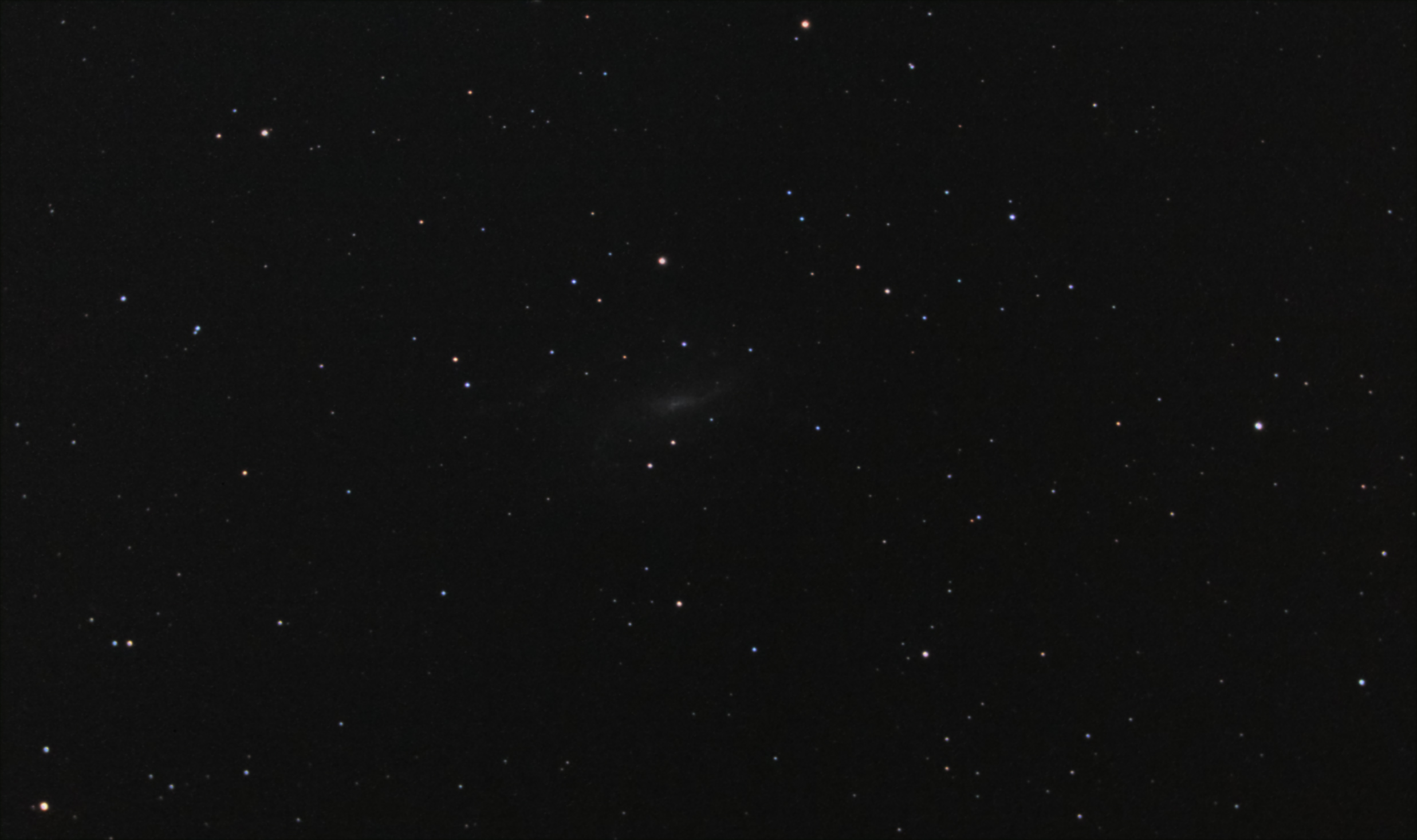
Galaxy NGC 925 on Nov 29, 2014. 18×120 sec @ ISO 3200, C8 at F/6.3, IDAS-LPS, Canon T3 (modified.)
I wanted to see what this was. It appears to be a spiral galaxy. With just 18 sub-images, it is only barely visible. I might come back to this one with longer exposures and 4 times as many subs to bring it out better.
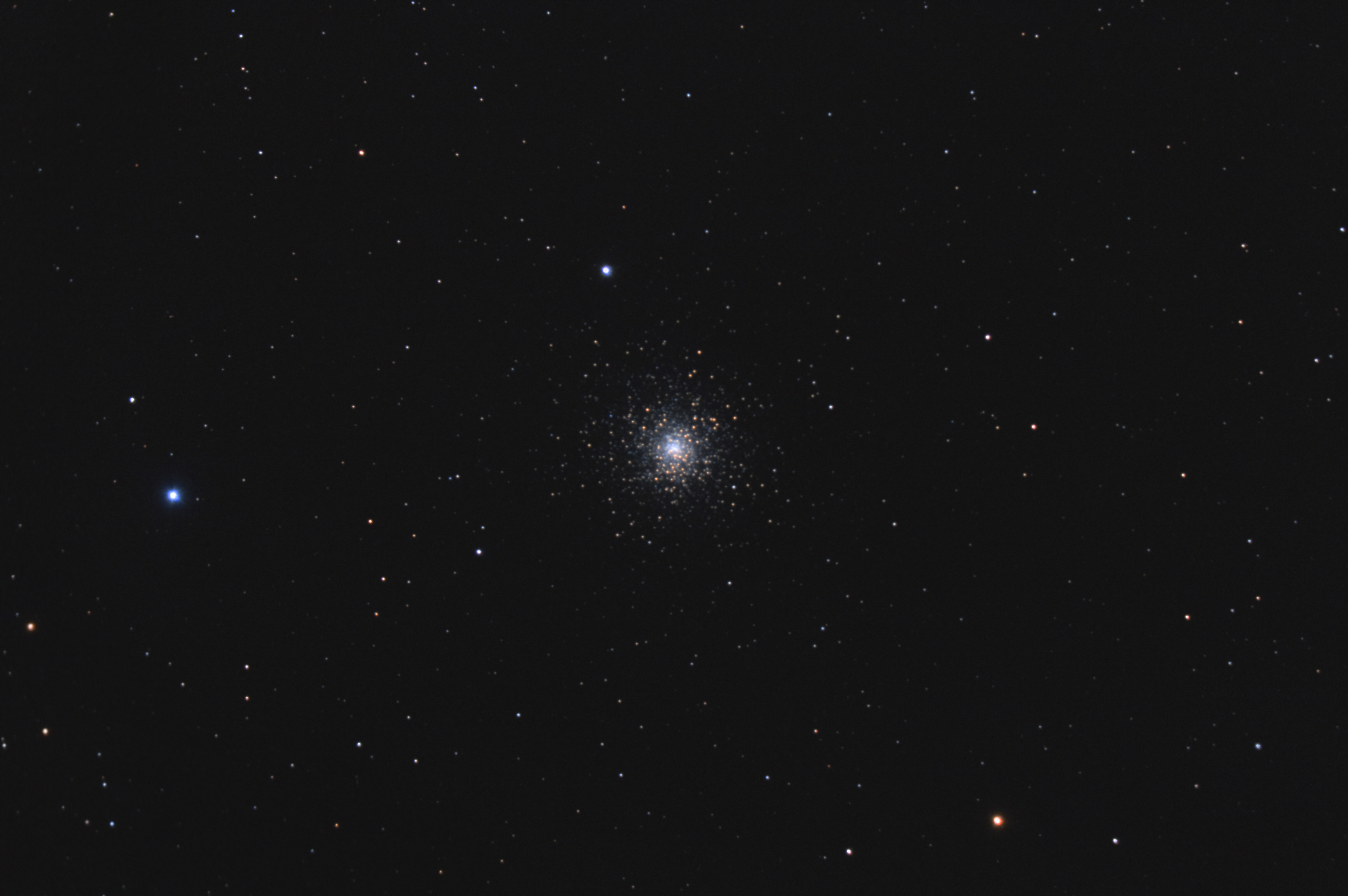
M15 Globular Cluster on Nov 29, 2014. 32×120 sec @ ISO 800, C8 at F/6.3, IDAS-LPS, Canon T3 (modifed.)
It has been so long since I imaged with the C8 I forgot how big a globular would look in it. To satisfy my curiosity, I shot M15 at the start of my imaging session on Nov 29, 2014. I had to crop out the distortion in the corners, so this is roughly a 60% crop of the central region.
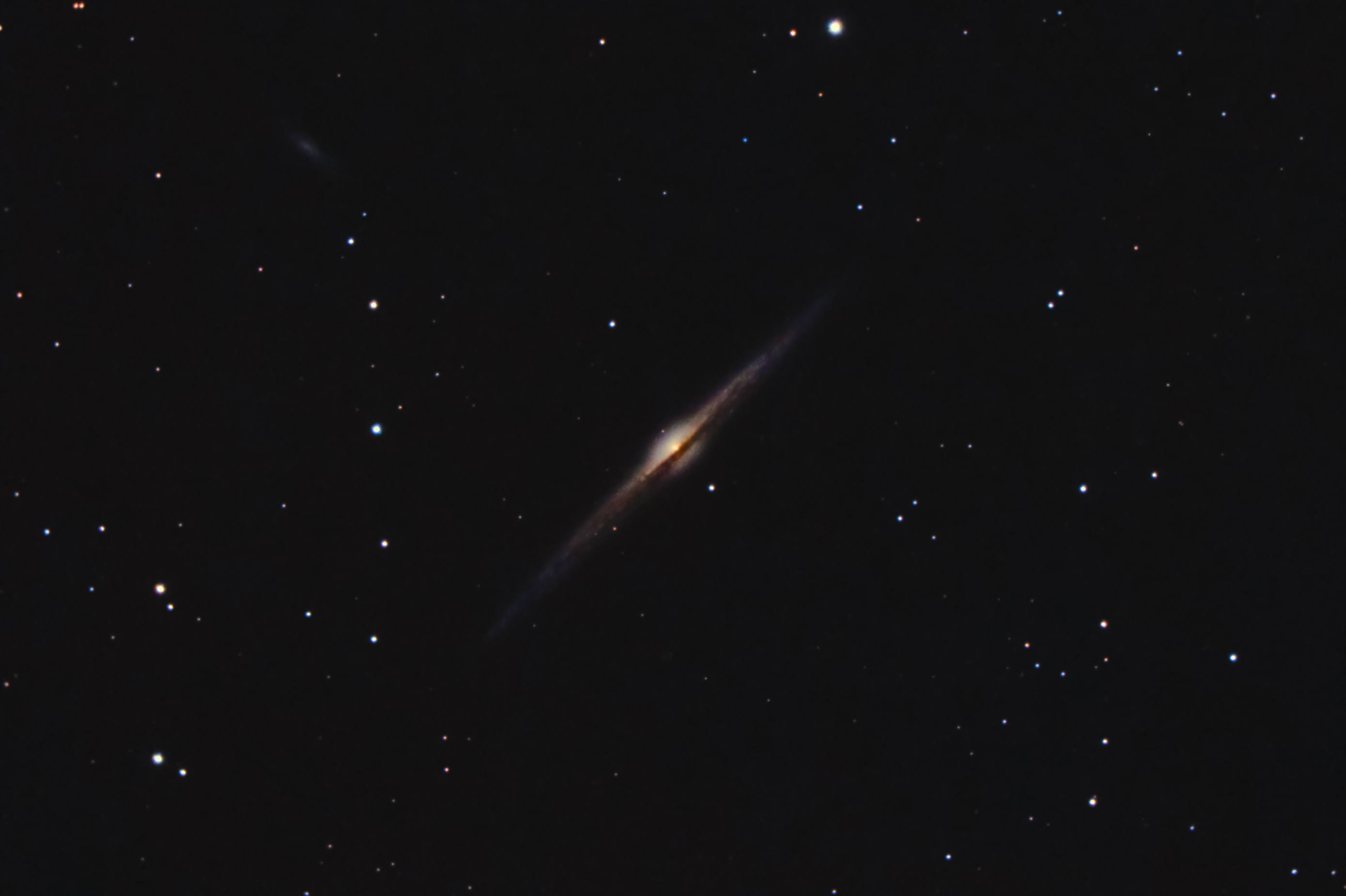
NGC 4565 on Nov 28 & 29, 2014. 18×180 sec @ ISO 1600 plus 20×120 sec @ ISO 3200, C8 at F/6.3, IDAS-LPS, Canon T3 (modified.)
This is a “quickie” of one of my favorite deep sky objects, taken with my Celestron C8 SCT. Edge-on galaxy NGC 4565 is the best example of the edge-on galaxy class in the sky. I shot this right before sunrise when the object was just high enough to start imaging. It could use more time and I’ll probably add to it (I did on Nov 29, 2014 – an additional 40 minutes of data.) I’m pleased at what I have so far. I haven’t seen it in quite some time and it was nice to image it again.
The Orion Nebula on Nov 28, 2014. 24×60 sec and 27×300 sec @ ISO 1600, C8 at F/6.3, IDAS-LPS, Canon T3 (modified.)
One of my first images shot through a telescope at prime focus was of M42, the Orion Nebula. It was taken with my Celestron C8 SCT and 35mm film. Here’s the latest digital version of the same object taken with the same scope. I had to work hard aligning and collimating the scope before taking the sub-images for this, but the old girl is back in shape and delivered some useful data for this often imaged object. It just fits in the field of view at 1260mm of focal length.
NGC 891 on Nov 27, 2014. 35×300 sec @ ISO 1600, C8 at F/6.3, IDAS-LPS, Canon T3 (modified.)
Edge-on galaxy NGC 891. The “Outer Limits” moniker is from an old 1960’s sci-fi TV show of the same name. An image of the galaxy was featured prominently in the closing credits, along with some other galaxy images, all in black and white.
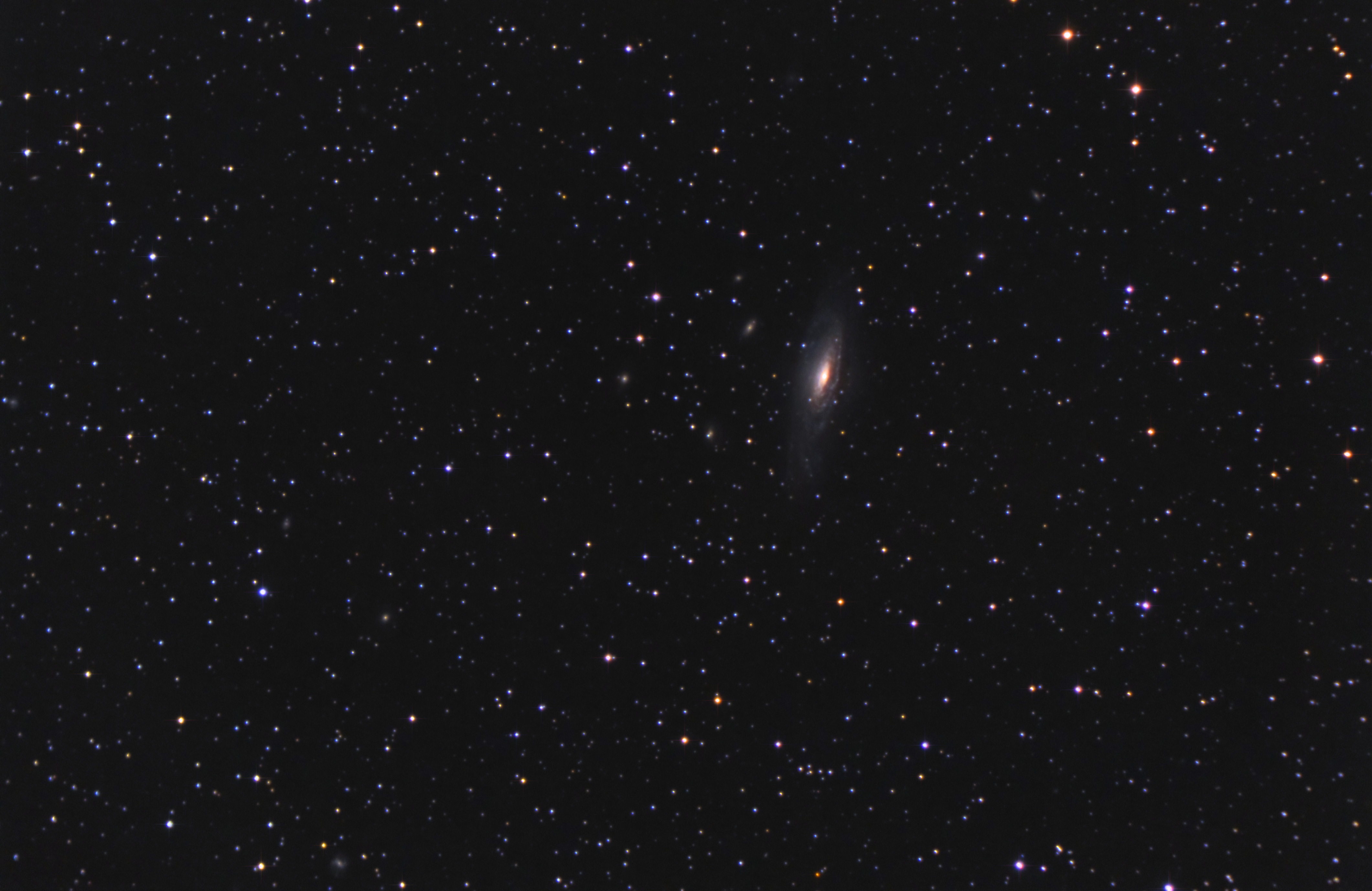
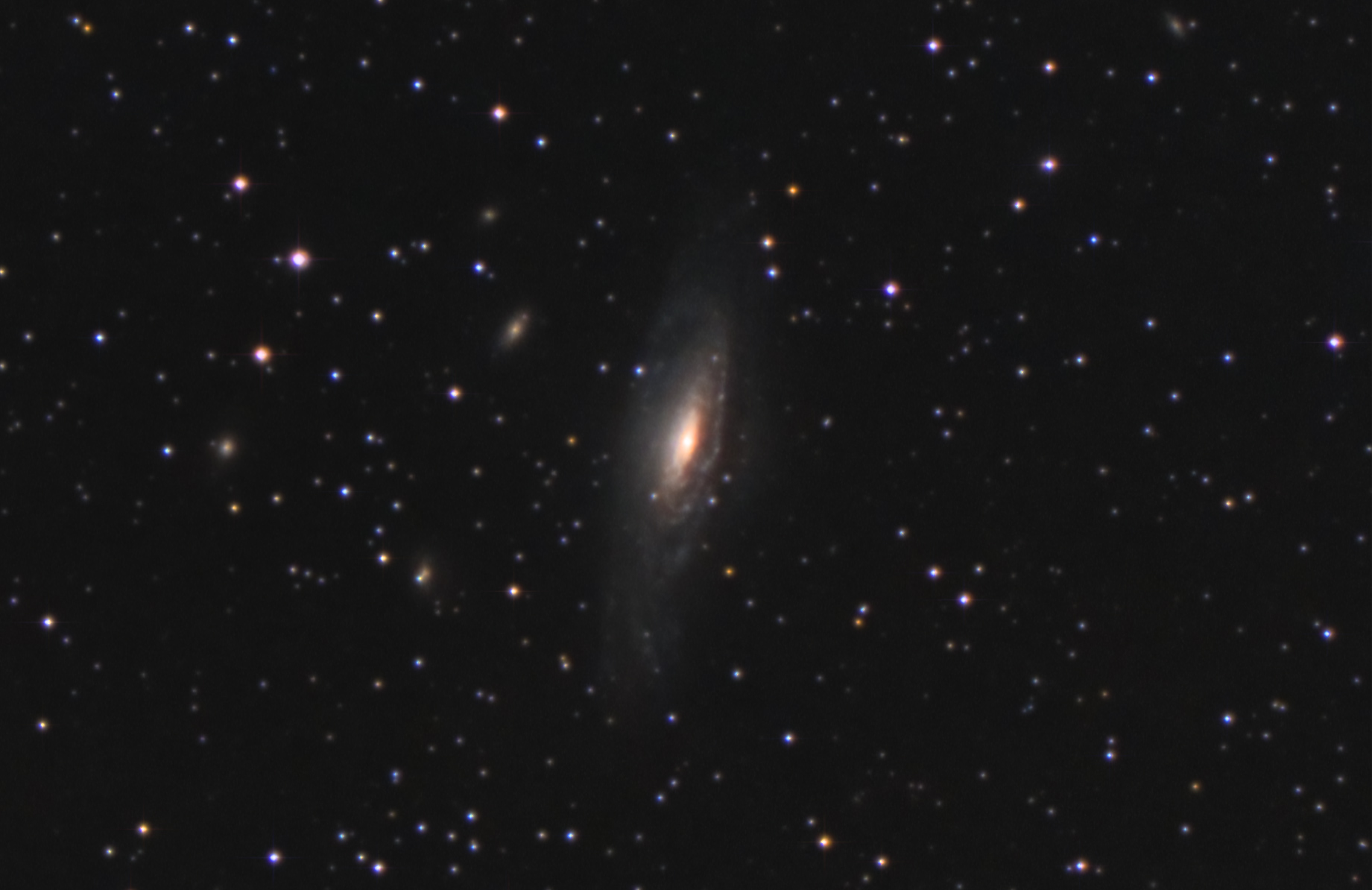
NGC 7331 taken with a TV-85 and a C8. 27×300 sec @ ISO 1600 (TV85) and 23×150 @ ISO 3200 (C8), Canon T3 (modified.)NGC-7331 detail view. Nov 20, 2014, 23×150 @ ISO 3200, C8 at F/6.3. Oct 27, 2014, 27×300 @ ISO 1600, TV-85 at F/5.6. IDAS-LPS, modified Canon T3.
At the end of October 2014, I was shooting images of some brighter NGC galaxies, but the TV-85 scope I was using just didn’t have enough image scale to do them justice, so I never posted them. Well, my old C8 is still kickin’ and it has over 2.5 times the focal length of the smaller refractor. But, I needed a way to guide it and the 50mm guiding scope arrangement I used once for it was just not good enough.