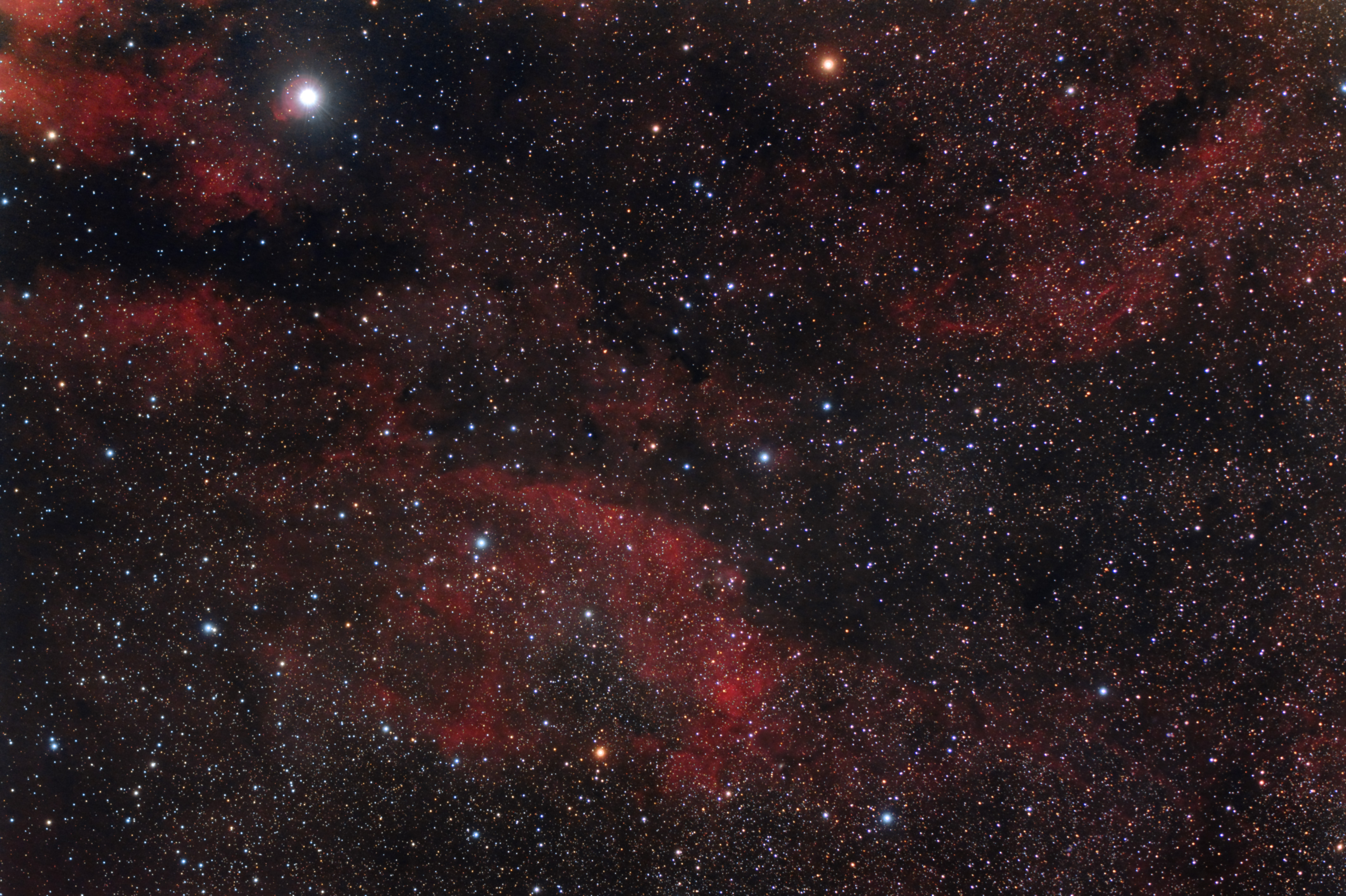
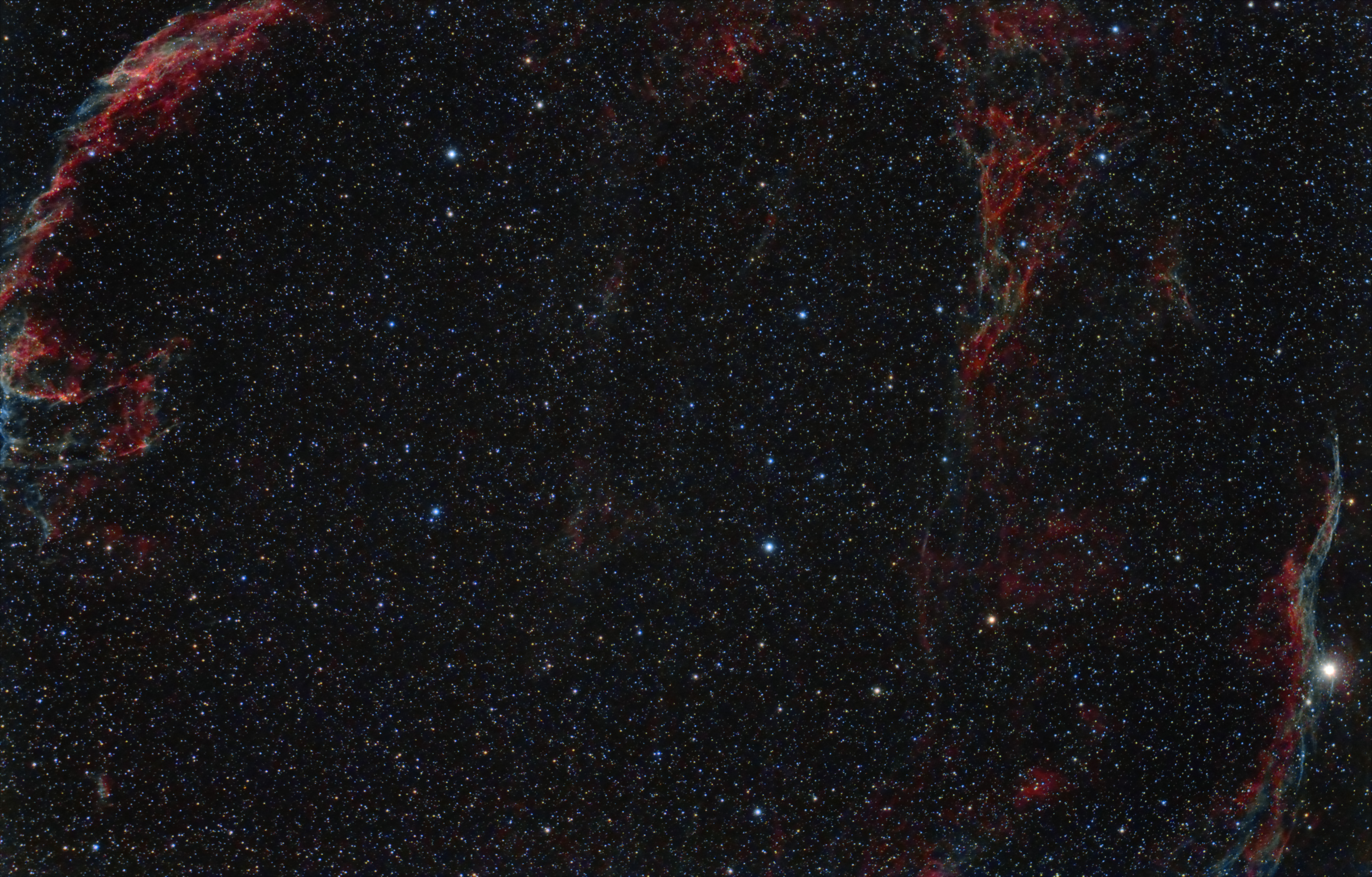
This is in Cygnus and is the middle star of the Cygnus cross, Sadr. I love this area and it has so much nebulosity. I really need to devote more time to it, as this is only a taste, it seems.

This is in Cygnus and is the middle star of the Cygnus cross, Sadr. I love this area and it has so much nebulosity. I really need to devote more time to it, as this is only a taste, it seems.
Update October 20, 2014: The above image is an update with more time added. Compare it to the image below which was made with only 20 minutes of data shot at ISO 6400 (20×60 sec sub-images.) I took an additional 30 minutes of 3 minute sub-images at ISO 1600 and added it in, so the combined total is 50 minutes.
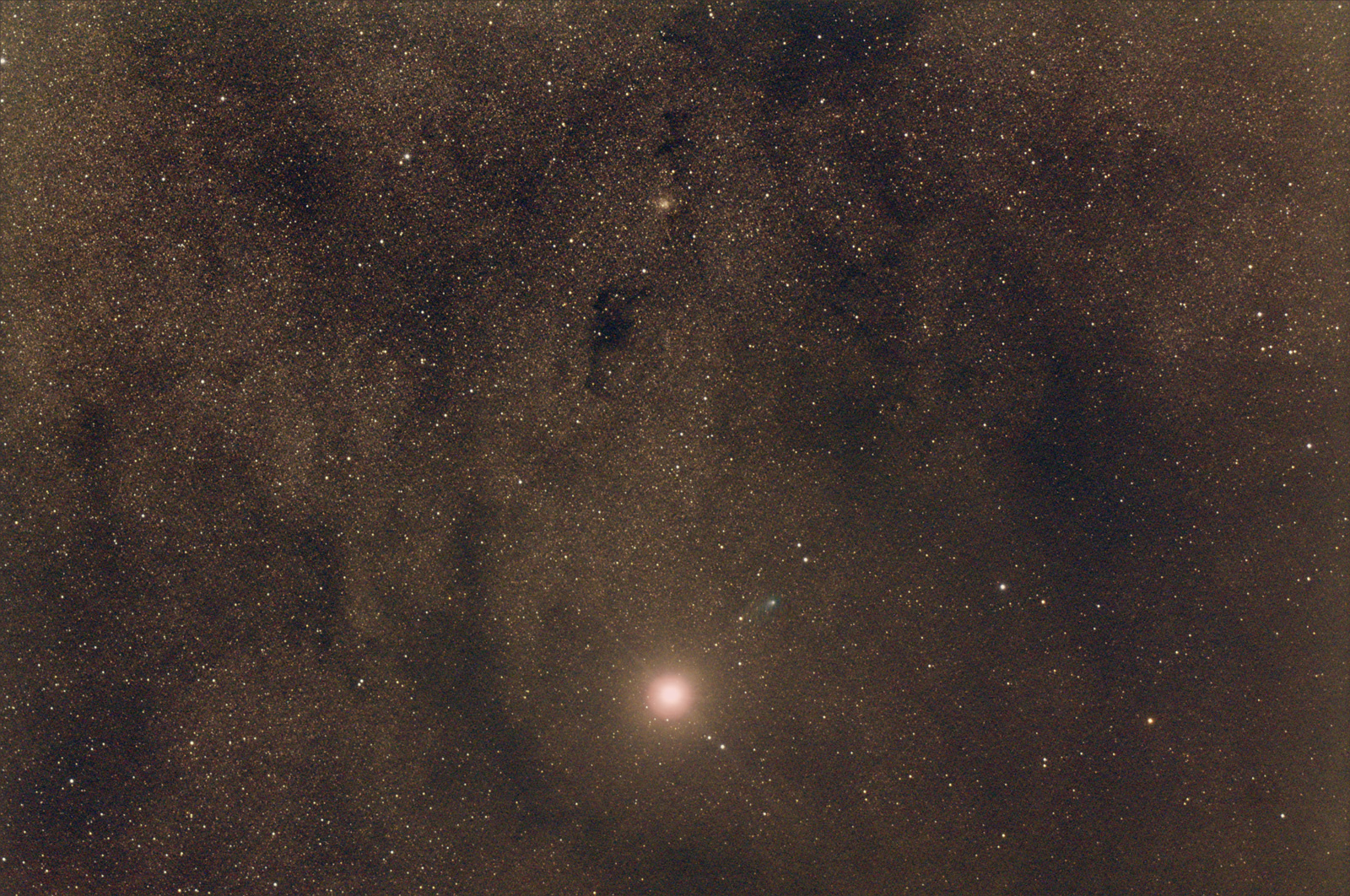
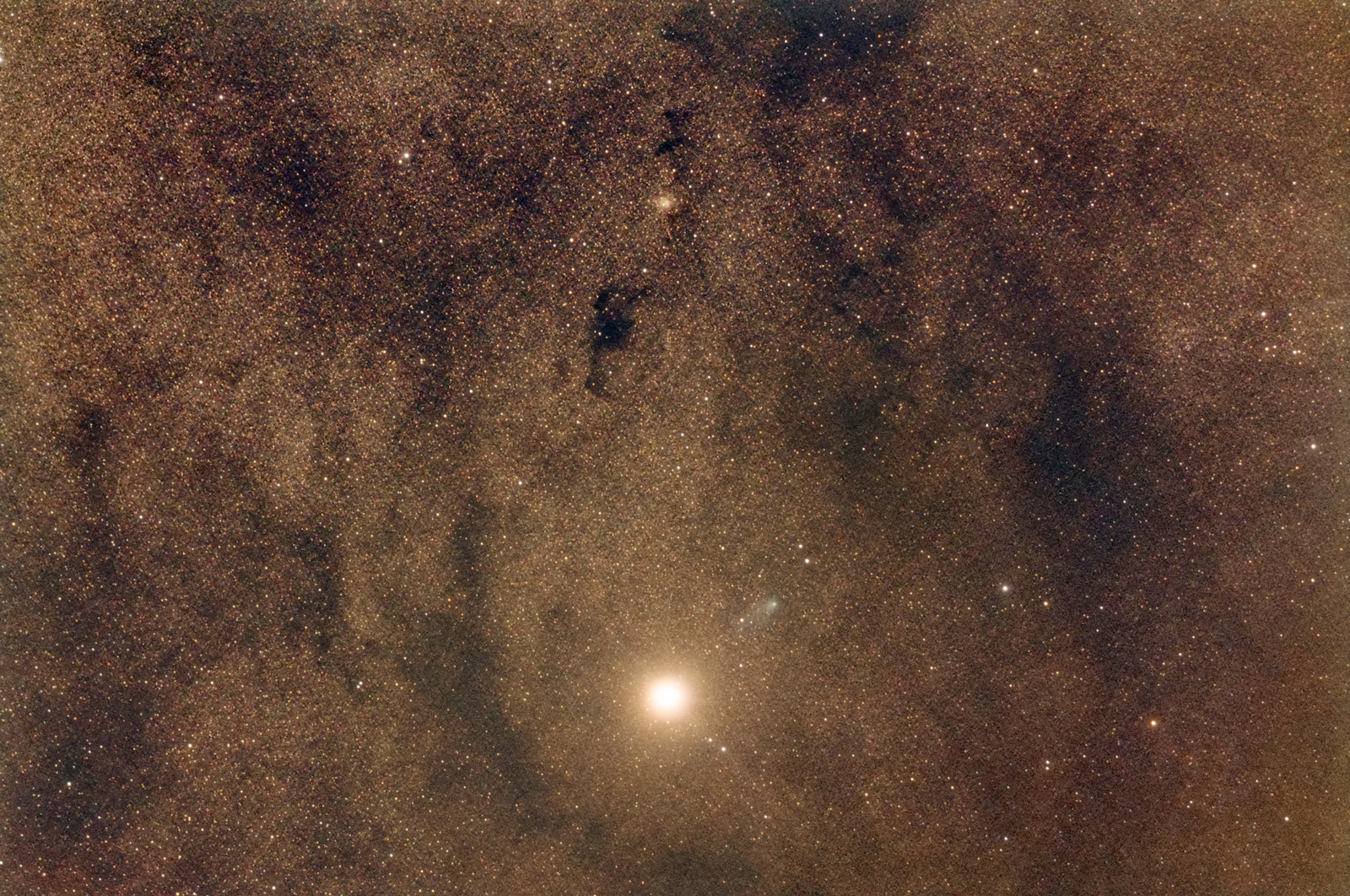
Well, the big comet encounter of the year took place tonight, Oct 19, 2014 and Mars and Comet Siding Spring (C/2013 A1) both survived. LoL. Seriously, it was a very close encounter if you had darkness when it was closest. Here in southern Louisiana, it took place during daylight, so I had to catch it after closest approach as C/2013 A1 was bidding Mars farewell.
I had a strange night with some issues, but I managed to get some decent data and also lucked out with some good weather for this event. This image is from the first set of images I took and it is a composite of comet-only processed and star background processed image stacks. The comet moved a good distance in the twenty-five minutes it took to get the sub-frames, so I had to isolate it with different alignment and stacking techniques than I use for normal deep-sky images.
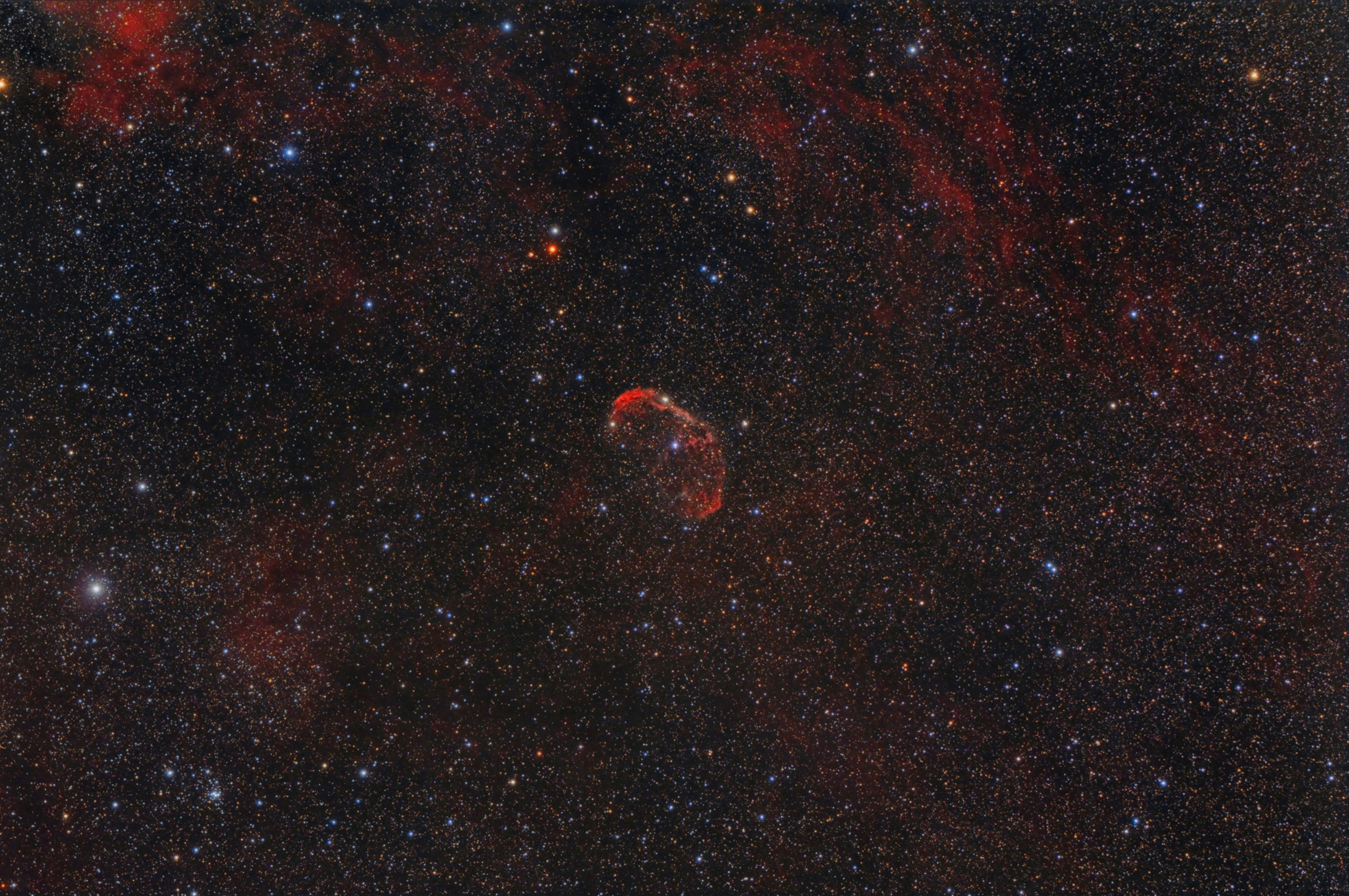
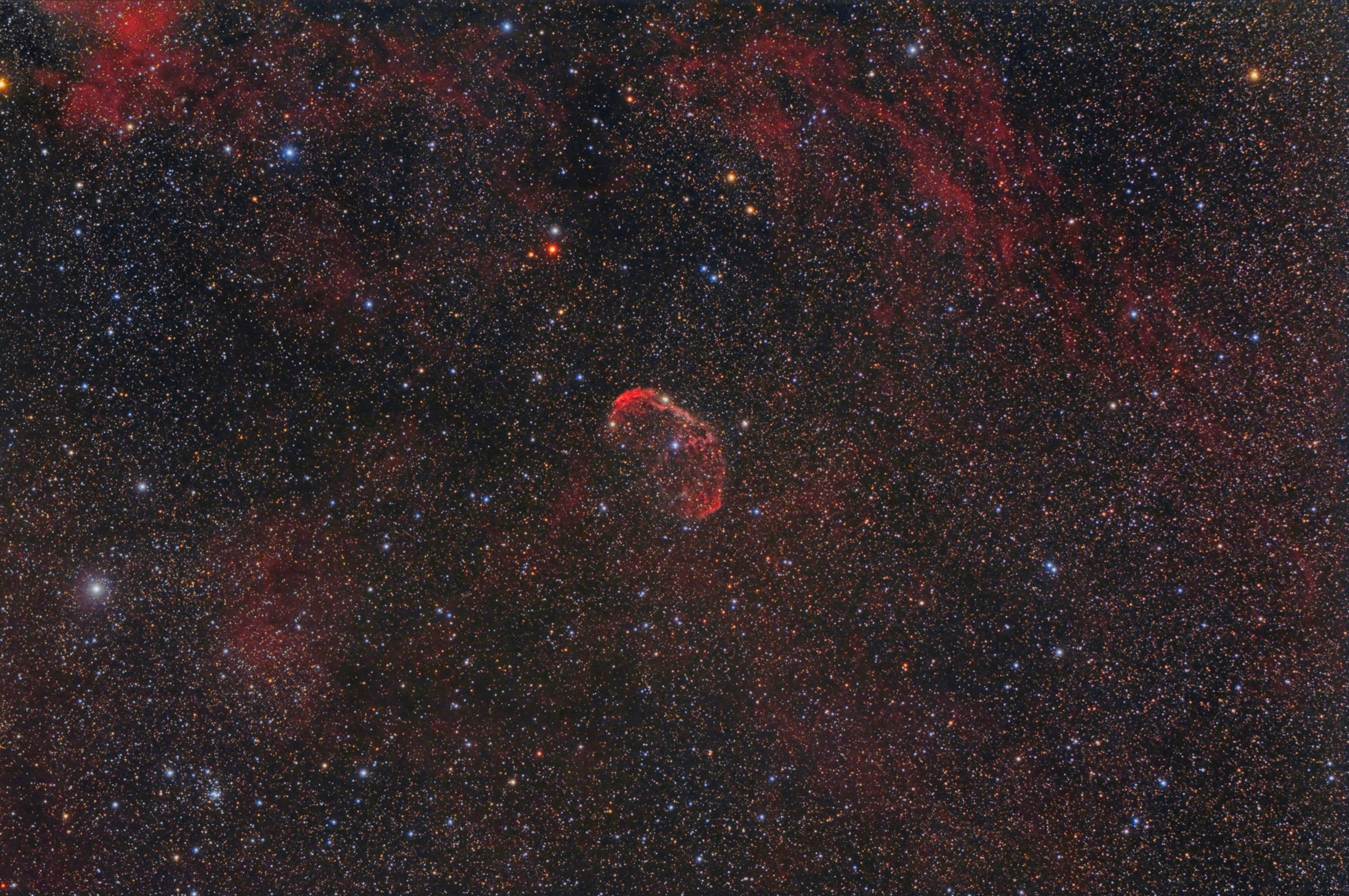
A mosaic of the Crescent Nebula area. Exposures from 4 different years were used. The base image was acquired on Nov 2, 2013 and was 40x60sec ISO 6400. I imaged it again on October 17, 2014 with 77 images and added that into the mix. Two nights of imaging in Nov 2010 of 9×720″ ISO400, 11×480″ ISO800 sub-images were also added in (for a total of 5.21 hours integration time.) Finally, data from an image of just the Crescent Nebula itself, taken with my SN-8 telescope was used and it was made with 57×180″ ISO 1600 sub-images taken on Oct 1, 2007.
I used RegiStar to manipulate the data. The beauty of software like RegiStar is that it can combine data taken years apart. In this case, over 7 years. I was able to take the nebulosity caught with a high ISO stack of sub-images, but with a noisy background and combine it with stacks of subs taken at lower ISO values which had a much smoother background. The stacked mosaic-like result let me bring out more of the dim nebulosity that pervades the Crescent Nebula area and keep the noise at bay, somewhat. A little more detail in the Crescent itself was enhanced with data from my larger, 8″ scope.
I present a regular version and an enhanced, lighter version that was generated from the data in the first image with Starizona’s Levelizer plug-in for PS.
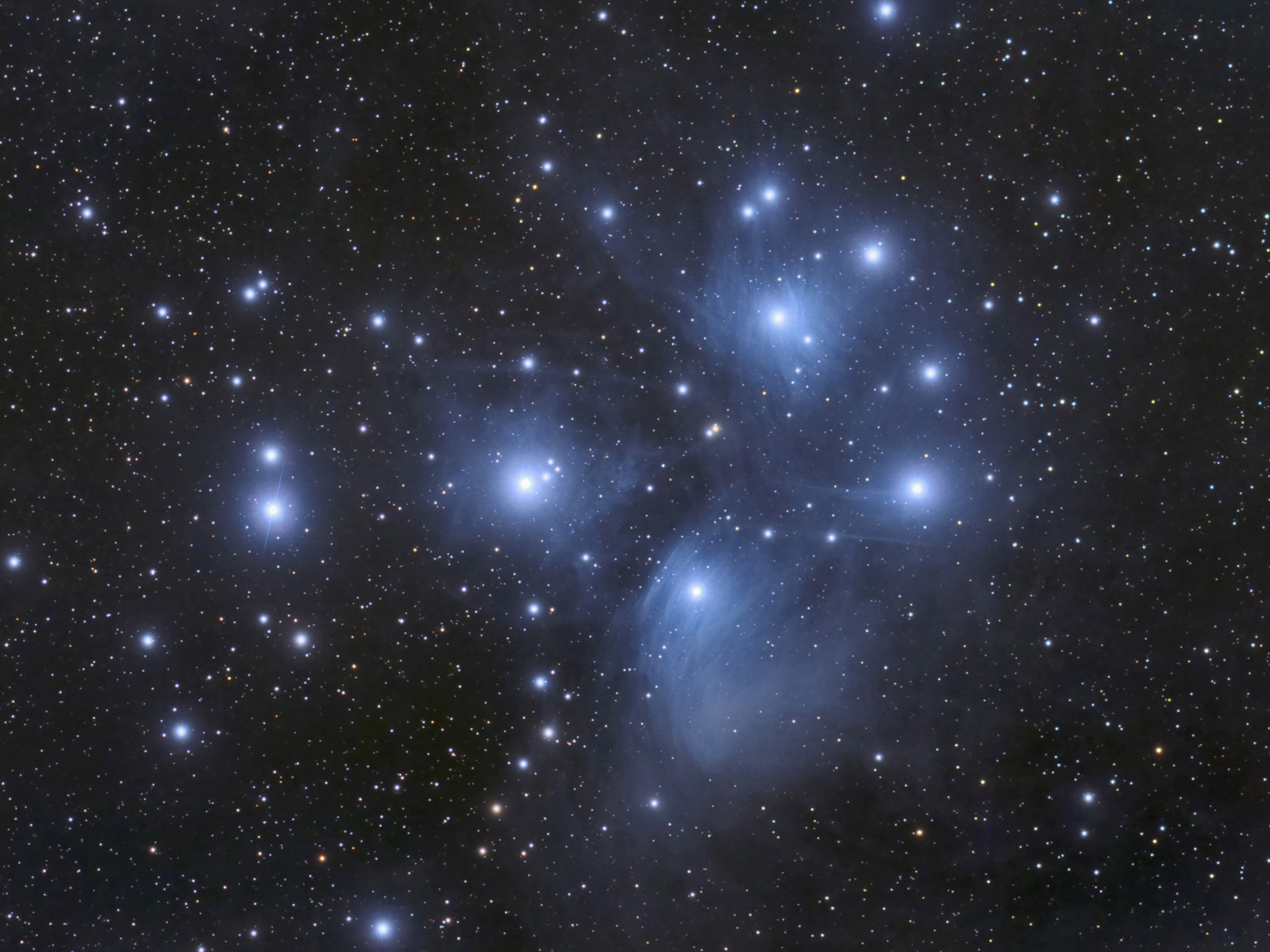
This image of the Pleiades was a combination of data from October 2013 and October of 2011. I sized it to be used as a screen background for my current monitor.

I was looking at some unprocessed data recently (Oct 5, 2014) and found this set of 40 sub-images taken at ISO 6400. It was a batch of 60 second subs, so only 40 minutes worth of integration. It came out surprisingly well for just 40 minutes. I’ll have to try some more with that setting and see if I can get some dimmer nebulae.
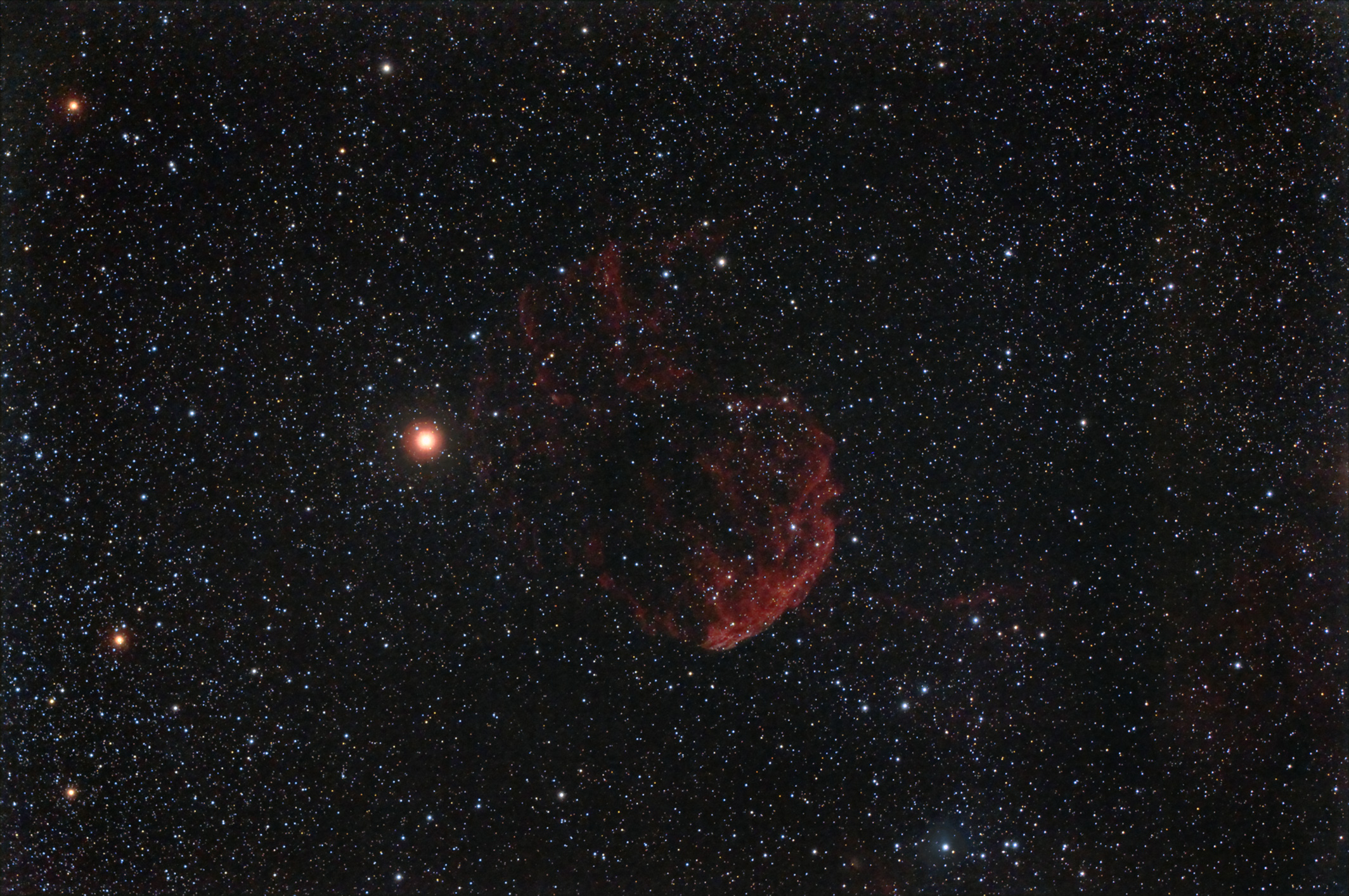
This was just me playing around with something while waiting for Comet ISON to rise high enough to begin imaging. It is only 24 minutes of integration and it really needs ten times that much. Another project for another day, I guess. Or, I’ll just keep plugging away at it before shooting the comets and I might get enough data to make this project worth my time.

This is a busy area in the Auriga constellation. M38 is an open cluster at the top of the frame. Beneath that is NGC 1907, another open cluster. To the right side is a faint nebula listed as LBN794 in Cartes du Ciel. At the bottom of the frame another patch of nebula known as IC 417/LBN804.
Edit: I managed to add 40×30 sec @ ISO 6400 sub-images to this and the above image has been updated. Below is the original details and image:
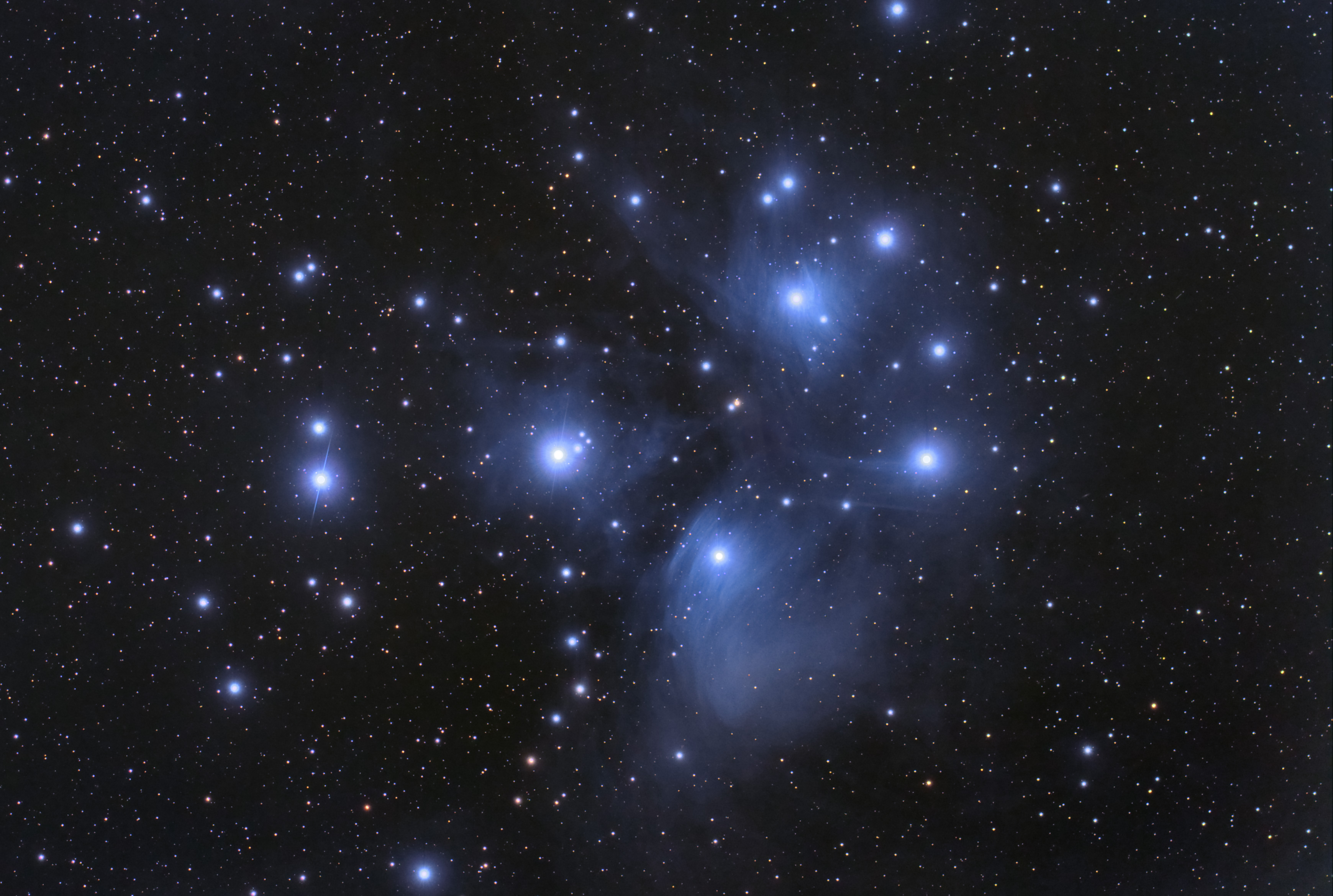
Here’s the obligatory M45 image for the month of October, 2013. I shot this while waiting for other objects to get into position.

Here is the October 2013 version of this photogenic area of the sky. I used a high ISO and lots of sub-images. Noise was low, which was good. Color was more difficult to deal with than a lower ISO stack normally is.
This was taken with my TV 85 and a modified Canon T3. It is only 26×180 sec sub-images @ ISO 1600. I was just testing the scope, mount and computer to make sure it all still worked, since the last time I used it was last April.