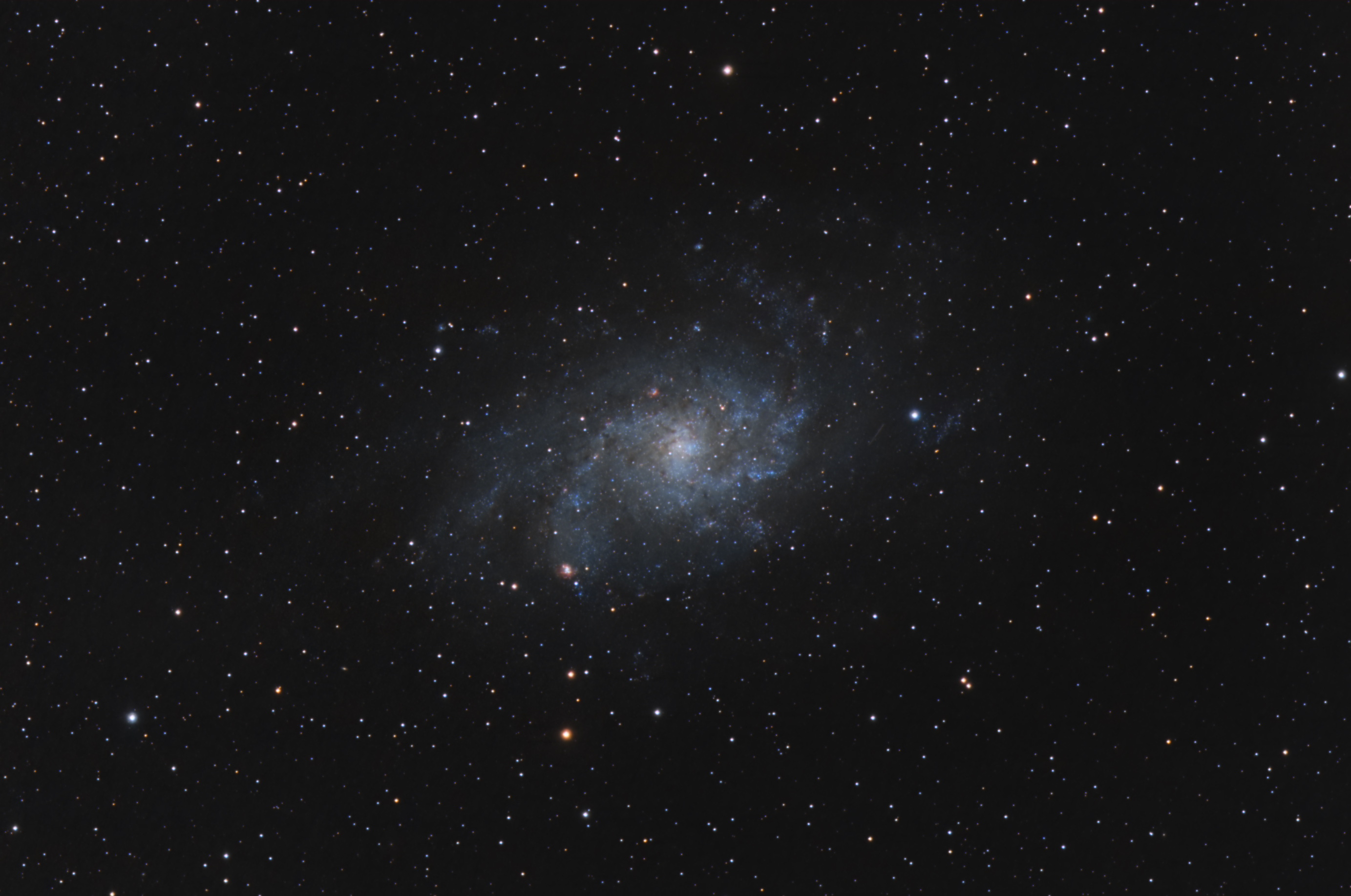
M33 on Nov 14, 2014. 77×150 sec @ ISO 3200, TV-85 at F/5.6, IDAS-LPS, Modified Canon T3.
Here’s a center crop of M33 that I took recently. It didn’t come too bad, all things considered. Notice that there is an asteroid to the right of the nucleus of M33, before that bright star. That is 1503 Kuopio (1938 XD,) a mag 14.3 asteroid that just happened to be in the shot. So, I got two for the price of one for this gig. 🙂
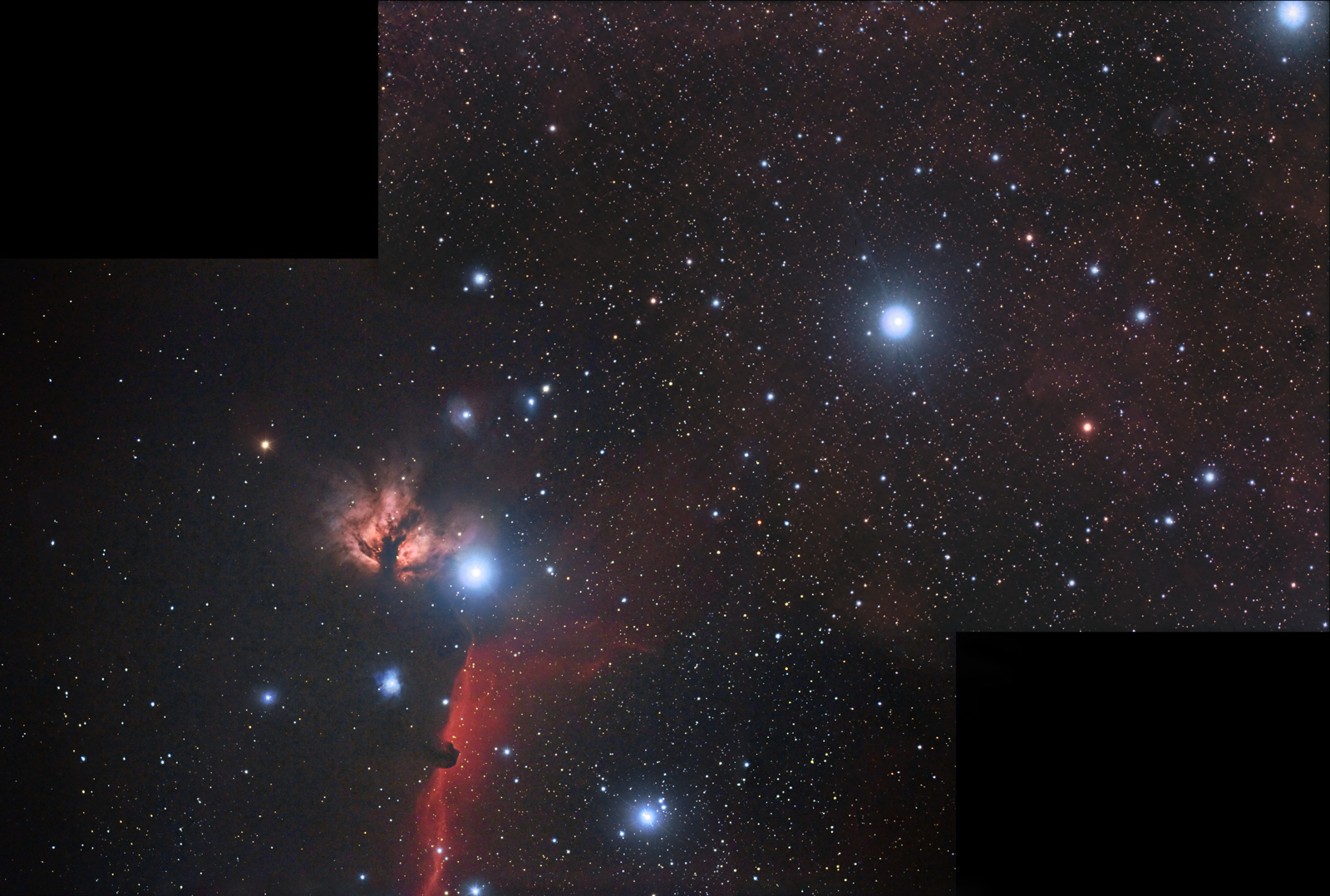
Orion’s Belt Mosaic. Upper frame is 50×60 sec @ ISO 3200, plus 40×60 @ ISO 6400. The lower frame is data from 2007, 31×180 sec ISO 1600 and some 2013 data that includes 40×180 sec ISO 1600 sub-images. Finally, there are 3×180 sec @ ISO 800 sub-images that were taken on Nov 2, 2014. Scope and camera used were a TV-85 at F/5.6, IDAS-LPS filter and a Modified Canon T3.
Here’s one that’s in progress. I shot this area over two nights. I have very little of the Horse Head region from these sessions, but another 40 subs of the belt stars upper frame area. I should be able to put something together with other data from older sessions and get a somewhat complete mosaic image. (Update: Yes, I was able to add some old data and smooth it out.)
M45, The Pleiades. 40×120 sec @ ISO 3200, TV-85 at F/5.6, IDAS-LPS, Modified Canon T3.
I had time to kill while waiting for Orion to get into position, so I shot 40 x 2 minute sub-images of the Pleiades at ISO 3200. I did not spend much time in post processing this, but it came out half-decent regardless.
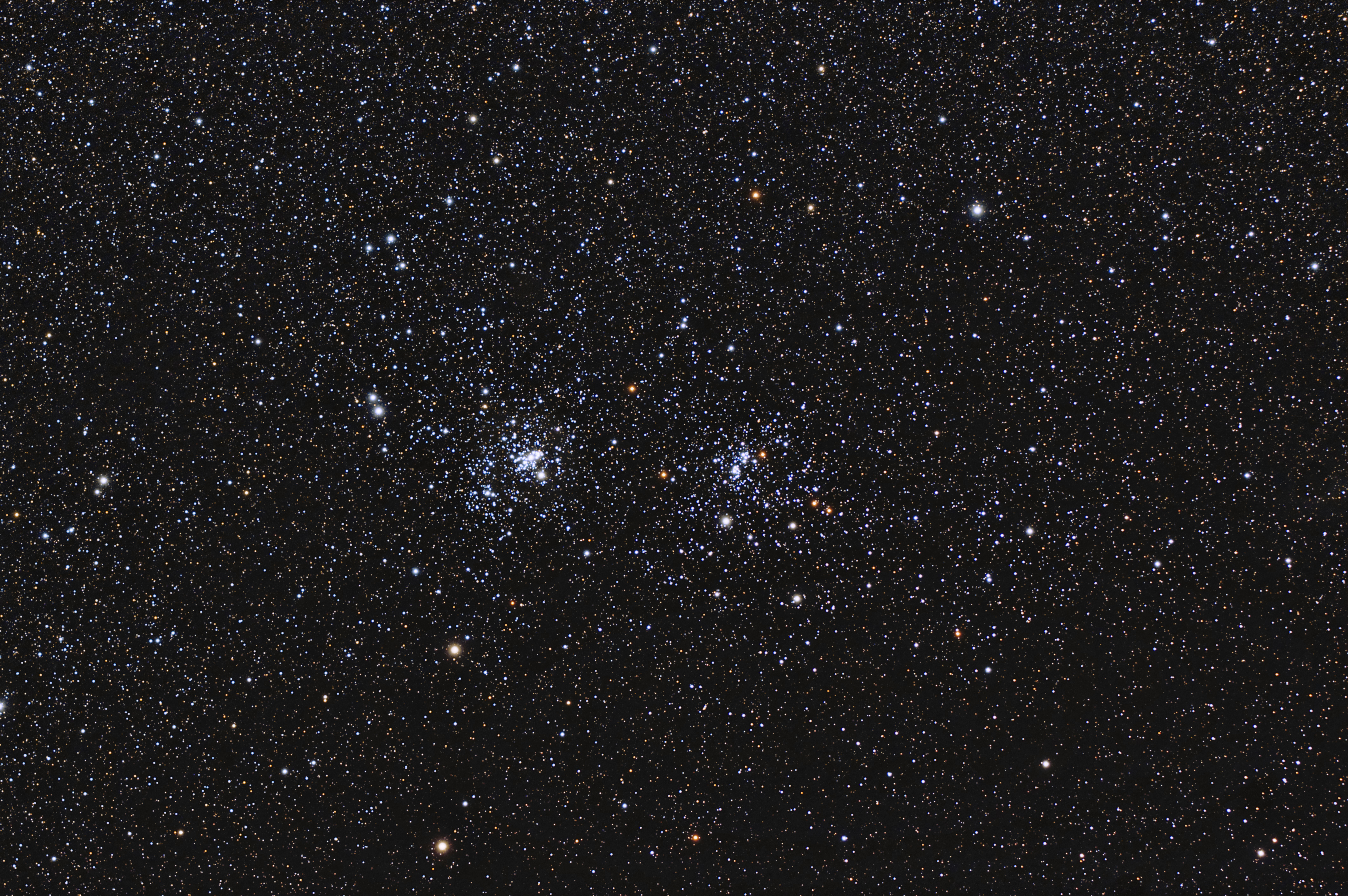
The Double Cluster on Nov 1, 2014. 40×180 sec @ ISO 400, TV-85 at F/5.6, IDAS-LPS, Modified Canon T3.
A bright moon precluded shooting any dim deep sky objects (DSO’s.) Star cluster are still viable targets, though. I had time to kill so I picked the most photogenic star cluster(s) to shoot – the Double Cluster.
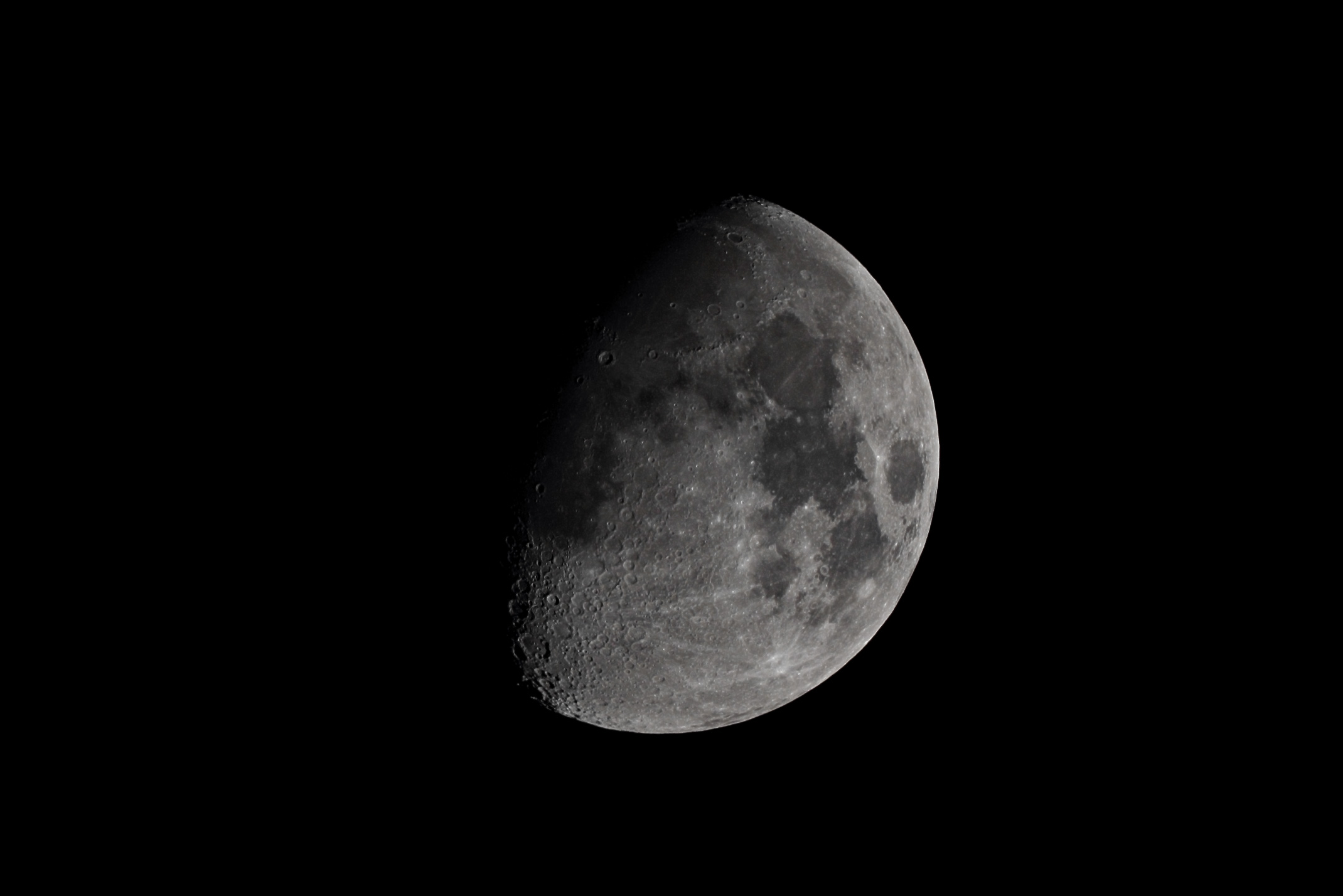
The Moon on November 2nd, 2014. 1/500th sec @ ISO 100, TV-85 at F/5.6, IDAS-LPS, Modified Canon T3.
A bright moon dominated the night sky on the evening of Nov 2nd, 2014. I used it as a focusing target before starting to shoot DSO’s. The image came out good enough to post here.
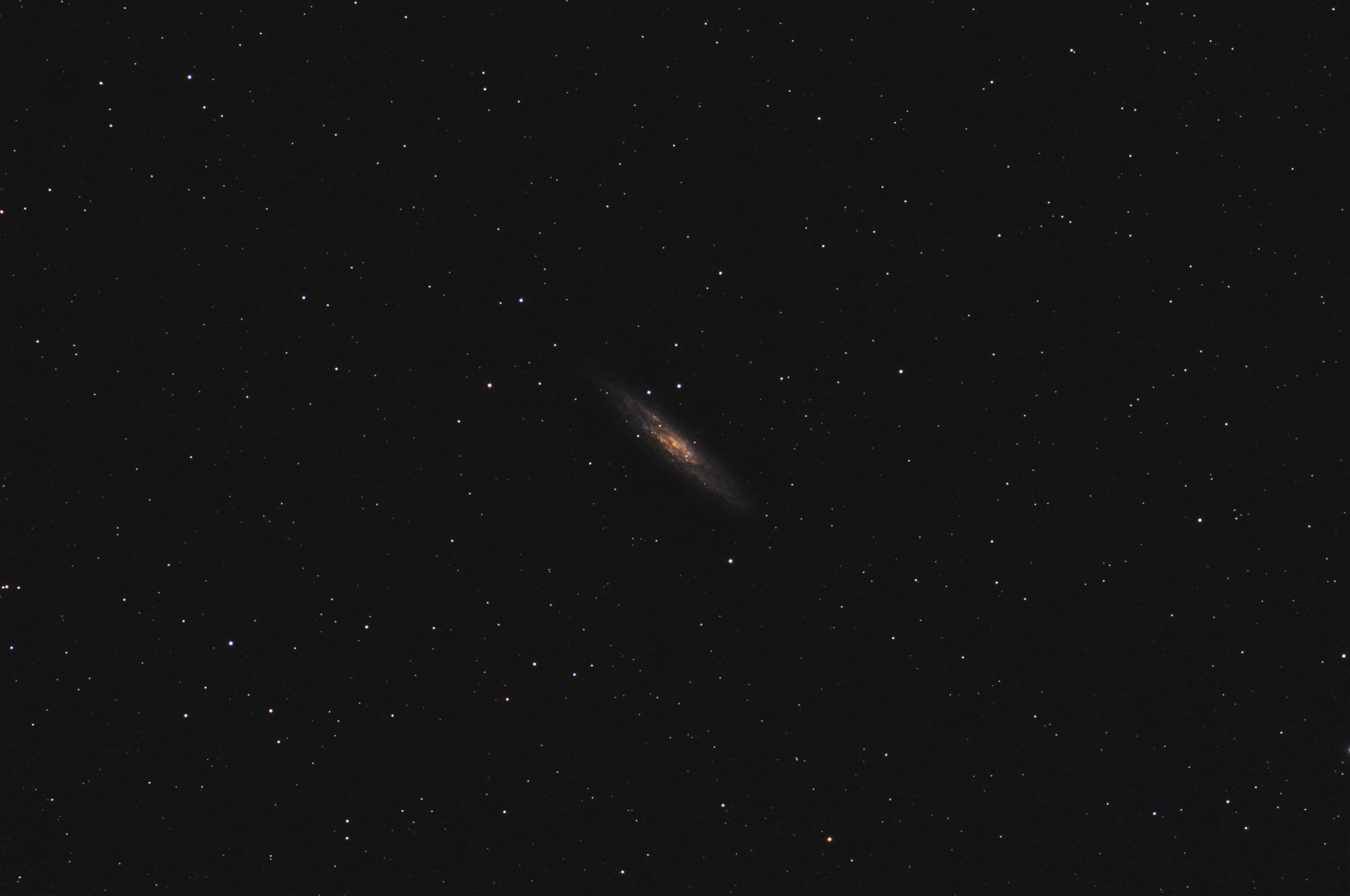
Galaxy NGC 253 on Nov 1, 2014. 17×120 sec @ ISO 800, TV-85 at F/5.6, IDAS-LPS, Modified Canon T3.
I just had to visit my old friend, NGC 253, just to see how it was doing. A bright moon and only a short window of possible imaging time did not let me get much data, but at least I got to see it again.
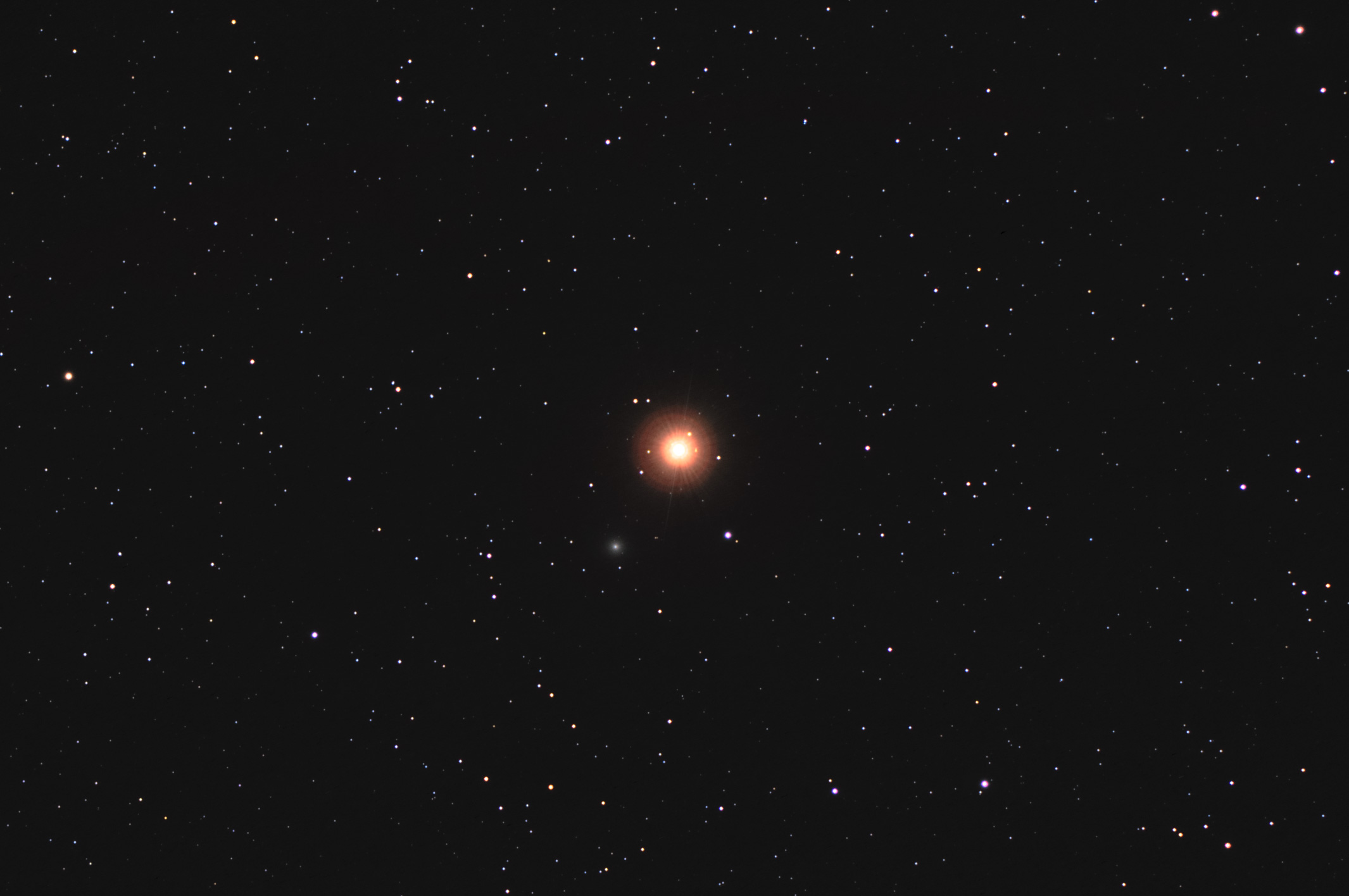
Mirach and Mirach’s Ghost on Halloween, 2014. 42×60 sec @ ISO 800, TV-85 at F/5.6, IDAS-LPS, Modified Canon T3.
An appropriately named object was chosen as an early evening test target on Halloween night, 2014. Mirach is Beta Andromedae and it is a jump off point for finding M31 and M33. Mirach’s Ghost is that small object very near Mirach that looks almost like a reflection glint of the bright star itself. Nope, it is actually NGC 404, a small elliptical galaxy that just happens to lie in the same line of sight.
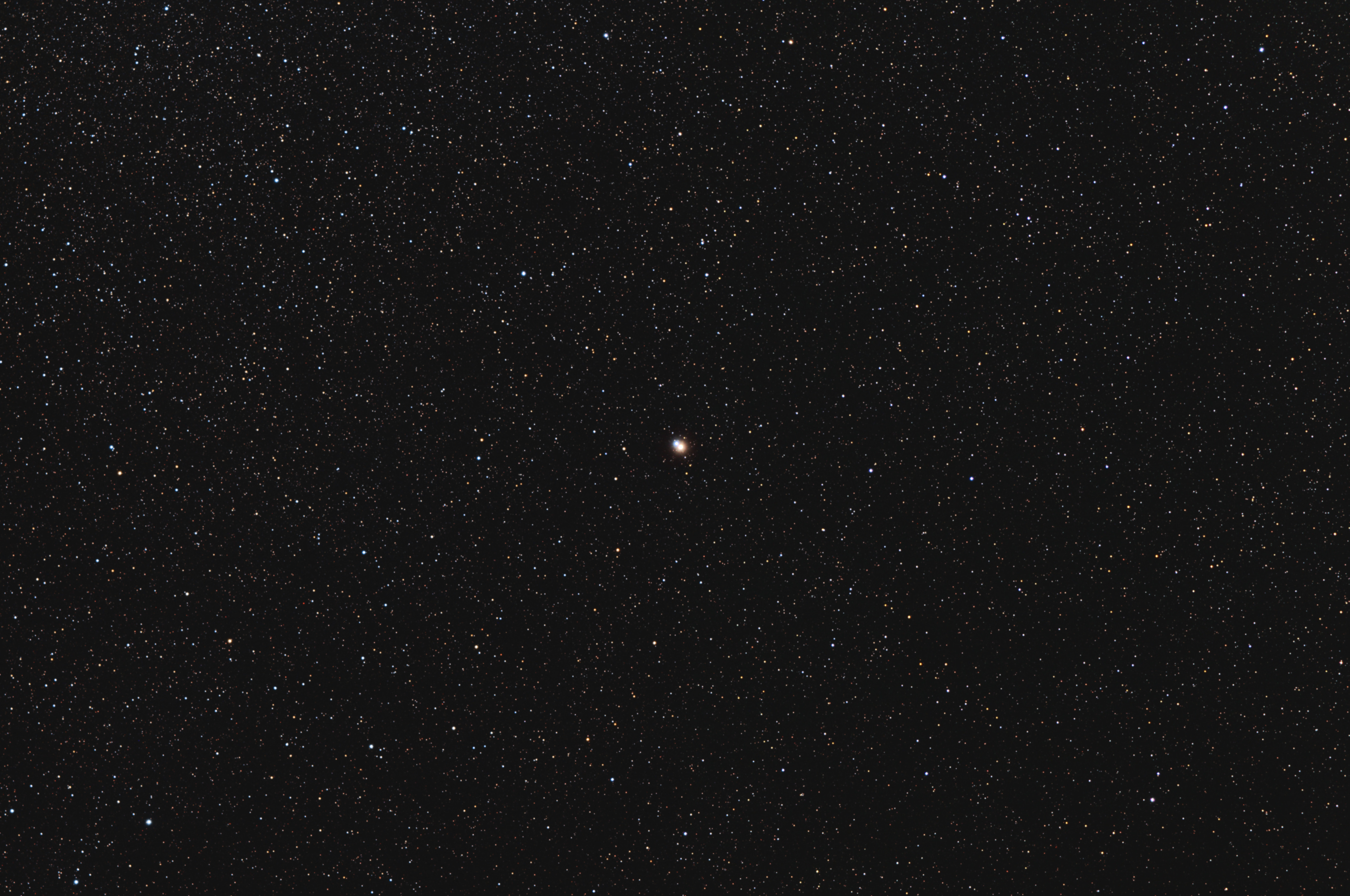
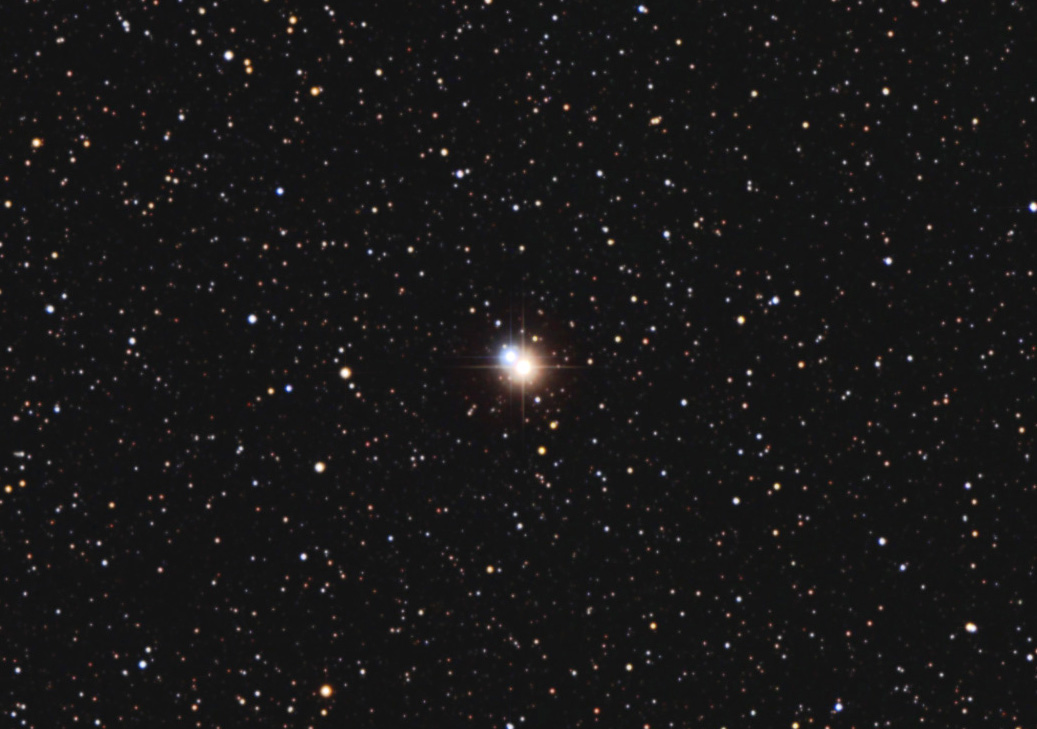
Albireo on Oct 31, 2014. 20×60 sec @ ISO 400, TV-85 at F/5.6, IDAS-LPS, Modified Canon T3.Albireo on Oct 31, 2014. Close-up crop.
I started off Halloween night by imaging Albireo, an amazing double star in Cygnus. It was during twilight and there was also some moonlight, so I went with ISO 400 so that I could do 1 minute exposures and get good color and depth.
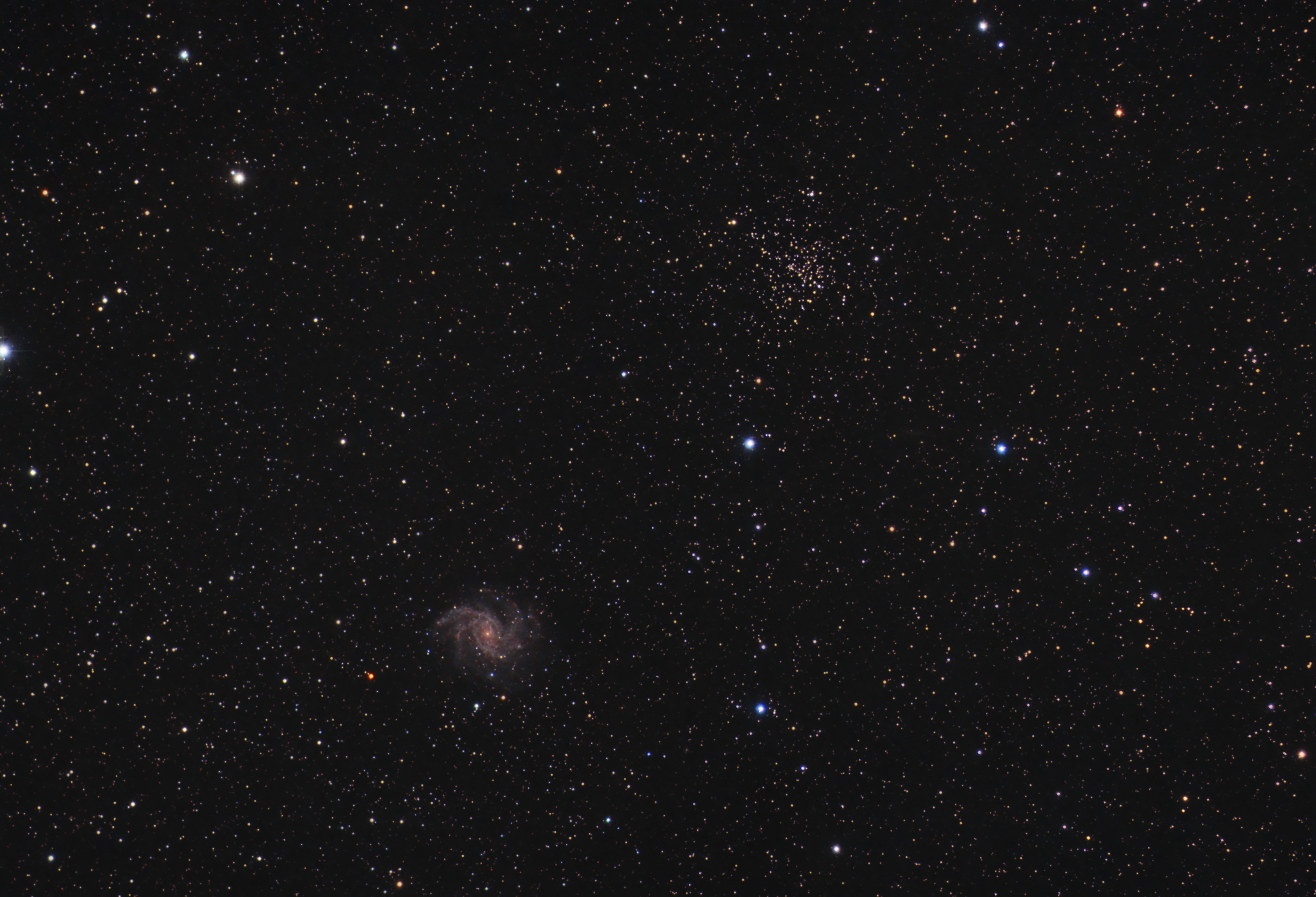
NGC 6939 & NGC 6946. 100×120″ ISO 3200, TV-85 at F/5.6, IDAS-LPS, Modified Canon T3.
Here’s 3.3 hrs of data on two NGC objects, 6939 and 6946, that happen to be side-by-side in the sky. Conditions were decent and I was able to get plenty of sub-images.
The PacMan Nebula. 38×300 sec @ ISO 1600, TV-85 at F/5.6, IDAS-LPS, Modified Canon T3.
Over 3 hours worth of data in 5 minute ISO 1600 sub-images were used for this image of the PacMan Nebula. It came out alright, I guess. I didn’t have to do much noise reduction on it and it still seems reasonably smooth.
Images of Comets, Nebulae, Galaxies and Star Clusters