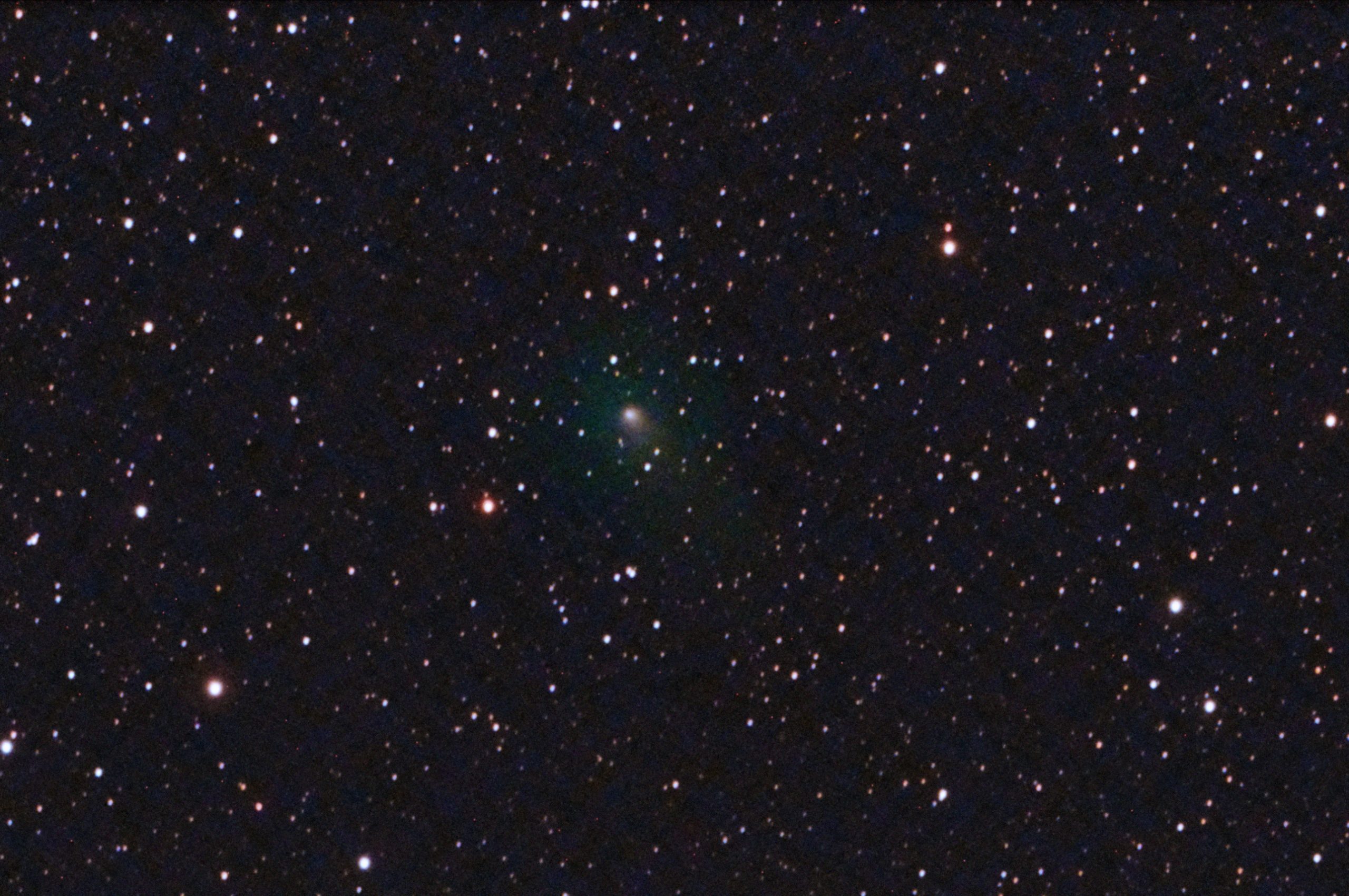
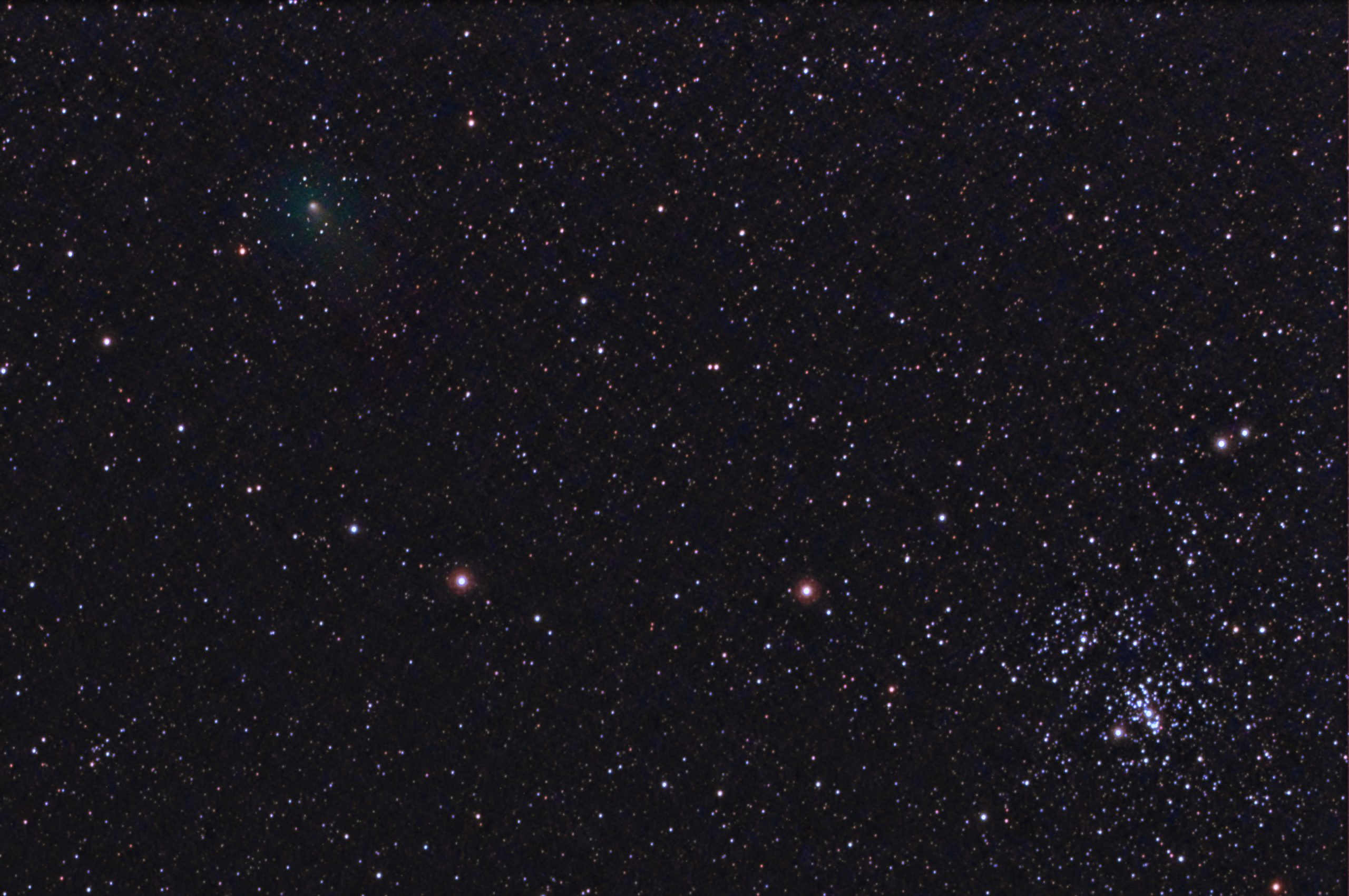
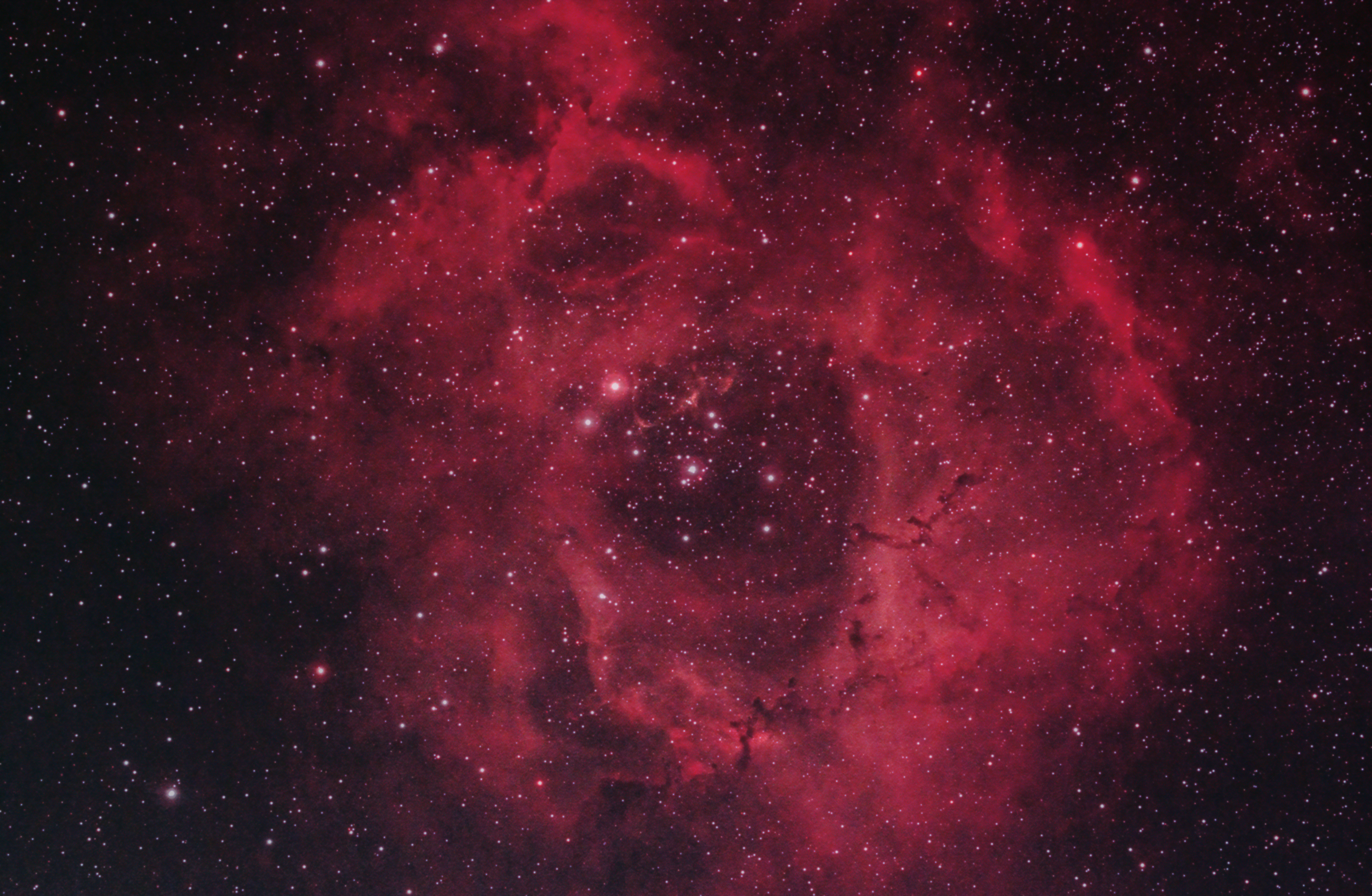
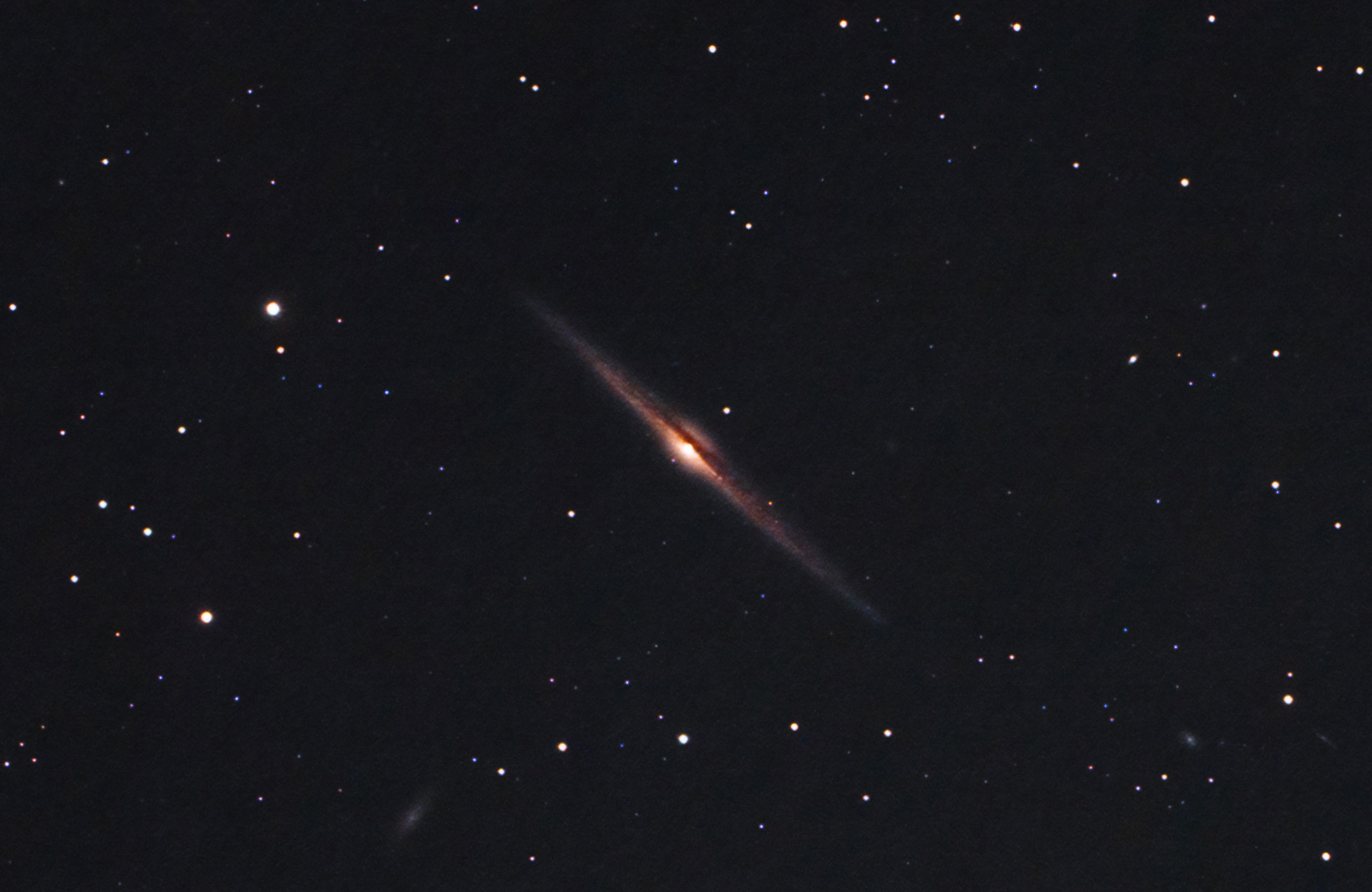
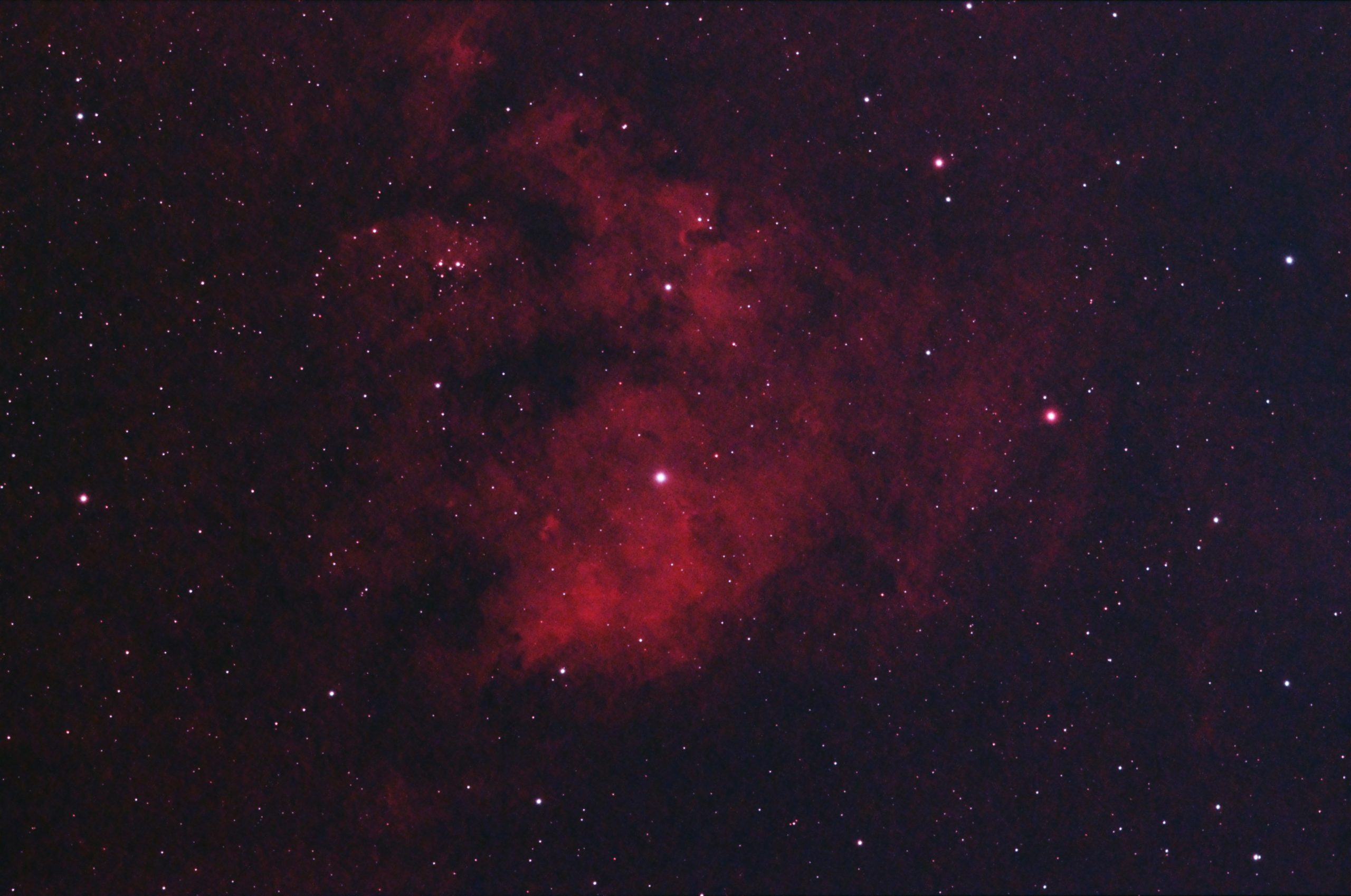
The Witch’s Broom – Western Veil Nebula and Friends

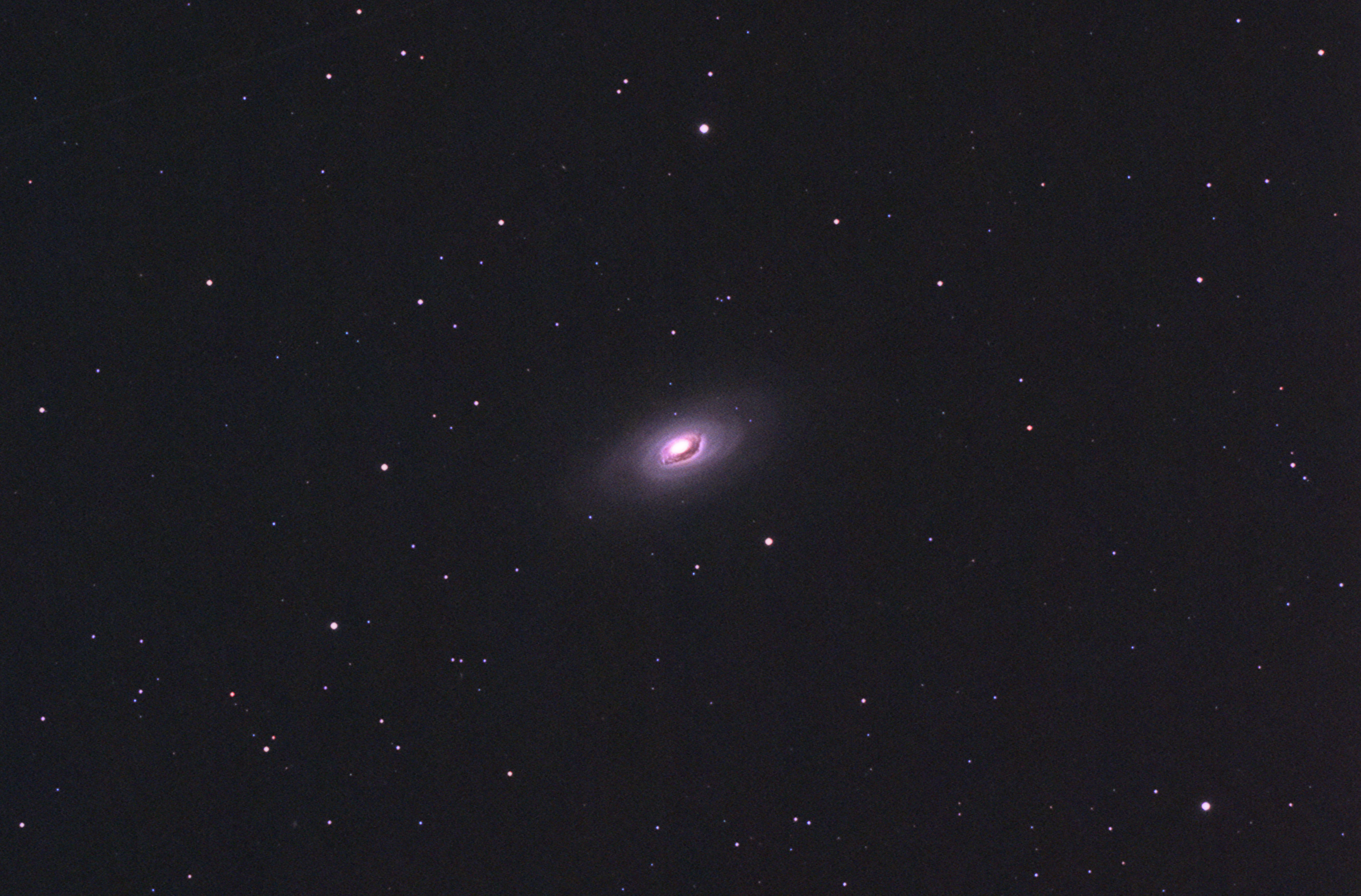
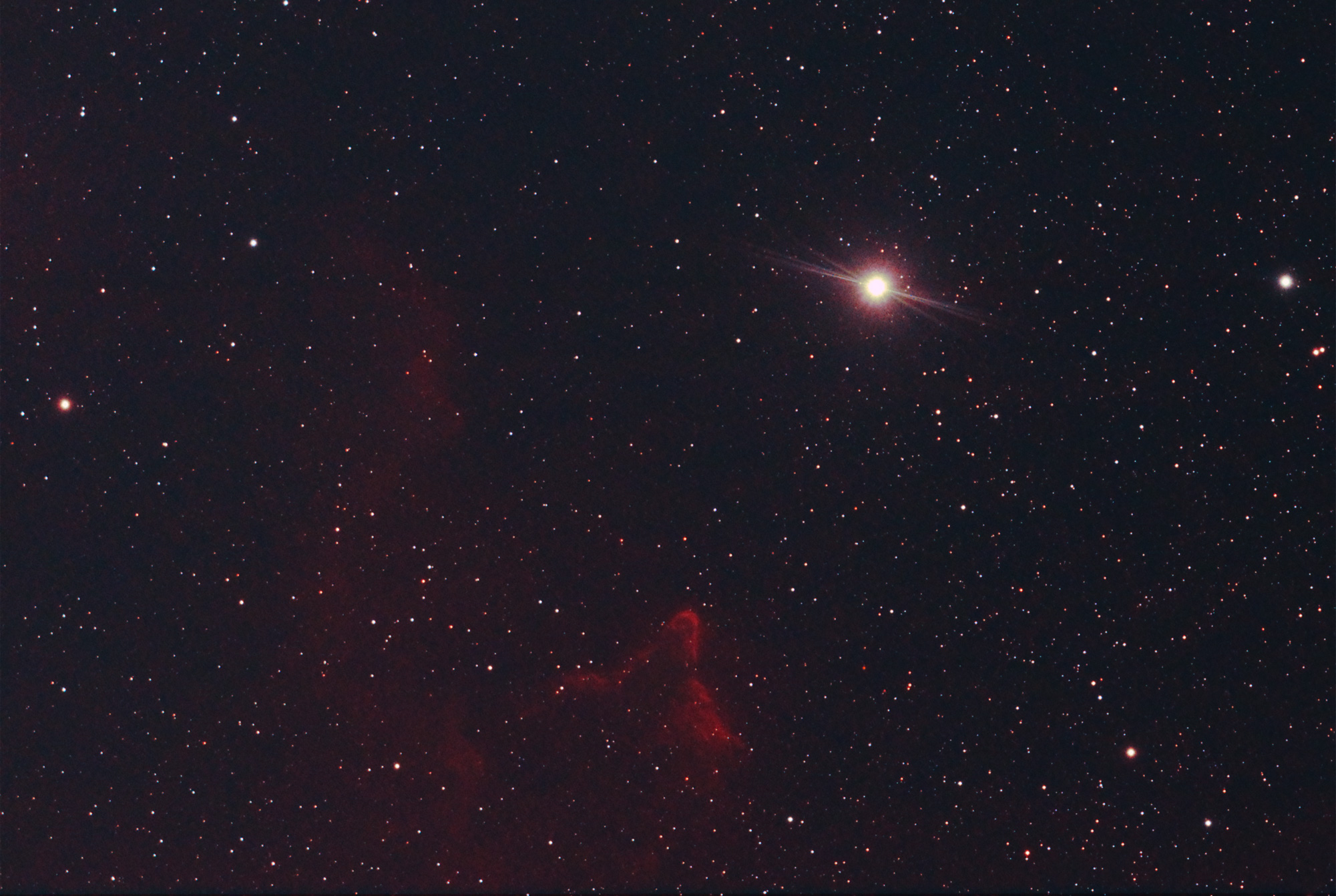
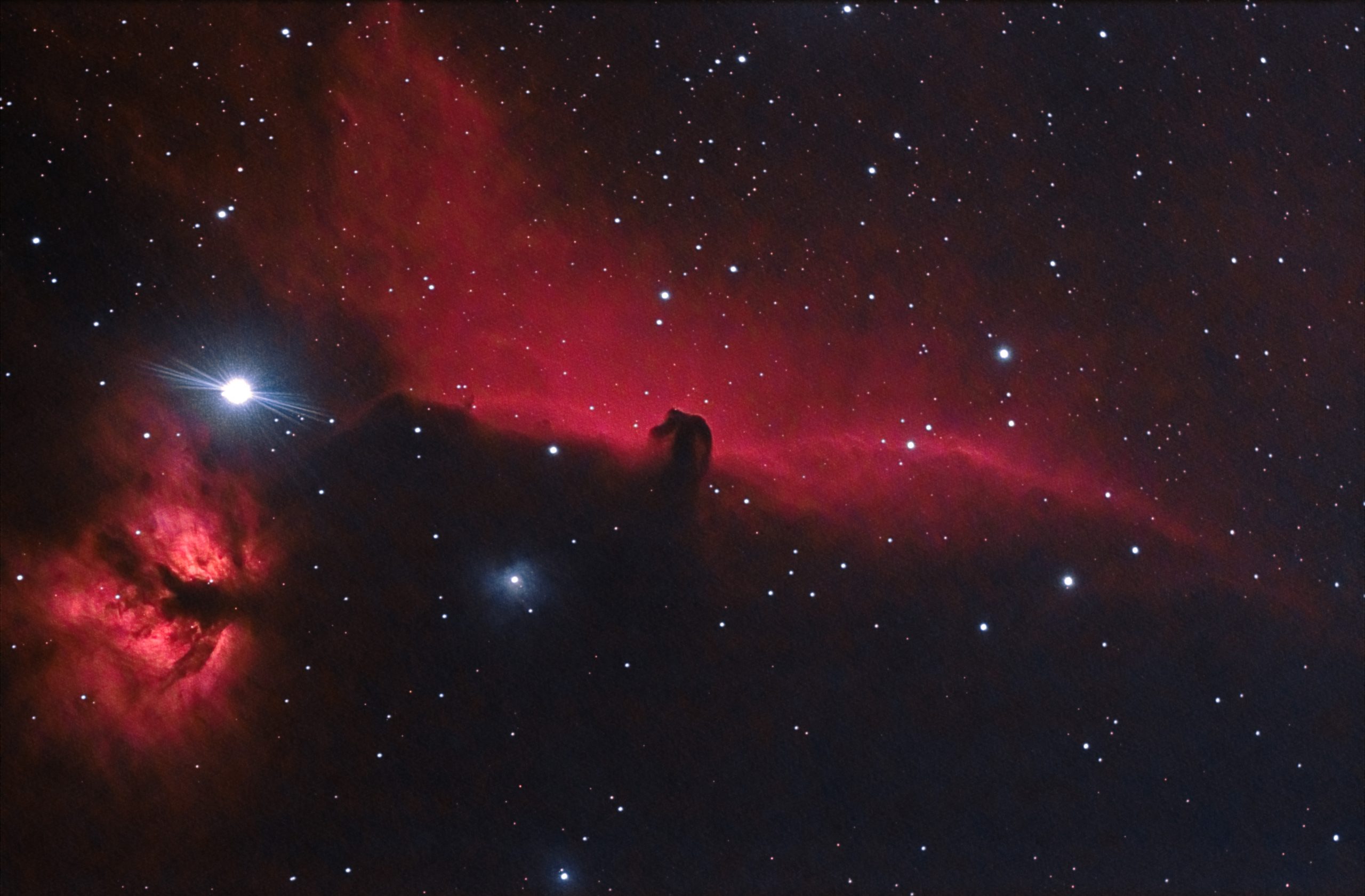
Witch’s Broom Nebula – 90×30 sec, QHY183c, -25C cooling, Gain 30, Offset 5, UHC filter, Televue TV-85 at F/5.6.

After a few all-nighters during the recent good weather we’ve been having down here in Cajun Country, I must say I’m worn out.   LoL.   But, I had lots of fun shooting very dim objects through Bortle Red Zone skies that I would have never thought would let me capture what I did.   Modern progress with astro-filters and more sensitive cameras save the day!  Plus, none of the stuff I bought broke the bank.

Since I shot the Eastern Veil with the new setup, I had to try the western part, aka the Witch’s Broom.   It was easy with the QHY183c and a cheap UHC filter.  I got 45 minutes worth of 30 second sub-images and they stacked automatically in SmartCap 3.2.  Star colors could be better, but this is about normal for a UHC filter shot.  The red channel was not quite in focus, however.   I fixed it after acquiring the data for the above image.

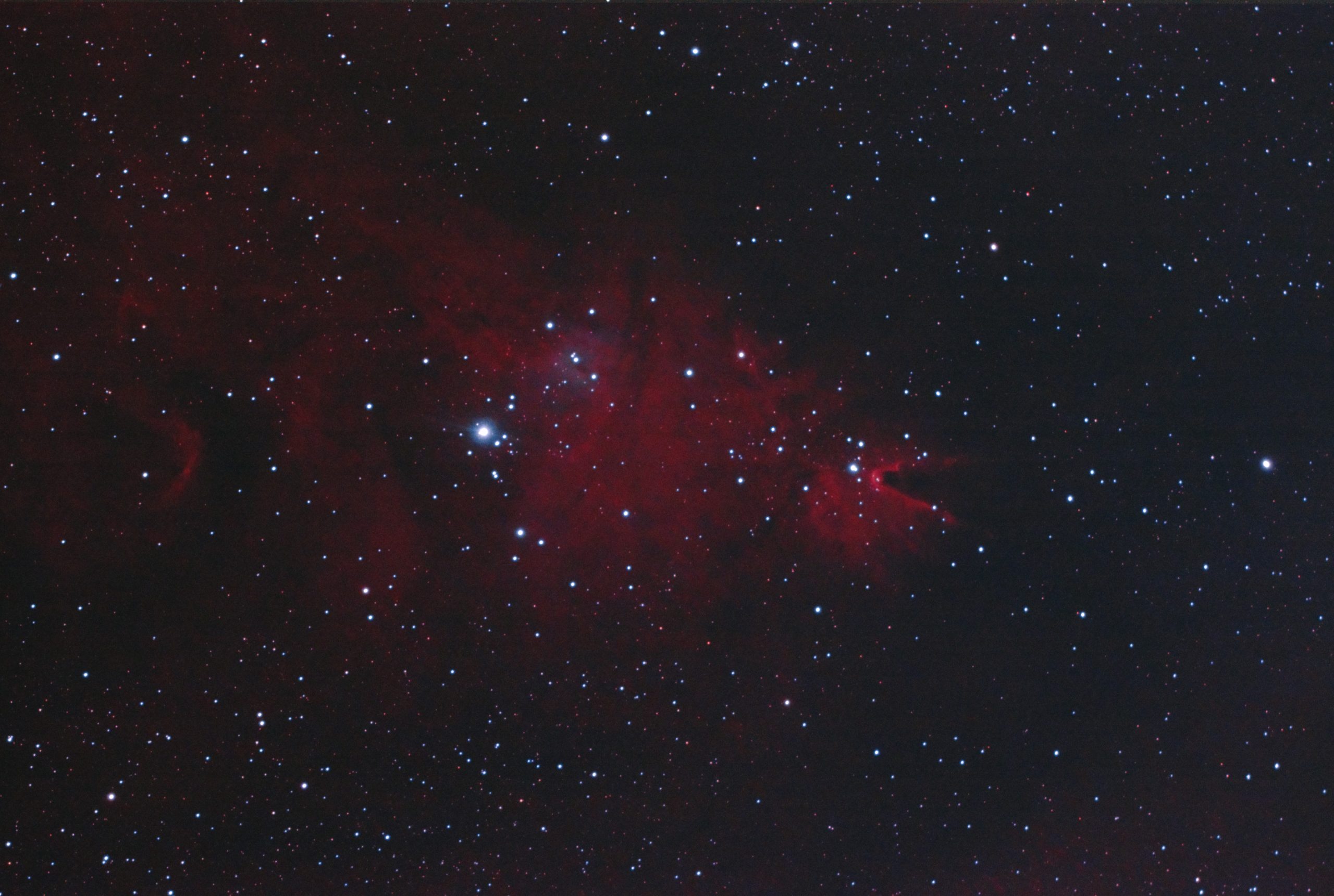
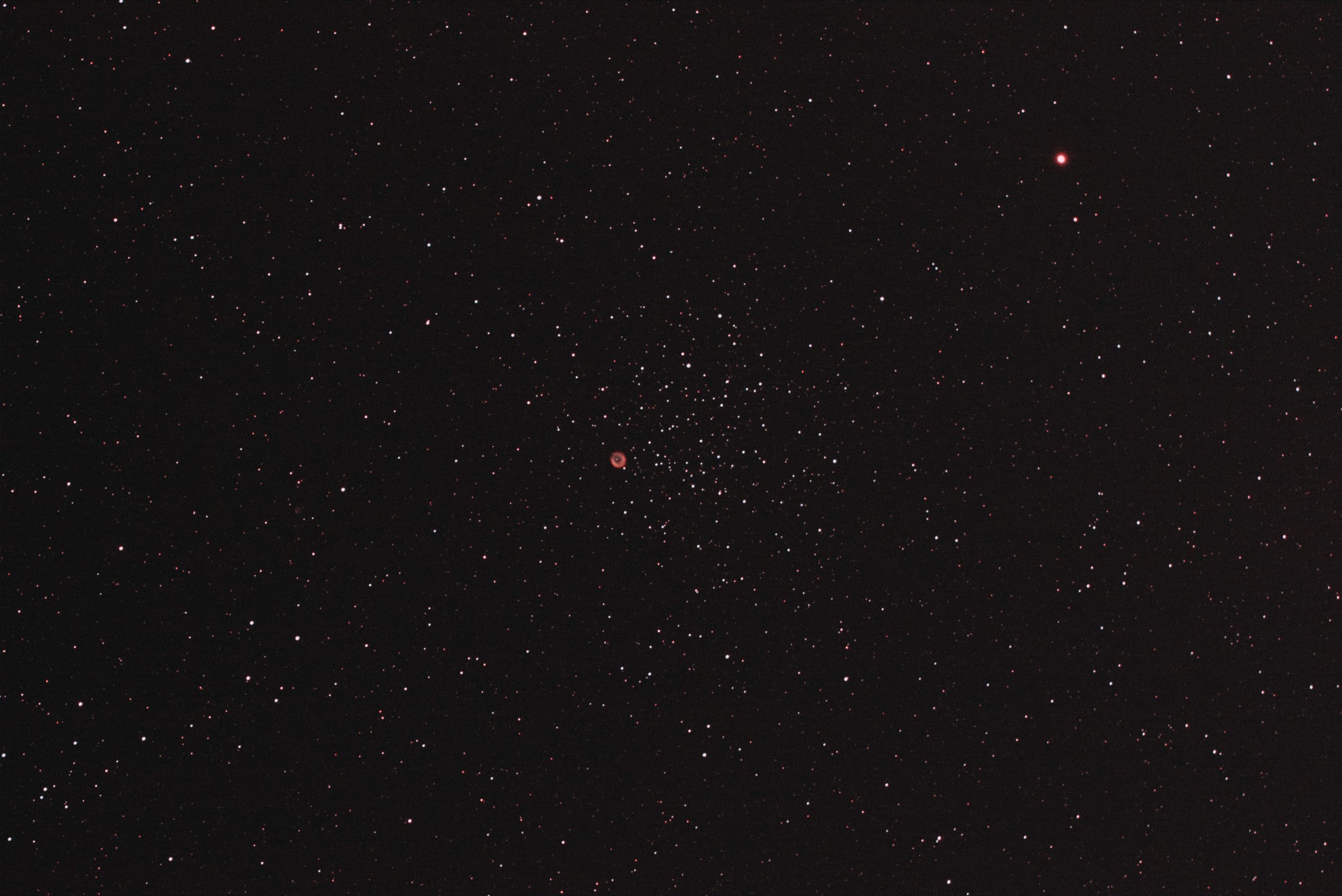
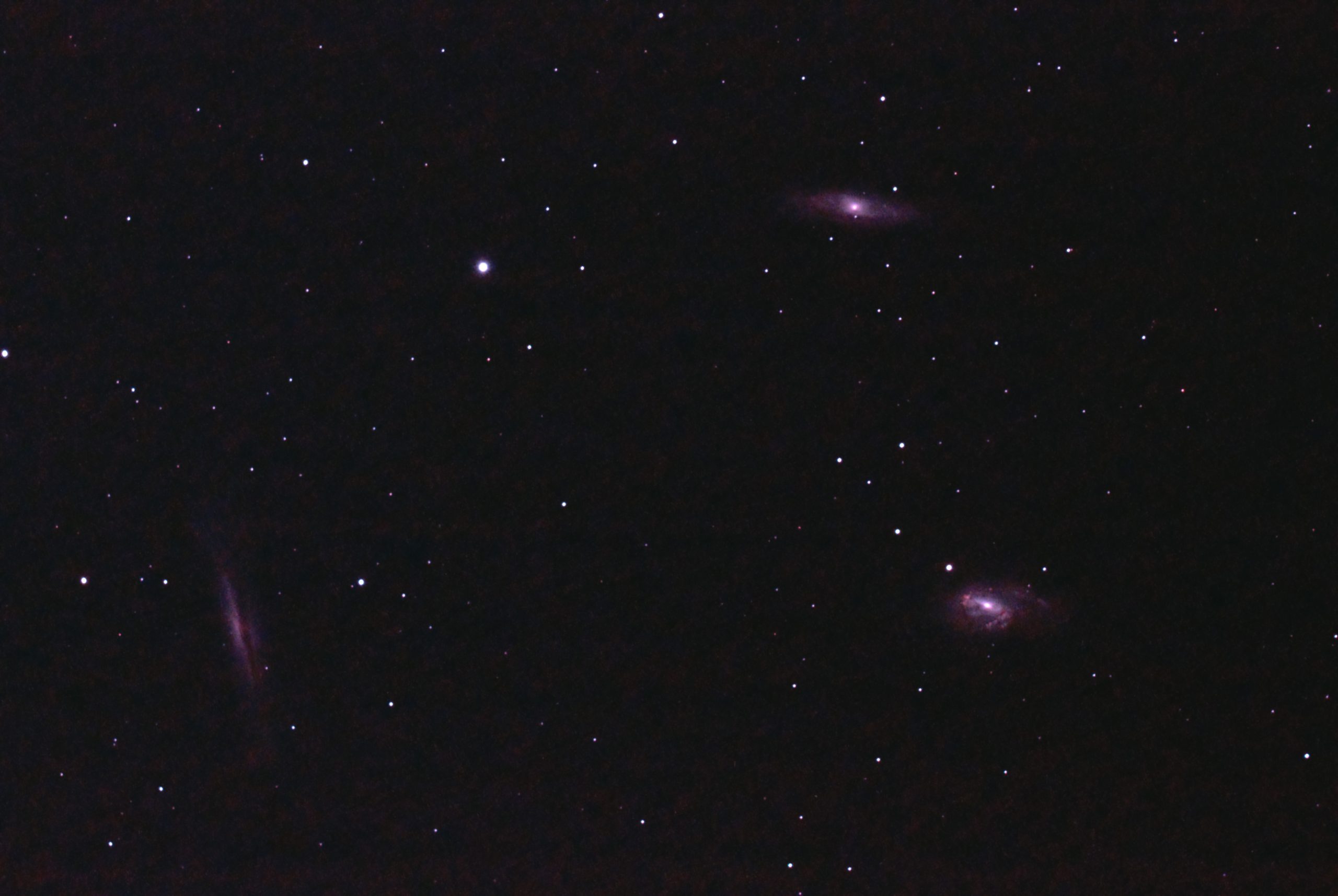
I shot 3 other objects on  this night, Gamma Cas, M33 (again) and the Horse Head Nebula,  with 2 of them completed.  I got clouded out during the last session with the Horse Head.   Below are the results:

Gamma Cas – 75×30 sec, QHY183c, Gain 30, -25C, UHC filter, TV-85 at F/5.6.
M33 – 10×120 sec, QHY183c, Gain 30, -25C, UHC filter, TV85 at F/5.6.


Great Night for EAA and Imaging with New QHY183c Camera

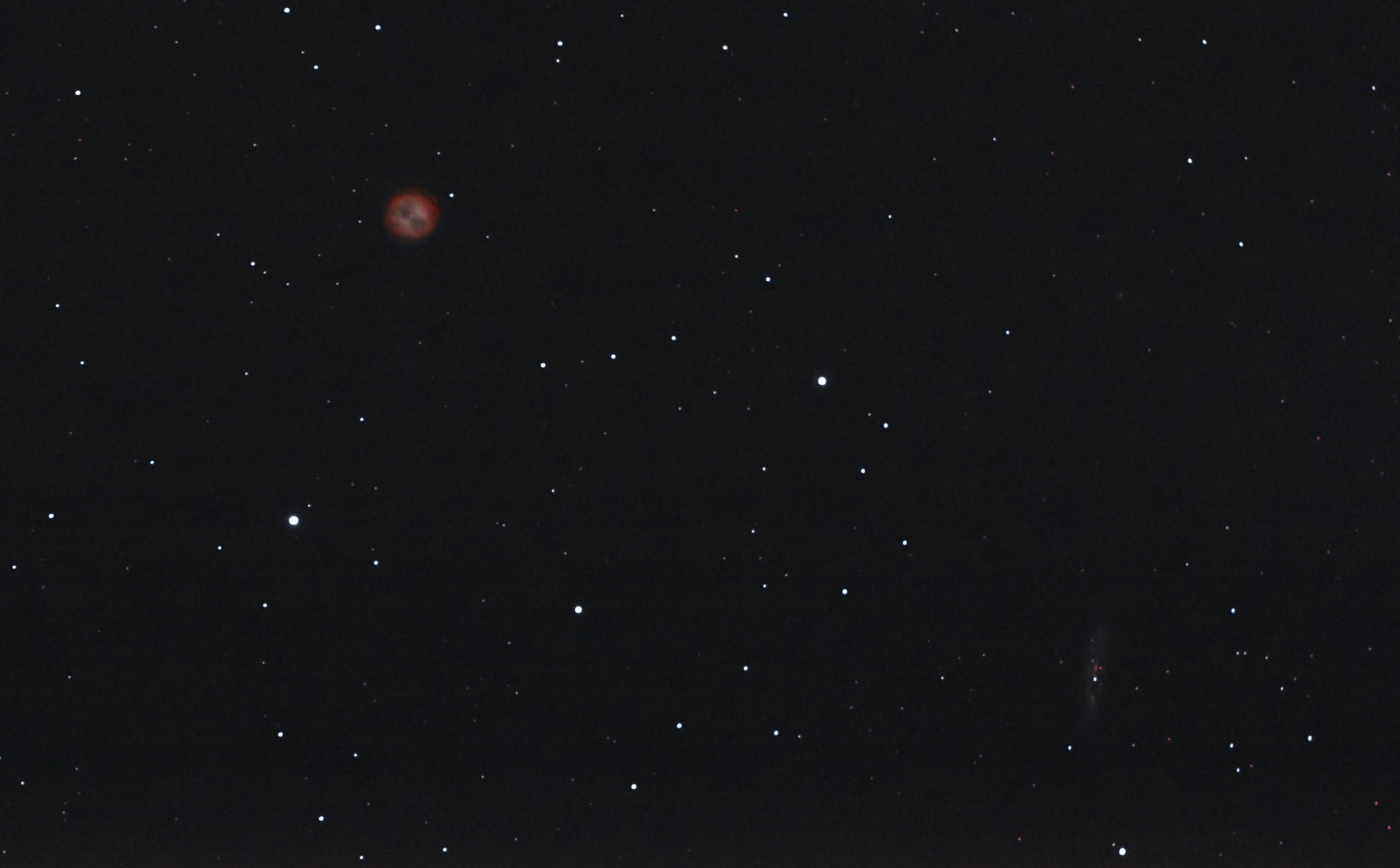
M27 – 90×30 sec, QHY183c at -25C, Gain 30, UHC filter, TV-85 at F/5.6.
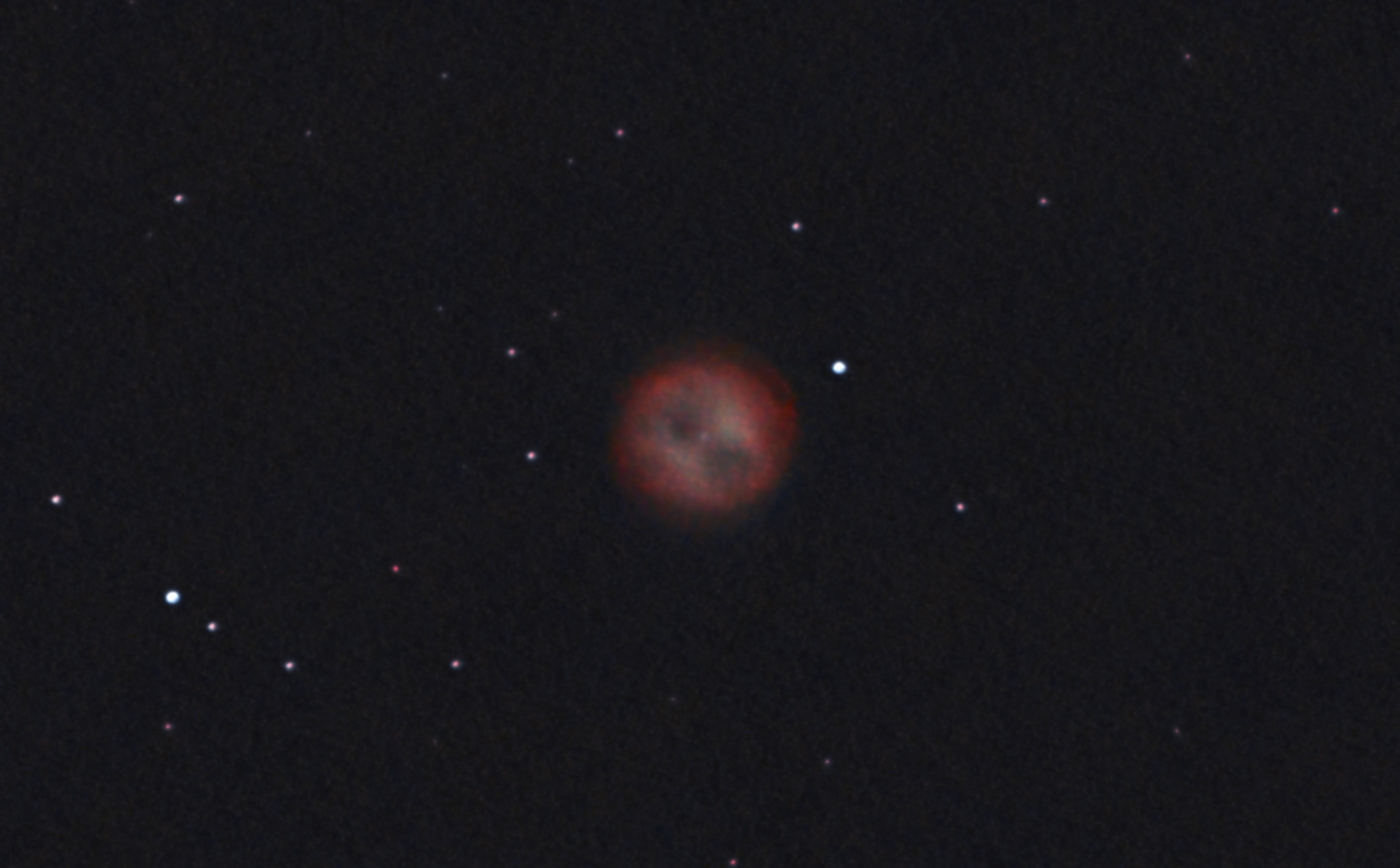
M27 – Close Crop Detail at 100% Res. 90×30 sec, QHY183c at -25C, Gain 30, UHC, TV-85 @ F/5.6.
Eastern Veil Nebula – 103×30 sec, QHY183c at -25C, Gain 30, Offset 25, UHC filter, TV-85 at F/5.6.
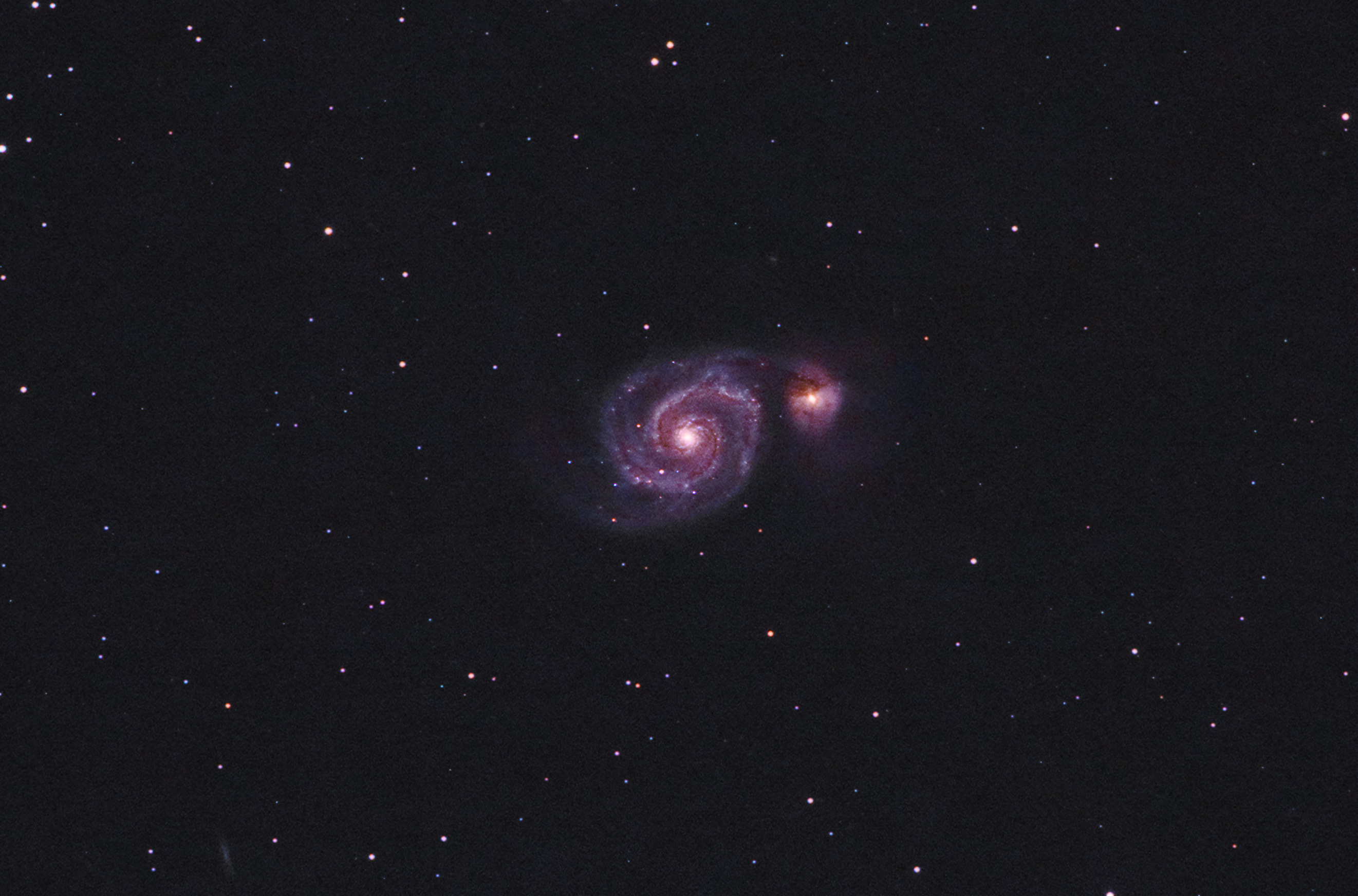
M31 – 90×30 sec, QHY183c at -25C, Gain 30, UHC filter, TV-85 at F/5.6.
M33 – 30×30 sec, QHY183c at -25C, Gain 30, UHC filter, TV-85 at F/5.6.
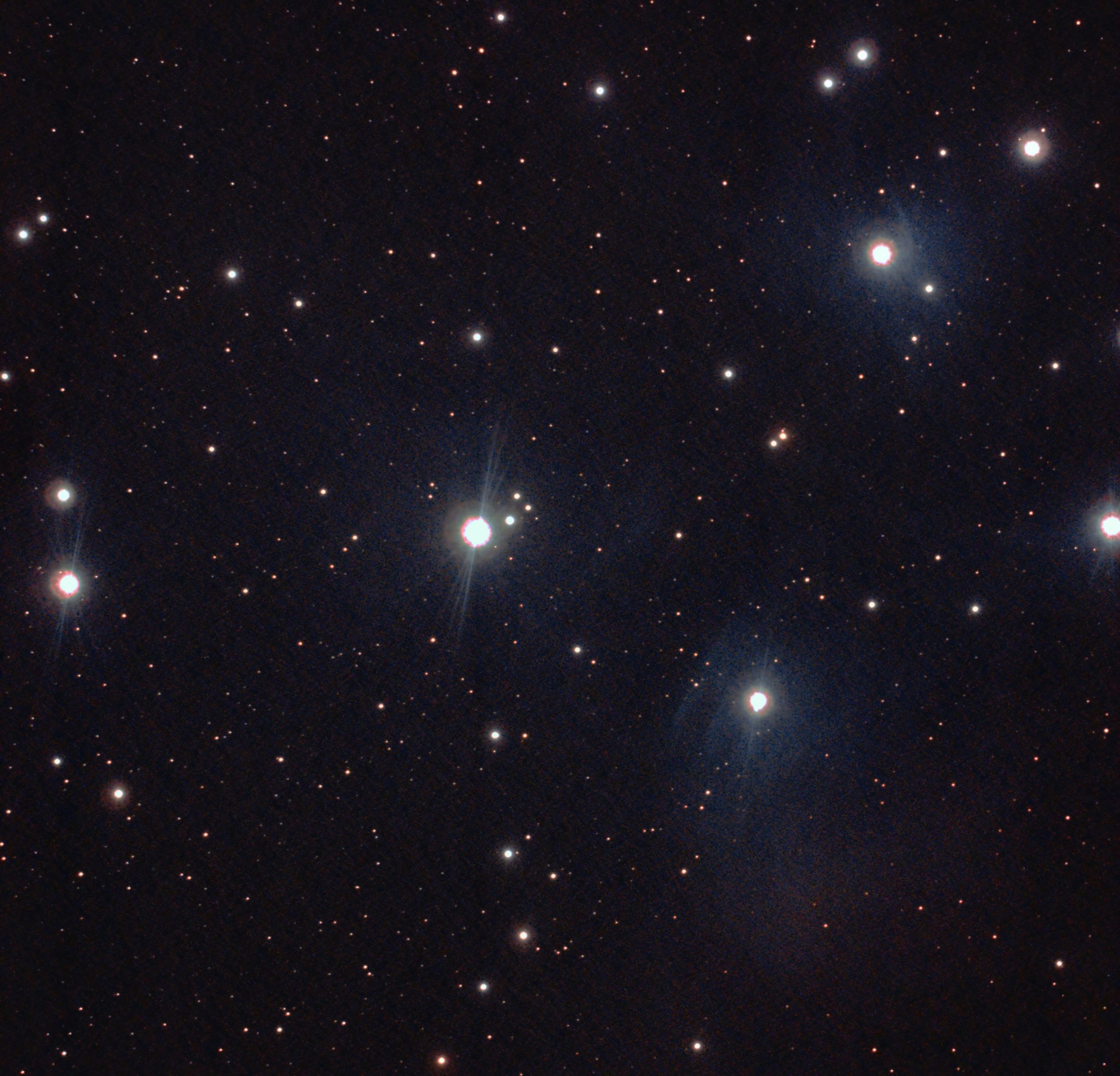
M45 – 100×30 sec, QHY183c at -25C, Gain 30, UHC filter, TV-85 at F/5.6.
M42 – 40×30 sec, QHY183c at -25C, Gain 30, UHC filter, TV-85 at F/5.6.

What a night!  My new QHY183c astro camera worked really well once I had it hooked to a computer that could handle the 20MP downloads and live stacking requirements of SharpCap 3.2.  I used my older  Panasonic ToughBook for controlling the scope and the guiding while another laptop, a Toshiba i7-based unit, was used for image acquisition and live-stacking.  I was able to bag six objects with this setup before I had to turn in and get some sleep.

(BTW, EAA is Electronically Assisted Astronomy.  It is a way to “observe” from a light-polluted metro area with real-time captures and strong LP filters on a computer using highly sensitive astro cameras.)

SharpCap 3.2 works really well on the faster machine but not on the ToughBook.  The USB 3 port and it’s 2.5Ghz processor are just not powerful enough, I guess.  I will have to tuneup the Toshiba to do all the stuff the ToughBook was doing and live-stack with SharpCap, all at the same time.  Hopefully, I’ll take care of that soon.

First Light – The Moon with a New QHY183c Camera

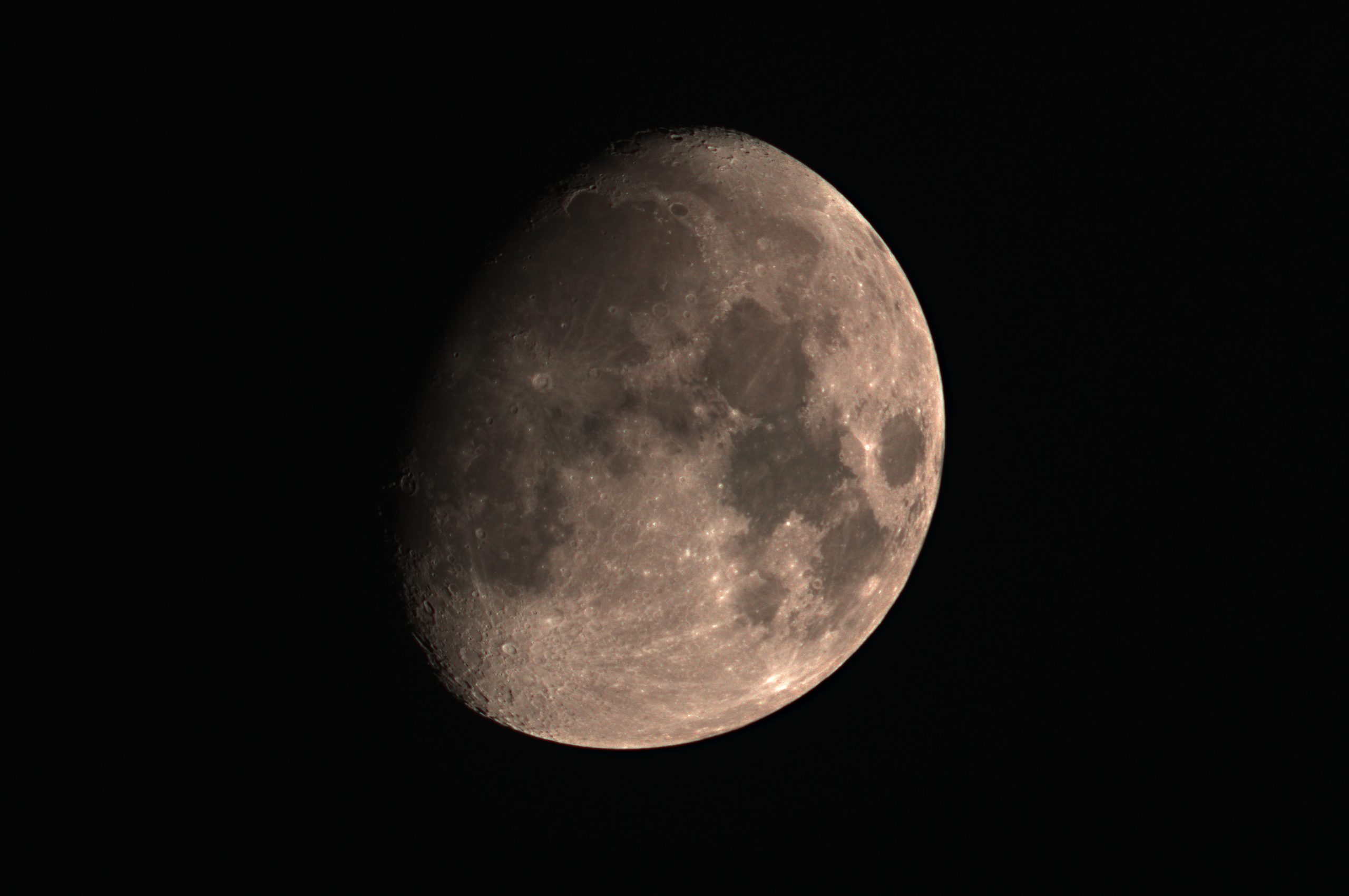
The Moon on Oct 19, 2019. Stack of 30 frames with QHY183c, UHC filter and a TV-85 at F/5.6

I finally did it.  I bought a new camera for imaging (and Electronically Assisted Astronomy or EAA for short) that has a cooler and is dedicated for astrophotography.  It is a QHY183c from QHYCCD.   It is a 20MP, Sony IMX183 BSI CMOS-based camera with electronic refrigeration to cool the CMOS chip and reduce noise.

I chose a color camera since I shoot comets and it is easier to do those with a one-shot-color (OSC) camera vs. a mono camera needing filters and a filter wheel.  Plus, it was cheaper by far for the color version ($699 vs $999 or $1199 w/filter wheel) since Sony sells and produces lots more of them than the mono version of the chip.  And, you don’t need a set of filters and the filter wheel, which adds to the cost considerably.

The moon image  above was shot when it was still low in the sky and reddish in hue.   I shot a short video of it with 61 frames.   I used SharpCap 2.9, since the newer SharpCap 3.2 version did not want to work for some reason.   I opened the .SER video file it produced in AutoStakkert and stacked half the frames with the default AutoStakkert settings.   Some sharpening and other enhancement was done in PS.

I had a few problems with the laptop not handling the amount of data that the 20MP cam produces at it’s full resolution and highest bit-depth settings.   I could get it to work in mono mode but not in color mode reliably.  Later, I tried the camera with a much more robust and newer laptop and it seemed to work much better.   Looks like I will need to upgrade my field laptop, which is an older Panasonic ToughBook with an i5 processor.

EAA was a blast with this camera.   I was in the middle of the city and was picking up the Veil Nebula and the Horse Head Nebula with no problems.   I was using a cheap UHC filter that had sharp cutoffs for H-beta/OIII and H-alpha wavelengths and that helped with all the LP.  I did more EAA than trying to get data to produce finished images.   I kept a few that I will tack on to the end of this post.

M42. A single 20 second mono image taken through a UHC filter and TV-85 at F/5.6 with the new QHY183c.
Horse Head Nebula. 93×30 sec subs live-stacked with SharpCap 2.9, QHY183c, UHC filter and a TV-85 at F5.6.


Full Moon October 12, 2019

Full Moon, Oct 12, 2019
The Full Moon on Saturday, October 12, 2019. 1/500th sec @ ISO 100, Canon T3, TV-85 at F/5.6, IDAS-LPS.

I got a chance to do an equipment shakedown imaging session on Saturday night, Oct 12, 2019.  It was my first one this season.   I thought I would run into numerous problems, but it was not as bad as I thought it might be.   Only a few things were not working and needed fixing or replacing.   It was all small stuff, like a busted dew strap and broken focus mask, which I was able to glue back together. The main thing I was able to fix were some issues with my mount’s declination axis and backlash settings.   It had been needing some adjustments since before the last time I imaged and I finally got it done.

The weather was nice, at least at first.  We had a cold front pass through the night before down here in Cajun Country – the first significant front of the season and it brought the temps down into the 50’s.    It was very clear at the start of the night and cool.  But, clouds eventually came in and spoiled everything as the night wore on, unfortunately.   By 2:00 AM, I was completely clouded out, so I packed it in and called it a night.

Here’s another version of that moon image, which being a Hunter’s Full Moon, made it a worthwhile keeper:

The Full Moon on Saturday, October 12, 2019. 1/500th sec @ ISO 100, Canon T3, TV-85 at F/5.6, IDAS-LPS.

Comet C/2018 Y1 (Iwamoto) on Feb 13, 2019

C/2018 Y1 (Iwamoto) on Feb 13, 2019, 09:20 UT. 40×30 sec @ ISO 3200, IDAS-LPS, Canon T3, Televue TV-85 at F/5.6.

A new comet is in our neighborhood passing by at a relatively close 28 million miles from Earth.  It is a very long period comet that we have not seen before, but it has visited the inner solar system over 1300 years ago.  However, nobody noticed it because it was probably too dim to see naked eye.   It was discovered late last year by Japanese astronomer Masayuki Iwamoto.

Below is the Star-Streaks version with minimal processing.   Both images were treated minimally in these first iterations of processing.  There is probably room for improvement, but I doubt I’ll get much more than what I have here.

C/2018 Y1 (Iwamoto) on Feb 13, 2019, 09:20 UT. 40×30 sec @ ISO 3200, IDAS-LPS, Canon T3, Televue TV-85 at F/5.6.

I shot this from a Bortle Red/White zone in the middle of a metro area.   It was moving so fast that even 30 sec shots showed trailing.   So, I went with ISO 3200 and 30 sec exposures even though it trailed a bit, which was about max for the sky conditions I had this night.  I shot some 1 minute subs while trying to guide on the comet, but my DEC calibration was not working, so they showed some trailing in DEC.  Plus, I was barely able to pick it up with 4 sec subs, so it was not tracking too well at that setting.

These two didn’t come out too bad, I guess.   A darker location would have shown the tail better, probably and there is some hint of it here.  Reports are the comet can be seen in binoculars from dark sites, which is pretty good for any comet.   But, I knew from experience that when they are barely visible in binos from dark sites, binoculars are almost useless from inside a metro area, so I didn’t even try.

The Super Blood Wolf Moon Lunar Eclipse

2 sec @ ISO 200, Canon T3, Televue TV-85 at F/5.6
5 sec @ ISO 100, Canon T3, Televue TV-85 at F/5.6

The lunar eclipse of Jan 20, 2019.   Top image is just after totality had set in.  It is enhanced to show more background stars and brighten the moon a bit, sort of like you would see it in binoculars or a telescope.

The second image is just after mid-eclipse and is enhanced to show more background stars, but not brighten the moon too much.  This was more how the eclipse looked to the naked eye.

Below is the whole eclipse saved as a 79-frame animated GIF image:

Complete Lunar Eclipse – Animated GIF

I had a hard time getting the images aligned on this one.  I tried manually doing it in PS, but it is tedious and easy to make mistakes.  Finally, I had to write a script in IRIS and told it to combine separate RGB files into color images that had been processed through IRIS’s planetary alignment tool.   I also tried to make a video file that would upload to hosts on the web.   Unfortunately, it always changed the colors to be too bright and yucky with the conversion from AVI to MP3/MP4 or WMV formats, so I gave up on that.

Two Moons and 1 Comet

The Moon on Jan 12, 2019. Afocal eyepiece projection, 25mm eyepiece to Samsung Perx (5Mb,) on a 6 inch, F/8 Newtonian.

I finally tried my phone with the afocal camera holder and the dob I use from time to time.   Yes, it works.  But, the image quality is definitely poor compared to my DSLR’s.

A couple of nights later, I setup the TV-85 refractor/Canon T3 combo and took some shots.   One was of the moon before the sun had set.   Here it is in two versions – as taken and converted to look like a nighttime shot:

The Moon on Jan 14, 2019. 1/400 sec @ ISO 100, IDAS-LPS, Canon T3, Televue TV-85 at F/5.6.
The Moon on Jan 14, 2019. 1/400 sec @ ISO 100, IDAS-LPS, Canon T3, Televue TV-85 at F/5.6. Nighttime simulation.

I was setting up for some deep sky and the moon made a convenient test target.  Later that night, I shot some images of Comet 64P.   Unfortunately, I was cut off by clouds after only 10 sub-images.   I was going to just throw this out, but I managed to make an image out of the paltry amount of data, so it is not a complete loss.

Check it out:

Comet 64P on Jan 14, 2019, 01:12 UT. 10×180 sec @ ISO 400, IDAS-LPS, Canon T3, Televue TV-85 at F/5.6.

Comet 46P Roundup

So far, I’ve managed to image Comet 46P/Wirtanen four times during this apparition with my TV-85 scope and twice with camera lenses.  For this time of the year, that is pretty good.   December and January are usually months of unending rain and clouds down here in Cajun Country.

Now that the main part of Comet Wirtanen’s visit is over, it is a good time to do a roundup of the data and see the bigger picture.   So, I took the best four star-freeze versions from those four times with the telescope and combined them into one display image above.    That way, you can easily compare the shape of the comet and see how it changed depending on our angle of view at the time.

The dust and ion tails were both mostly hidden behind the huge coma on this comet.  It was huge because it was so close to us.   But, since it was still further from the Sun than we are and the Sun, Earth and comet were in a line, the tails were pointing directly away from us.   That foreshortens the length of the tail and makes it look like it doesn’t even have one at times.   It is just the geometry of the view angle and the way the coma can overwhelm the dim tails when they are behind it from our vantage point.

When we were more at an angle to the Sun-comet angle, the tail appeared longer.   When we were in-line with it and the Sun, the tail decreased.   So, it is not totally comet activity at this point that controls tail length, it is view angle and how much is behind a thick coma.   You still have the solar wind and how chaotic it is that causes the tail to “flap” like a flag when the wind varies.  But, mostly view angle.

46P came in low going high and crossed our orbit then angled above the elliptic plane heading away from the Sun.  Our view now is from underneath, you would say.   That is why the tail is south now when it was mostly on the north side when it was below the elliptic.


Images of Comets, Nebulae, Galaxies and Star Clusters