
M4 and NGC 6144 are two globular cluster near the bright star, Antares in Scorpius. I shot this while waiting for Comet Pan-STARRS to come into view.
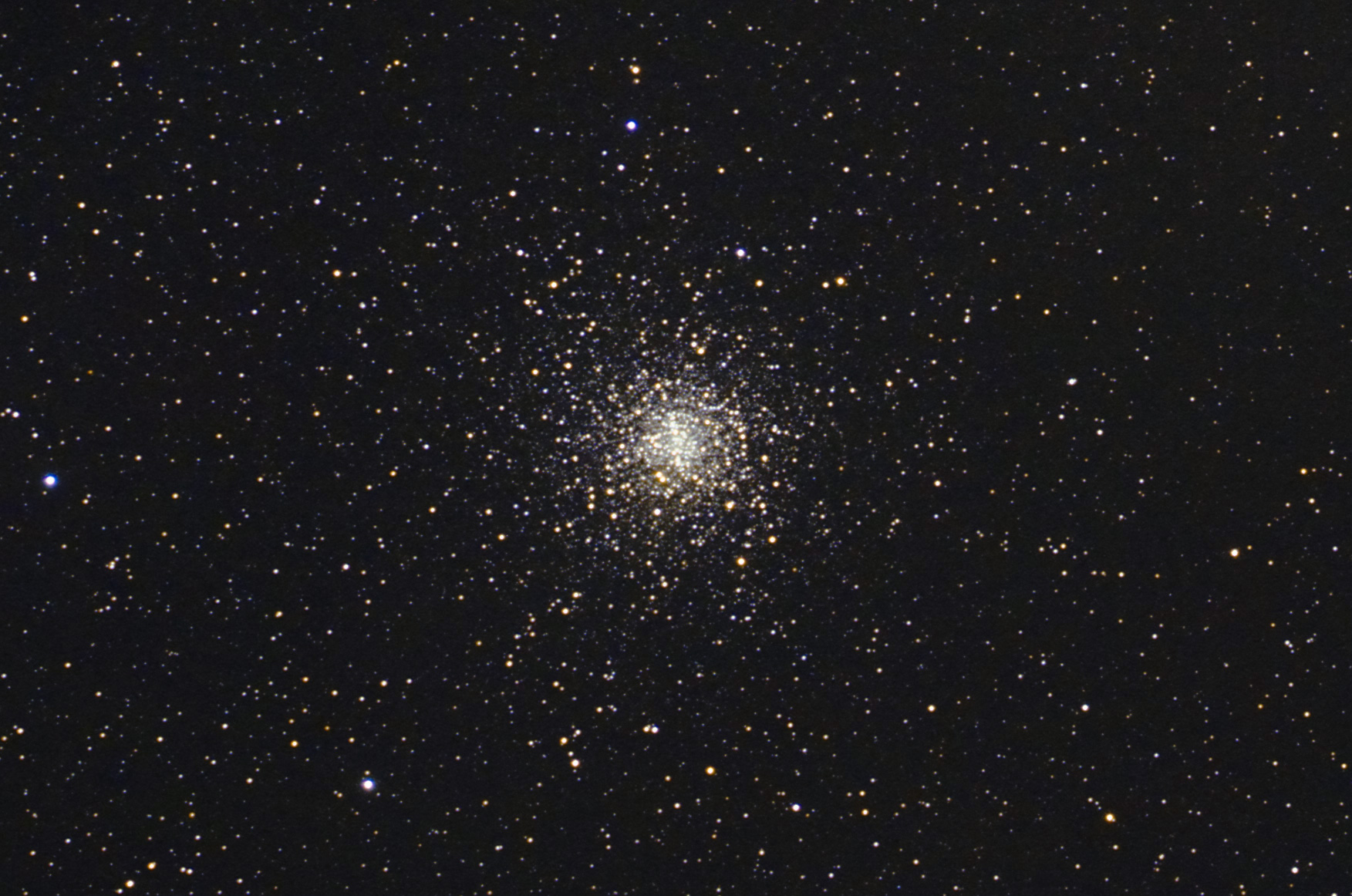

M4 and NGC 6144 are two globular cluster near the bright star, Antares in Scorpius. I shot this while waiting for Comet Pan-STARRS to come into view.
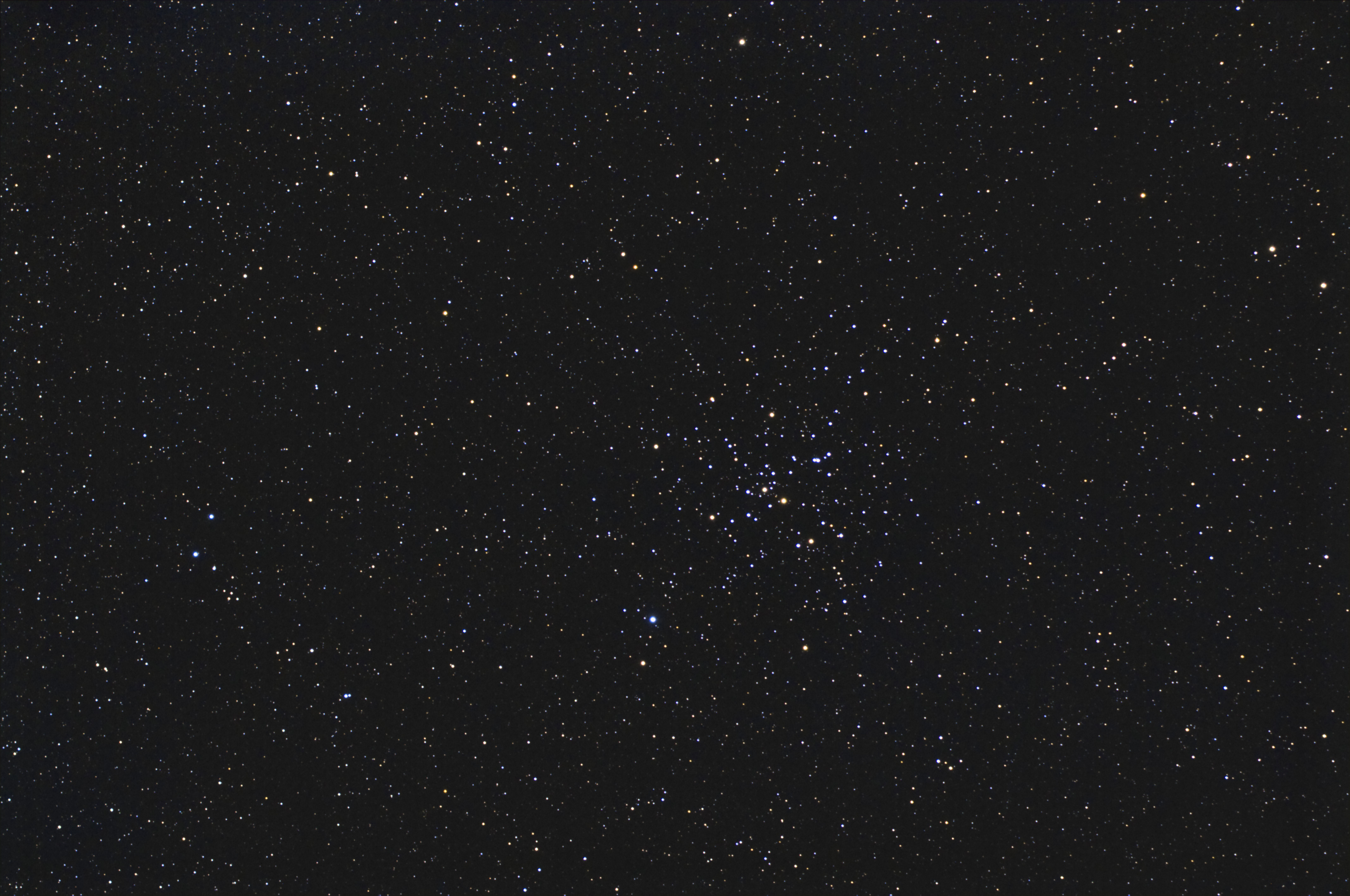
An easy to find open cluster that lies just below Sirius, the brightest star in our skies here in the northern hemisphere. I had just setup and needed something to test the rig and make sure everything was working. M41 was convenient so I shot 10 x 3 minute sub-images and combined those to get this final image. There was lots of moonlight and LP, so open and globular cluster shooting is about all you can do in such conditions.
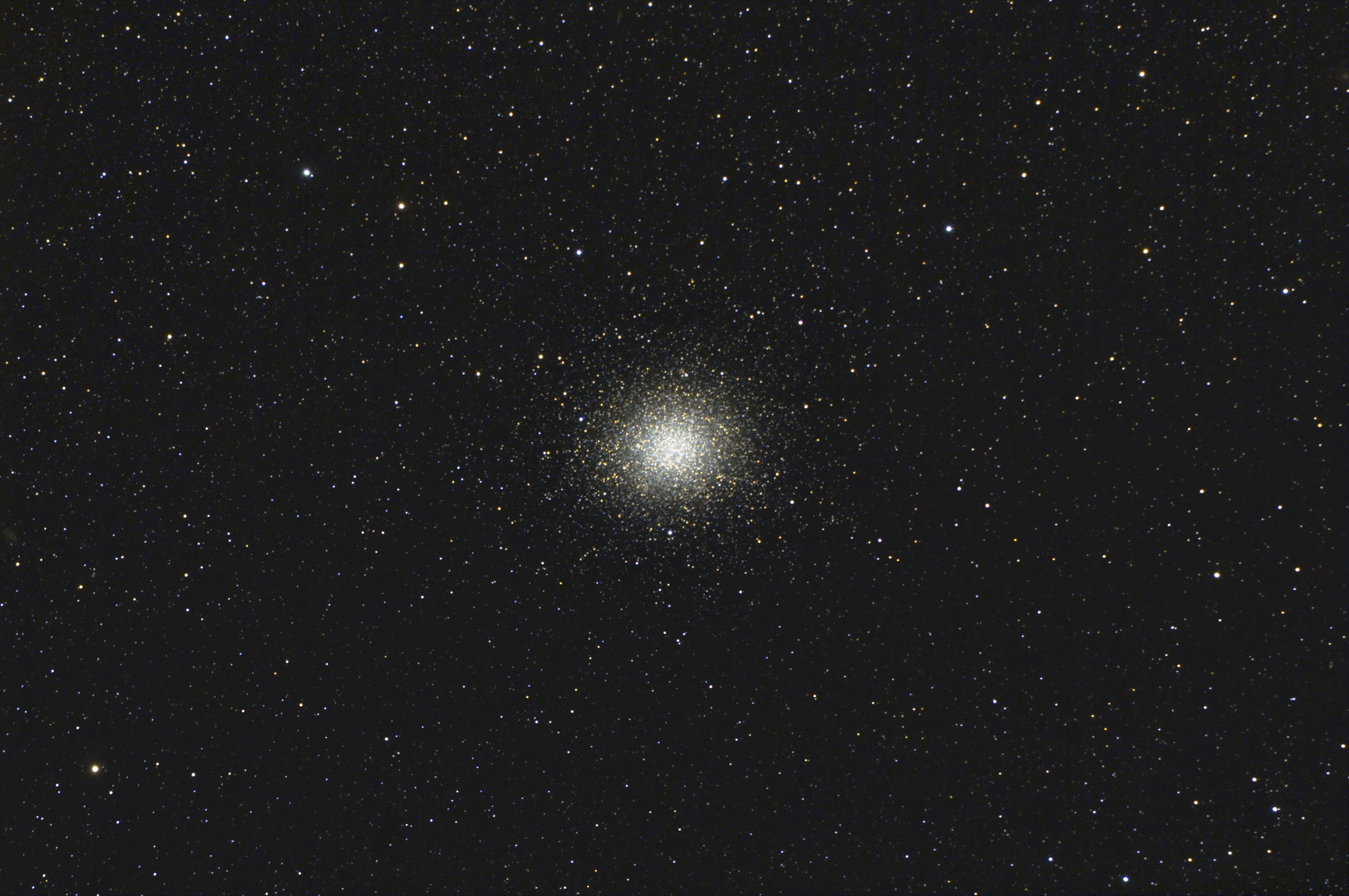
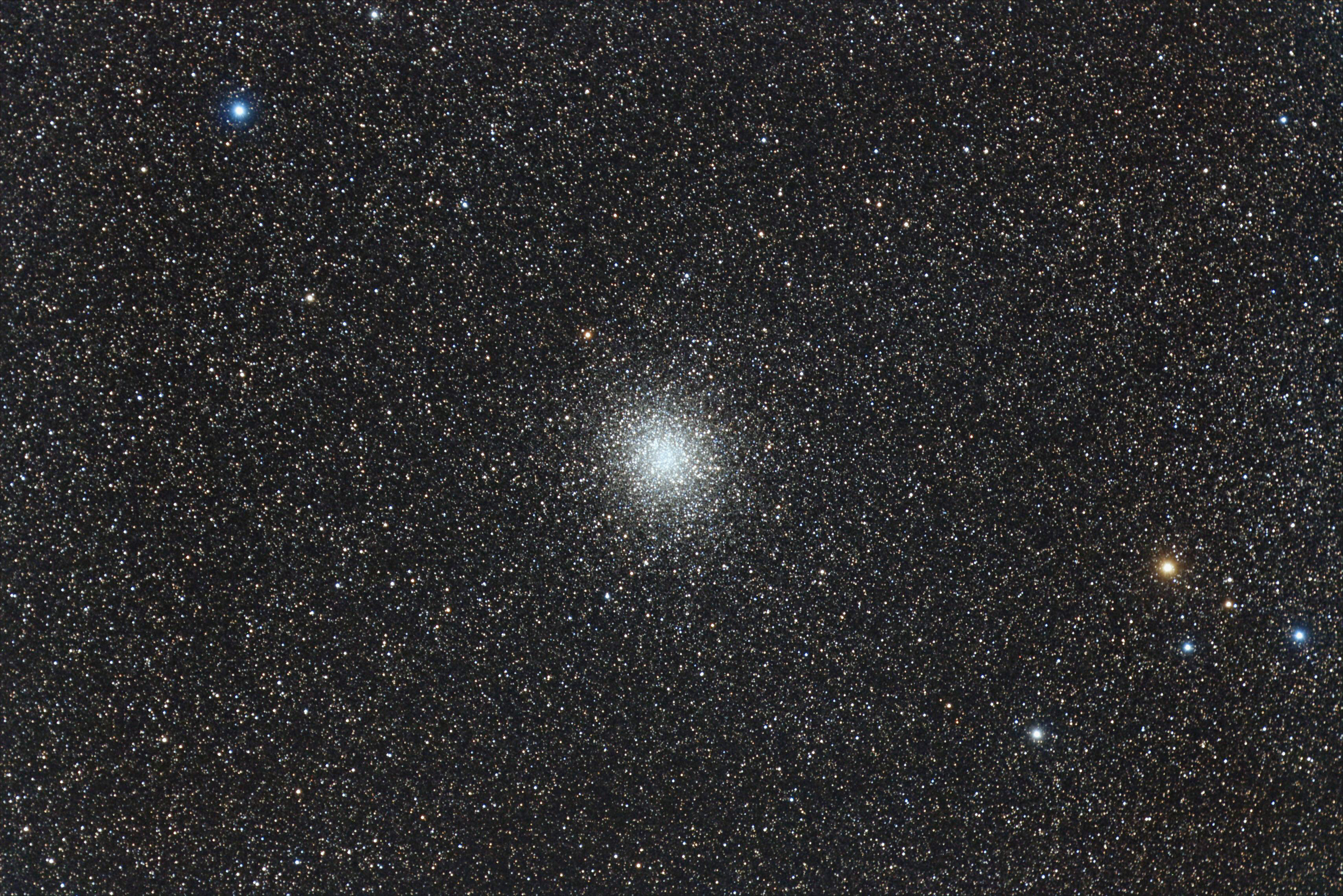
I camped out on Friday night, April 19, 2013 at the old family farm property. I brought everything I needed to image with my Televue TV-85 APO refractor, including my Atlas EQ-G mount. What a load! lol I had fun even with a bright moon out. As soon as Omega Centauri was visible, I started imaging it. Three minutes at ISO 400 was as much as I could go with the moonlight and LP, so I tried to get as many sub-images as possible. I ended up with 42×3 min for a total of 2 hours and 6 minutes worth of integration.
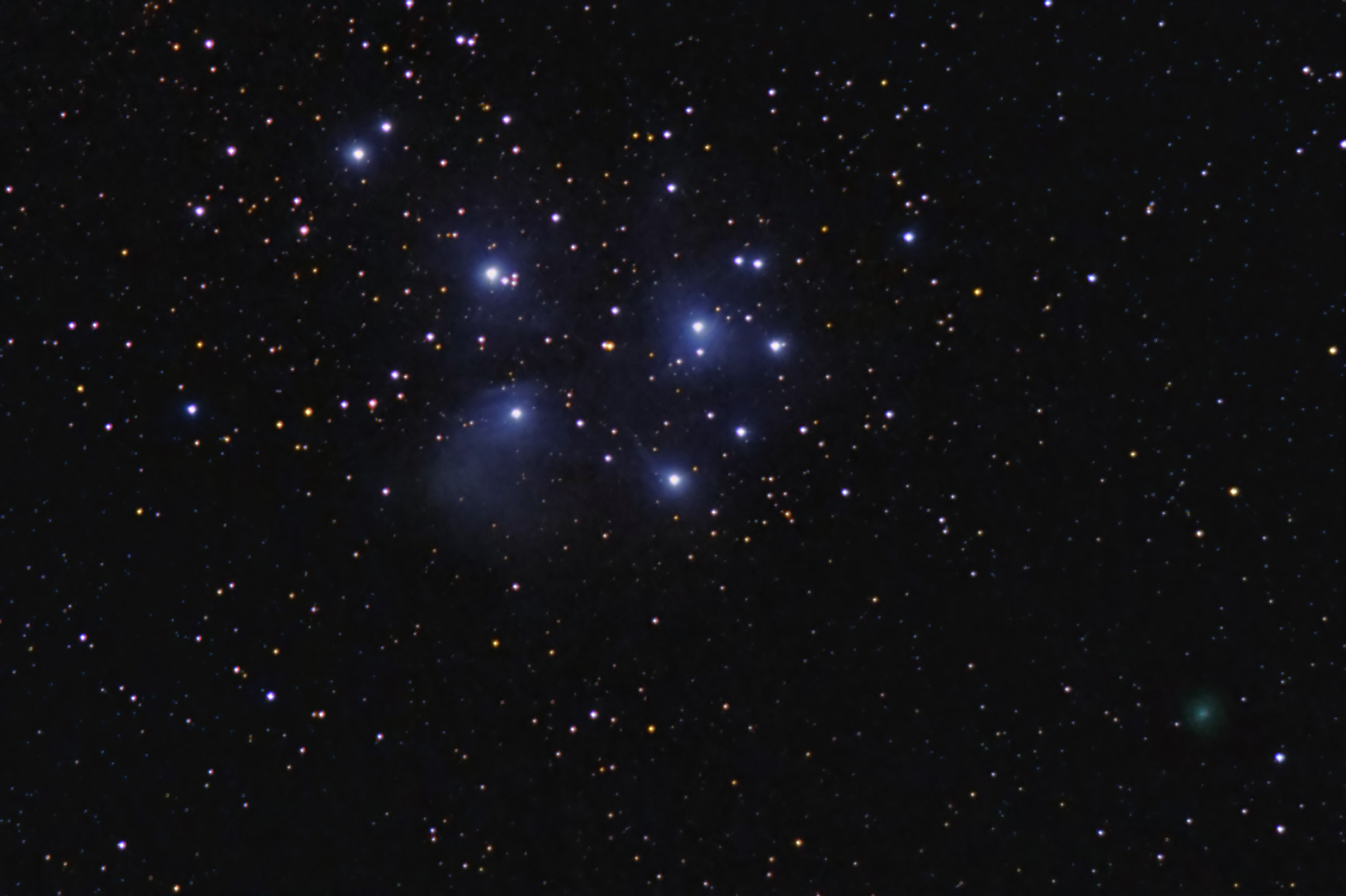
I struck out trying to image Comet Panstarrs on Sunday evening, March 24, 2013. It was just too short of a time to find it in bright twilight, bright moonlight and with its low altitude. However, I tried something to redeem myself while I still had the equipment setup. I shot the Pleiades with a bunch of 15 second unguided exposures. I managed to catch them and Comet C/2012 L2 (Linear) in the shot. This is cropped down quite a bit to just the cluster and comet.
By the way, the comet is in the lower right. Its that small greenish smudge. 🙂
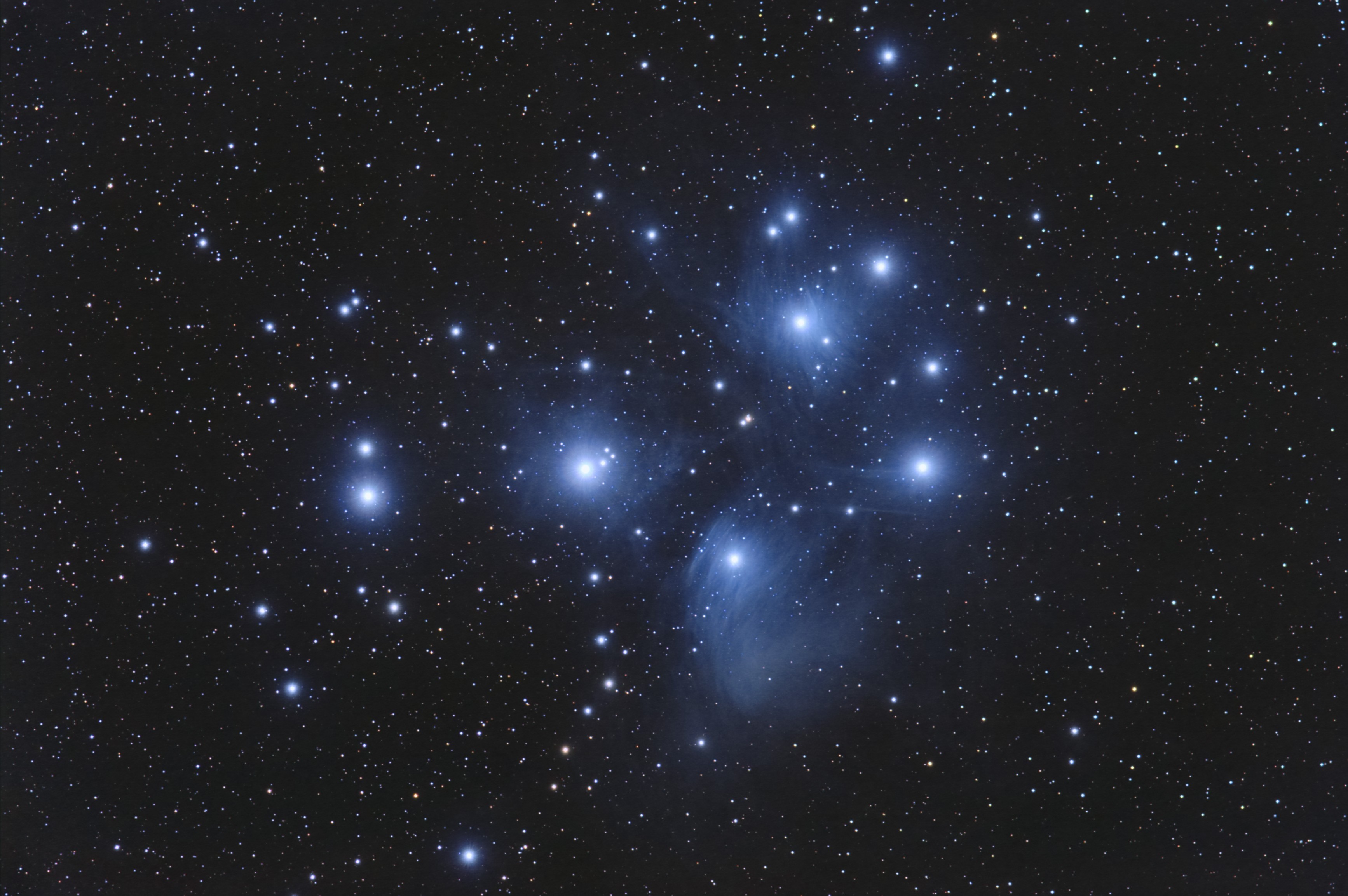
M45 2011 Version – Calibrated and stacked in IRIS, export to PSD file. Post processing in PSCS2 with Noel Carboni’s Astronomy Tools, Gradient Xterminator, Neat Image, Astroplugins, DeepSkyColors HLVG and WhiteCal and CS2 Smartsharpen.
This is a composite of data taken with 2 telescopes – a Meade SN-6 and a Meade SN-8. This was in 2008.

M28 Globular Cluster in Sagittarius. 2x Drizzle processing in IRIS.
Imaging telescopes or lenses: Meade SN8
Imaging cameras: Canon EOS 350D / Digital Rebel XT
Mounts: Orion Atlas EQ-G
Guiding telescopes or lenses: Celestron 102mm F/5 Achromat
Guiding cameras: Meade DSI I Pro
Software: Iris, Patrick Chevalley’s Cartes du Ciel, PHD guiding, Noel Carboni’s Astro Tools for PhotoShop, GradientXterminator
Filters: Hutech IDAS-LPS-FF
Resolution: 1600×1200
Dates: Aug. 11, 2007
Locations: Maurice Louisiana
Frames: 22×120″ ISO1600
Integration: 0.7 hours
Darks: ~15
Flats: ~10
Bias: ~40
Avg. Moon age: 27.55 days
Avg. Moon phase: 4.37%
Bortle Dark-Sky Scale: 4.00
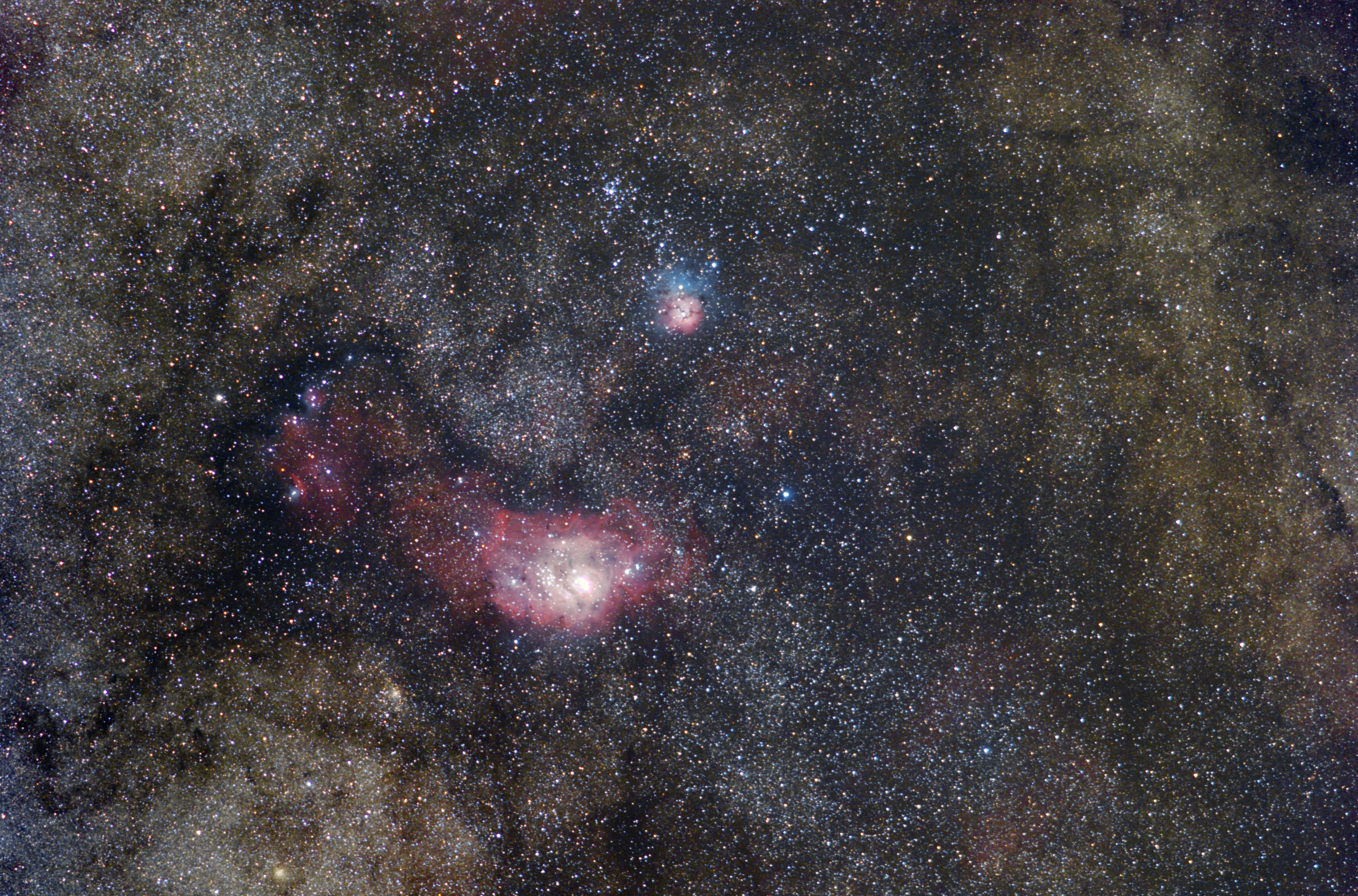
One of my better images of this rich Milky Way area containing the Trifid and Lagoon Nebulae. Shooting in the middle of summer is always tough, but I got a break when I took these some time in July of 2007.
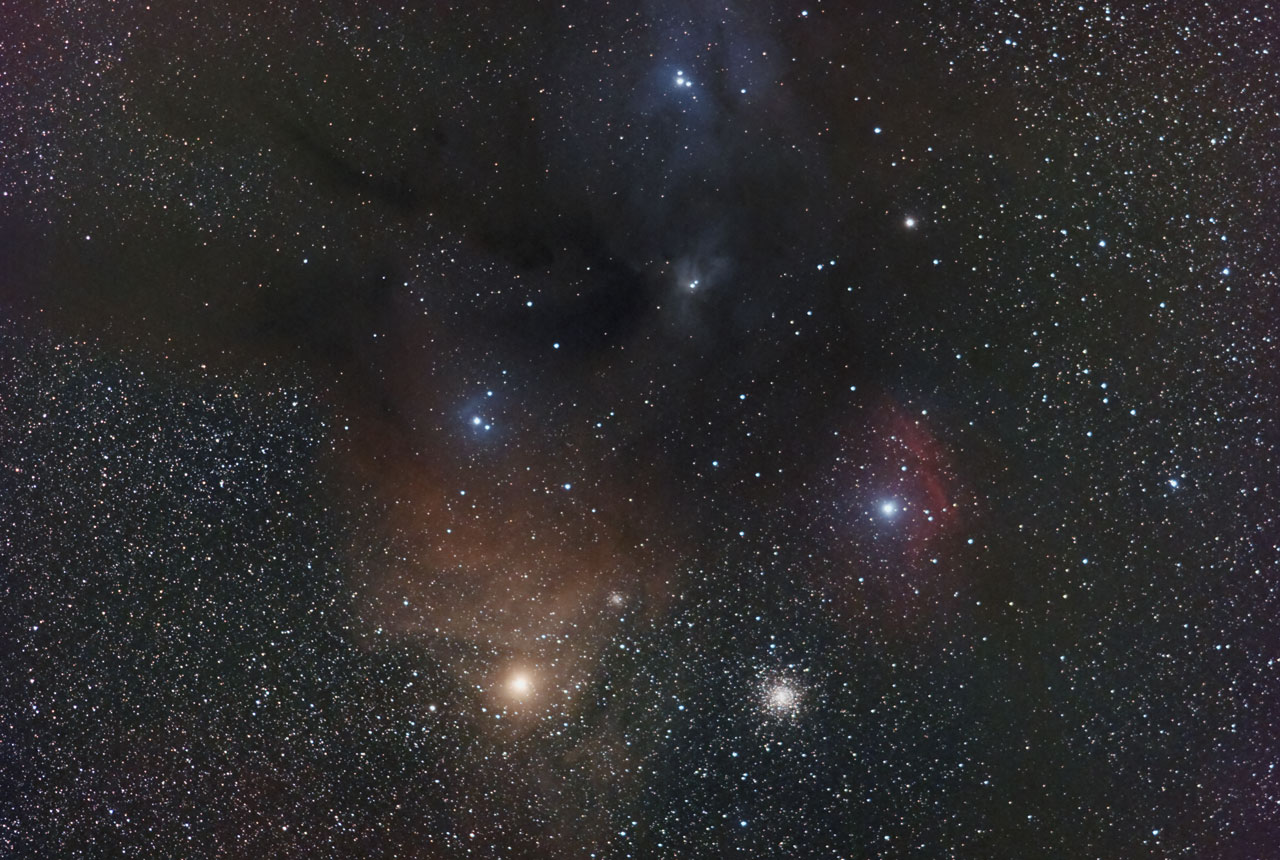
Back when the southern sky was still dark enough to shoot long exposures, I managed to do 3 minute subs at F/2.8 and ISO 400 speeds. Taken sometime in July of 2007.