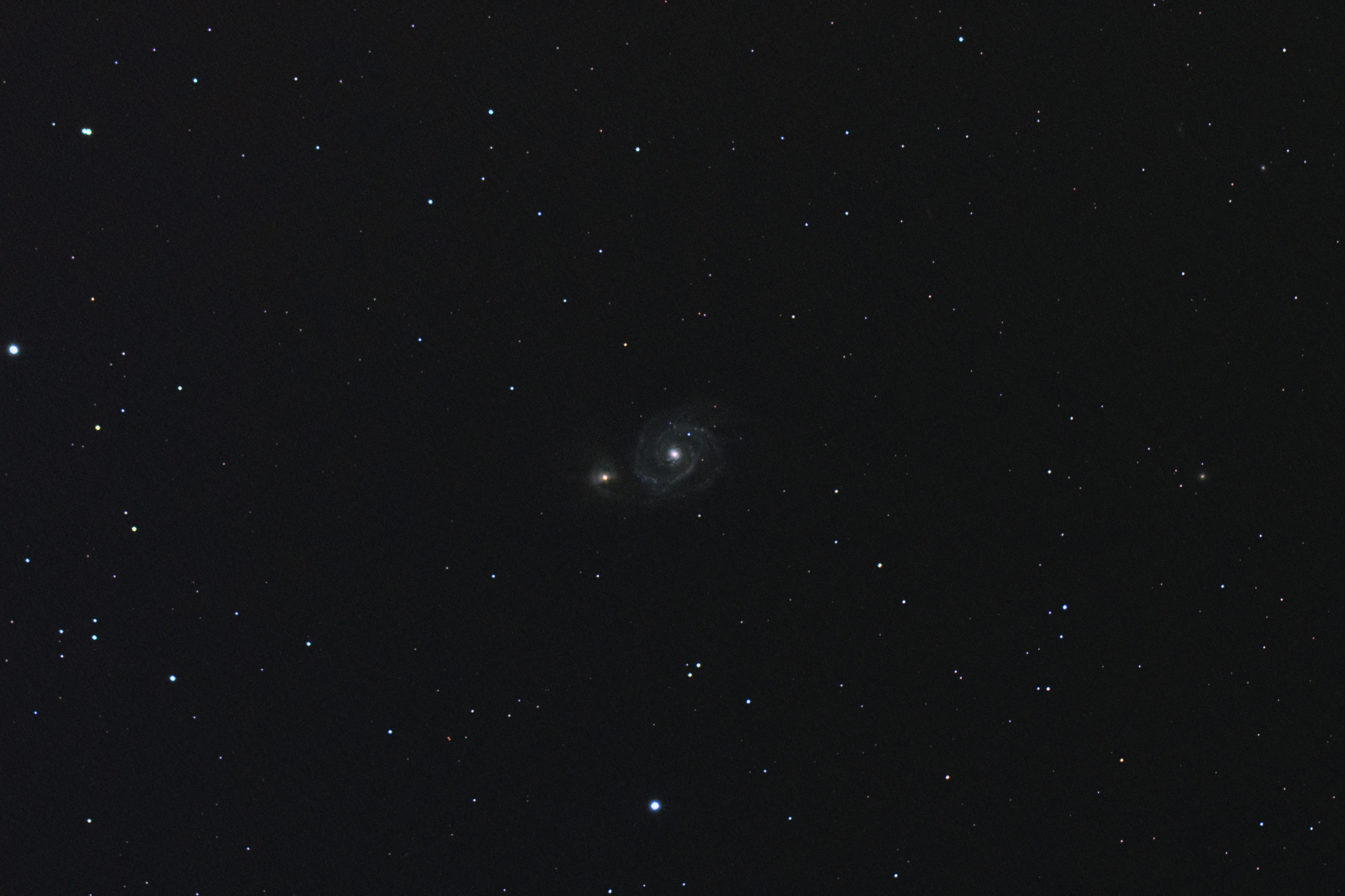
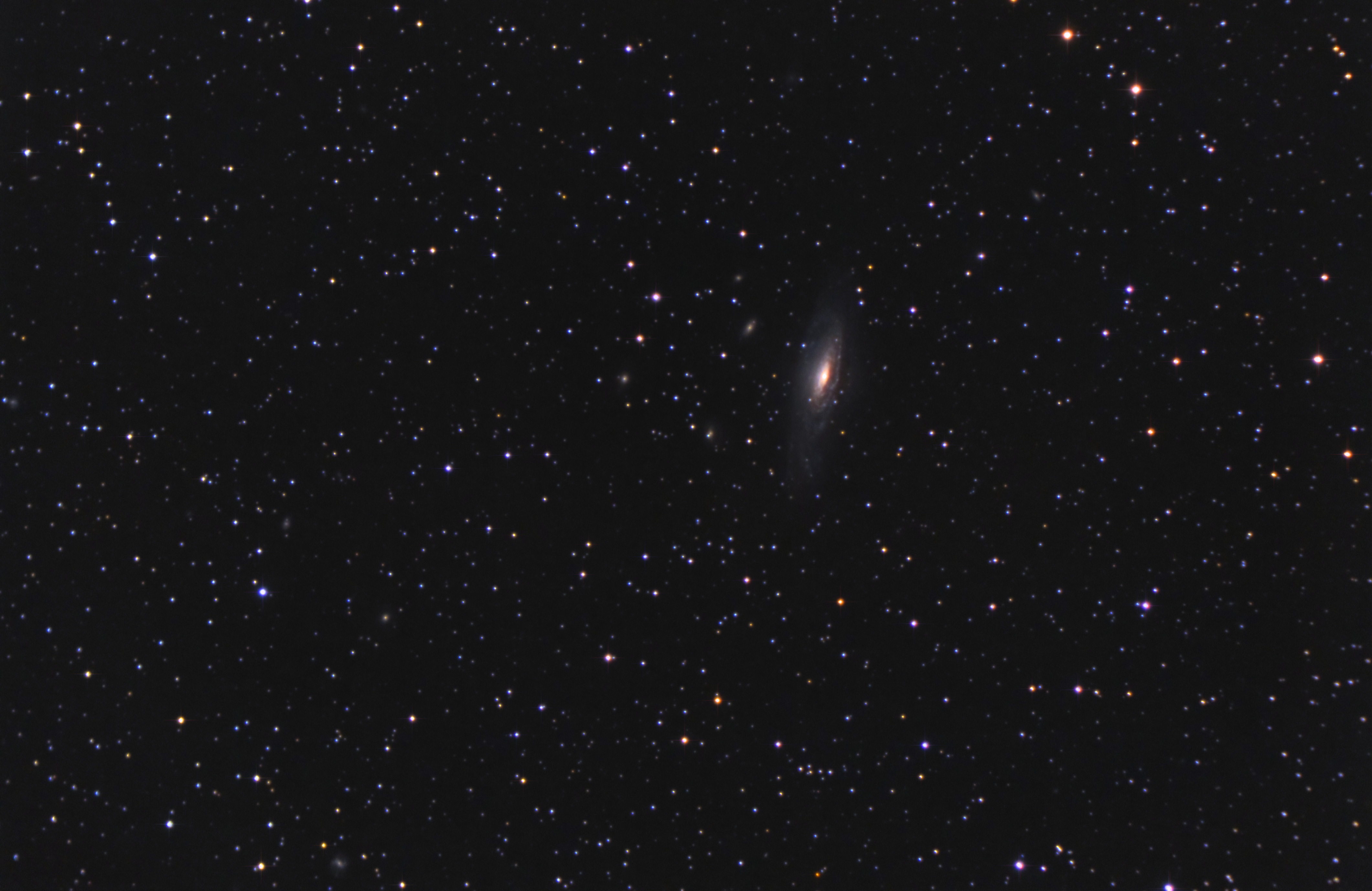
M51 on Jan 24, 2017. 40×60 sec @ ISO 400, TV-85 at F/5.6, Canon T3, Atlas EQ-G w/EQMOD.
Another Bortle Red Zone image with a relatively short exposure of 40 minutes in 1 minute subs. I have another batch of 1 minute subs taken at ISO 800 to add to this, but here is the preliminary image for the time being.
Update:
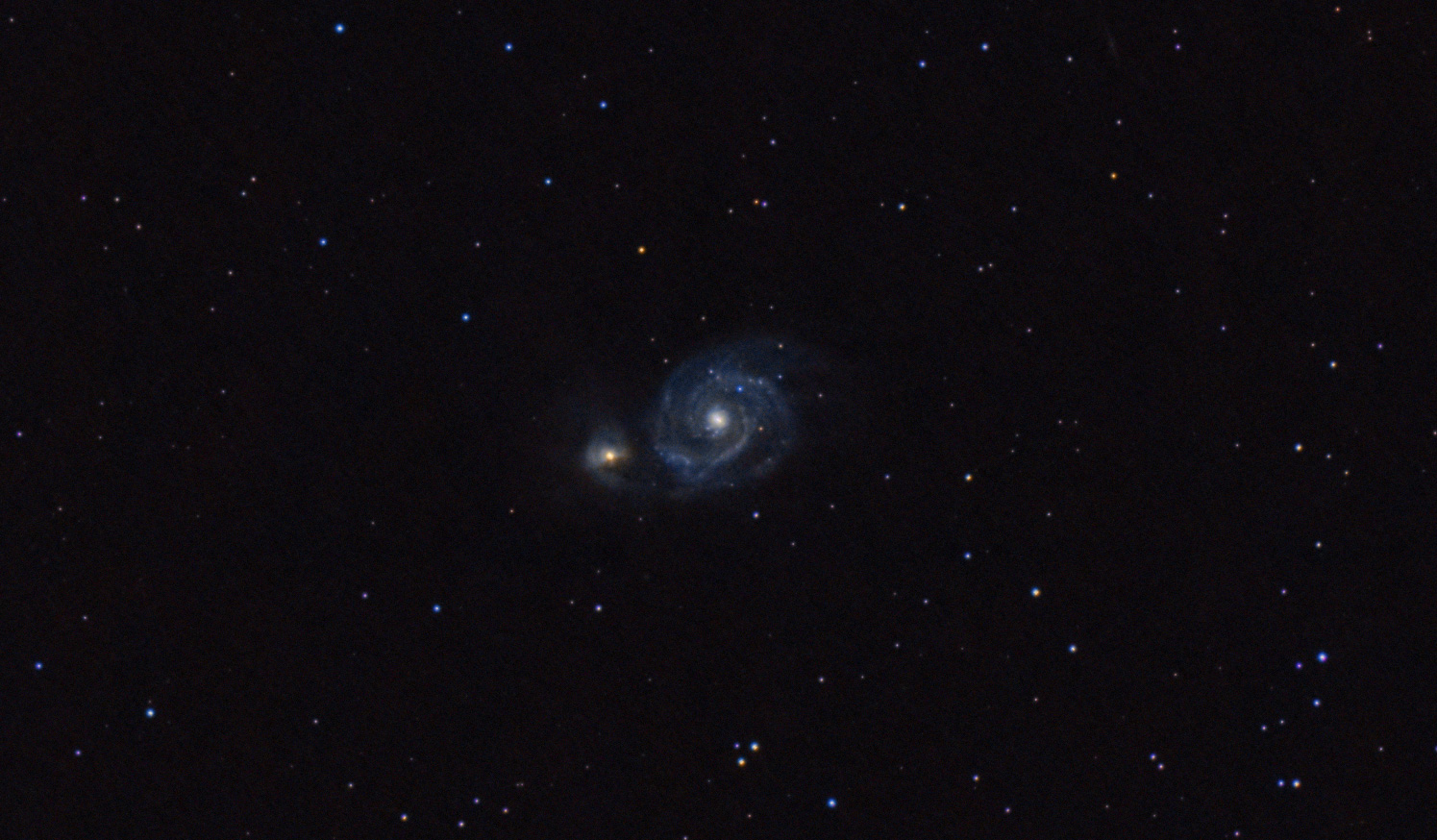
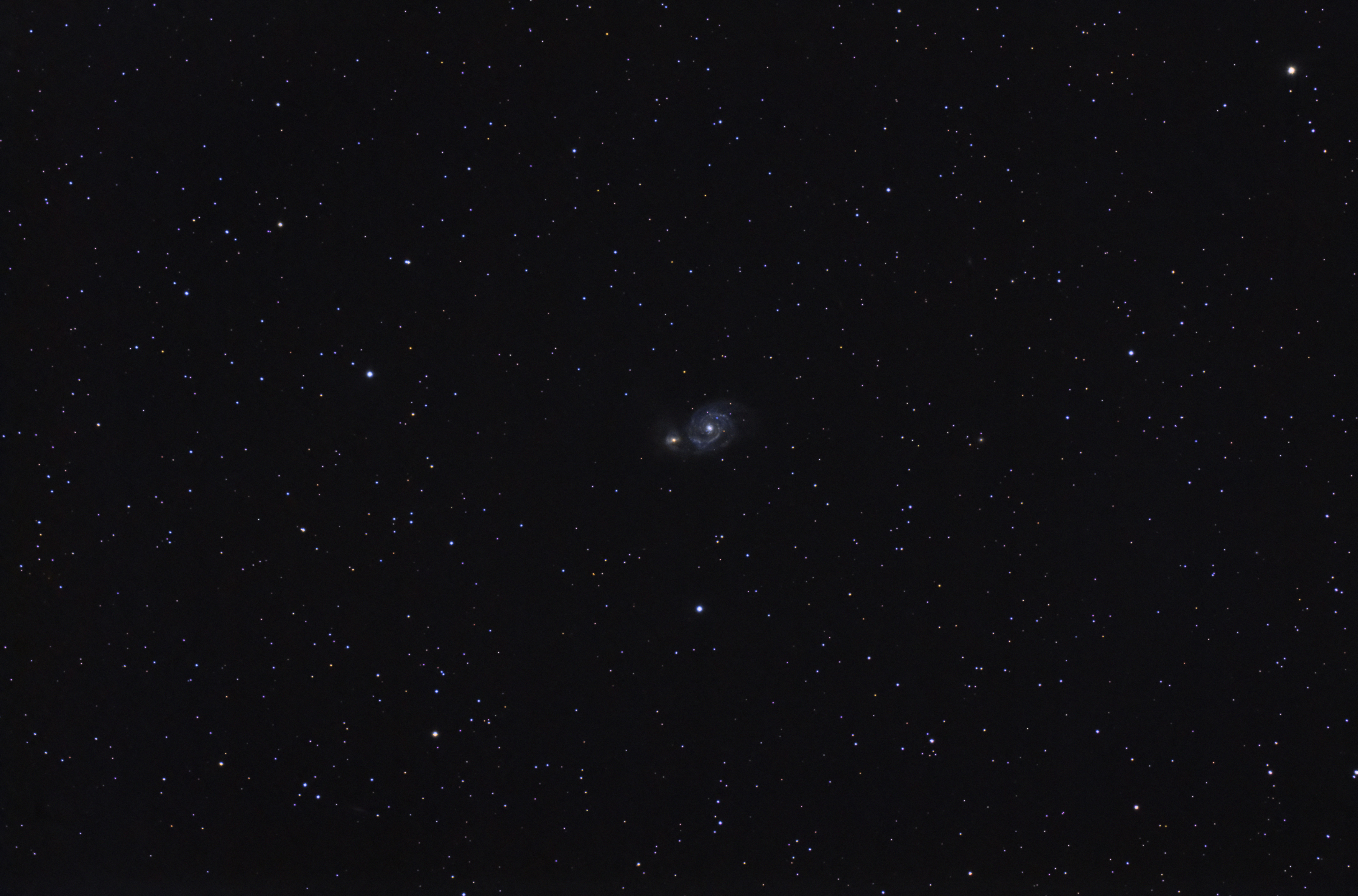
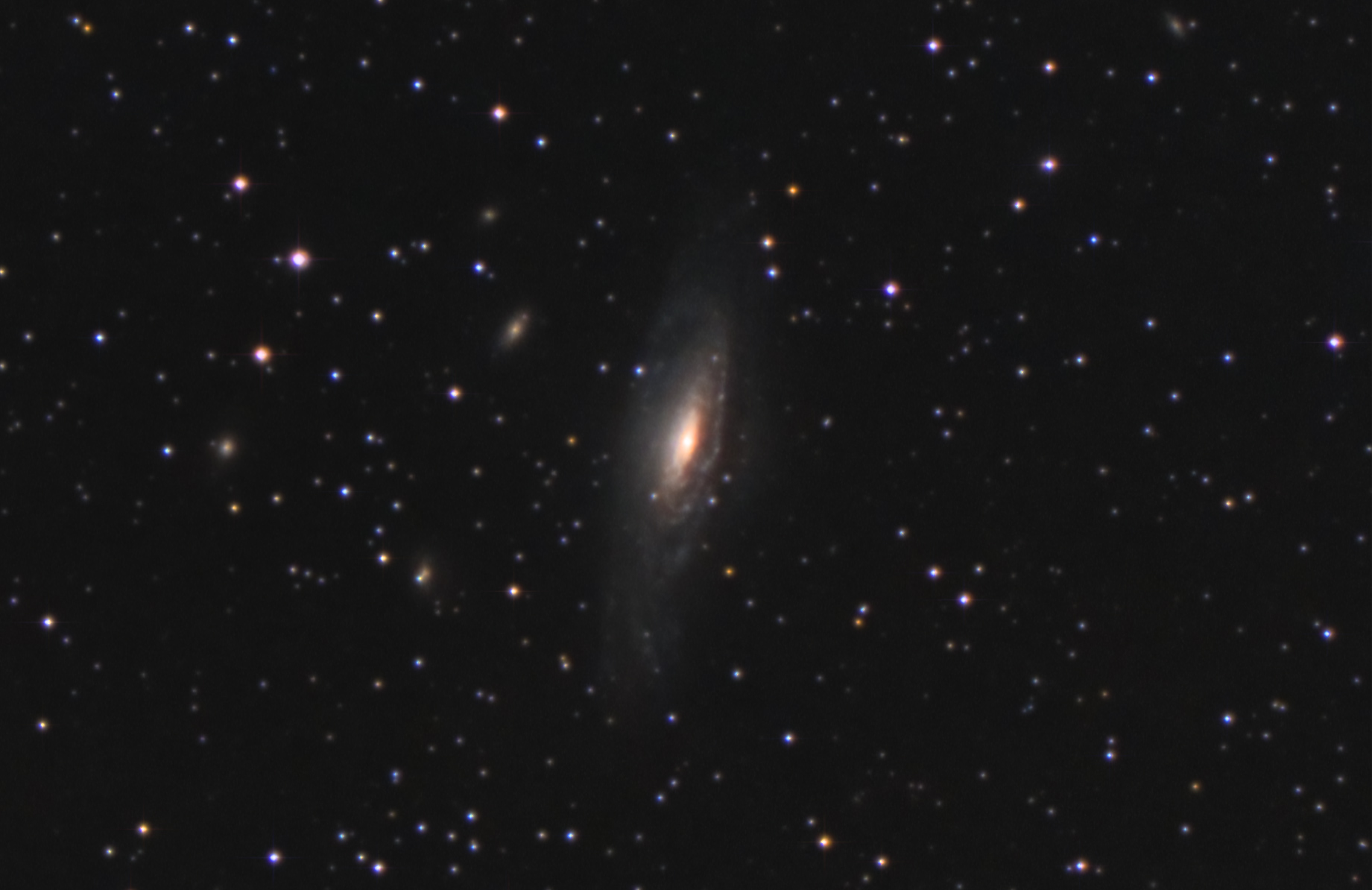
M51 on Jan 24, 2017. Close-up crop. 40×60 sec @ ISO 400 and 40×60 sec @ ISO 800, TV-85 at F/5.6, Canon T3, Atlas EQ-G w/EQMOD.M51 Full Frame.
The additional 40×60 sec @ ISO 800 subs-images are added into the mix and the updated full frame image and a close-in crop are above. 🙂
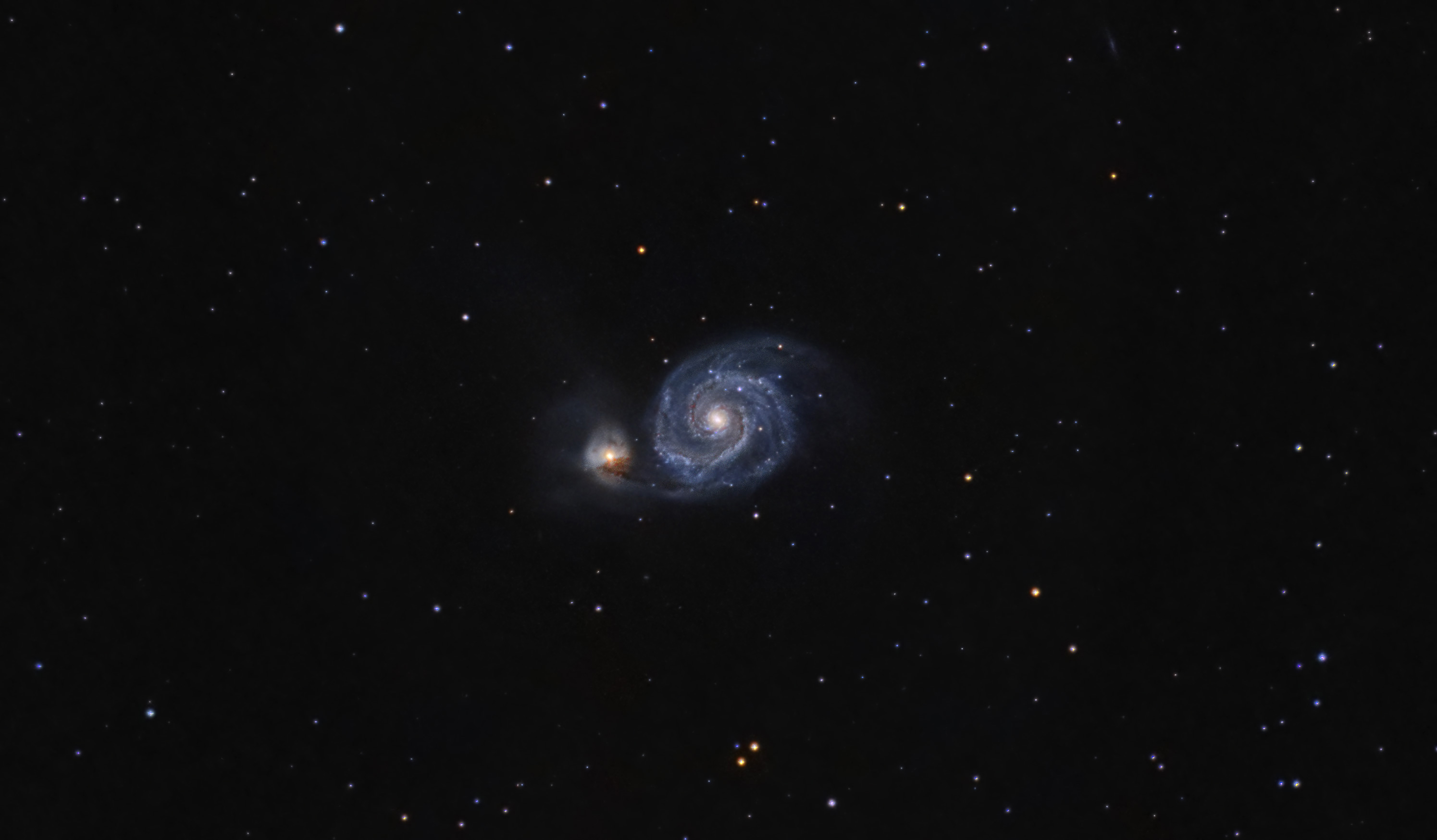
Just for fun, I added the above image with 2 previous images of M51 taken with bigger scopes and the results are below:
M51 Combined Data. C-8, SN-8 and TV-85 scopes with DSI and two Canon Cameras.
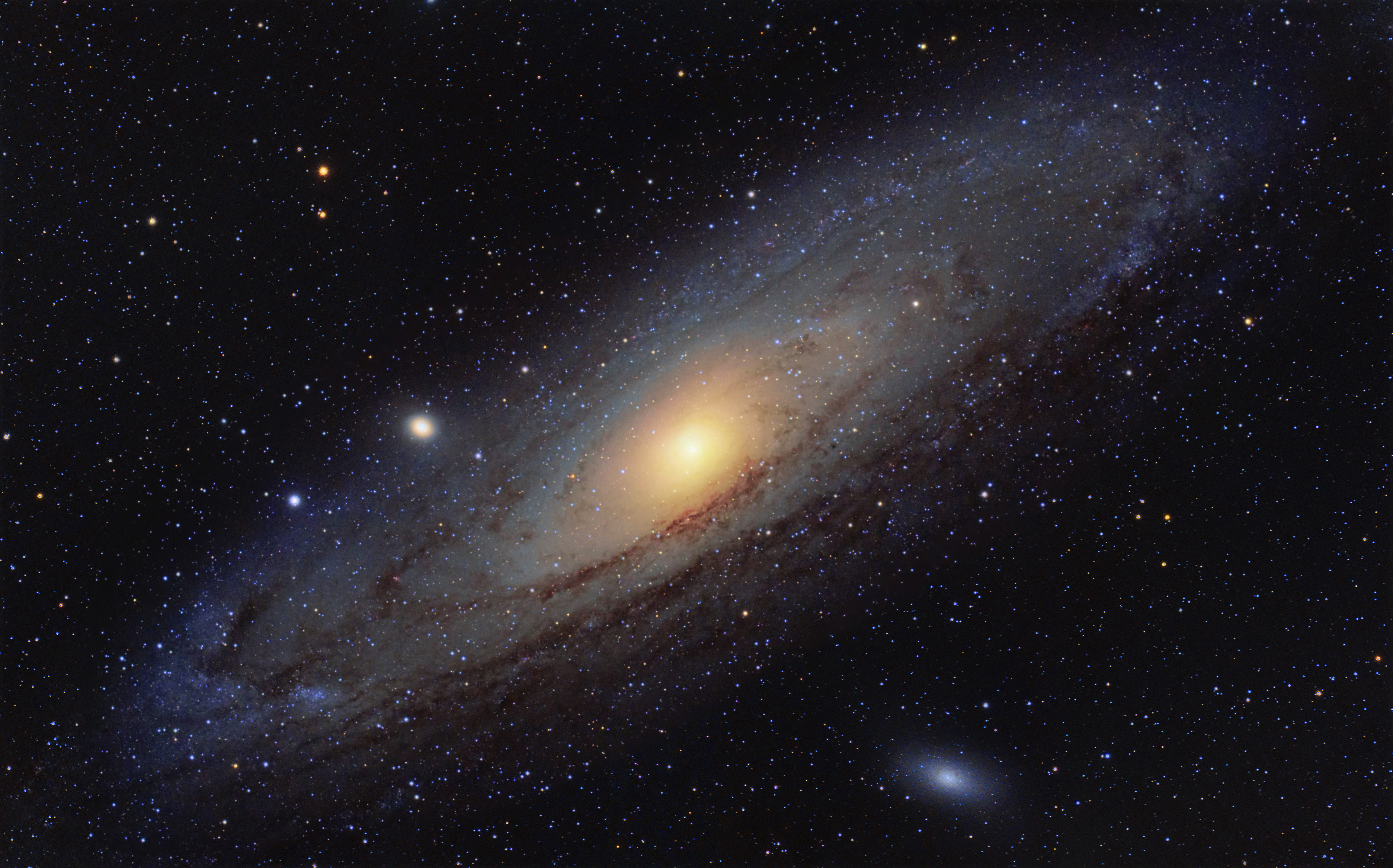
The Great Andromeda Galaxy. 3-panel mosaic taken with a SN-8 and data taken with TV-85 combined.
Data from a 3 panel mosaic taken with a Meade SN-8 telescope back in 2007 was combined with data taken with a Televue TV-85 from 2011. I used Registar and was able to match the data to the base image, which was the 3-panel mosaic.
I like the way it came out and the orientation is in the classic style for M31. Thinking about it further, it might be a good project for me to get even more data and add in everything together to get one deep image. Hmmm…
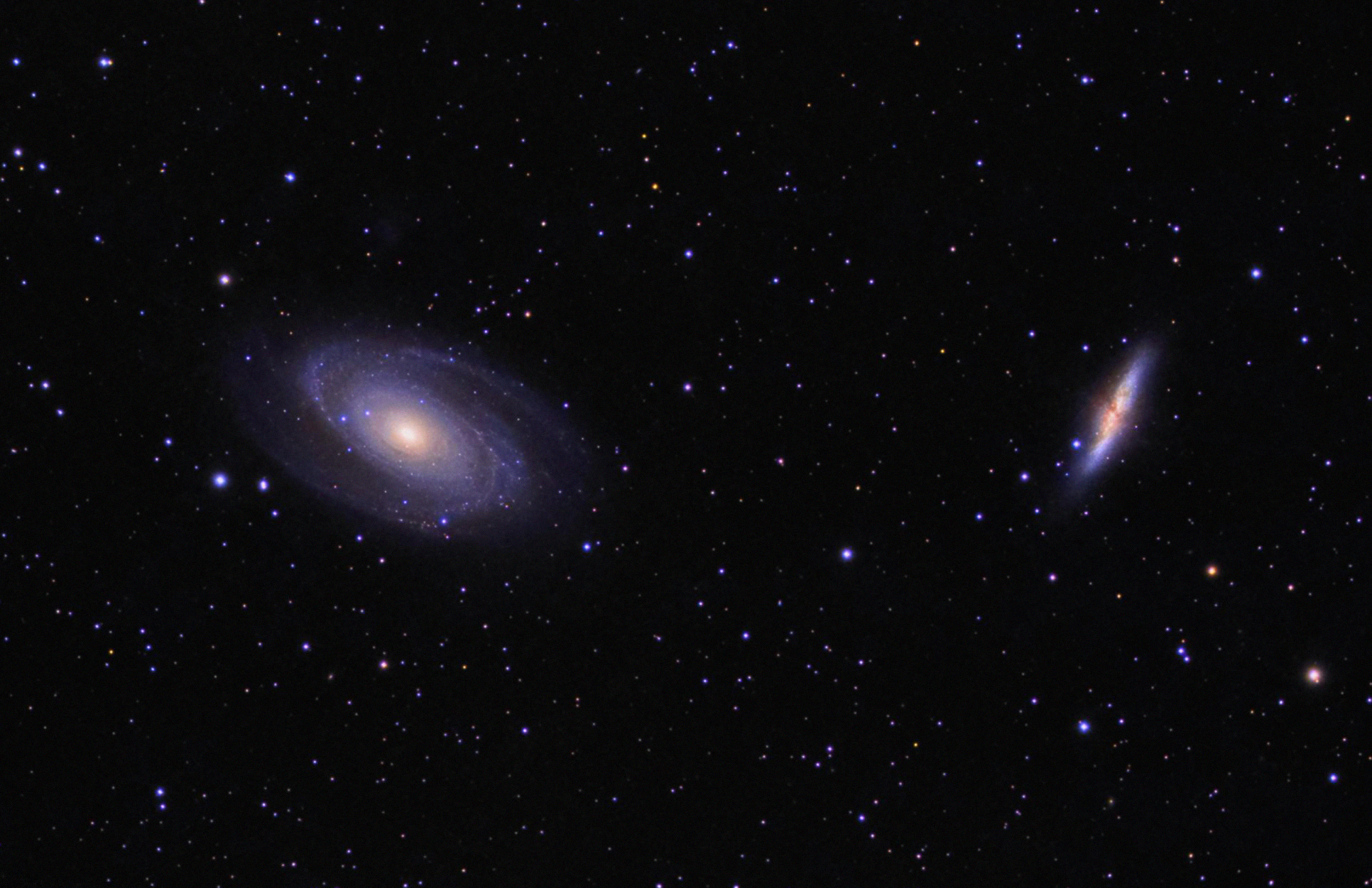
M81 & M82 Galaxies. Combined data from 3 imaging sessions. 350XT as the base image.M81 and M82 Galaxies. Combined data from 3 imaging sessions. T3 as the base image.
I was playing around and noticed I had three different images of this area. Two were taken with the same scope (a Televue TV-85,) but with two different cameras (a Canon 350XT and a Canon T3, both modified.) One was with my Meade SN8 and the Canon 350XT.
With Registar, I was able to align and combine the three images. I used two base images, one with the 350XT as the base and one with the T3 as the base. So, Registar scaled the T3 image down to the resolution of the 350XT in the first image, but scaled the data up in the two older camera images for the second image. I tend to like the larger scale second image more, but the scaled data is softer and not quite as sharp as the down scaled data.
The background in both is still a little noisy, but I think it is tame enough to post. There were lots of faint background galaxies in the full frames, but the one in this view that matters is that smudge just above M81, which is the galaxy on the left. That dim smudge is Holmberg IX, a dwarf satellite galaxy of M81. It is considered a good test of your data, since it is so dim and can be easily swamped by noise and not be seen.
The data I used is from Feb 2007, 24×360 sec @ ISO 1600, SN-8, Canon 350XT, Feb 2008, 41×180 sec @ ISO 1600, TV-85, Canon 350XT and Feb 2012, 39×240 sec @ ISO 1600, TV-85, Canon T3. Total integration of 7.05 hours
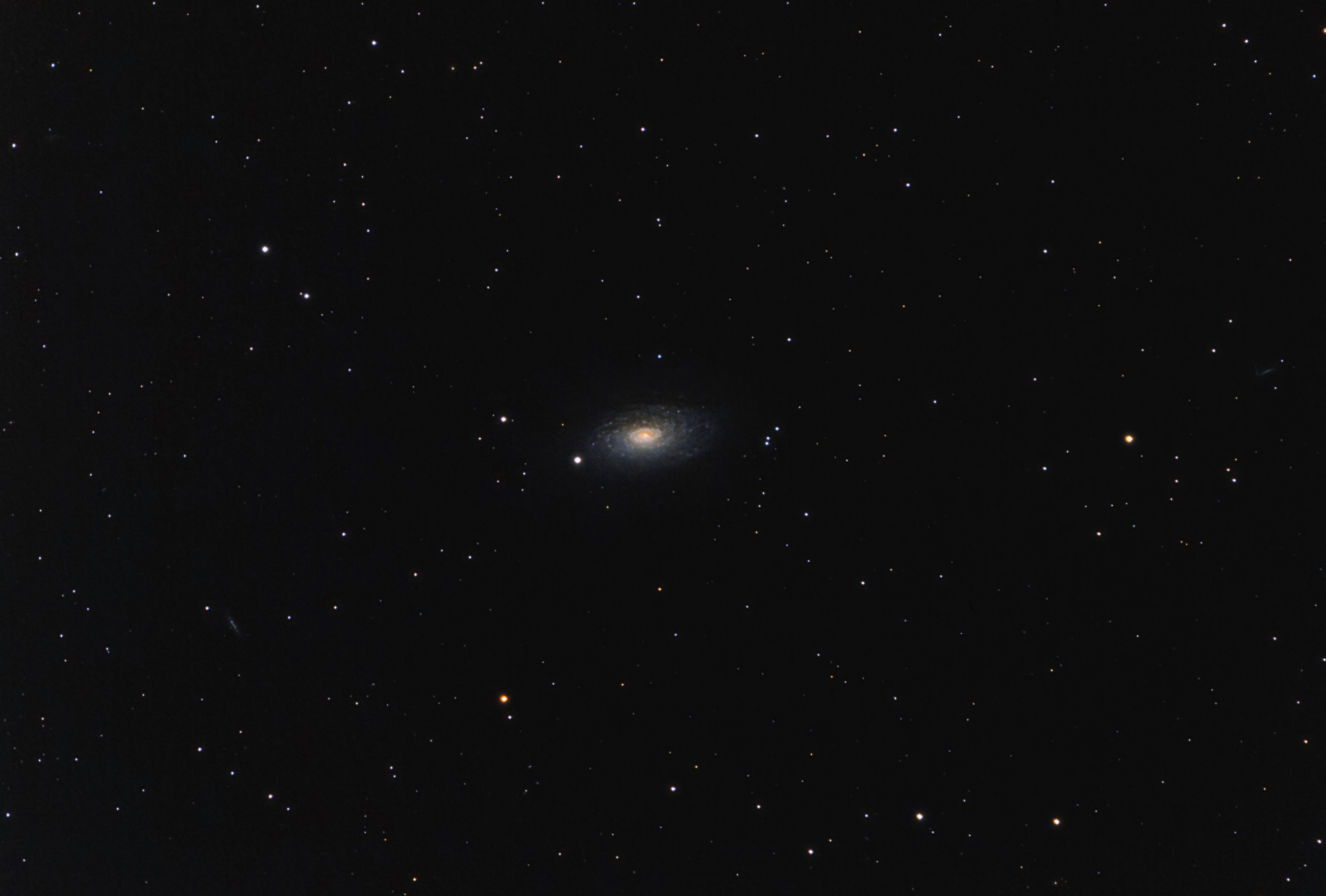
M63 Spiral Galaxy. 35×180 sec @ ISO 800, Meade SN-8 at F/4, Hutech Canon 350XT.
Here is a makeover of M63 from data taken in 2007. I boosted the color saturation and decreased the star brightness slightly. Plus, I worked on the star-shapes to get them more round. This was pretty decent data for ISO 800 and 35 subs.
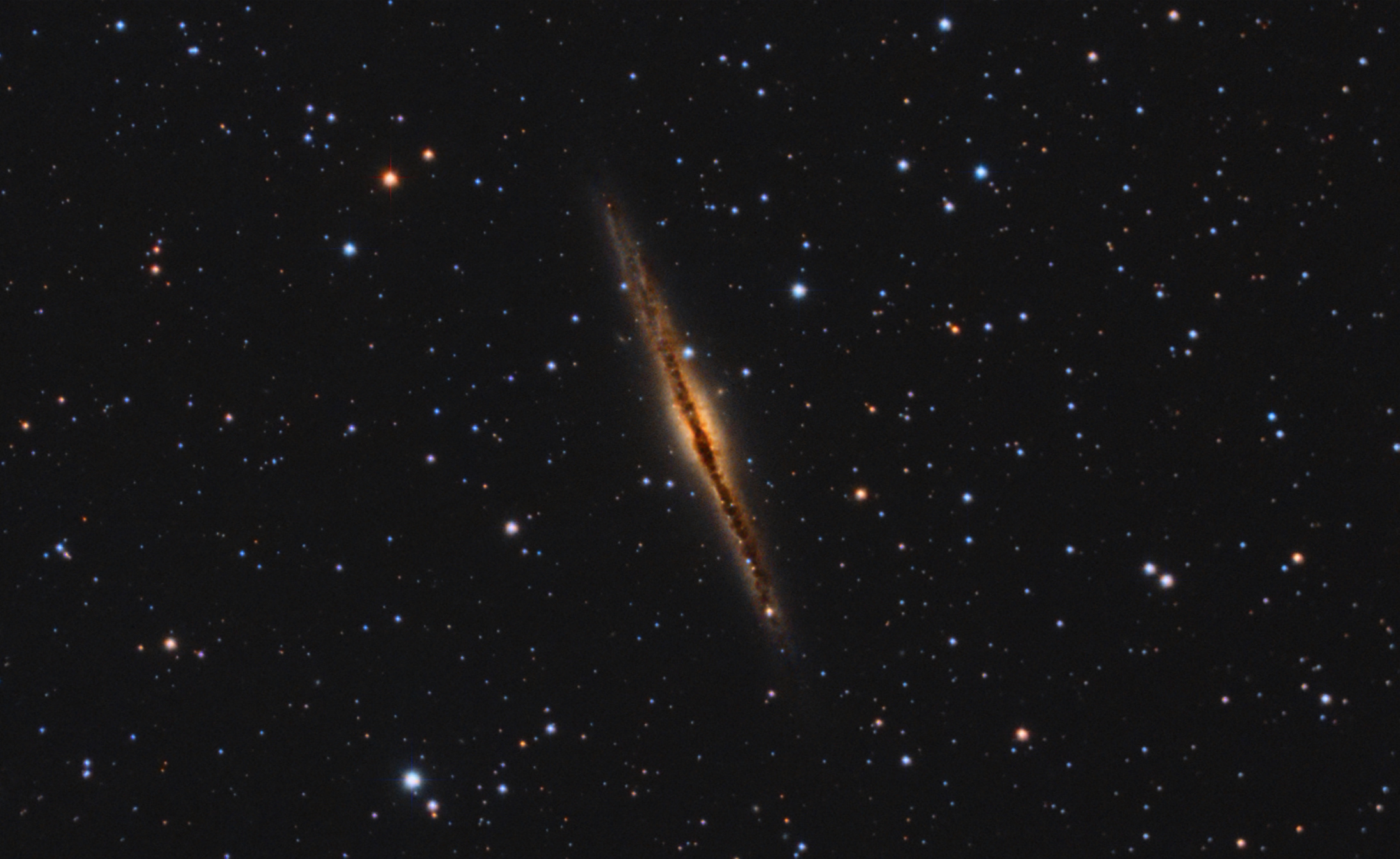
NGC 891. Combined data from two telescopes and 3 data sets – a C8 image and two SN6 images.
Finally, I think I got the data blended for this image as best as possible with the least amount of artifacts. Two images from a 6 inch Schmidt-Newt were combined with one of my more recent C-8 images of the galaxy. I used Registar to scale and align each of the 3 images and then blended them in PS manually.
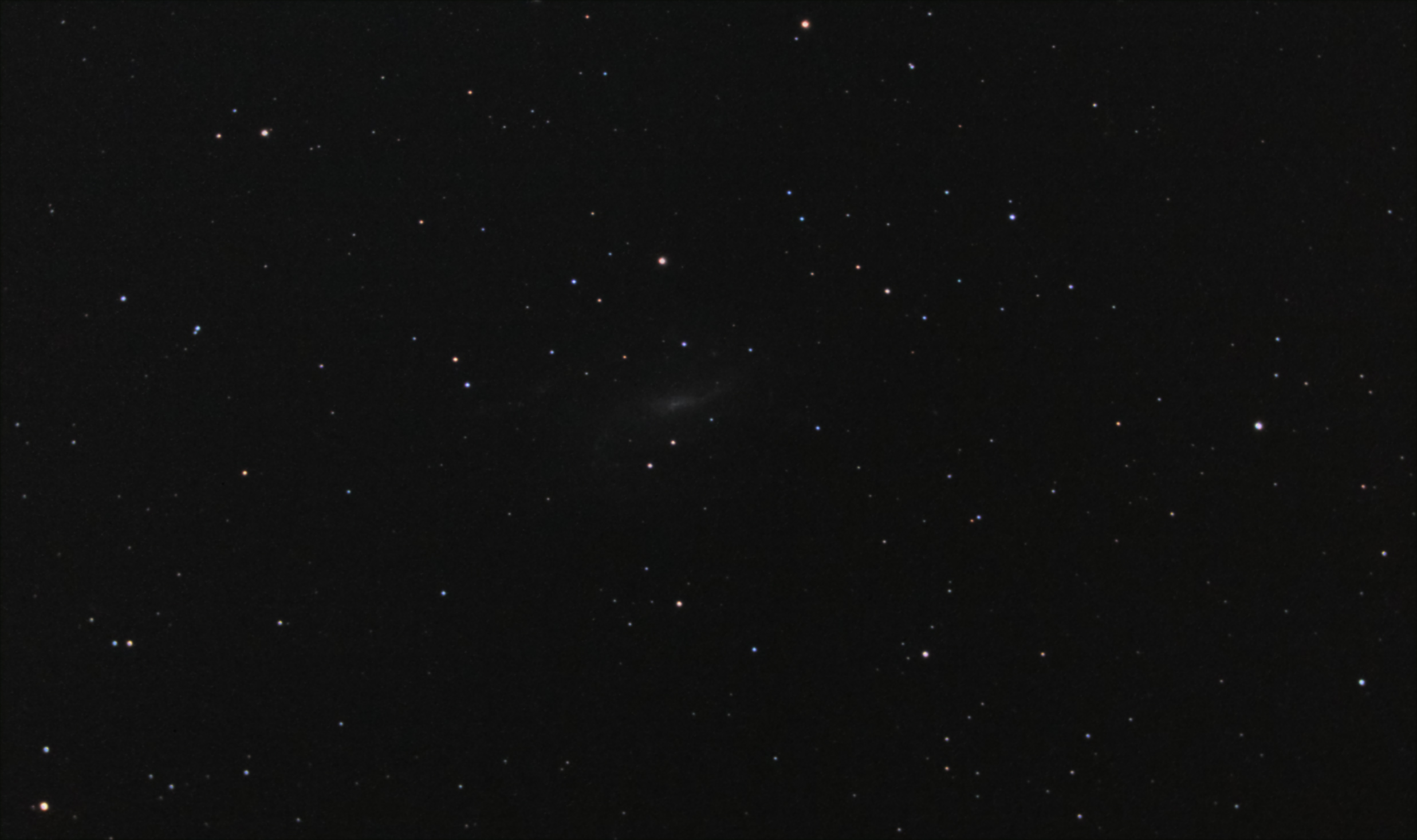
Galaxy NGC 925 on Nov 29, 2014. 18×120 sec @ ISO 3200, C8 at F/6.3, IDAS-LPS, Canon T3 (modified.)
I wanted to see what this was. It appears to be a spiral galaxy. With just 18 sub-images, it is only barely visible. I might come back to this one with longer exposures and 4 times as many subs to bring it out better.
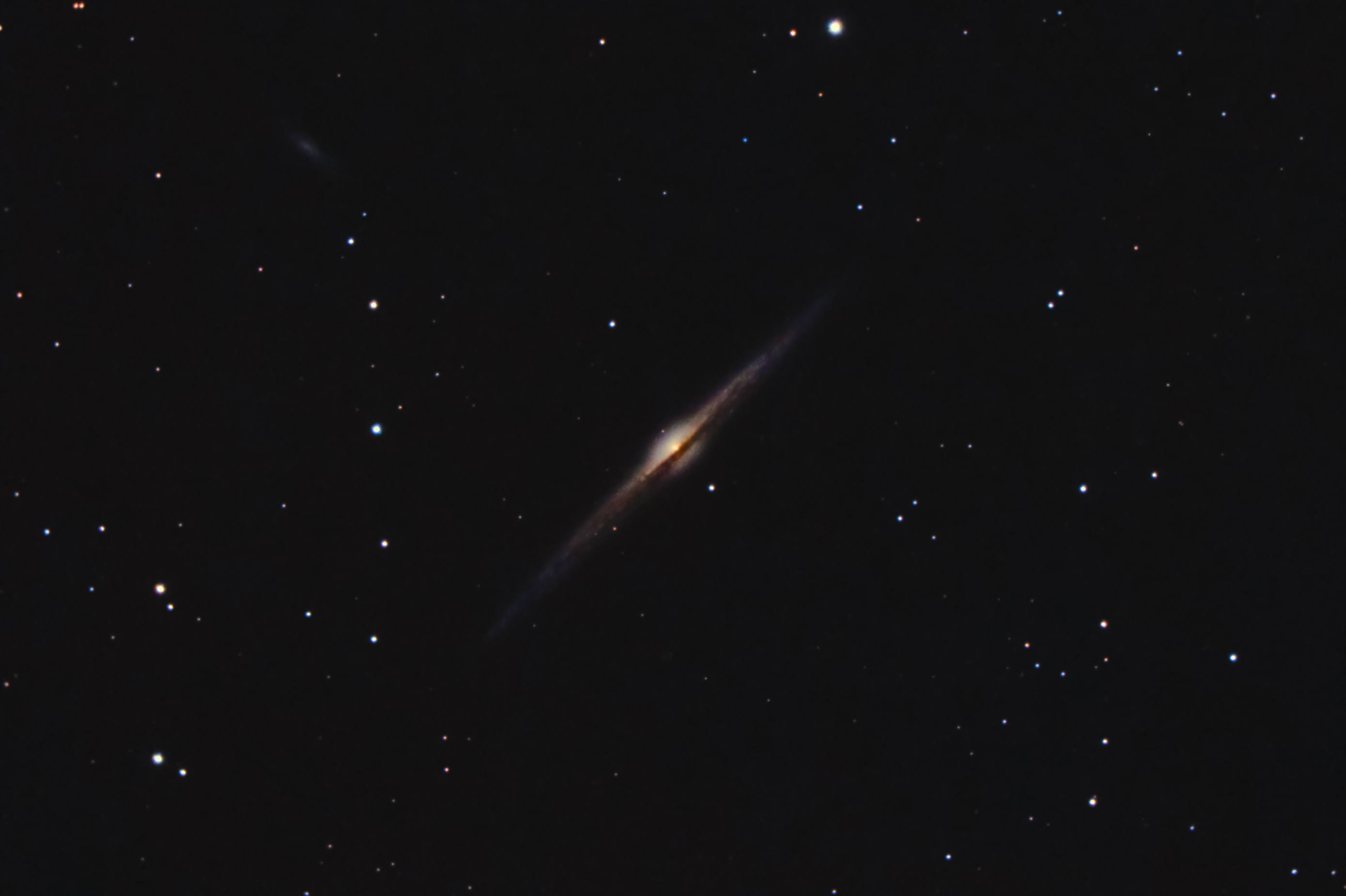
NGC 4565 on Nov 28 & 29, 2014. 18×180 sec @ ISO 1600 plus 20×120 sec @ ISO 3200, C8 at F/6.3, IDAS-LPS, Canon T3 (modified.)
This is a “quickie” of one of my favorite deep sky objects, taken with my Celestron C8 SCT. Edge-on galaxy NGC 4565 is the best example of the edge-on galaxy class in the sky. I shot this right before sunrise when the object was just high enough to start imaging. It could use more time and I’ll probably add to it (I did on Nov 29, 2014 – an additional 40 minutes of data.) I’m pleased at what I have so far. I haven’t seen it in quite some time and it was nice to image it again.
NGC 891 on Nov 27, 2014. 35×300 sec @ ISO 1600, C8 at F/6.3, IDAS-LPS, Canon T3 (modified.)
Edge-on galaxy NGC 891. The “Outer Limits” moniker is from an old 1960’s sci-fi TV show of the same name. An image of the galaxy was featured prominently in the closing credits, along with some other galaxy images, all in black and white.
NGC 7331 taken with a TV-85 and a C8. 27×300 sec @ ISO 1600 (TV85) and 23×150 @ ISO 3200 (C8), Canon T3 (modified.)NGC-7331 detail view. Nov 20, 2014, 23×150 @ ISO 3200, C8 at F/6.3. Oct 27, 2014, 27×300 @ ISO 1600, TV-85 at F/5.6. IDAS-LPS, modified Canon T3.
At the end of October 2014, I was shooting images of some brighter NGC galaxies, but the TV-85 scope I was using just didn’t have enough image scale to do them justice, so I never posted them. Well, my old C8 is still kickin’ and it has over 2.5 times the focal length of the smaller refractor. But, I needed a way to guide it and the 50mm guiding scope arrangement I used once for it was just not good enough.
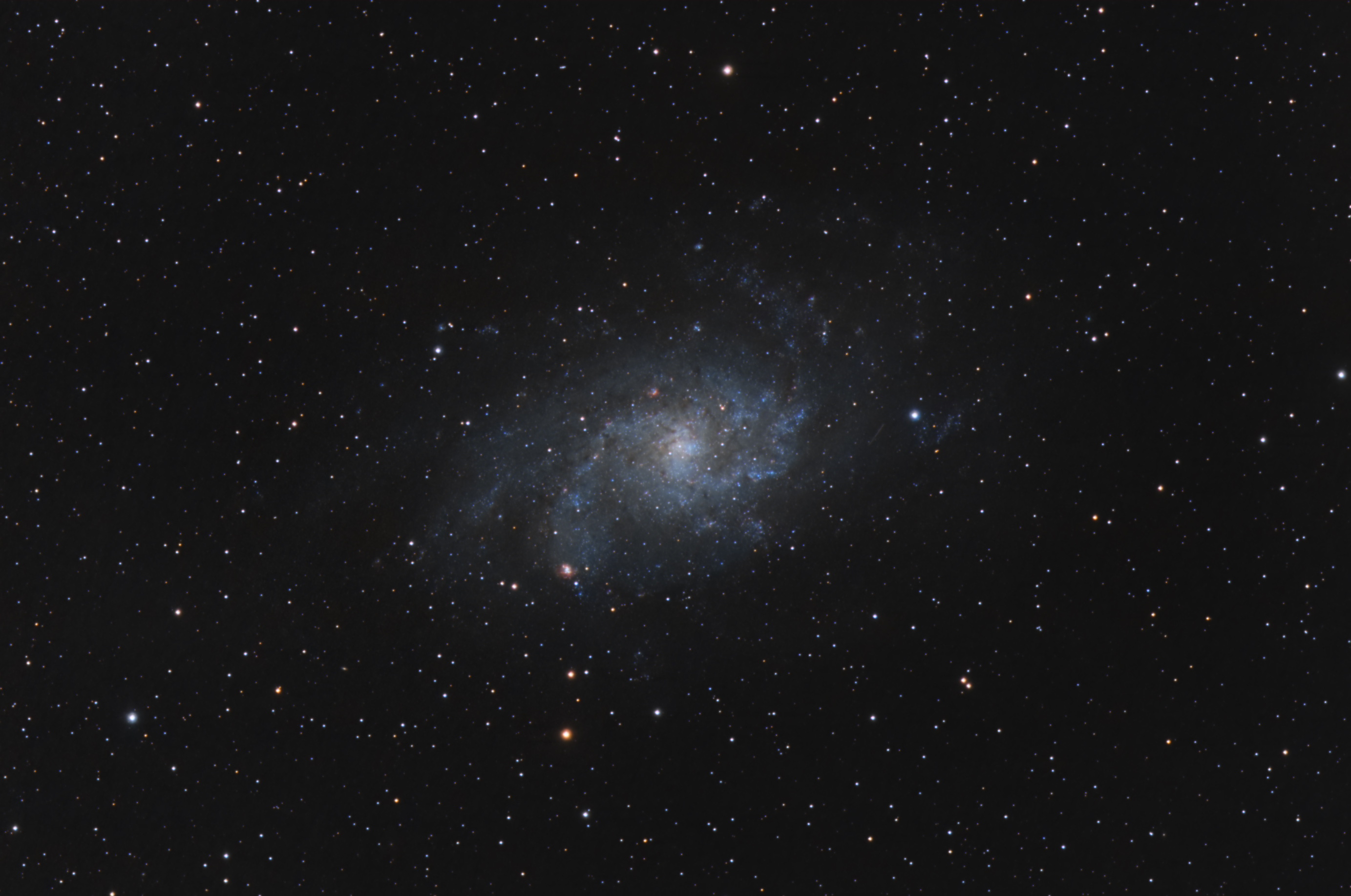
M33 on Nov 14, 2014. 77×150 sec @ ISO 3200, TV-85 at F/5.6, IDAS-LPS, Modified Canon T3.
Here’s a center crop of M33 that I took recently. It didn’t come too bad, all things considered. Notice that there is an asteroid to the right of the nucleus of M33, before that bright star. That is 1503 Kuopio (1938 XD,) a mag 14.3 asteroid that just happened to be in the shot. So, I got two for the price of one for this gig. 🙂