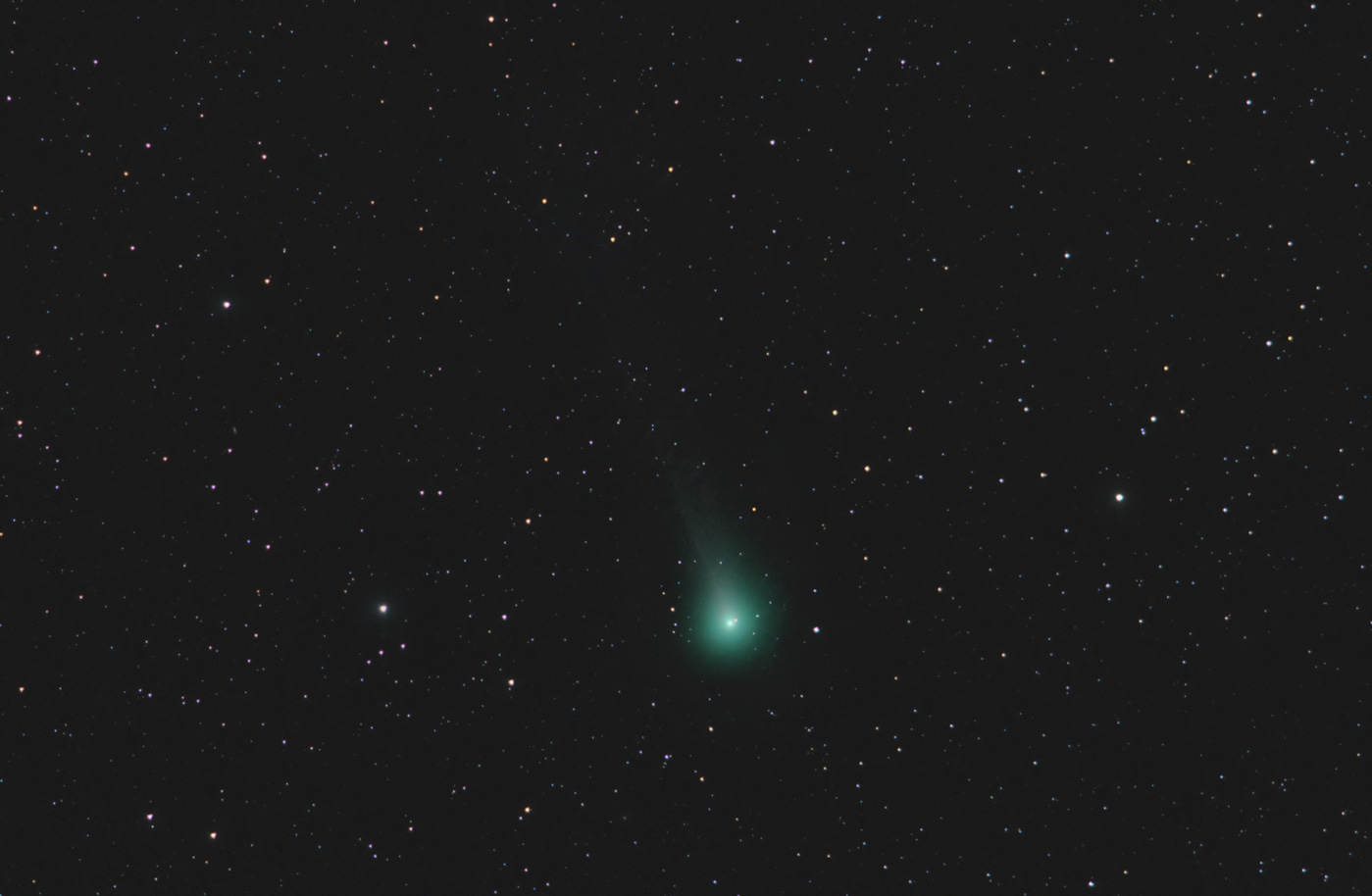
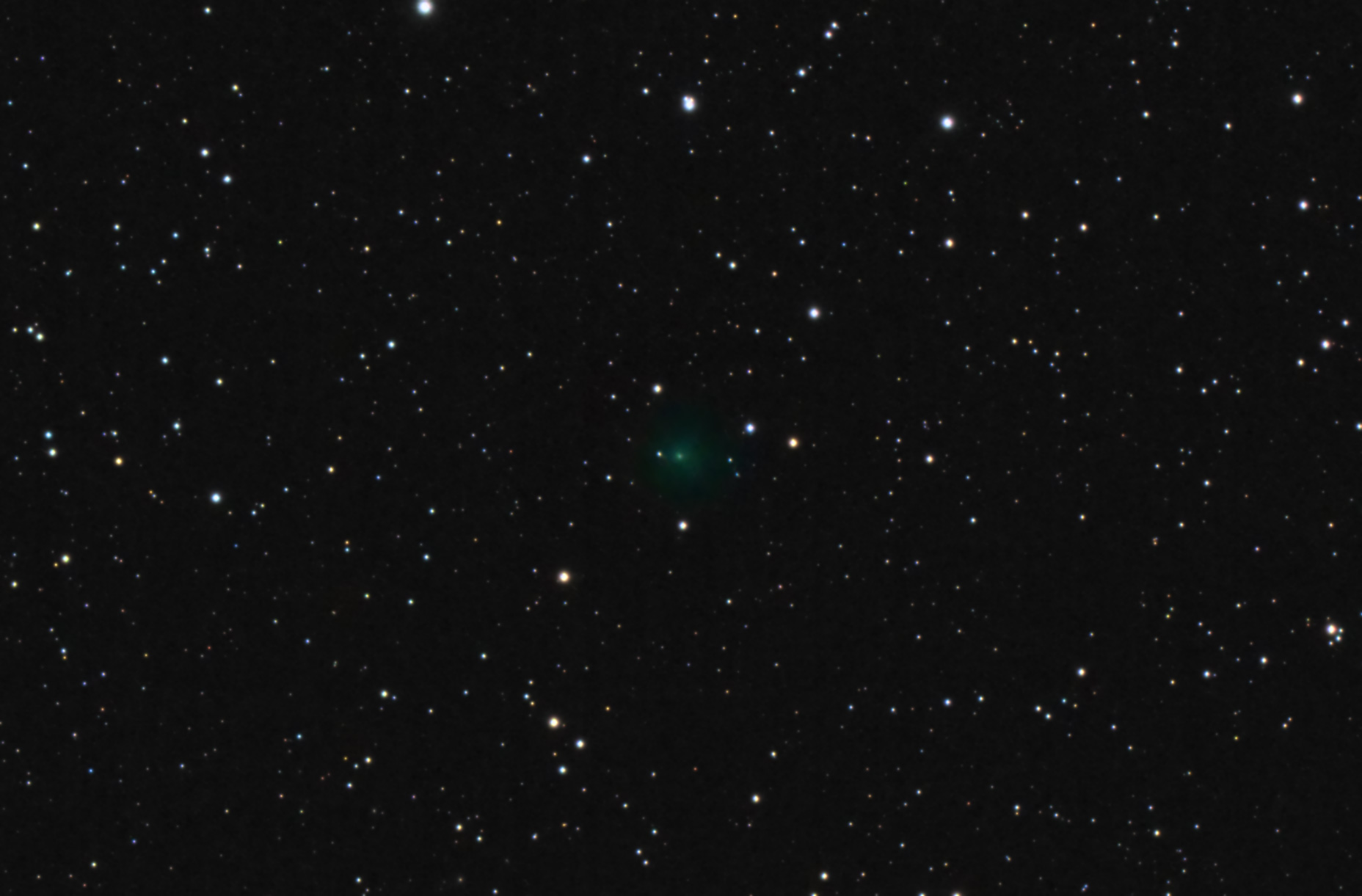
Comet Lovejoy with a Canon 200mm, F/2.8 telephoto. 19×30 sec @ ISO 1600, IDAS-LPS, modified Canon T3.
High altitude clouds from the subtropical jet stream barely gave me a break to image Lovejoy on the morning of November 14, 2013. I was shooting most of the sub-images through the clouds and consequently, didn’t go as deep as I had planned. I had to throw out more than half of the sub-images, unfortunately.
Probably my best Comet Lovejoy image to date. Lots of subs and setting up especially for shooting it helped quite a bit. I missed shooting ISON because of setting up for Lovejoy unfortunately. Oh, well…
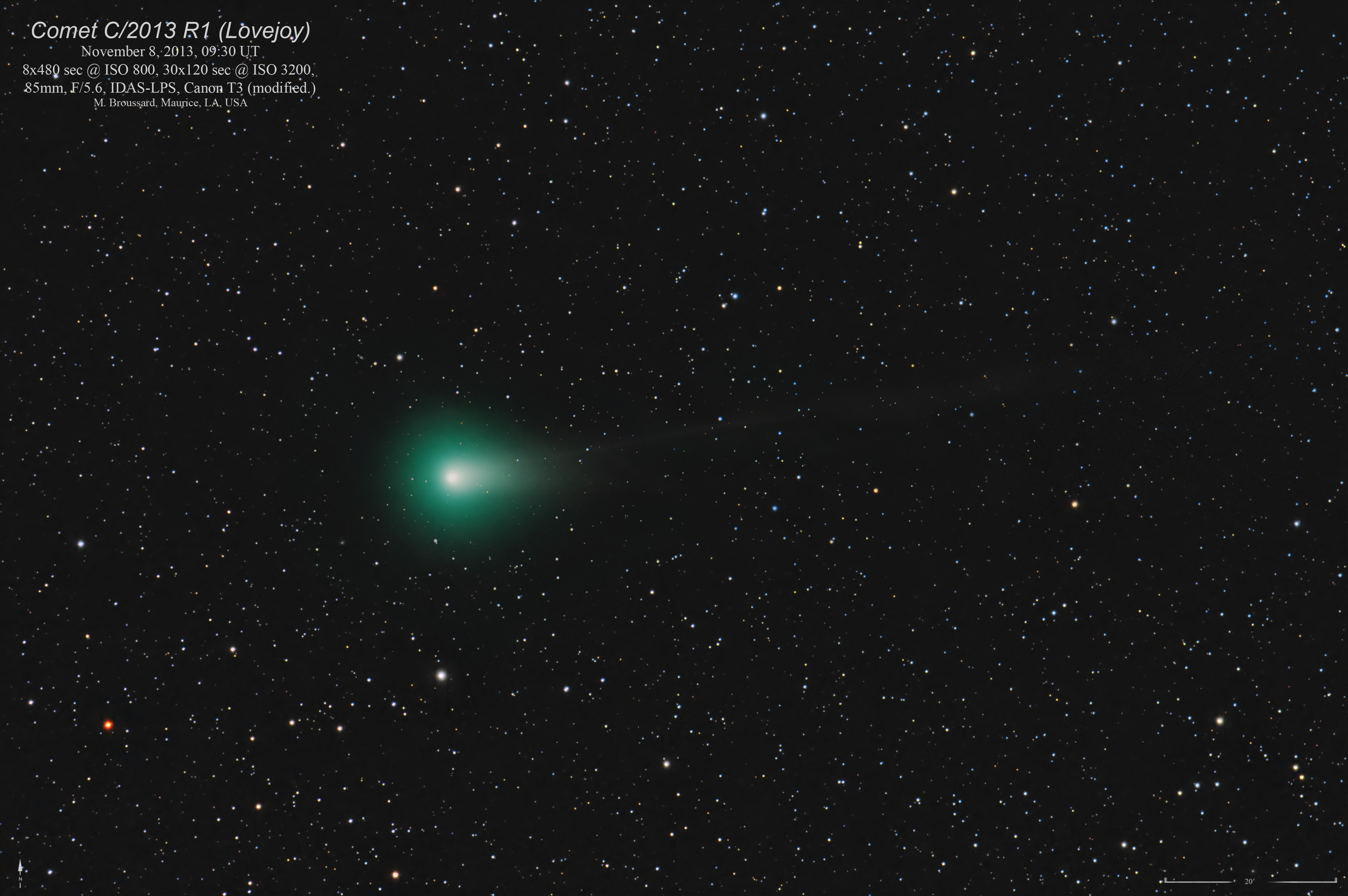
After shooting Comet Lovejoy, I had just enough time to shoot 4 to 8 sub-images of Comet ISON. By that time, the sky was getting bright with the approaching sunrise and these images were all too blue. But, I decided to try and put together a display picture anyway since it had been since Nov 4th that I last shot some images of it.
Comet Lovejoy. 7×60 sec @ ISO 3200, TV-85 at F/5.6, IDAS-LPS, modified Canon T3.
I shot this right after shooting 18 sub-images of Comet ISON. Twilight was already approaching really fast and by the time I got 7 images taken, the sky was too blue to continue. So, this version is lightened up somewhat to bring out the faint details that I couldn’t get because I didn’t get enough sub-images. It shows the comet well enough, at least.
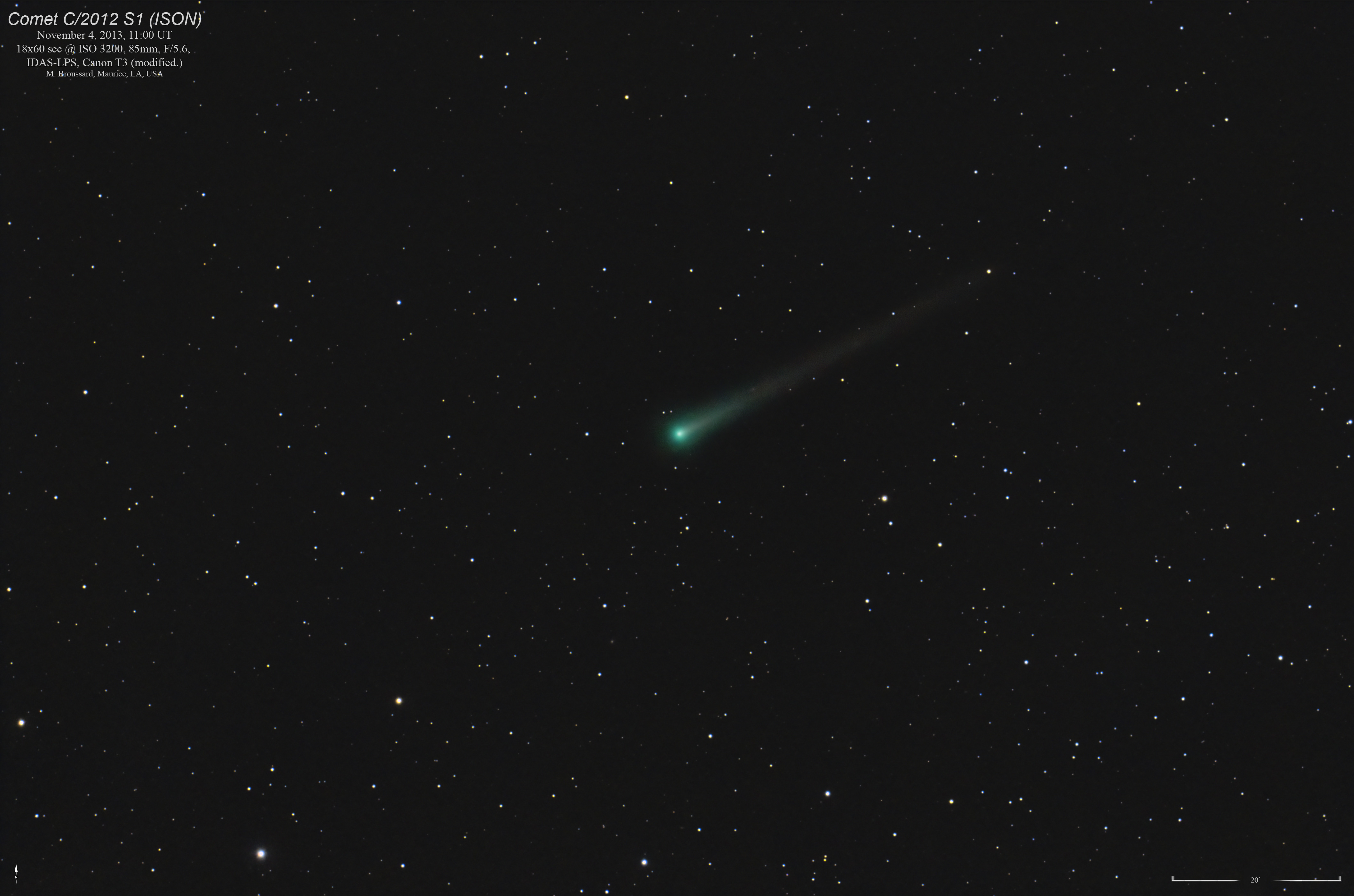
Comet ISON, Nov 4, 2013. 18×60 sec @ ISO 3200, TV-85 at F/5.6, IDAS-LPS, modified Canon T3.
I was experimenting with high ISO settings and short exposures for this impromptu imaging session of Comet ISON. I went with 1 minute at ISO 3200, which is equivalent to 4 minutes at ISO 800, the ISO setting I was using for most of my other ISON images. That is double what I was using before. Yes, its noisier, but tolerable in the cool 47 degree temps I had that morning.
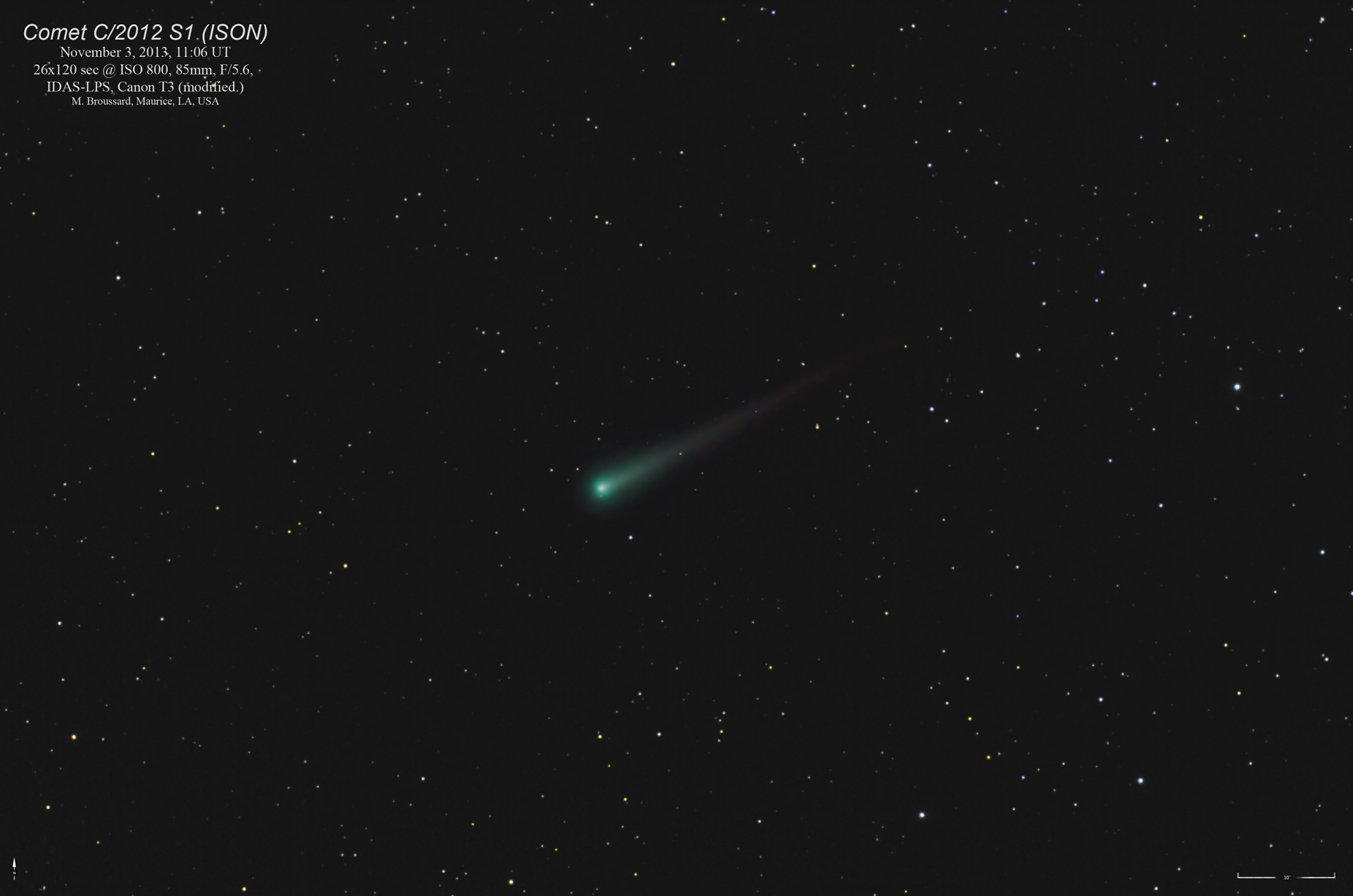
Also, this is the full field of my imaging rig. The only cropping done was to remove places where the sub-images did not overlap. I wanted to demonstrate how large the comet is getting.
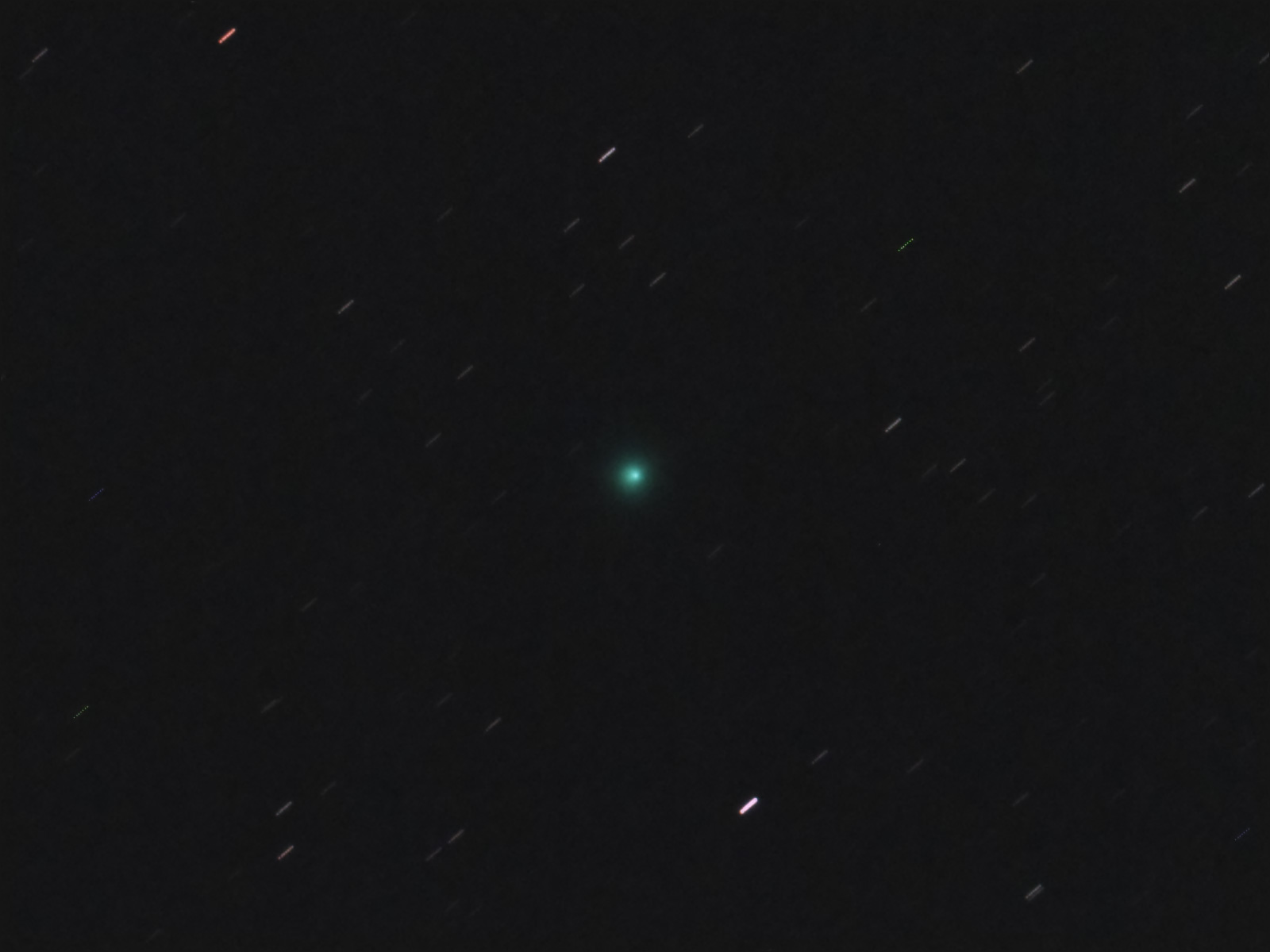
Comet ISON (C/2012 S1). 26×120 sec @ ISO 800, TV-85 at F/5.6, IDAS-LPS, modified Canon T3.
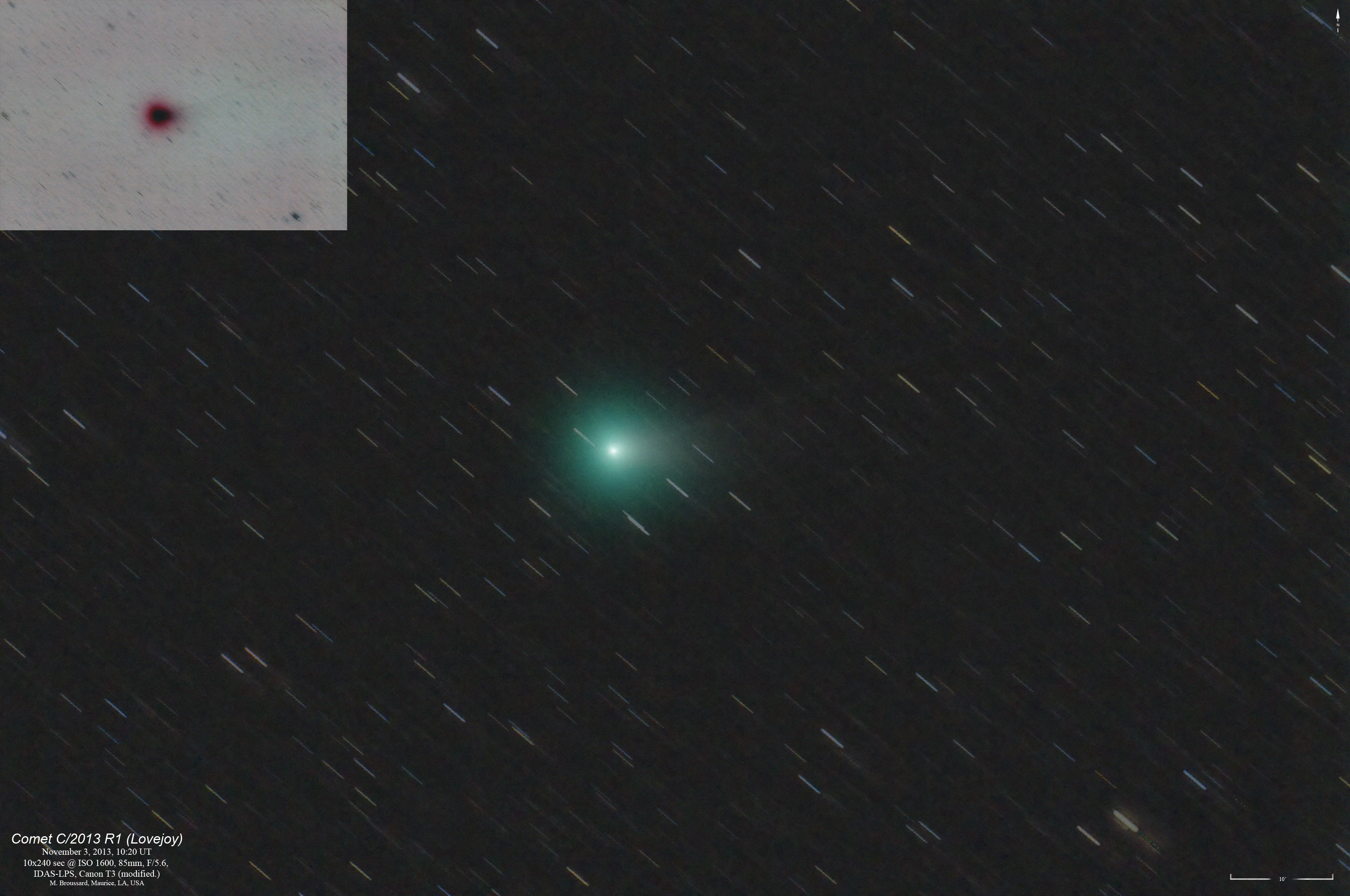
I shot comet ISON on the morning of November 3rd, 2013. I devoted most of the morning to Comet Lovejoy, but there was still enough time to get nearly 30 good sub-images of this object which is enough to make a pretty decent image. Clicking the picture brings up a half-of-full-size enlargement. Click here to see the image at the camera’s full resolution. The “star-streaks” version is below:
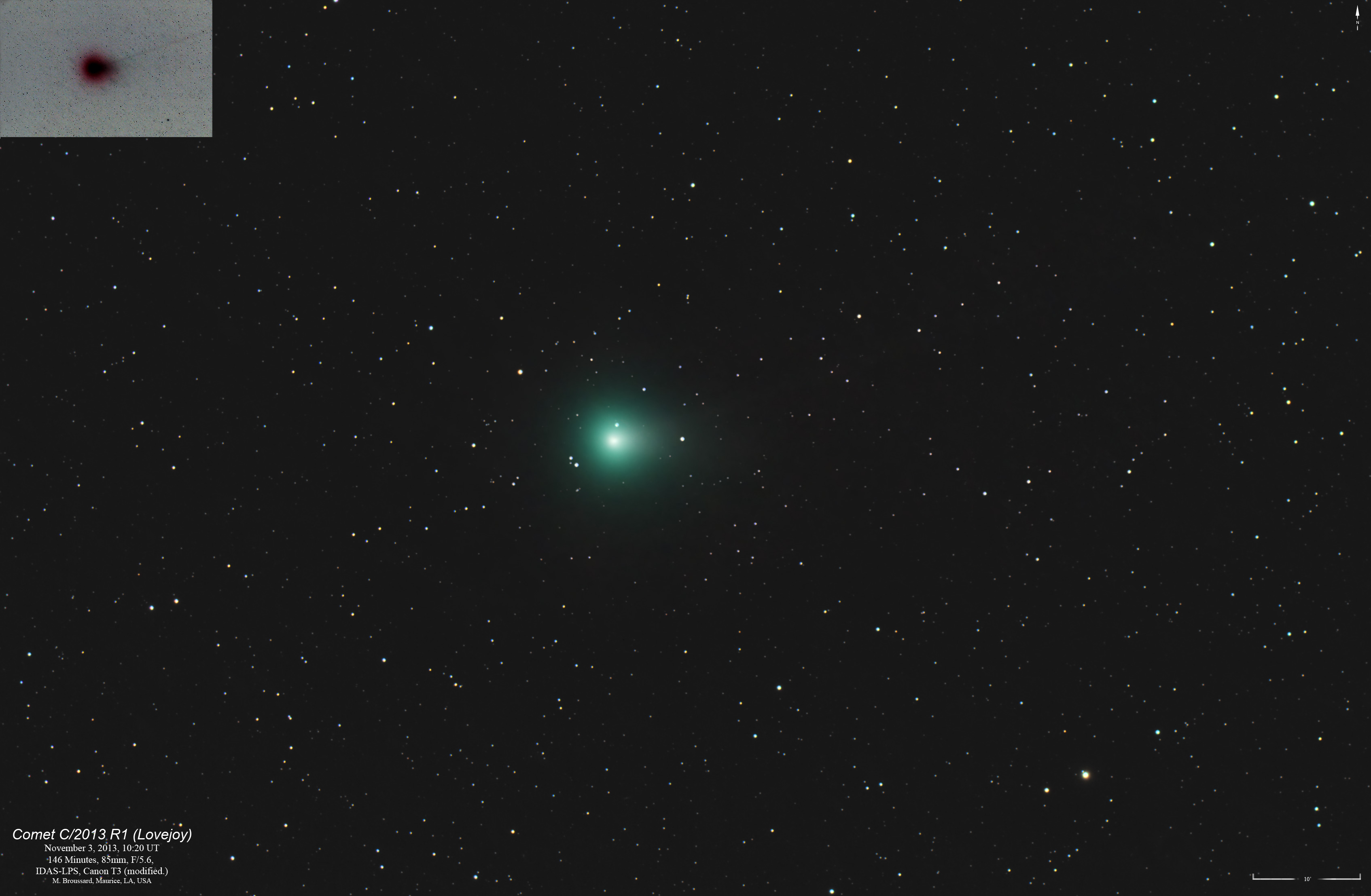
Comet Lovejoy is dominating the comet fiesta that is now occurring in our skies. It is the brightest and the biggest, by far! My most recent images show a 70 arc-minute tail that is best seen in the negative inset view.
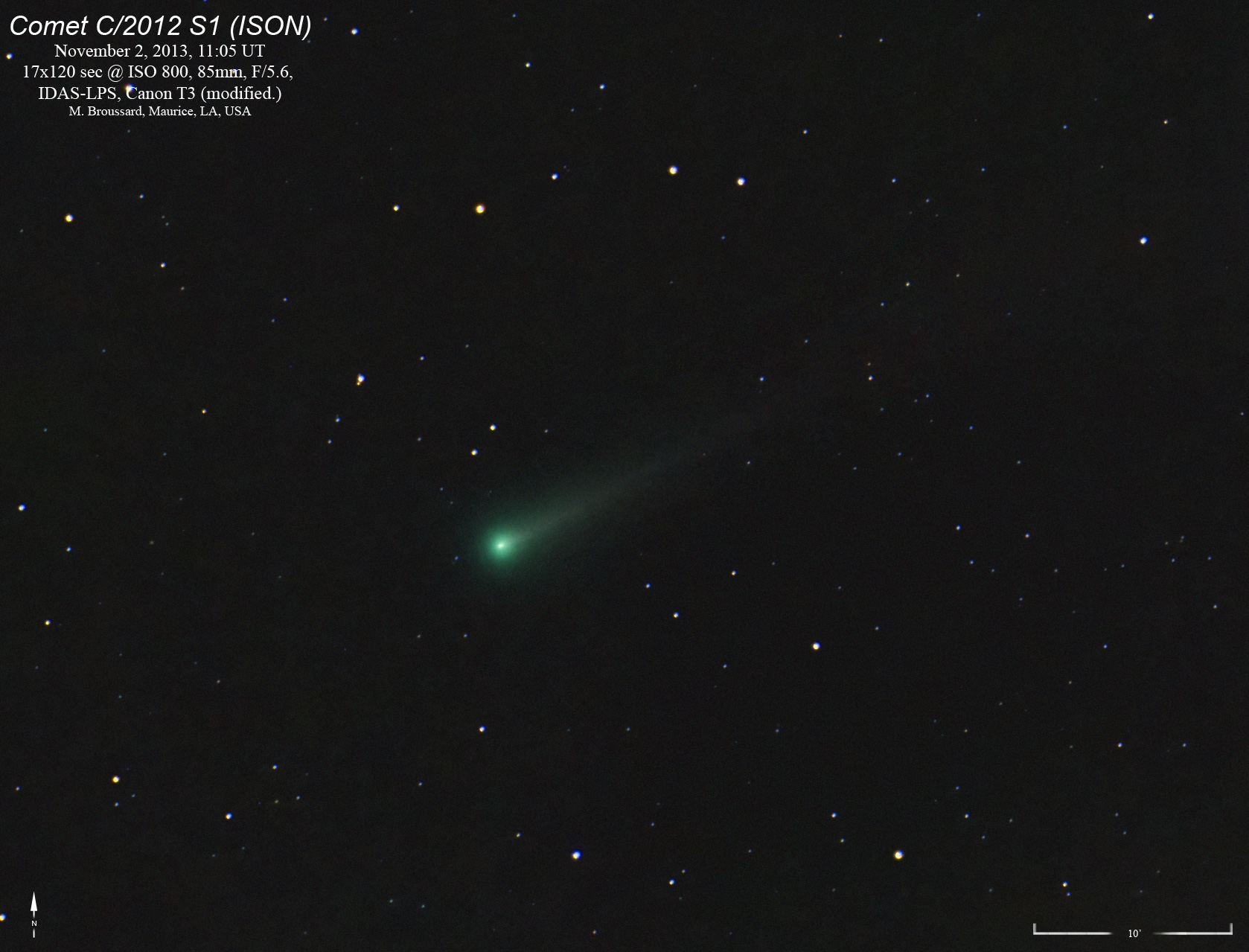
Comet ISON – 17×120 sec @ ISO 800, TV-85 at F/5.6, IDAS-LPS filter, Canon T3 (modified.)
Friday, November 1st, 2013 was clear and cool. I was convinced that Saturday morning would be crystal clear and I could get some great shots of all the comets in the sky. Unfortunately, the sub-tropical jet stream intruded and brought with it high altitude clouds and ruined my plans to do my comet imaging.
I shot lots of subs for ISON, but deleted more than I kept because most had clouds in them. Some had tree branches and I kept them because I had nothing else. Consequently, the image quality suffered with the low number of sub-images and the gradients introduced by the tree branches in the pics. Oh, well…