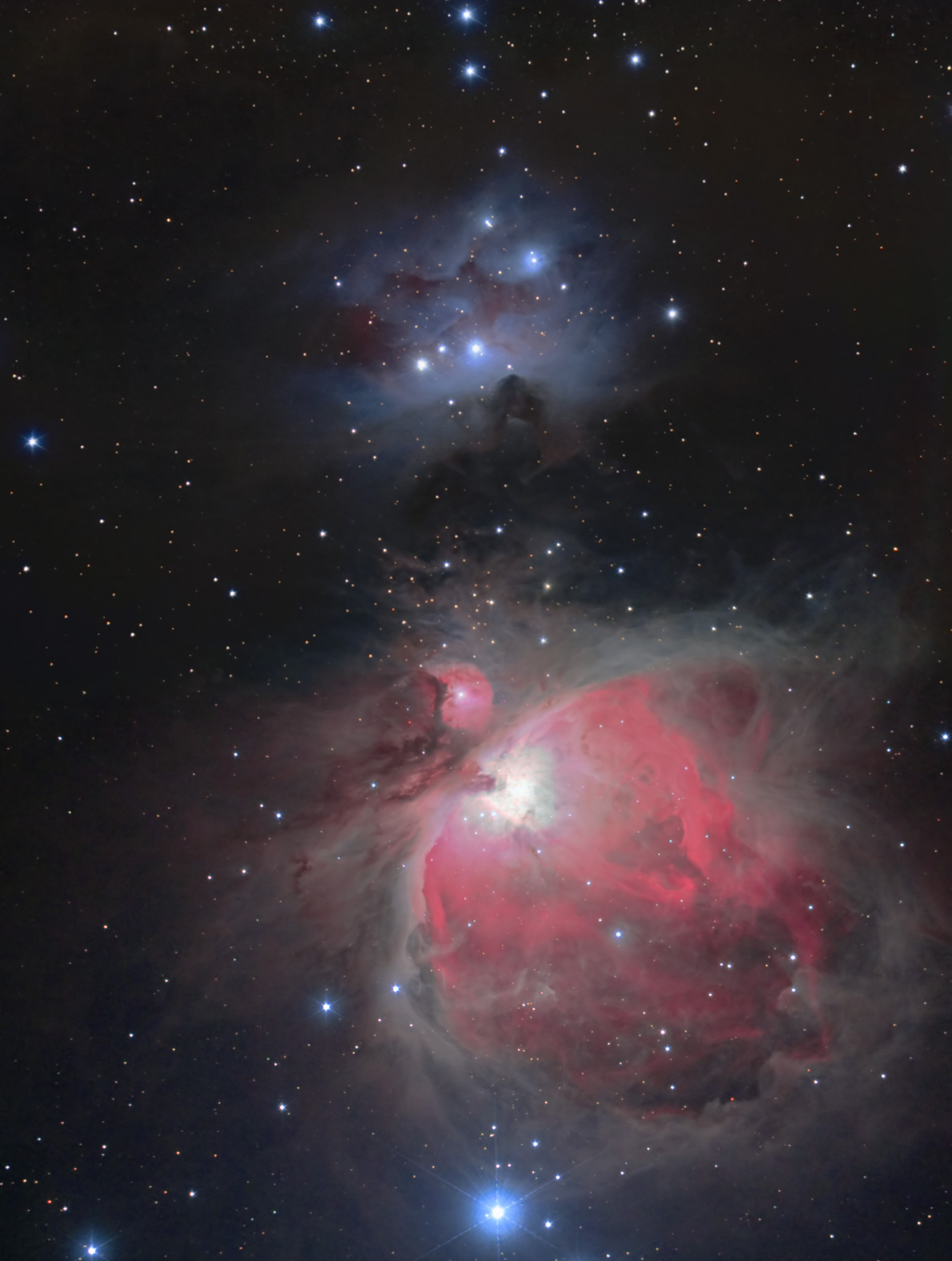
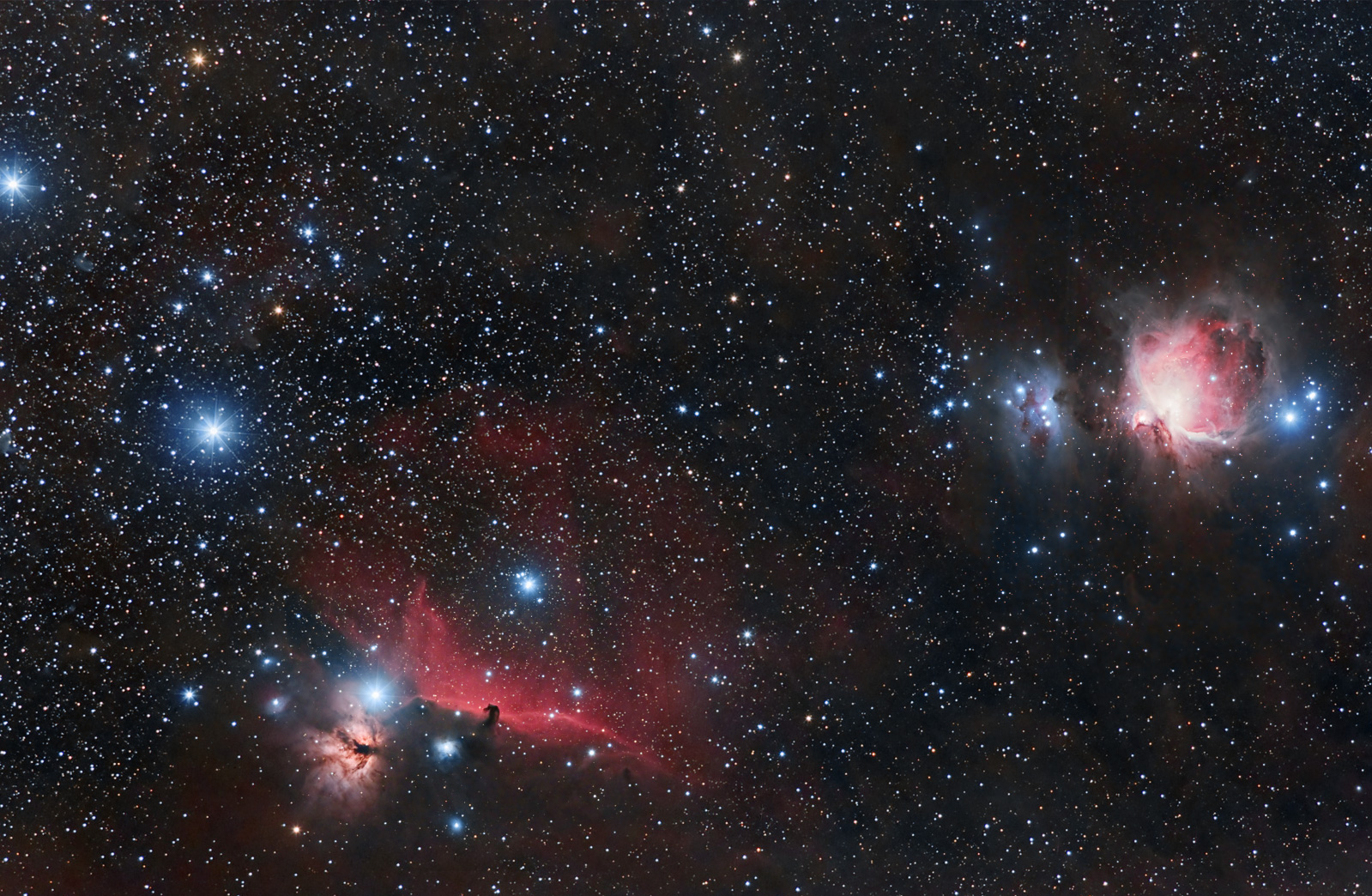
I shot some sub-images with my modified Canon T3 of the Running Man the other night and added that to the Orion Nebula test image I took recently and made a composite mosaic image of the two. I also shot some short subs (9) of the Orion Nebula core and made a HDR image from them and then composited that in to replace the burnt out core that I had previously.
So, the breakdown is 36×180 sec @ ISO 3200 for the bottom half, 30×180 sec @ ISO 400 for the Running Man and 9 sub-images from 5 to 30 seconds @ ISO 1600 merged into a HDR image in IRIS and then divided into 3 layers of various opacity settings and masking to blend in for the core area.
The ISO 3200 images had 2 LP filters – a Deep Sky filter and an IDAS-LPS. The ISO 400 images and the core images were only shot with an IDAS-LPS. A GSO 8″ F/4 Newtonian with a GSO 2″ Coma Corrector was the imaging scope.
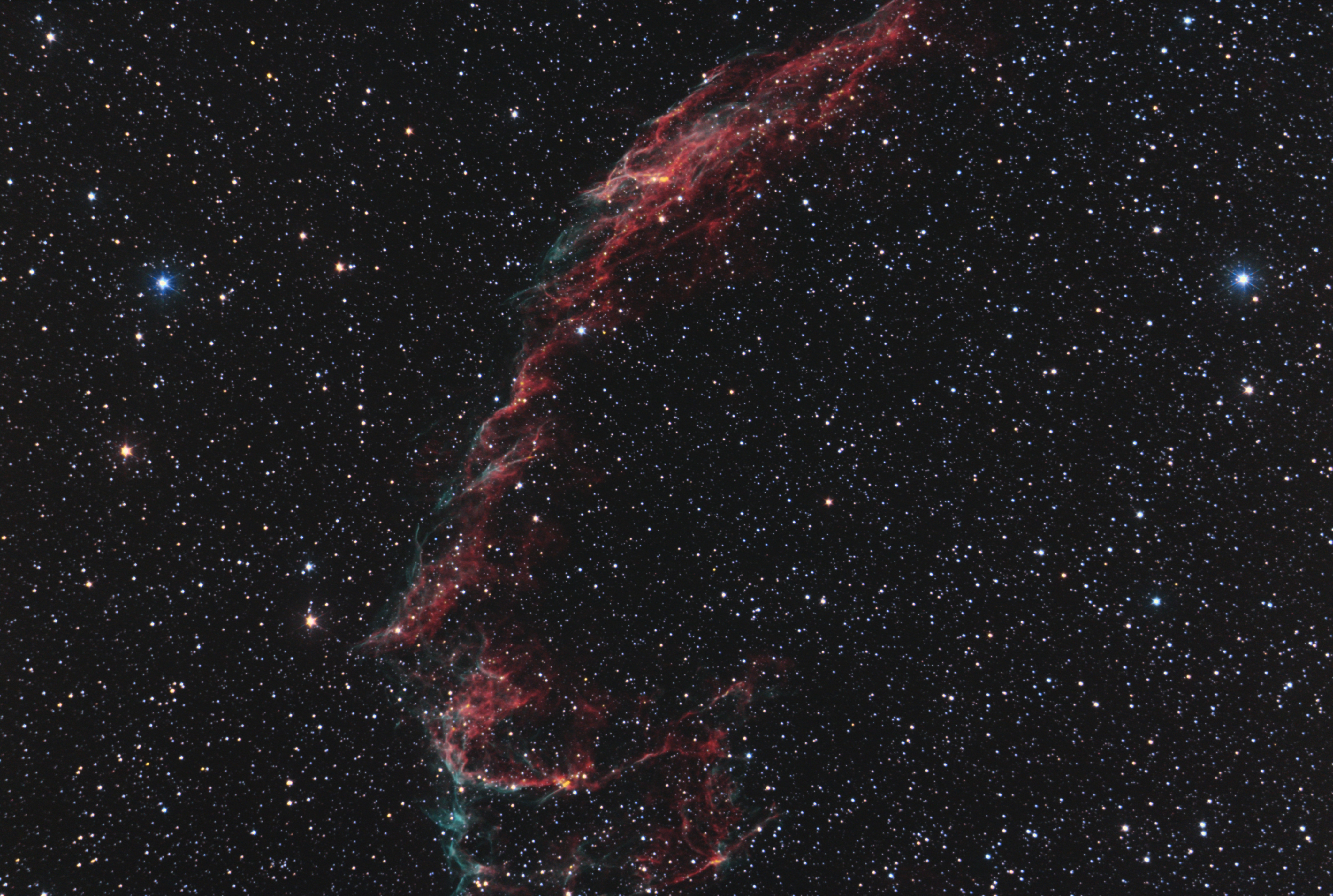
This is a supernova remnant in Cygnus. I took this with a GSO 8″ Newtonian that I was testing. I used ISO 3200 Speed on a Canon T3 DSLR camera that has been modified for astrophotography.
The Orion Nebula with the Televue TV-85 Refractor.
This was 84 sub-images of 3 min each at ISO 800 combined with 5 subs of 15 minutes each shot at ISO 400. All images done with a Televue TV-85 with a 0.8x focal reducer for F/5.6 speed, a Canon T3 modified DSLR camera and a IDAS-LPR filter.
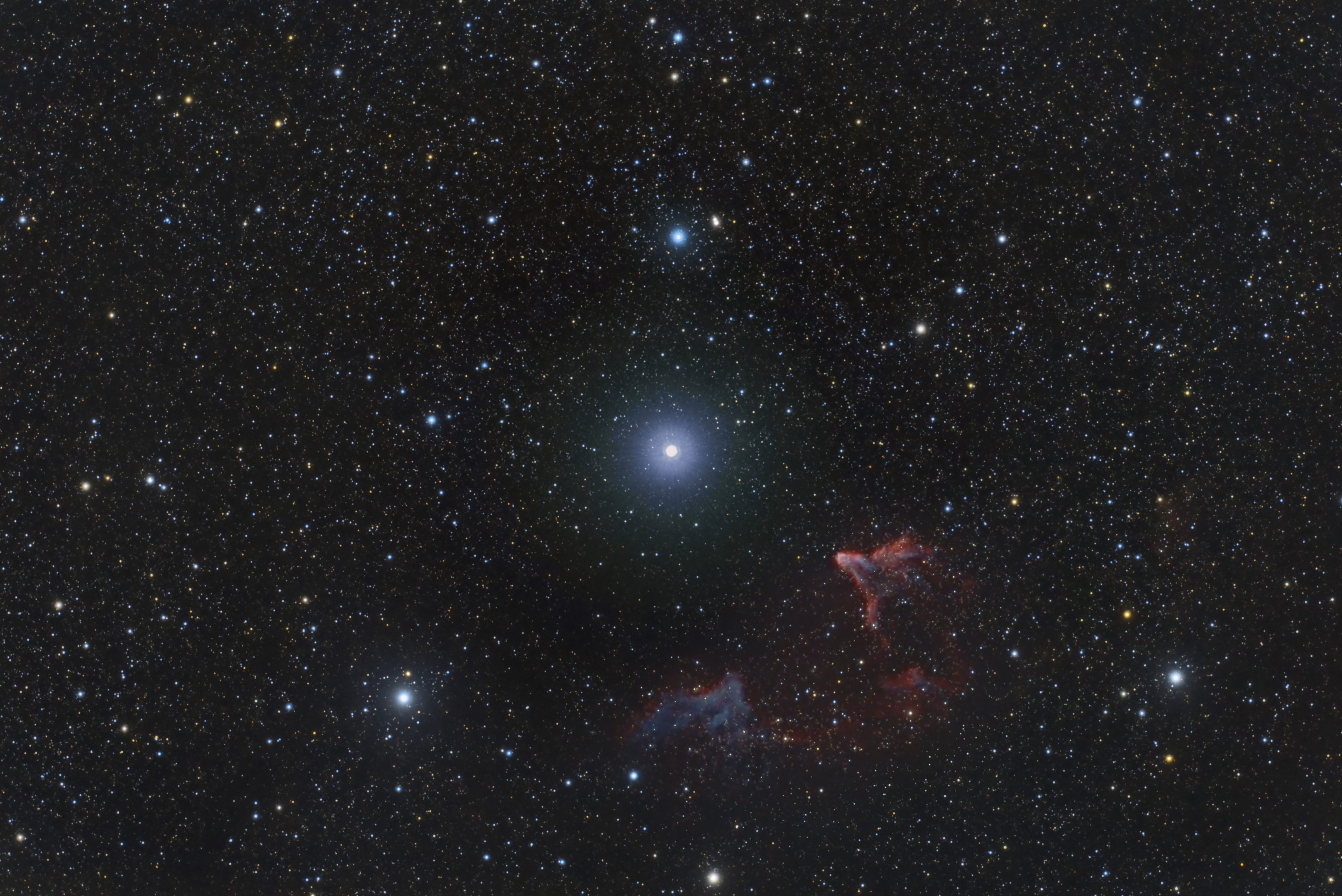
I took this with my Televue TV-85 refractor and combined 2 nights worth of data. The exposures ran like this: 46×180″ ISO1600, 11×900″ ISO400 and 57×360″ ISO800. Gamma Cassiopeia is the really bright star in the center and overwhelms the sensor, so I had to suppress it quite a bit in processing.
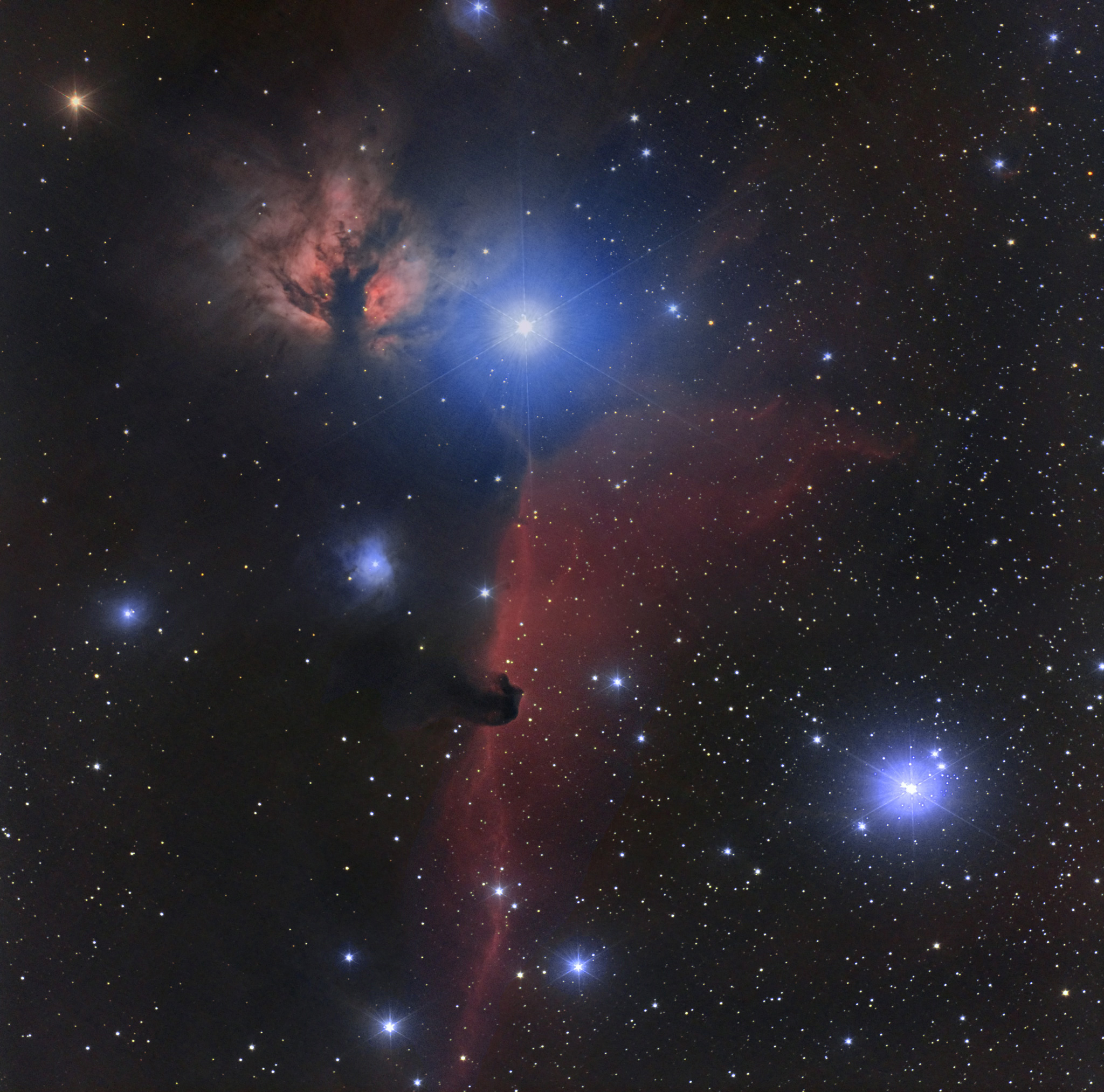
This is a composite image of the Belt of Orion area combining images shot with a Canon 200 mm F/2.8 lens at F/3.5 and at F/2.8, plus the Orion Nebula area and Horsehead area each imaged separately with a TV-85. RegiStar was used to align the separate images and PSCS2 was used to stack and blend the images together and crop them to form the final version seen here.
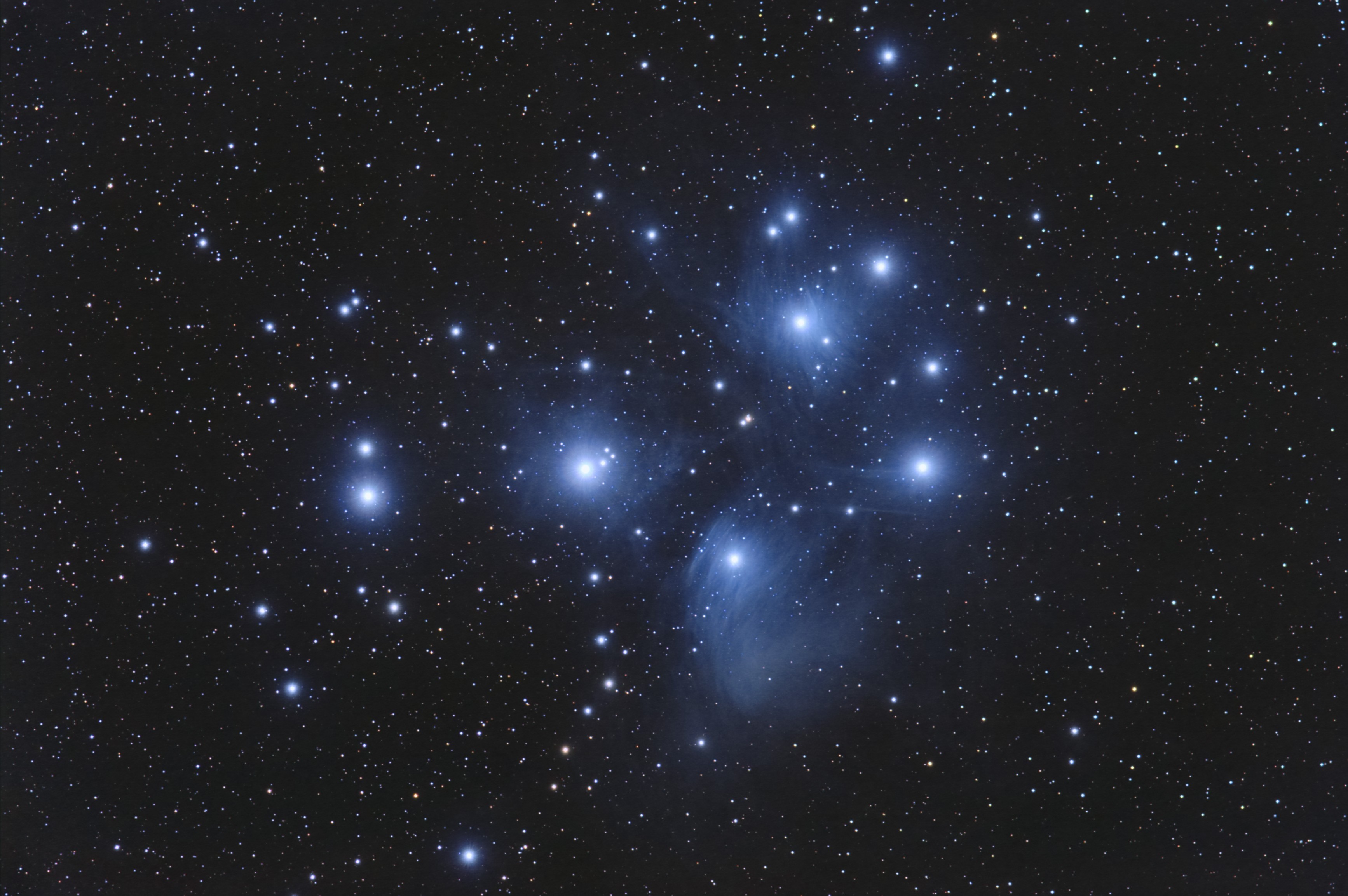
M45 2011 Version – Calibrated and stacked in IRIS, export to PSD file. Post processing in PSCS2 with Noel Carboni’s Astronomy Tools, Gradient Xterminator, Neat Image, Astroplugins, DeepSkyColors HLVG and WhiteCal and CS2 Smartsharpen.
Images of Comets, Nebulae, Galaxies and Star Clusters